handling sensitive data

Customer data collection has transformed how marketing professionals engage with consumers and target new prospects. Of course, data collection has also raised many concerns about consumer privacy. Just how much data is too much? What sensitive data is safe to share, and what data isn’t? Consumer engagement and marketing continue evolving as governments pass and revise privacy laws to address these concerns.

As marketers, we understand it’s crucial to balance utilizing available data and respecting privacy. Today, we’ll look at consumer privacy’s importance and several actionable marketing strategies for handling sensitive data.

Sensible vs. Sensitive Data Targeting

In this digitally connected age, marketers can access a wealth of data to create personalized ad experiences. However, we should tread carefully to avoid intrusive or offensive ads. Certain data points can potentially stigmatize or target minority groups unintentionally.

For an example, look no further than the discrimination lawsuit the Department of Justice brought against Meta in 2022. At the time, Facebook used a tool called the Special Ad Audience tool to display ads to users based on segmentation. The DOJ’s complaint alleges that Facebook used this tool to create algorithms based on legally protected data, including race, religion, sex, and more.

This allegedly resulted in discrimination, as the algorithm could determine that someone wasn’t eligible for a housing ad because of their race. As the DOJ explained in its press release, “the operation of [Facebook’s] algorithms affects Facebook users differently based on their membership in protected classes.” Facebook was ordered to pay a steep fine and agree to government oversight as they reworked their marketing algorithms.

This story should also lead us to consider what sensitive data may be legal for marketers to use, but not advisable. Hyper-targeted ads for pet food based on pet ownership data are likely to be well-received. On the other hand, targeting a prospective mom can make the consumer feel intruded upon or even violate her privacy in very tangible ways . Understanding the difference requires closely examining the sensitive data used, audience modeling, and messaging differentiation for existing customers versus prospects. Stay within your customers’ comfort zone and strike a balance between personalization and privacy.

Steer Clear of Potentially Stigmatizing Data & Indirect Sensitive Data Usage

To avoid crossing the line from sensible to sensitive targeting, marketers should review past audience exclusions and ensure their sensitive data strategies avoid sensitive topics for customers or prospects. Even in platforms that have removed audience sensitive data, it’s crucial to be aware of less conspicuous derivations of such data that might still exist.

A good example of this comes from the FTC’s fine of WW International (formerly known as Weight Watchers) in 2022. Kurbo, a WW-run app that allows teens to track their weight, allegedly collected and processed data on users younger than 13 and failed to verify their age. Both are illegal under COPPA. The FTC ordered WW International to delete all data on its underage users and, critically, to destroy any algorithms created based on this collected data. Deleting the data and leaving the algorithms in place would still indirectly be using the data even if it had been wiped.

This story reminds us that it’s not just the raw data that can be a source of trouble. Algorithms, audience segments, and other marketing strategies built around problematic data can still violate users’ privacy. Take the time to ensure you aren’t making this mistake yourself.

handling sensitive data

Data Usage for Customer vs. Prospect Targeting

When using personal data for customer insights and recommendations, marketers must exercise caution to prevent unintended discomfort or offense. A misstep can lead to backlash—for instance, displaying weight-loss product ads to customers who buy plus-sized clothing will make a lot of people upset! For prospect targeting, we should rely on demographic and publicly available data to avoid making overly personal assumptions about new prospects.

Be Clear About Data Collection Purpose

Consumers are more aware than ever of how much data companies collect from them. Thus, transparency is key when collecting data from customers and prospects. Clearly communicate how you plan to protect and utilize their data, and how sharing their information with you will ultimately benefit them. Specify if the data will only be used for recommendations or for tailored ads and personalization. Offering opt-out options for specific marketing services also shows that you respect the customer’s individual preferences.

Additionally, remember that there’s more than one way to gather data! Capture email addresses at checkout or incentivize customers and prospects to subscribe to exclusive content. Collaborating with other brands that share a customer affinity can also help build second-party data assets for targeted marketing.

Conclusion

In an era of extensive consumer data collection, marketers must navigate the sensitive realm of data-driven marketing responsibly. Respecting privacy while utilizing available data for personalization is crucial to avoid overstepping boundaries. By adhering to ethical practices, communicating clearly with customers and prospects, and exploring alternative data-gathering methods, marketers can create effective and personalized ad experiences while safeguarding consumer privacy.

Need some help navigating the world of handling sensitive data? Give our team of privacy-first marketing experts a call.

Compliance Is Opportunity for Marketers in 2020

In the past few years, we’ve seen a seismic shift in how consumers feel about their personal information. They’ve seen their information exploited for financial and political gain.  Tech companies increasingly innovate new ways to gather information. And with the lack of oversight, devise ingenious if perhaps diabolical methods to track, collect, and leverage as much information as is possible. All to monetize or manipulate consumers to achieve their objectives.

And then, in 2018, the GDPR became law in Europe. Governments around the world have followed suit ever since, and new privacy laws are passed every year.

Regulators have the power to impose financial penalties on companies that fail to meet new privacy compliance regulations. But more importantly, due to media coverage about privacy and data breaches, consumers are much savvier. They know they hold the upper hand and can end their relationship with companies by never offering consent, or uttering one word: unsubscribe. If customers now have control, how do you adapt your approach and seize the opportunity?

Building Trust Through Compliance

Most marketing organizations today invest substantially to improve the customer experience, increase personalization, and execute cross-channel orchestration. Each requires data to work correctly. In the face of new compliance regulations, the common perception is that less information gathering might occur. But for customers who DO give you information, it will be more precise, especially if you choose the correct time and place to request consent and data.

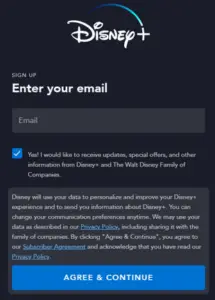
Example Form from Disney Plus

The best email campaigns are about timing, delivering the right message at the right time. It’s the same for compliance. The best time is when the customer is engaging with your brand.

One good example is Disney+ and its subscription streaming service. If you sign up for a free trial, they collect just enough information to get your trial subscription started, ask for permission to contact you about other marketing activities, and disclose the purpose of data collection. There are also prominent links to their privacy policy and subscriber agreement.

Even if the user chooses not to opt in, they may do so in the future. And nothing is preventing Disney from including the same offer again in the future.Because they are leading with privacy compliance in mind, the customer is more likely to trust them and, as a result, provide more data and potentially opt in more often if they have a genuine interest in their products or services.

Building a Foundation for Trust

It does not require a significant investment to improve the customer experience by asking for permission at the appropriate time. But you need a flexible framework that ensures you collect the correct information based on location, prompts for the right information and records how they gave consent. And don’t forget that each jurisdiction has dramatically different rules and processes, so your privacy compliance framework must be sufficiently flexible to accommodate those details. With a bit more up-front planning, you can lower the total cost of ownership. This planning will help prepare for future changes as well.

Of course, you could make some ad hoc changes to your existing systems, patch them up, and push them out there. And this may be your current, budget-friendly plan. The problem with this approach is that it’s a time bomb. At the very least, the cost of ownership of your marketing automation solutions will grow and grow as each new slice of legislation requires more and more detailed changes. But more importantly, you could lose a massive opportunity to create deeper trust with your customers.

Privacy Compliance Solutions for Oracle Eloqua

For Oracle Marketing Cloud (Eloqua) professionals, there’s a simple answer. 4Thought Marketing offers 4Comply and Eloqua Cloud Apps that takes the hard work out of building this capability from scratch. Our compliance apps cover the full privacy compliance lifecycle from data upload, form compliance (for landing pages), customer rights management (including the right to access, update and porting data, as well as the right to be forgotten), and compliance reporting. The whole process is made more manageable through our set-up wizard. So, in the future, you can accommodate critical changes to legislation through simple administration and not expensive coding. Additionally, our privacy compliance experts are on hand to ensure a smooth transition and answer your marketer’s questions.

To find out more about how you can turn data privacy compliance into enduring customer trust and loyalty, contact our team today.


privacy first marketing

In today’s data-driven world, the need for privacy-first marketing has never been more relevant. With consumers becoming increasingly aware of how their data is being used, it is essential for businesses to ensure that they respect their customers’ right to privacy while still gathering the information they need to personalize and target their marketing efforts effectively. In this blog post, we will go over three basic steps you should follow when implementing a privacy-first marketing strategy.

Focus on Your Privacy Policy

Your company’s privacy policy is the foundation of your privacy-first marketing strategy. The privacy policy outlines how your company collects and uses customer data and sets the guidelines for your data practices. It’s important to collaborate with legal counsel or privacy professionals to develop a privacy policy that complies with regulations and meets your marketing needs. If you already have a privacy policy in place, it’s important to review it to ensure that it meets your company’s current needs.

Your privacy policy will educate you on what you can and cannot do with customer data and ensure that you’re in compliance with data privacy regulations. This, in turn, will help you gain customer trust, which is essential for building a strong and loyal customer base.

Establish a Compliant Data Strategy

With a solid understanding of your company’s privacy policy, the next step is to develop a privacy-focused data strategy. This strategy should balance the need to gather data for personalization and targeting with the need to protect customer privacy.

One effective way to collect data while still respecting privacy is to maximize your collection of zero-party data. For example, you could exchange educational content for customer data or develop a digital questionnaire that asks for consent to collect data while helping customers select the product or service that fits their needs.

You can also benefit from the first-party data that other organizations are collecting by using walled gardens, such as Google, Facebook, and others. These walled gardens can target your ads for you, giving you the ability to personalize advertisements to the most relevant audiences while still complying with data privacy regulations.

privacy first marketing

Choose the Right Marketing Software

With your data strategy in place, you need the right tools to help you carry it out. When evaluating privacy-friendly marketing software, it’s important to keep a couple things in mind.

Any Third-Party Vendors’ Privacy Practices

Data privacy and marketing technology are not always guaranteed to go hand-in-hand, so it’s important to evaluate how third-party vendors treat the data you collect. A privacy professional can help you evaluate vendors for their data privacy compliance, or you can use a vendor monitoring solution to ensure compliance.

The Impact of Compliance on Your Role

Data privacy tools for marketers need to do more than just enable compliance. They also need to have a minimal impact on your role as a marketer, allowing you to carry out your marketing efforts effectively.

Privacy-First Marketing in the Modern World

In conclusion, implementing a privacy-first marketing strategy is essential for businesses in today’s data-driven world. By following these three basic steps, you can ensure that you’re collecting and using customer data in a way that respects their privacy while still achieving your marketing goals.

Want to know what else you can do to prioritize privacy-first strategies? Contact us today for more information.


cybersecurity

The leading technology issues of the 21st century can be summed up in two words: security and privacy. In particular, consumers are concerned with how to preserve privacy and “stay safe”. A kind of paradox arises from these concepts – security requires transparency, and thus privacy is violated (read: lost). To understand that not all is so black and white, we should first explore what cybersecurity and data privacy really are. 

What is Cybersecurity?

Cybersecurity and data security are two key elements of a successful information protection strategy. The difference between them is not so much in the execution of the processing or the results, but in the underlying philosophy and goals. Ultimately, the situation boils down to what data is protected, how it is protected, from whom it is protected, and who is ultimately responsible for that protection. 

Cybersecurity is primarily focused on preventing unauthorized access to data, regardless of who the unauthorized party is. To achieve this, organizations use tools and technology such as firewalls, user authentication, network restrictions, and internal security practices to prevent data leaks. 

It also includes security technologies such as tokenization and encryption to further protect data, making it unreadable which in the event of a leak can prevent cybercriminals from using that data.

What is Data Privacy?

Data privacy is concerned with ensuring that the data an organization collects and processes, stores, or transfers is protected and is managed with the consent of the data owner. This means informing individuals in advance about what types of data will be collected, for what purpose, and with whom it will be shared. 

Once this transparency is ensured, the individual must agree to the terms of use, allowing the organization that processes the data to use it following the stated purposes.

In other words, privacy is less about protecting data from malicious threats and more about its responsible use under the user’s wishes. But it can certainly include security measures to protect privacy. For example, identification of sensitive data by unauthorized parties is ensured, identity or other personal information is removed within the system, and data can even be stored in different locations to ensure privacy. 

Although security controls can be met without compromising privacy, actual privacy is impossible to achieve without first using effective security.

Taking Control

Digital security and privacy should automatically be a priority for businesses, but all too often, they are not. However, there are a few actions organizations can take to ensure cybersecurity as well as privacy of their customer data.

Some solutions allow companies to control all data through a centralized administration system, synchronize all business email accounts, track all business communication and data, and encrypt all files. Because there are so many entry points for attackers, it’s critical for any comprehensive security strategy to leverage a solution that can cover not just email, but instant messages, SMS, voice and video calls, servers, and all documents and files stored in the cloud, local and removable storage, on many devices. 

Several fundamental cybersecurity steps both companies and average users can take include:

  • Using an antivirus package that includes a complete internet security service 
  • Using strong passwords that are not easy to guess, using different passwords for different accounts, and changing them from time to time
  • Protecting your personal information on social networks using the provided privacy settings. 
  • Keeping track of which sites you visit and on which sites you create user accounts
  • Protecting work (and home) networks with a strong password. Make sure not only your computer but also your mobile phone has a VPN installed to encrypt all traffic leaving your devices until it reaches its destination
  • Staying aware of fraudulent e-mails (phishing) supposedly from financial institutions asking you to confirm account information
  • Understanding what data your organization has, where it is, and who is responsible for it
  • Raising employee cybersecurity awareness
  • Conducting regular risk assessments to identify any potential threats to your organization’s data
  • Backing up your most important and sensitive data regularly

Cybersecurity & Data Privacy: A Top Priority from The Start

Cybersecurity is a prerequisite for effective data privacy. A simple equation applies: without cybersecurity and data privacy, there is no trust. And without trust, quality digital services cannot be ensured. 

Cybersecurity, like data privacy, is an important success factor for digitization. “Security by design” is a popular approach that incorporates security from the very beginning of product or service development. After all, making sure security is the top priority during development is easier than correcting errors in the IT security architecture afterward. This is especially the case if there are any fundamental adjustments to the system design.

In terms of data protection, this proactive technology design has been conceptually established for a long time. It is important to consider the data protection implications as early as the development phase and to plan how data protection risks can be reduced as best as possible at this early stage of development.

Conclusion

Cyber​security, like data protection, is certainly not a one-off matter that can be clarified at the beginning and then filed away. Rather, it is an ongoing task for the entire life cycle of products and services in the digital world.

Interested in how to improve your own security and data privacy setups? Get in touch with 4Thought Marketing today to get started.


The Fifth P of Marketing

Marketing’s New “P” Privacy

As marketing professionals, we’ve all grown up with the four, or more recently, the five Ps of marketing – product, price, placement, promotion, and peoplke.  But now there’s a new P of marketing in town,  and this is the most important one of all; Privacy.

The Ps of marketing are from a bygone age where communications were limited to postal mail, phone calls, and sales outlets, and tracking was limited to computer capacity.  But this has long since changed.  Despite the plethora of new technologies in their marketing stack, marketers are still playing catch-up.  In fact, many are so far behind that the regulators are stepping in to protect consumer privacy because brands can’t be trusted.

And here lies the problem.

Privacy: The Foundation of Everything

Everything we know about customer experience tells us that TRUST is the foundation for everything.  Yet, legislators and privacy advocates scream that marketing needs to be regulated to ensure that minimum data privacy standards are upheld.  Really?

Surely this is upside down for a digital world.  Shouldn’t we be starting with trust and building on this without the obligation of privacy regulation?  And with new generations of consumers becoming savvier, the focus on privacy is more intense than ever.

Dodging the Digital Backlash

If brands are to prevent a digital backlash from their most lucrative buyers, they need to build trust.  And they need to do it now.

With the implementation of GDPA in the EU (2018) and the recent introduction of CCPA in California, brands are suddenly jarred awake to the realities of privacy regulation and compliance.

But with many marketers, as soon as they’ve caught up with one set of regional regulations, the next one comes down the line; it’s the digital version of marketing playing whack-a-mole.

Beyond Basic Privacy Compliance

There is a better way for marketers to get ahead of the curve.  Marketers need to build a framework that is flexible and agile enough to quickly accommodate changes in customer data privacy regulations whenever they change, or with the introduction of new ones.  But the more important aspect of this approach is to place trust at the forefront of your marketing and customer experience strategy.

For example, 4Thought Marketing created 4Comply – a solution for Oracle Marketing Cloud (Eloqua) users who want to remove marketing from playing legal whack-a-mole from their core competencies and embed privacy best practices into the fabric of their brand.  But building a trusted relationship needs a whole lot more than just meeting privacy compliance basics.

The next step is to transfer control to your customers, offering the ability for customers to control precisely how your brand interacts with them.  Everything from the frequency of contact to the subject matter and medium of communication.  But, this is easier said than done.  Give your customers too much work to do and they’ll throw their hands up and walk away.  Ask them questions that are too intrusive, and they might be offended.  This is why data privacy management goes hand-in-hand with Subscription Management when it comes to building trust.

Marketing’s Trust-Leadership Challenge for Privacy

In these days of increasing data privacy regulation, there is a golden opportunity for marketers to take a customer experience, leadership position by putting TRUST at the forefront of the relationship. By being the champions of establishing trust, you build a strong foundation for customer loyalty.  By setting the bar high, and putting strong governance in place, you insulate your brand from the endless conveyor belt of privacy regulation.  The sooner you act, the easier it will be.

To find out more about how you can turn data privacy compliance into enduring customer trust and loyalty, download our free eBook, “Achieving Trust Through Compliance. A Marketer’s Guide to Customer Data Privacy.


4Thought Marketing Logo   February 7, 2026 | Page 1 of 1 | https://4thoughtmarketing.com/all-product/data-privacy-products/