Every Brilliant Email Risks a Single Click: Here’s How Your Subscription & Preference Portal Can Prevent Unsubscribes
You pour your heart into every campaign—meticulous copy, striking visuals, and carefully orchestrated send schedules—only to see a single click snuff out all that effort. When subscribers feel overwhelmed by relentless messaging or disconnected from one‑size‑fits‑all content, the “Unsubscribe” link becomes more than a compliance checkbox; it’s their ultimate escape hatch. But what if that moment of departure could instead become the moment you win them over? By introducing a Subscription & Preference Portal, you hand control back to your audience, transforming passive recipients into engaged participants.
Imagine readers who tailor their own experience, choosing exactly which topics matter—be it product updates, industry trends, or event invitations—and deciding the cadence that fits their lives, from weekly digests to instant alerts.
This level of email frequency control and personalization not only complies with mandatory opt‑out regulations but also drives deeper connections. Rather than burying your unsubscribe link in tiny type, showcase your portal as the place where subscribers craft their ideal inbox. By weaving subscriber preferences directly into your segmentation and messaging strategy, you’ll reduce unsubscribes, elevate email engagement, and cultivate a loyal audience that stays because they want to, not because they have to.
Why “Unsubscribe” Feels Like Defeat
No one wakes up eager to hit “Unsubscribe,” yet poor frequency management and one‑size‑fits‑all content push readers toward that click. Your Subscription & Preference Portal isn’t merely a feature—it’s your best tool to reduce unsubscribes by putting power back in the hands of your audience. Instead of hiding the link in tiny font, showcase the portal as the place where subscribers decide exactly how often they want to hear from you, reinforcing trust and protecting your sender reputation.
The True Drivers of Opt‑Outs: How Preference Portals Fix Them
MarketingSherpa data underlines two main causes of opt‑outs: excessive volume and off‑target content. Without email frequency control, even the most compelling subject lines feel like noise; without personalization, content fails to resonate. A Subscription & Preference Portal lets users dial their own email frequency control—weekly digests, bi‑weekly insights, or instant alerts. Simultaneously, it fuels deeper personalization, as each subscriber’s topic selections feed directly into your segmentation logic, driving stronger email engagement.
Transforming Compliance into Connection
Generic unsubscribe links satisfy legal requirements but do little for your bottom line. By offering a Subscription & Preference Portal with clear options for frequency and content type, you not only comply—you convert. When subscribers can pause communications during busy periods or subscribe only to “Industry Insights,” they stay on your list and engage more. This level of personalization and email frequency control isn’t an add‑on; it’s central to any strategy aiming to reduce unsubscribes and cultivate meaningful email engagement.
Real-World Impact on Engagement
Companies that embed a Subscription & Preference Portal into every email footer report striking improvements. Typical results include a 30% drop in opt‑outs, a 20% lift in email engagement, and a 15% boost in click‑through rate. These gains stem from giving subscribers granular control over the volume and type of messages they receive. In practice, stronger personalization and precise email frequency control lead directly to fewer unsubscribes, as readers choose to stay engaged on their own terms.
Building Your Preference Portal
Building a seamless Subscription & Preference Portal starts with mapping your current email streams—newsletters, product updates, event invites—and grouping them by topic. Design a clean interface where each subscriber can adjust email frequency control, select content categories, and pause messaging when needed. Integrate these preferences into your ESP so segments update in real time, ensuring every campaign reflects each individual’s choices. This level of personalization not only helps you reduce unsubscribes but also supercharges email engagement.
Next Steps: Download the Preference Portal Playbook
Ready to transform one‑click losses into ongoing loyalty? Our free guide—“The Preference Portal Playbook: 7 Proven UX Patterns to Reduce Unsubscribes and Boost Email Engagement”—provides wireframes, copy templates, and a step‑by‑step launch checklist. Learn how to deploy a Subscription & Preference Portal, master email frequency control, and deliver hyper‑relevant content that keeps your audience clicking.
[ Get the Preference Portal Playbook ] (Bonus: the first 100 downloads get a customizable template pack.)
Could your next big sale be hiding in plain sight? Dive into our product led scoring model and uncover the secret signals that turn every click into a revenue goldmine!
Imagine hosting a dinner party where you judge your guests’ appetite only by their RSVP—and then wonder why half of them leave hungry. That’s what a traditional lead scoring model feels like: you’ve got names on a list, but no real sense of who’s truly hungry for what you’re serving. Now, picture swapping out those RSVP guesses for live feedback: you watch guests nibble the appetizers, refill their plates, and linger by the dessert table. That’s the essence of a product led scoring model—using real-time product usage metrics to see who’s genuinely engaged and prime for a deeper conversation.
This refined product led scoring model turns product usage into something more like a carefully curated tasting menu. Every click, feature adoption, and activation milestone signals, “Serve this person the next course”—or in sales terms, “Reach out about this capability.” Whether your team is pursuing a product‑led growth or developing an internal product‑led growth strategy, integrating usage data into your product led scoring model shifts the focus from “Who signed up?” to “What do they want to feast on next?” And that, in turn, enables more natural and effective product-led sales conversations—so nobody goes home hungry.
A Quick Refresher on Traditional Lead Scoring: Why It Falls Short
Think of your classic lead scoring model as a paper map: it gets you in the proper city, but you’re navigating blindfolded once you arrive. Traditional lead scoring leans heavily on firmographics (company size, industry) and one-off behaviors (email opens, form fills). You assign point values—10 for a webinar signup, 5 for a whitepaper download—and hope the highest scorers are your best prospects.
But here’s where that old approach—and not a product led scoring model—shows its limits:
Static Snapshots: Scores rarely update in real time. A lead who binge-tested your product last week still has the same score today, even if they haven’t returned.
Assumed Intent: Clicking “Download” doesn’t guarantee hunger for your solution. Without product context, signals can be misleading.
Missed Momentum: You might catch someone who matches your ICP on paper, but never uses your product.
In short, traditional lead scoring tells you who your leads are, but not how they’re engaging. It’s a starting point—and a blunt instrument—until you swap in a product led scoring model that adds the nuance of product‑led growth metrics.
Enter Product‑Led Growth: Shifting the Paradigm
Product led growth works for both pre‑sales and post‑sales engagement. During pre‑sales, lean into free trials and proof‑of‑concept projects. Monitor your guests while they sample the meal you’ve prepared. With a robust product led scoring model, the product itself becomes your most persuasive storyteller—every feature, interaction, and onboarding flow educates and excites. Rather than forcing prospects through gated content or rigid sales scripts, you let them explore at their own pace, using real-time signals from your product led scoring model to guide when marketing or sales should step in. In post‑sales, you’ll uncover underutilized features or concerns—critical signals in any forward‑looking product led scoring model.
Core Components of a Product‑Led Scoring Model
At the heart of a modern, product led scoring model are a few foundational elements:
Behavioral Signals: Beyond sign‑up events, track depth of interaction: session frequency, features used, and pathways taken within your product.
Activation vs. Engagement: Differentiate between a user who’s activated (completed an onboarding step) and one who’s deeply engaged (returns weekly, explores advanced features).
Score Decay & Refresh: If activity stalls, let scores naturally degrade, and bump them back up when users re‑engage, keeping your model in sync with real‑world interest.
Together, these components ensure your product led scoring model prioritizes prospects based on genuine product momentum rather than just surface‑level behaviors.
Designing Your Product‑Led Scoring Framework
Building a winning product led scoring model starts with pinpointing those “aha” moments—features or milestones that reliably correlate with downstream value. For one SaaS team, it might be inviting collaborators into a workspace; for another, it’s setting up an automated workflow. Once you’ve catalogued these moments:
Assign Weights Thoughtfully: Give higher point values to actions that signal deeper intent (e.g., creating a dashboard vs. merely logging in).
Blend Traditional & Product Signals: Marry your firmographic inputs with real‑time usage metrics in your product led scoring model to balance reach with relevance.
Test & Iterate: Launch your updated model to a subset of leads, compare conversion rates, and refine weights or decay rates until it reliably surfaces qualified prospects.
Conclusion & Next Steps
Traditional lead scoring felt like reading tea leaves—vague signs interpreted without context. By contrast, a product led scoring model reads the table: you see exactly who’s sampling, savoring, and returning for seconds. Ready to transform your scoring engine? Contact 4Thought Marketing for a consultation on building a custom product led scoring model. Let’s ensure nobody at your table leaves hungry.
Companies that embrace product-led growth strategies report annual revenue increases of around 50%—more than double the 21% growth rate of their traditional SaaS counterparts. This dramatic gap, confirmed by research from OpenView Partners, SevenAtoms, and Bain & Company, highlights a widespread shift in how B2B organizations attract and expand customer relationships. In this post, we’ll map out the advanced dimensions of product-led growth —multi‑product adoption and Collaborative Intent Modeling—and show how an AI‑Driven Product Growth Strategy turns raw usage data into predictive insights that fuel faster expansion and deeper customer relationships.
Why Expand Beyond Traditional Lead Scoring
Assigning points for email opens or job titles once worked for simple, single‑product offerings, but today’s sprawling SaaS suites demand more nuanced signals. Demographic data often blurs high‑value accounts into the noise, static rules become brittle with every new feature, and delayed feedback means missing early “aha” moments. An AI‑Driven Product Growth Strategy and product-led growth mindset flip the script by making real‑time product behaviors the core signals, aligning marketing, sales, and customer success around what truly drives expansion.
Collaborative Intent Modeling
Scoring individual user actions tells only half the story—modern adoption happens in teams. Collaborative Intent Modeling elevates your lead score by measuring how groups use and share your products together, revealing when an entire department or cross‑functional team is rallying around your tools. This is a core tenet of any successful product-led growth initiative.
Key Signals to Track:
Cross‑Department Feature Usage: Are marketing, sales, and customer success all leveraging the same dashboards or workflows? Broad adoption across functions signals mission‑critical value for your AI‑Driven Product Growth Strategy.
Workspace & Project Velocity: How rapidly do new shared spaces, boards, or projects spin up? Accelerated creation indicates growing stakeholder engagement—another data point in your product-led growth framework.
Template Sharing & Reuse: Frequent passing of templates, reports, or playbooks between team members highlights collaborative momentum and validates your Collaborative Intent Modeling approach.
Workflow Linkages: Connections between campaigns, support tickets, and analytics pipelines demonstrate integrated team processes critical to product-led growth success.
Implementation Blueprint
Building a robust AI‑Driven Product Growth Strategy begins with laying a strong foundation of high‑quality data. Start by auditing all existing sources—product usage logs, CRM records, web analytics, and support ticket systems—to ensure you capture every meaningful interaction. Standardize event definitions across platforms so that a “feature activation” or “workspace creation” has the same name and attributes everywhere, reinforcing your product-led growth measurement consistency.
At the same time, put privacy and compliance measures in place: anonymize user identifiers, secure data transfers, and document your data governance practices to align with regulations like GDPR and CCPA. With data pipelines in place, move on to model development. Gather 12 to 18 months of historical data that includes both successful expansions and dead‑end trials. Split this dataset into training and validation sets, and experiment with different algorithms—gradient‑boosted trees, random forests, or even simple logistic regression—to see which delivers the most accurate predictions for your AI‑Driven Product Growth Strategy.
Use cross‑validation and A/B tests to compare your AI scores against current rule‑based models, measuring uplift in conversion rates, sales cycle length, and average deal size. Establish a regular retraining cadence—monthly or quarterly—so the model stays fresh as new features roll out and usage patterns evolve within your product-led growth program.
Finally, weave your new scores into everyday operations. Embed lead and account scores directly into your CRM and customer success dashboards, with clear visual cues—such as color‑coded risk tiers or priority flags—so teams can act at a glance. Define handoff protocols for each score range: which accounts go into automated email nurturing, which trigger an in‑app message, and which demand a personalized outreach from a Customer Success Manager. Train marketing, sales, and support teams on interpreting the scores, understanding the AI explanations behind your Collaborative Intent Modeling, and feeding back qualitative insights that can further refine the model.
Benefits, Metrics & ROI
Organizations deploying an AI‑Driven Product Growth Strategy consistently report significant uplifts in both revenue and operational efficiency. By homing in on accounts that demonstrate genuine product-led growth engagement signals and collaborative momentum, companies can drive measurable improvements at every stage of the funnel:
Conversion Uplift (20%–30%)
When sales and marketing teams focus on high‑score accounts identified by Collaborative Intent Modeling, they engage prospects who have already experienced real value within the product, rather than cold leads. This alignment of outreach with in‑product “aha” moments results in win‑rates that can climb by up to 30%.
Shortened Sales Cycles (15%–25% Faster)
Real‑time scoring alerts—part of your product-led growth toolkit—notify reps the moment an account hits key activation thresholds or collaboration spikes, enabling timely, context‑rich engagement.
Enhanced Customer Experience & Satisfaction
Personalized interactions based on actual usage data deepen relationships. Customer Success teams can proactively share best practices tailored to the exact features customers use—whether it’s optimizing a segmentation rule or scaling an automation workflow—driving higher satisfaction rates and Net Promoter Scores (NPS).
Optimized Resource Allocation:
Composite lead scores create clear tiers for engagement: top‑tier accounts, which show both deep product usage and strong team collaboration through Collaborative Intent Modeling, receive dedicated Customer Success Managers and bespoke strategy sessions.
Predictable, Data‑Driven Revenue Forecasting
By monitoring the distribution and movement of high‑value leads across score tiers—central to any product-led growth motion—leadership can forecast revenue with greater accuracy. Seeing a surge in accounts crossing a premium‑score threshold signals a likely boost in ARR for the upcoming quarter.
Conclusion
Embracing AI‑enabled, product-led growth means looking beyond one‑off leads and treating every user interaction—and every team’s collaborative behavior—as an opportunity to expand. By building reliable data pipelines, applying predictive models to both individual and group usage patterns, and weaving those insights directly into your sales and success workflows, you create a self‑reinforcing engine for expansion. Start with a focused pilot, validate your model against real outcomes, and then scale across products and teams. In doing so, you’ll turn early “aha” moments into consistent revenue gains, deeper customer loyalty, and a more predictable, data‑driven growth trajectory.
Mastering campaign deliverables requires precise vendor coordination and seamless B2B vendor collaboration. B2B marketing teams often rely on a network of specialized partners to execute complex campaign deliverables that demand agility, expertise, and scale. External vendors play a pivotal role by delivering services and assets that internal teams may lack the resources or skills to provide on their own. From content creation to marketing automation and analytics, vendors supply the building blocks that bring complex campaigns to life—and seamless vendor coordination ensures each piece lands exactly when and how it’s needed.
The Impact of Vendor Collaboration on Campaign Results
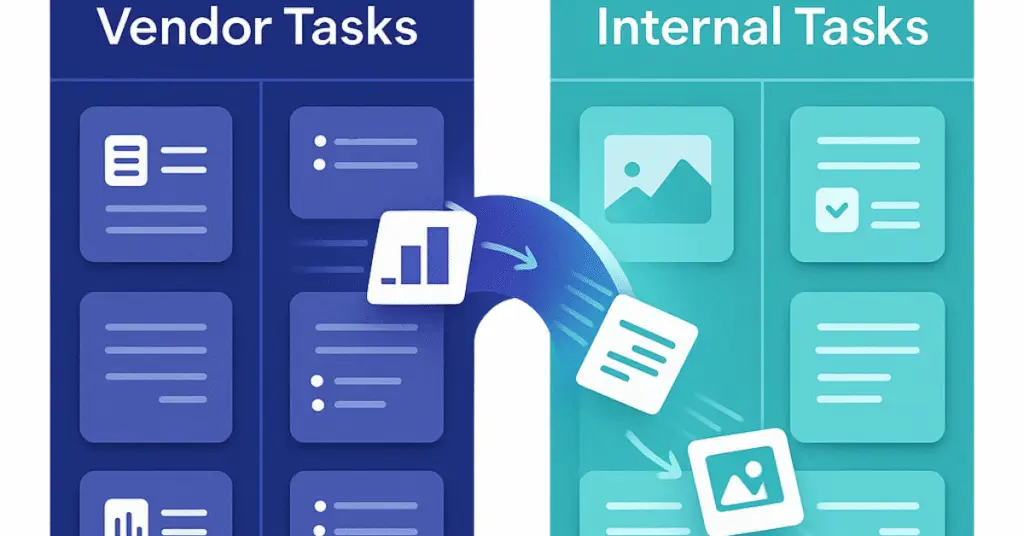
The successful integration of external vendors directly influences the outcome of campaign deliverables. Well‑orchestrated B2B vendor collaboration can mean the difference between meeting campaign objectives and falling short on quality, timelines, or compliance. When organizations effectively align vendor tasks with internal processes through robust campaign workflow integration, they not only increase operational efficiency but also support innovation and broader reach.
Common Challenges in Coordinating Campaign Deliverables
Every B2B team working with external vendors on campaign deliverables knows that obstacles are almost inevitable. While partnerships create opportunities for scalability and expertise, the coordination process is rarely seamless. Several recurring challenges can undermine the quality and timeliness of campaign outputs if left unaddressed:
Miscommunication and Mismatched Expectations
One core issue is miscommunication between internal stakeholders and vendors. Information may be incomplete, goals can remain ambiguous, or channels for feedback may not be established. This can create confusion about deliverable requirements and lead to teams working on different interpretations of the same brief. Clarity around approvals and feedback windows often suffers as a result, increasing frustration on both sides.
Timeline Delays and Missed Deadlines
Campaign schedules depend on multiple dependencies. When vendors lack visibility into shifting project priorities or when stakeholders do not provide timely input, delays accrue. The agile nature of modern marketing means deadlines often move, but unless all parties update their plans collaboratively, key assets may be late—or rushed at the expense of quality. Periodic status updates and shared project trackers help, but only if rigorously maintained.
Quality and Consistency Risks
Beyond delivery dates, quality assurance poses a significant risk. Vendors may use different standards or tools than the internal team, leading to inconsistencies across messaging, branding, or technical execution. Problems compound when multiple vendors contribute to a single campaign, raising the potential for incompatible file formats, off-brand visuals, or non-compliant messaging.
Fragmented Processes and Limited Oversight
Fragmented workflows make it hard to enforce accountability. If task tracking, communication, and asset management happen in silos, vital context slips through the cracks. For B2B marketing leaders, this adds pressure to implement integrated systems and standardized procedures. Solutions can bridge operational gaps, synchronize project flows, and support transparent vendor engagement from initial briefing to asset delivery.
Establishing Clear Objectives and Expectations
Aligning with external vendors relies on clarity from the start. Teams that invest time in setting transparent goals and deliverable standards see better overall results and less friction throughout campaigns. Without precise expectations, misunderstandings can lead to inconsistencies, missed deadlines, or outputs that fail to match a brand’s needs.
Defining What Success Looks Like
Every campaign should open with a discussion of what both sides expect. This goes beyond broad objectives; it means outlining the specific deliverables, timelines, and quality benchmarks. Effective vendor agreements cover:
Clear descriptions of each deliverable—file types, formats, branding, and functional requirements
Agreed timelines with review points or check-in milestones
Success metrics that are measurable, not subjective (such as turnaround time, compliance rates, or engagement goals)
Approval and revision workflows so all parties know what happens if requirements shift or deliverables need changes
Translating Objectives into Actionable Guidance
Templates, creative briefs, and checklists all help vendors understand how to meet expectations. Setting these up front reduces the likelihood of errors and rework, and gives teams a single reference point when questions arise. Open sharing of background information, brand guidelines, and campaign context also creates alignment from day one.
Early-stage consulting and documentation can be essential—especially for complex automation, data integration, or privacy-focused campaigns. This structure supports campaigns that not only launch on time, but also meet performance and quality metrics critical for B2B marketing success.
Building Strong Communication Channels
Miscommunication and fragmented workflows often undermine even the best vendor relationships. The solution lies in building strong communication channels that clarify progress, responsibilities, and expectations in real time. Direct conversation and structured processes help avoid small issues snowballing into missed deadlines or subpar deliverables.
Routine Check-Ins and Real-Time Updates
Short, regularly scheduled calls—whether weekly or aligned to project phases—allow both sides to review status, address blockers, and adjust priorities. These check-ins minimize ambiguity around task ownership and timing. For time-sensitive projects, real-time updates are critical. Shared dashboards or instant messaging platforms like Slack or Microsoft Teams facilitate transparent progress tracking. Tools with notification features help stakeholders respond quickly to time-sensitive questions.
Essential Collaborative Tools
Project Management Platforms: Systems like Asana, Trello, and Jira provide a centralized space for timelines, deliverable tracking, and feedback. They eliminate confusion by providing a single source of truth for everyone.
Document Sharing: Google Drive and Microsoft OneDrive streamline collaborative editing and asset approvals. Shared folders keep version control issues to a minimum and prevent miscommunications on asset status.
Approval Workflows: Setting automated approval workflows within project management or content review tools ensures that nothing moves forward without the right visibility and sign-offs.
To keep campaigns accountable and aligned, establish clear communication protocols at the outset—define what gets escalated, how, and when. Assigning a single point of contact on both sides supports faster decisions and reduces bottlenecks.
Organizations seeking to optimize these processes often partner with B2B consultancies. They can help teams set up integrated communication systems, streamline collaboration, and automate alerts or approvals, supporting faster, higher-quality campaign deliverables from external vendors.
Integrating Vendor Workflows with Internal Processes
Clear objectives and expectations form the groundwork for effective vendor relationships. Yet, bridging the gap between external partners and internal teams requires something further: practical systems that bring disparate workflows into consistent alignment. Misaligned processes slow down campaigns, introduce inconsistencies, and increase compliance risks.
Keys to Successful Workflow Integration
The first step is mapping how vendors fit into current marketing operations. This means documenting how work passes between internal and external teams—covering briefing, production, feedback, review, and final delivery. Standardizing these hand-offs reduces ambiguity and error rates. Organizations often benefit from:
Designating single points of contact for both internal and vendor teams to channel requests, updates, and queries
Synchronizing project management tools, such as Asana or Jira, to ensure both sides see the same deadlines, responsibilities, and feedback threads
Adopting shared folders or asset libraries for version control and consistent file organization
Standardizing formats and templates for creative briefs, assets, and reports to minimize rework and friction
Documenting clear escalation paths for issues that threaten compliance or campaign quality
Integrating Technology and Processes
Technology can close gaps between internal and external systems. Shared dashboards, for instance, give both parties visibility into status updates and review cycles. Automation helps transfer files or data, reducing manual mistakes. Integrations between marketing platforms and vendor systems—such as linking Eloqua or Marketo with creative production apps—ensure smooth data flow and version alignment.
Consultancies may help B2B teams audit and align workflows for each campaign stage. They introduce process automation, integration, and documentation tailored to the team’s tech stack and goals. This approach not only boosts consistency, but also prepares organizations for privacy audits and quality reviews. The result is fewer operational bottlenecks, and a higher certainty that vendors can deliver what’s required, when and how it’s needed.
Ensuring Data Security and Privacy Compliance
Coordinating with external vendors requires more than project management—organizations handling campaign deliverables must prioritize data security and privacy compliance at every engagement. B2B campaigns often exchange sensitive contact details, customer preferences, and performance analytics, all of which fall under tight regulatory expectations.
Understanding the Risks of Data Sharing
When vendors access or process marketing data, risks multiply. Shared files could contain personal information that is protected by regulations such as GDPR or COPPA. An unsecured file transfer, weak password, or unencrypted portal could expose confidential campaign data.
Potential breaches: Unauthorized access, data leaks, or mishandled files
Regulatory penalties: Fines and legal costs for non-compliance
Reputational damage: Loss of trust from prospects, partners, or clients
Best Practices for Data Management and Privacy
To safeguard sensitive information, teams must blend strong vendor selection with documented privacy standards. Practical steps include:
Limit access to data strictly to what vendors need for their tasks
Use secure file-sharing tools—such as encrypted cloud storage or SFTP
Require vendors to sign data processing agreements (DPAs) that outline privacy obligations
Establish incident response protocols for reporting and mitigating any suspected breaches
Train all stakeholders—internal and external—on compliance requirements relevant to every campaign
Leveraging compliance-focused solutions (like data anonymization and automated access controls), they ensure only pre-approved users can view or move sensitive assets. For B2B leaders, investing early in vendor onboarding and privacy tooling reduces operational risk while supporting transparent, legal, and reliable campaign execution. Learn more about privacy-first marketing best practices.
Leveraging 4TM Solutions for Seamless Vendor Collaboration
As campaign complexity increases, B2B teams need systems that bridge the gap between internal standards and external vendor capabilities. Technology and process consulting make the difference. 4Thought Marketing provides focused support for teams struggling with misaligned workflows, fragmented data, and uneven communication with outside agencies or service providers.
Optimizing Coordination Through Consulting and Tools
Consultants from 4Thought Marketing assess not just technology stacks, but also existing handoffs, approval processes, and data sharing practices. They help organizations:
Map and document current vendor interaction points
Identify workflow friction and inefficiency
Design integrated project plans that sync internal marketing roles with vendor schedules
Many organizations rely on multiple marketing automation tools and CRM systems. 4Thought Marketing supports integration with platforms like Eloqua and Marketo, helping ensure that vendors interact with up-to-date campaign data and standardized templates. The result is a reduction in duplicated effort and manual error, while timelines stay visible to all contributors.
Streamlining Approvals and Reducing Compliance Risk
Approval delays slow down vendor deliverables. 4Thought Marketing helps clients automate approval flows and asset review cycles, using cloud-based tools to centralize decision-making and feedback. This shortens delivery times, improves transparency, and makes it easier to trace who approved what and when—crucial for both quality assurance and privacy compliance.
Strengthening Data Management and Privacy Controls
When vendors access sensitive data, compliance and security become major concerns. 4Thought Marketing implements privacy solutions, like 4Comply, that let B2B teams share only the information necessary for campaign execution. This approach helps organizations meet strict data handling requirements and adapt to privacy laws without creating operational drag.
Bringing in an experienced consulting partner helps B2B organizations maintain control and consistency, even as they scale their campaigns and vendor networks. This makes high-value external collaboration a strength, not a liability, for marketing operations teams focused on accurate, on-time campaign deliverables.
Conclusion: Evolving Vendor Partnerships for Sustained Marketing Growth
Vendor coordination is not a static process. B2B marketing teams that consistently deliver on campaign goals view vendor relationships as living partnerships rather than transactions. Campaign deliverables improve over time when organizations treat every vendor interaction as a chance to strengthen collaboration, optimize shared workflows, and refine best practices.
Continuous Improvement in Vendor Relationships
The most resilient B2B marketing functions make deliberate efforts to review processes, gather feedback, and adjust expectations with external vendors. This commitment ensures that quality, speed, and compliance keep pace with evolving organizational goals. Key actions for sustained growth include:
Debriefing after major campaigns to identify bottlenecks or misalignments
Inviting vendor input on how joint processes might be simplified or tasks automated
Tracking quantitative metrics—such as turnaround times and error rates—to spotlight areas for improvement
Staying proactive about changing privacy requirements or technology integrations that may require new vendor training or protocols
Consistent communication and a willingness to iterate make campaign deliverables more reliable and scalable. Strong partnerships move beyond basic compliance to focus on shared growth and mutual learning, which drives both innovation and long-term performance.
Strategic Use of Technology and Consulting
Sustaining these benefits often requires technical investment and operational discipline. Technologies that automate routine handoffs, safeguard sensitive campaign data, and standardize content or asset workflows minimize mistakes. Incorporating external expertise, such as from 4Thought Marketing, allows teams to benchmark against industry standards, accelerate integration, and deploy proven frameworks for managing vendor relationships. B2B organizations ready to evolve should treat vendor management as a core capability—updating processes regularly, training new team members thoroughly, and leveraging consulting support for complex integrations or campaign rollouts. By embedding continuous improvement into the fabric of vendor engagement, marketing teams ensure that external partnerships contribute not just to tactical execution, but also to sustained competitive advantage and growth.
Unlock Focus and Agility: Why It Makes Sense to Outsource Marketing Operations
Your marketing operations team is built for strategy, not for answering repetitive questions at 9 p.m. or fixing HTML on the fly. Too often, their time is consumed by routine tasks that slow down high‑value work and stifle innovation. By choosing to outsource marketing operations, you tap into dedicated marketing ops helpdesk support, freeing your strategists to focus on campaigns that drive real results.
A dedicated, outsourced helpdesk changes that equation. Whether it’s handling global support across time zones, taking on everyday platform tasks, or stepping in with expert guidance when even your top performers get stuck, a marketing automation helpdesk gives your internal team the breathing room to do what they do best—build campaigns that move the needle.
1. Reclaim Your Team’s Time: Offload the Routine
The problem: High‑value talent is routinely pulled into low‑level requests—HTML tweaks, form errors, segmentation logic, platform navigation. These tasks are important, but they don’t require a strategist’s expertise. The solution: Shift first‑line support to an expert, outsourced marketing automation support team. Your helpdesk partner can handle:
HTML and template adjustments
Eloqua, Marketo, or Salesforce process questions
Asset reviews and constructive feedback
Troubleshooting segmentation, lead scoring, and data flows
The payoff: Internal experts gain back hours per week to drive strategy, optimize performance, and innovate—rather than chase tickets.
2. Provide Global, On‑Demand Support
The problem: Campaign teams span multiple time zones, but support often does not. A glitch in APAC can become a lost day in North America when fixes wait for local hours. The solution: True follow‑the‑sun marketing support ensures tickets are picked up instantly, wherever they originate:
Around‑the‑clock coverage with regional desk rotations
Local‑language or working‑hour support
Standardized SLAs and clear escalation paths
The payoff: Launch delays shrink, campaign velocity increases, and your team stops waking up to overnight emergencies.
3. Bring in Experts When It Matters Most
The problem: Even seasoned marketing ops pros hit roadblocks—formatting errors, style guide questions, or complex automation logic. Time spent troubleshooting or waiting on vendor support is time lost. The solution: A proactive helpdesk acts as an extension of your team, delivering:
Direct access to certified platform specialists
Context‑aware problem solving tailored to your stack
Documentation and video walkthroughs outlining what changed—and why
The payoff: Faster resolutions, fewer escalations, and an expanding knowledge base that upskills your team over time.
4. Smooth Onboarding for New Hires
The problem: New team members struggle to learn internal systems, naming conventions, and workflows—slowing ramp‑up and pulling senior staff into training. The solution: Onboarding support for marketing teams from your helpdesk includes:
Templates, naming standards, and process documentation
Video walkthroughs and sandbox training environments
The payoff: New hires ramp up quickly, reinforce best practices, and reduce training overhead for the rest of the team.
5. Accelerate Testing and QA Cycles
The problem: Campaign QA often falls on the same people building them—leading to blind spots, burnout, or rushed launches. The solution: Campaign QA outsourcing hands repetitive validation tasks to your helpdesk:
Testing emails across clients and devices
Checking segmentation logic and personalization rules
Verifying assets, links, forms, and rendering across platforms
The payoff:Campaigns launch with confidence, rework drops, and your internal team gains time to refine messaging and targeting.
The Strategic Benefits
More time for what matters: Internal teams can reallocate up to 30% of their time to high‑value strategy and optimization
Scalable support: Ramp capacity up or down without hiring or retraining
Speed and agility: Fast turnarounds and clear handoffs keep momentum high
Brand consistency: Standardized templates and workflows maintain governance and quality
Operational resilience: Continuous improvement fueled by ticket insights and issue tracking
Final Thought
Outsourcing your marketing operations helpdesk isn’t about cutting corners—it’s about working smarter. When your team stops chasing small fixes and starts focusing on the big picture, your marketing becomes faster, more responsive, and more impactful. Let your strategists lead; let the helpdesk handle the rest.
Let your team lead. Let the helpdesk handle the rest.
July 24, 2025, 11:00 – 11:30 AM Pacific – Is Your Eloqua Data Holding You Back?
Data is the fuel behind your marketing automation — but only if it’s clean, complete, and trusted.
Understanding Data Quality
In this month’s Eloqua Office Hours, we’re spotlighting Data Quality. You’ll hear how organizations approach it today and get real-world answers to your data challenges.
What we’ll cover:
The evolving role of a Data Steward
Common Eloqua data issues — and how to fix them
Live Q&A — bring your questions!
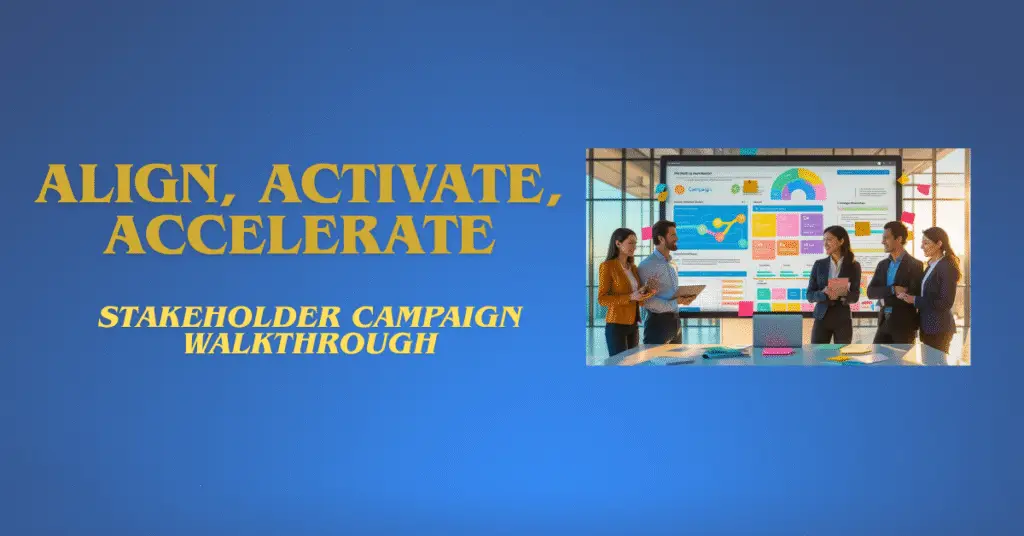
Marketing automation platforms like Eloqua and Marketo have revolutionized how teams orchestrate complex customer journeys, but the real magic emerges when you translate those intricate configurations into a clear, shared narrative. A stakeholder campaign walkthrough shifts the focus from clicking through platform menus to illustrating how each component of your marketing automation workflow contributes to overarching business objectives.
By weaving together a compelling campaign strategy visualization, you transform technical steps into strategic milestones—ensuring everyone from content creators to sales leaders understands not just what happens, but why it matters. Ultimately, this process is about forging genuine cross‑team alignment, turning a series of automated triggers into a cohesive story that drives results.
Why a Walkthrough? Because Alignment Beats Configuration
It’s tempting to equate sophisticated automation logic with campaign success, yet even the most advanced marketing automation workflow can fall flat without shared context. A stakeholder campaign walkthrough invites participants to step out of the weeds of “if this, then that” and focus on the customer journey in human terms. When you frame each trigger or decision node within your campaign strategy visualization as part of a broader narrative—“We want to nurture high-value leads through personalized content before handing off to sales”—you create a unifying purpose that transcends departmental silos. This emphasis on story over settings accelerates buy‑in, reduces misinterpretation, and lays the groundwork for true cross‑team alignment.
What are we trying to achieve?
Who are we targeting?
How do we personalize the journey?
Where do we hand off leads, and what happens next?
When everyone sees the same program flow and understands the intent behind each step, true cross‑team alignment follows—and your campaigns move faster from plan to pipeline.
What the Stakeholder Walkthrough Covers
Rather than clicking through individual steps, this session unfolds as a structured tour of your automation blueprint. Use these pillars to anchor your discussion:
Entry Points as Strategic Triggers: Describe how prospects enter the workflow—whether via a gated whitepaper form, a behavioral signal like webinar attendance, or an imported list segment. Position it as the moment your marketing automation workflow sparks a conversation.
Touchpoints as Engagement Milestones: Each email, SMS, or webhook represents a purposeful interaction in your campaign strategy visualization. Explain why the initial awareness email precedes a personalized case study follow‑up and how these layers of messaging build momentum.
Wait Steps as Respectful Pauses: Instead of simply “waiting three days,” articulate how each pause honors the prospect’s need to digest content, increasing receptivity to your next touch.
Decision Steps as Personalization Logic: Walk through how specific behaviors—“opened the product launch email” or “clicked the pricing page”—branch the journey toward deeper educational content or a renewed outreach angle.
Handoff as Collaborative Handoff: Demonstrate how qualified leads seamlessly transition from marketing nurture to sales outreach, complete with context on past engagements. This stage is where cross‑team alignment crystallizes into coordinated action.
Best Practices for Leading a Walkthrough
To maximize impact, structure your stakeholder campaign walkthrough around clarity and engagement rather than technical deep‑dives. Start with a high‑level diagram of your campaign strategy visualization—a simplified flow that highlights each stage without platform jargon. Narrate the story using plain language focused on customer intent: “We begin by identifying new sign‑ups, then we build trust through educational emails, and finally we invite prospects to a demo based on their engagement.” Pause deliberately after each major phase to solicit feedback, ensuring participants can voice questions or concerns in real time. Throughout, circle back to your core metrics—conversion rates, time‑to‑value, pipeline contribution—to tie every element of your marketing automation workflow back to tangible goals.
Who Should Be in the Room?
A truly effective stakeholder campaign walkthrough includes more than just the builders of your automation. Invite representatives from every team that influences or relies on the campaign’s outcome: marketing operations professionals who design the logic; content and messaging specialists who craft the emails and landing pages; sales or SDR managers who will act on hand‑raiser leads; analytics or data leads who measure performance; and compliance or privacy officers when regulatory considerations apply. You may also benefit from an external consultant or platform expert who can validate your approach and share best practices gleaned from other implementations. By assembling a cross‑functional group, you reinforce the spirit of cross‑team alignment and foster collective ownership of campaign success.
The Payoff: Faster, Smarter, Better Campaigns
When your organization adopts regular stakeholder campaign walkthroughs, the ripple effects are profound. Miscommunications become rare as everyone works from the same campaign strategy visualization; approval cycles shorten because plain‑language narratives replace technical documentation; and performance improves through sharper segmentation and more relevant messaging. Over time, this collaborative cadence transforms optimization into a habit—each walkthrough surfaces insights that refine your marketing automation workflow, driving continuous uplift in engagement and conversion metrics.
Final Thoughts
Whether you’re on Eloqua, Marketo, or another automation platform, victory hinges not on the sheer number of workflow steps but on the clarity and cohesion with which you present them. A thoughtfully executed stakeholder campaign walkthrough elevates your technical setup into a strategic storyline—aligning teams around shared objectives, validating assumptions before launch, and empowering everyone to execute with confidence.
By centering the customer journey in your campaign strategy visualization and fostering genuine cross‑team alignment, you set the stage for campaigns that are not only well‑built, but truly impactful.
A world-class customer onboarding experience isn’t a “nice to have”—it’s the linchpin of sustained B2B onboarding success. From that very first login, you set expectations, accelerate time-to-value, and build the trust that drives long-term customer retention. In today’s competitive landscape, treating onboarding as a mere checklist dooms you to frustrated users, mounting support tickets, and stalled adoption. Instead, employ proven onboarding strategies—interactive demos over static videos, role-based personalization, and outcome-focused roadmaps—to turn new clients into confident advocates. When you architect your B2B onboarding process around clarity, relevance, and rapid wins, you slash churn by up to 30% and boost lifetime value by as much as 25%.
In complex B2B environments—where decision-makers invest months and hundreds of thousands of dollars—every stalled step or confusing handoff erodes trust and increases the odds of defection. Yet too many organizations treat onboarding as a checklist, tossing out static PDFs and one-size-fits-all training videos. The result? Frustrated users, mounting support tickets, and second-guessing executives.
To truly cement loyalty and transform buyers into advocates, you must personalize each journey, map out crystal-clear roadmaps, and automate milestone-based touchpoints that guide clients seamlessly from signup to success. Below, 12 B2B thought leaders share their battle-tested tactics for building an onboarding engine that not only delights but also deepens relationships over time.
Three Proven Strategies for Effective B2B Customer Onboarding Experience
“There are three things I’ve seen actually work when it comes to new customer onboarding in B2B.
First, swap out long videos for interactive demos. They’re way more engaging and convert better. We’ve seen up to 250% more engagement and 7× higher conversion when B2B teams use guided demos instead of static content.
Second, add some level of personalization. Not everyone needs a totally custom path, but people do come in with different roles, goals, or starting points. A little relevance goes a long way.
Third, focus on outcomes, not features. Onboarding shouldn’t just show what your shiny features do. It should show what success looks like and how to get there using these features in the right way.”
Personal Touch and Bite-Sized Steps Reduce Onboarding Friction
“The first step in setting up a great onboarding process is to ensure it is made personal and easy to navigate. In our case, we concentrated on small, bite-sized chunks so customers don’t get overwhelmed. We have a welcome guide that is very simple and shows new customers how the first 30 days will look in terms of setting up their account and taking advantage of our service. Such a strategy makes them believe they are not alone and not overwhelmed by information. It’s more about getting them on board in a way that they don’t feel lost or confused.
Among the main lessons of our experience, it is essential to understand that it should be interactive. We provide check-ins at key milestones to remind the person and see, even with a quick message like ‘How is it going?’ This keeps customers engaged and helps build trust from the very early stages. The results? It encourages people and boosts their confidence, thereby decreasing churn. It comes down to two things in the end: reducing friction and day-one relationship building.”
Simplicity and Personalization Drive Successful B2B Onboarding
“Designing an excellent onboarding journey for new B2B clients demands a well-planned and organized strategy. At TradingFXVPS, where I’ve focused on enhancing marketing and sales outcomes in the tech and finance industries, I’ve learned that simplicity, strong communication, and a tailored approach can make a big impact. Begin by offering a straightforward and detailed demonstration of your platform or services, customized to align with the client’s objectives. For example, when introducing traders to our services, we ensure they receive clear, step-by-step instructions for configuring their VPS system effortlessly. Consistent follow-ups during the early stages are critical—this is when clients value proactive outreach and prompt solutions to their concerns.
Personalized resources, such as guides or individual consultations, can build confidence and empower clients to feel ready. Highlighting key achievements, like how their setup enhances efficiency and reliability for trading, fosters trust and reinforces the benefits you deliver. Above all, be available; at TradingFXVPS, I ensure our team remains approachable and ready to assist, showing that we truly prioritize our customers’ success from the very beginning.”
“One of the most common pitfalls in B2B onboarding is a lack of clarity. Many companies overwhelm new clients with fragmented communication and unclear timelines. This often leads to frustration, stalled progress, and a diminished first impression.
At Lock Search Group, we believe setting precise, transparent expectations is the cornerstone of effective onboarding. So, from the very first interaction, our clients receive a detailed roadmap outlining key milestones, responsibilities, and direct points of contact. Every step is clearly defined, eliminating uncertainty and ensuring both sides are fully aligned. While plans may—and often do—change as needed, the roadmap is always up-to-date thanks to our client coordinator. The result is a highly tailored and clear process, free of generic, automated sequences, with proactive communication and knowledge sharing happening in real time. The outcome? Lasting partnerships.”
Streamlined Process Cuts Retreat Partner Setup Time
“For our ayahuasca retreat partners, we use a clear welcome email with a step-by-step guide to our review platform, plus a quick call to hear their needs. This cut setup time by 25%. Personalize with a dedicated contact and use simple tools like Trello for progress tracking. It builds trust fast, like a solid handshake.”
Proactive Communication Builds Trust in Client Onboarding
“Agencies and B2B marketing teams can create a great onboarding experience for new clients by providing proactive and detailed communication around what to expect. The initial communication should be centered around who, what, and when:
Who is the main point of contact
What initial deliverable(s) the marketing team will provide
When the deliverables are scheduled to arrive
Proactively providing these items helps build confidence with a new client and sets a solid foundation of trust and open communication between teams.”
“The handoff from sales to delivery makes or breaks B2B onboarding.
Your salesperson was incredible—responsive, attentive, answering every question immediately. Then the production team takes over and communication drops off. The client feels abandoned, and trust is immediately lost.
Great onboarding maintains the sales-level attention and energy throughout the delivery process. Guide them through what’s next. Show them your systems. Make them confident in their decision. Every single detail matters: How professional do your documents look? Is your kickoff meeting organized? Do you communicate next steps clearly? Are you proactive or reactive?
Set communication cadence expectations upfront, and stick to them. Show organization in everything from file naming to meeting agendas. B2B buyers stake their reputation on vendor choices. Your onboarding should make them look smart internally, not second-guess their decision.”
Structured Calls Create Momentum in Client Onboarding
“B2B marketing teams can enhance the onboarding experience by initiating a structured call. This call should clearly define responsibilities, assign tasks to specific individuals, and set deadlines for deliverables. As an agency, it’s important to have a framework that’s understandable for laypeople. Make it clear that the main workload lies with the agency at the beginning, while the client takes on a supporting role. Frequent communication—at least every two days—helps create momentum and gives the client confidence that things are moving. Starting with weekly or bi-weekly calls also builds trust and ensures that progress is reviewed and next steps are aligned.”
Customized Onboarding Process Builds Customer Confidence
“By making the onboarding process customized, organized, and beneficial, B2B marketing teams can create a fantastic experience. Start with a friendly welcome email that lists important contacts and next actions. Provide product tours, FAQs, and setup instructions that are easy to understand and tailored to the customer’s objectives. Offer webinars or one-on-one training sessions. Regularly check in to answer inquiries and gather feedback. Finally, to help new customers feel encouraged and secure using your product, provide success stories or best practices.”
“Having worked with 500+ entrepreneurs and designed thousands of websites, I’ve seen B2B onboarding fail most often because companies dump everything at once instead of creating a strategic sequence. The breakthrough came when we started treating onboarding like a sales funnel—guiding customers through one specific action at a time.
We implemented what I call ‘milestone-based automation’ for our web design clients. Instead of sending a generic welcome email, we created a 7-step sequence triggered by specific actions: domain setup confirmation, content submission, design approval, etc. Each email only focused on their immediate next step with a clear deadline.
This approach increased our project completion rate by 40% and reduced client confusion emails by 60%. The key was mapping out every single touchpoint where clients typically got stuck, then building automated workflows that anticipated their questions before they asked them. Most B2B teams overcomplicate onboarding with feature tours and lengthy documentation. We found success by focusing on the customer’s first ‘quick win’—usually getting their staging site live within 48 hours. That early success momentum carries them through the more complex parts of the process.”
Personalized Video Emails Deliver Immediate Customer Value
“My agency has onboarded 90+ B2B clients, and the biggest difference-maker is automated email sequences that deliver value immediately after signup. Most companies send generic welcome messages, but we create personalized video emails that show clients exactly how to achieve their first quick win within 48 hours.
For one client, we built a 7-day email nurture sequence that walked new customers through their software setup step-by-step. Each email included a short video addressing one specific task, like ‘How to import your contact list in under 5 minutes.’ This reduced their support tickets by 60% and increased product adoption rates significantly.
The secret is mapping out your customer’s buyer journey and identifying the exact moment they need encouragement most. We use transactional emails triggered by specific actions—when someone completes step 1, they automatically get the step 2 tutorial. When they hit a roadblock, they receive troubleshooting help before they even ask for it.
I’ve seen companies lose 40% of new customers in the first month simply because people didn’t know what to do next. Set up automated workflows that guide them through each milestone, and you’ll turn confused buyers into confident users who actually stick around.”
Visual Guides and Clear Expectations Transform Onboarding
“To enhance the onboarding experience, we emphasize the importance of visual aids. Providing customers with a tailored visual guide or interactive design tool can help them better understand how our cabinets fit into their specific kitchen layouts.
We also advocate for setting clear expectations regarding timelines and next steps. By transparently communicating what they can expect in terms of delivery and installation, we reduce anxiety and build trust. We have a dedicated onboarding specialist to serve as a single point of contact, so customers can get the information they need without feeling overwhelmed.
I also believe in the value of exclusive onboarding offers, such as discounts on their next purchase or access to premium resources. This incentivizes them to engage more deeply with our brand and makes them feel appreciated right from the start.
It’s crucial to celebrate milestones, whether it’s their first order or the completion of their kitchen remodel. Sending a congratulatory message or a small gift can create a positive impression and reinforce their decision to choose us.”
Conclusion
Outstanding customer onboarding experiences combine personalization, transparency, and momentum to create a seamless journey from signup to success. By integrating targeted onboarding strategies—breaking the path into bite-sized milestones, automating proactive touchpoints, and emphasizing early wins—you reinforce value and deepen engagement. Every step of your B2B onboarding process should spotlight how you accelerate time-to-value, minimizing friction and maximizing confidence. Treat onboarding as a strategic investment, not an afterthought, and you’ll not only retain more customers but also unlock new upsell and advocacy opportunities.
Ready to transform your onboarding? Contact 4Thought Marketing today to craft tailored B2B onboarding solutions that deliver unforgettable customer onboarding experiences, accelerate time-to-value, and drive lasting growth.
Artificial intelligence (AI) content is no longer a novelty—it’s become the engine that powers modern marketing. From automated copy and visuals to data-driven campaign insights, AI tools are reshaping every stage of the lifecycle. We asked a dozen industry leaders: “Where has AI had the most positive impact on your marketing efforts?” Below, you’ll find each expert’s full answer—along with links to their profiles and organizations—plus ideas for where you might apply AI next.
AI Boosts Speed Across Multiple Channels
“Simple: a dramatic increase in speed.
We are using it for nearly every aspect of our marketing. We’re replacing stock photos with custom AI-generated images, we’re producing content at a record pace and we’re receiving deep research reports by uploading our customer data for AI analysis. We also capture 60 million IP addresses every month and we’re using AI to help us find fraud faster and more efficiently.” — Mike Schrobo, CEO & Founder at Fraud Blocker
AI Content Optimization Drives 23% Lead Increase
“At Vitanur, we support clients in the real estate, construction, and healthcare industries where content has to do more than just ‘sound good.’ … Take a real estate client, for instance: we used AI tools to fine-tune their property listing, just tweaking copy length, tone, and keywords based on how users behaved on the site. Within two weeks, their lead form submissions jumped by 23%.” — Afruz Fatulla-zada, Project Manager | Growth Marketer at Vitanur
AI Cuts Production Time in Half
“AI has made the biggest difference in content production workflows. We now use AI to turn outlines into first drafts, repurpose long-form into social snippets, and tailor messaging by persona and funnel stage. This has cut time-to-publish in half, letting our team focus more on strategy, distribution, and performance…” — Bryan Philips, Head of Marketing at In Motion Marketing
Writer Reduces Project Time 50% With AI
“As a writer for a digital marketing agency… I create online content for clients in the home services, HVAC, and energy sectors. … I’ve managed to reduce the billable time on individual writing projects by between 25% and 50% (or more), while preserving the same quality and results.” — Luke Enno, Content Writer at Art Unlimited
AI Reveals Critical Emotional Gaps in Messaging
“Our LinkedIn messaging had a confident, upbeat tone, but the audience we were targeting was navigating layoffs and uncertainty at the time. That mismatch dulled the message’s impact… AI helps us catch that tension before it becomes a missed opportunity.” — Nirmal Gyanwali, Founder & CMO at WP Creative
AI Speeds Creation, Human Touch Prevails
“AI has had the biggest positive impact on our content creation… It speeds up almost every writing-related task and even enables things like text-to-voice. Overall… content production has become much faster, but quality now matters more than quantity. A human touch is still needed.” — Heinz Klemann, Senior Marketing Consultant at BeastBI GmbH
AI Personalization Boosts Performance 25%
“Through machine learning, we have been in a better position to analyze customer data and segment our audience… We have already observed an increase in content performance by 25% … simply applying AI to change the headlines and images to adapt to users’ preferences in real-time.” — Joe Reale, CEO at Surplus Solutions
AI Automates Menial Tasks, Unlocks Creative Time
“AI has contributed… by far the automation and acceleration of menial tasks, allowing the team more time to focus on creative and strategic tasks… generating UTM tags for an extensive campaign can take a long time… ChatGPT turns this task… from potentially multiple hours, to less than 30 minutes.” — Alex Myers, Head of Marketing at The SEO Works
Five AI Tools Transform Performance
Content Generation at Scale – Speeds up production while maintaining brand voice (with a good content style guide).
Use case: Blog posts, product descriptions, ad copy, emails. Tools: ChatGPT, Jasper, Copy.ai.
Use case: AI finds patterns in customer data to streamline ad targeting and lifecycle marketing. Tools: Meta Ads, Google Performance Max, Salesforce Einstein.
Personalized Email & Web Experiences – Higher engagement and conversion rates.
Use case: Dynamic email content, product recommendations, AI chat on websites. Tools: Klaviyo, ActiveCampaign, Dynamic Yield.
Performance Forecasting & Creative Testing – Eliminates wasted time and money on underperforming assets.
Use case: AI predicts high-performing creatives or titles before going live. Tools: Meta’s Creative AI, Marpipe, Pencil.
SEO & Keyword Strategy – Organic traffic in less time.
Use case: AI identifies gaps in content, keyword clusters, and topic ideas. Tools: SurferSEO, Clearscope, SEMrush AI.
“Our AI system can identify that a client is interested in sustainable design… and automatically generate an email… In the first 6 months… we have increased email open rate by 30 percent and a 20 percent lead conversion enhancement…” — Alex Smith, Manager & Co-owner at Render 3D Quick
AI Targeting Boosts E-Commerce Conversions 15%
“AI permitted us to find those consumers who habitually viewed product review videos… Then we applied AI… This produced a 15 percent growth in conversion rates of the targeted campaigns.” — Spencer Romenco, Chief Growth Strategist at Growth Spurt
AI Creative Tools Lift Click Rates 35%
“We used ChatGPT to generate ad copy variants… Created visuals with Midjourney and Canva… The result: faster A/B testing… and a 35% increase in CTR within the first two weeks.” — Maksym Zakharko, CMO at maksymzakharko.com
Conclusion
AI is transforming the marketer’s role—automating routine tasks, speeding up creation, and uncovering insights that human teams might miss. Whether you’re just starting or want to deepen your AI practice, choose one of these twelve areas, run a quick pilot, and measure the results. Are you curious about how ready your organization is to work alongside AI?
4Thought Marketing can assess your current setup—your data, systems, team processes, and policies—and provide practical suggestions to help you advance confidently. We’d be happy to connect if you’d appreciate an outside, helpful perspective.
Imagine stepping into a dynamic control center where data streams flow in real time and intelligent assistants stand ready to streamline routine tasks. Beside every team member is an AI coworker: a reliable partner that handles data aggregation, preliminary analysis, and first-draft creation—so that human experts can focus on strategy, critical judgment, and creative innovation.
In this model, “AI-First” doesn’t mean “AI instead of people.” It represents a collaborative shift toward an AI-Forward organization, where AI coworkers are embedded teammates rather than standalone replacements. From generating initial content outlines and uncovering hidden trends to suggesting live optimizations, the AI coworker accelerates and enhances every phase of work. Built-in checkpoints—clear prompt guidelines, review stages, and dual-approval processes—ensure that people remain firmly in the decision-making seat.
Over the following sections, we’ll outline a clear roadmap for integrating AI coworkers into your organization: establishing a solid data foundation, deploying the right technology, empowering your teams with AI skills, embedding AI into daily workflows, and setting up robust quality-control measures. Let’s get started on unlocking higher efficiency and innovation together.
Roadmap to AI-Forward Organization & Co-Worker Readiness
Every transformation begins with a thoughtful plan. Here are the five essential steps to set up your AI coworker for success:
1. Inventory Your Data Sources Start by cataloging all the places data lives—CRM records, web analytics, campaign performance logs, customer feedback—and documenting who owns each source and how frequently it’s updated. This “data inventory” gives you visibility into coverage gaps, quality issues, and compliance requirements. From there, you can prioritize which datasets to onboard first and define clear stewardship policies so that, over time, you build a consolidated, governed repository feeding reliable inputs into your AI models.
2. Deploy the Right Technology Stack Choose AI platforms or machine learning operations (MLOPs) tools that integrate seamlessly with your existing systems—whether that’s your marketing automation software or data warehouse. Set up transparent dashboards and model registries to track performance metrics like accuracy, speed, and drift, so you can address issues before they affect operations.
3. Develop AI Fluency Across Teams Host interactive workshops on crafting effective AI prompts, evaluating model outputs for bias or errors, and interpreting performance dashboards. Simulate real projects—have teams brief the AI, review its work, and iterate on prompts—so everyone gains confidence in collaborating with AI.
4. Embed AI into Everyday Decisions Move beyond post-project reports by weaving AI suggestions into live workflows. For instance, if your AI flags a recommended budget adjustment midway through a campaign, present that insight alongside your performance dashboard so strategists can review and act immediately.
5. Implement Quality-Control Protocols Set up automated checks to scan AI-generated assets for compliance, consistency, and ethics before any release. Pair these with a human review step: designate “AI champions” who validate high-impact outputs, ensuring speed doesn’t compromise quality. These safeguards not only protect brand and compliance, they also formalize AI collaboration best practices—so every team member understands how to co-author work with their AI coworker.
Elevating Marketing Operations with AI coworkers through AI Collaboration
When marketing teams embrace AI as a collaborative partner, they unlock new levels of efficiency and creativity:
Why Agencies Benefit
Tasks that once took days—segmenting audiences, drafting content variations, building reports—can now be completed in hours. That frees your team to concentrate on customer insights, innovative campaign ideas, and personalized experiences.
Illustrative Use Cases
Predictive Lead Scoring: AI analyzes engagement patterns and external signals to rank prospects. Sales reps then review edge cases and craft targeted outreach, refining the model with their feedback.
Programmatic Bidding: An AI service adjusts bids in real-time based on defined objectives. Strategists set overall goals, monitor performance flags, and fine-tune parameters weekly.
Creative Testing: Overnight, AI generates dozens of headline and image combinations, tests them on small segments, and ranks the top performers. Designers then polish the winners, infusing them with brand voice and nuance. This iterative AI collaboration cycle ensures every creative asset benefits from both machine scale and human artistry.
Content Personalization: AI assembles customized copy snippets tailored by industry, stage, or preference. Brand managers spot-check samples to ensure alignment with tone guidelines and compliance standards.
From One-Off Campaigns to Continuous Improvement
Rather than launching a campaign and waiting for results, teams receive ongoing AI-driven recommendations, confirm them quickly, and watch the campaign evolve in real time. This continuous loop maximizes performance while keeping human creativity at the forefront.
Measuring Co-Pilot Maturity
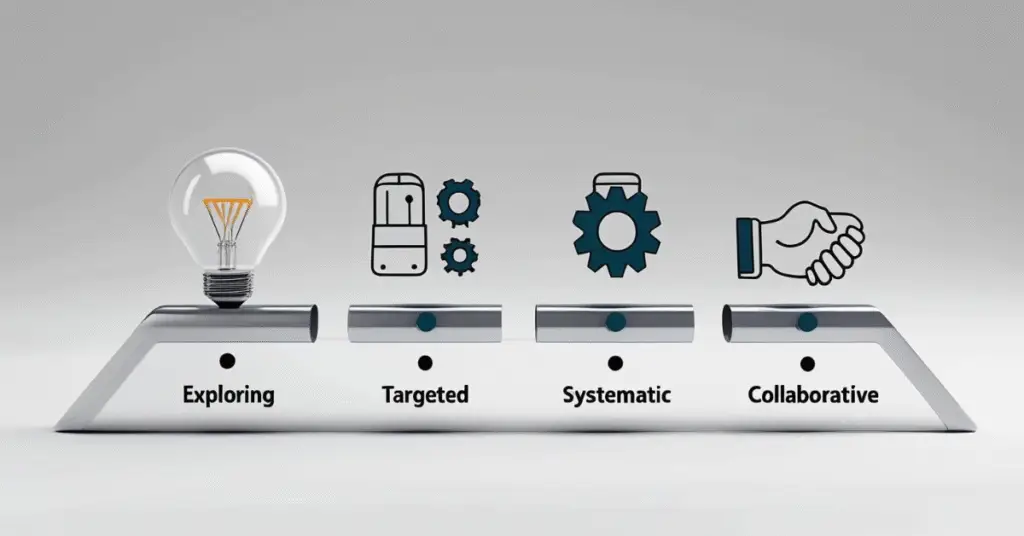
Organizations progress through four stages as they integrate AI coworkers more deeply:
Stage
Description
AI’s Role
Human’s Role
0
Exploring Possibilities
Sporadic tests and experiments
Manually review every AI suggestion
1
Targeted Adoption
AI supports specific tasks
Teams integrate AI into select workflows
2
Systematic Integration
AI woven into core platforms
Teams manage models, prompts, and alerts
3
AI-First Collaboration
AI underpins daily operations
Humans steer strategy, governance, innovation
Leadership Engagement: Executives define the vision, allocate resources, and track ROI on AI initiatives.
Center of Excellence: Central teams build shared models, best practices, and monitoring tools.
Operational Teams: Line teams craft prompts, interpret AI suggestions, and continuously refine both models and workflows.
Knowing your stage helps you plan targeted next steps—whether piloting a single-use case or scaling to enterprise-wide AI collaboration.
Integrated Architecture: How Data, Models, and Tools Work Together
To make your AI coworker truly seamless, you need an architecture where every component feeds the next in a governed, transparent way:
Data Foundation
All your customer, campaign, and operational data should flow into a single, well-managed repository (e.g., a data lake or CDP). Real-time streams—from CRM updates to web events—are ingested automatically, and data governance policies (catalogs, stewards, privacy checks) ensure that everything feeding your AI models is accurate, compliant, and auditable.
Model Management
Once data is centralized, you need a robust machine learning operations environment: a versioned model registry, automated training pipelines, and monitoring dashboards. Whenever performance dips or new data patterns emerge, retraining jobs kick off, and alerts notify your team of any anomalies. This layer keeps your AI coworker up-to-date and reliable.
Application Integration
Rather than stand-alone tools, AI services should plug directly into the systems your teams already use—marketing automation, ad platforms, content editors, reporting dashboards. Inline suggestions (e.g., budget recommendations next to spend charts, draft headlines inside your email builder) make it easy for people to accept, tweak, or reject AI output without switching contexts.
People & Process
Technology alone isn’t enough. Establish ongoing training (hands-on workshops in prompt design and model review), simulation exercises (practice projects under controlled conditions), and standard operating procedures (a clear human-review step for every high-impact AI recommendation). These practices ensure that AI contributions meet your quality, ethical, and brand standards every time.
AI has had the biggest positive impact on our content creation—especially for blogs and SEO content, but also on web or landing pages, ad copy, keyword research, and email texts. It speeds up almost every writing-related task and even enables things like text-to-voice, which we’re starting to use more often. Overall, content production has become much faster, but we’re also seeing that quality now matters more than quantity. To truly stand out or rank for competitive keywords, a human touch is still needed. Most “AI only” content feels generic and can be detected easily.
In the long run the LLM and/or Google will not prioritize or even allow content like that. This goes hand in hand with better AI content detection. Therefore, AI should be used as a support to create content but not something that does everything on its own.
Conclusion & Next Steps: Embracing Human–AI Partnership
Empower, Don’t Replace
True human–AI partnership means augmenting human talent, not displacing it. You are being AI-Forward, by offloading repetitive, data-intensive tasks to AI, your teams gain the freedom to innovate, strategize, and build deeper customer relationships.
Readiness Checklist
Have you inventoried your key data sources and begun applying governance policies?
Do you have end-to-end model pipelines with automated retraining and monitoring?
Are AI insights surfaced directly within the tools your teams already use?
Have you trained core “AI Champions” and codified human-review steps?
Are compliance, bias, and brand checks integrated into every AI output?
Your First Coworker Project
Pick one high-volume, repeatable task—such as drafting email subject lines, adjusting ad bids, or generating weekly performance summaries. Pair a small team member with the AI “co-worker”, define clear review guidelines, and measure both time saved and quality uplift. Iterate on your prompts and process until the AI reliably delivers value.
When you see the first real gains (and you will), scale that pattern across additional use-cases, continually refining your architecture, training, and governance. That’s how you’ll transform from “experimenting” to “AI-Forward Collaboration”—and unlock your organization’s next wave of productivity and innovation.
Need Some Help!
Are you curious about how ready your organization is to work alongside AI? 4Thought Marketing can examine your current setup—your data, systems, team processes, and policies—and offer practical suggestions to help you move forward with confidence. We’d be glad to connect if you’d find an outside helpful perspective.
Picture this: You’ve spent weeks crafting the perfect multi-touch nurture campaign in Marketo. The content is compelling, the segmentation is precise, and the timing is flawless. But just as you’re about to hit “activate,” that familiar knot forms in your stomach—do you actually have permission to email everyone on this list? One moment of doubt can paralyze an otherwise brilliant marketing program.
The Consent Management Reality Check
The digital marketing landscape has fundamentally shifted. What once required a simple checkbox now demands sophisticated consent orchestration across multiple touchpoints, jurisdictions, and preference types. GDPR fines alone exceeded €1.6 billion in 2024, while CCPA, LGPD, and emerging regional regulations create a complex web of compliance requirements that traditional marketing automation platforms weren’t designed to handle.
For Marketo users, this reality presents unique challenges. Your database contains contacts who have interacted with your brand across multiple channels—form submissions, webinar registrations, content downloads, preference center updates, and direct sales interactions. Each touchpoint represents a potential consent event, but tracking the intricate relationships between these interactions manually is virtually impossible at scale.
Why Traditional Consent Tracking Falls Short
Most marketing teams attempt to manage consent through custom fields, smart lists, and elaborate scoring systems within Marketo. This approach creates several critical vulnerabilities:
Data Fragmentation: Consent decisions scattered across multiple fields and systems create incomplete pictures of permission status.
Timing Misalignment: By the time a manual audit catches a consent issue, non-compliant emails may have already been sent.
Audit Trail Gaps: Proving compliance requires detailed records of who consented, what they consented to, when, and under what circumstances—data that’s difficult to maintain in standard marketing automation workflows.
Regulatory Evolution: New privacy laws and updated requirements demand system-wide changes that can take weeks or months to implement manually.
Enter 4Comply: Purpose-Built Consent Knowledge
4Comply transforms consent management from a manual compliance burden into an automated competitive advantage. Rather than replacing your existing Marketo infrastructure, it seamlessly integrates with your existing data flow, from form submissions or other consent mechanisms, to smart lists that confirm you have permission before sending campaign emails.
The platform’s approach is elegantly simple: every interaction that could represent a consent event gets automatically tagged with a comprehensive data packet called a “Consent Input.” These inputs capture not just the basic details of what someone agreed to, but the complete context—IP address, timestamp, language version of privacy notices, and the specific legal basis for processing.
The Technical Integration: How Marketo and 4Comply Work Together
The integration between Marketo and 4Comply operates through strategic insertion points in your existing workflows, requiring minimal disruption to current processes while providing maximum compliance coverage.
Form-Level Integration: Every Marketo form automatically passes hidden consent data to 4Comply alongside standard contact information. This happens transparently—your forms look and function exactly as before, but each submission now creates an immutable consent record.
Real-Time Permission Checking: Within Marketo, a smart list evaluates if it has permission before sending email.
Preference Center Synchronization: When contacts update their preferences through Marketo preference centers, 4Comply captures these changes as new consent inputs, ensuring that the most recent preference always governs future communications.
A Day in the Life: Consent Management in Action
Consider a typical B2B nurture scenario. A prospect downloads a white paper through your Marketo landing page. Alongside capturing their contact information, the form submission automatically creates a detailed consent record in 4Comply, including their explicit agreement to receive related content and the specific privacy notice version they accepted.
Two weeks later, your nurture campaign triggers the following email in the sequence. Before Marketo sends the message, a smart list confirms you have permission to communicate. If you have permission, the email is delivered normally. Marketo automatically excludes them from the campaign if they’ve since opted out or their consent has expired under applicable regulations.
This process repeats for every communication, creating a dynamic consent layer that adapts to changing preferences and regulatory requirements without manual intervention.
The Strategic Advantages
Confidence in Scale: Marketing teams can launch global campaigns knowing that every send respects both legal requirements.
Data Quality by Design: When only genuinely consented contacts receive communications, engagement metrics reflect true audience interest rather than compliance-driven inflation.
Legal Team Efficiency: Built-in audit trails and automated compliance reduce legal review cycles from days to hours.
Future-Proofing: 4Comply makes complying with new regulations easy, protecting your Marketo investment against changing compliance landscapes.
Revenue Protection: Avoiding compliance violations protects both brand reputation and bottom-line revenue from regulatory penalties.
The Business Case for Automated Consent Management
The ROI of purpose-built consent management extends far beyond regulatory compliance. Organizations typically see improvements in email deliverability, engagement rates, and campaign efficiency within weeks of implementation. More importantly, the confidence to execute sophisticated, multi-touch campaigns without compliance anxiety enables marketing teams to focus on strategy and creativity rather than legal logistics.
Looking Forward: The Future of Consent-Driven Marketing
As privacy regulations continue evolving and consumer expectations around data stewardship rise, consent management will become increasingly central to marketing effectiveness. The organizations that thrive will be those that view consent not as a compliance burden, but as a foundation for building deeper, more trusted relationships with their audiences.
Taking Action
Privacy should empower marketing, not constrain it. When consent management operates seamlessly in the background, marketing teams gain the confidence to innovate, scale, and engage audiences in ways that respect legal requirements and individual preferences. Combining Marketo’s marketing automation capabilities with 4Comply‘s consent management creates a foundation for sustainable, compliant growth in an increasingly privacy-conscious world.
Nurture Emails are more than a series of messages; they’re the strategic conversations that guide a prospect from first contact to confident buyer. In marketing, capturing a new lead is like opening a door. But what happens once they’ve stepped inside? The path from a prospect’s initial curiosity to their confident purchase decision is a delicate journey that is rarely won with a single, loud promotional message.
This crucial, in-between space is where nurture emails thrive. They are a series of insightful conversations that build a lasting relationship, one message at a time. For savvy marketers, and especially for those leveraging the power of Adobe Marketo Engage, a sophisticated Marketo nurture program is the engine that transforms passive interest into active engagement and, ultimately, into loyal, high-value customers.
What Exactly Are Nurture Emails? A Deeper Dive
At its core, a nurture email sequence is a series of automated, interconnected communications designed to guide a prospect through the buyer’s journey. Think of it as a digital conversation that evolves. Unlike standalone email blasts that shout the same message to everyone, nurture emails listen first. They are sent in response to a lead’s behavior, interests, and demonstrated intent, delivering hyper-relevant information precisely when it matters most. The guiding philosophy is to educate, empower, and build trust before asking for the sale.
The Marketo Advantage
Marketo users have a distinct advantage here. This isn’t about sending one-off emails from a static list. This is about building a sophisticated Engagement Program with Marketo Smart Campaigns at its heart. Within Adobe Marketo Engage, you can design multi-stream nurtures that cater to different personas, product interests, or stages of awareness. By leveraging Marketo Smart Campaigns as the engine and triggers based on web activity (Munchkin tracking), score changes, and data value updates, your Marketo nurture programs become a living, breathing entity that responds to your leads in real time.
Why a Nurture Strategy is a Revenue Imperative
The impact of effective lead nurturing on the bottom line is undeniable. Forrester Research famously found that companies excelling at lead nurturing generate 50% more sales-ready leads at a 33% lower cost. But the “why” goes deeper than just numbers. A robust nurture strategy is a cornerstone of modern marketing because it allows you to:
Build Authentic, Scalable Trust: Trust is the currency of modern business. Consistently providing value without an immediate ask demonstrates a genuine investment in your audience’s success. This approach fosters a sense of reciprocity and positions your brand as a credible, reliable partner long before a sales conversation begins.
Educate and Shape the Narrative: Your prospects are looking for answers. Nurture emails allow you to become their most trusted source of information. By proactively addressing their pain points and educating them on potential solutions (including your own), you shape their understanding of the problem and subtly frame your solution as the ideal one.
Maintain Meaningful Top-of-Mind Awareness: The average B2B sales cycle can be long and involve multiple decision-makers. A gentle, value-packed presence in their inbox ensures that when the time for a decision finally arrives, your brand isn’t just one of the options—it’s the obvious choice they’ve come to know and respect.
Maximize Your Martech Investment: For Marketo users, nurturing through Marketo nurture programs and proper dynamic content email personalization is the key to unlocking the platform’s true ROI. You have the power to track behavior, score leads, and automate complex communication journeys. Failing to implement a sophisticated nurture strategy is like owning a sports car and never taking it out of first gear. It’s a massive waste of potential and investment.
“Companies that nurture leads effectively see 3× more pipelines and generate 50% more sales-ready leads at 33% lower cost.”
Types of High-Impact Nurture Campaigns for Marketo Users
Your nurture strategy can take many forms; each tailored to a different stage of the buyer’s journey or segment of your audience. Below are four of the most impactful campaign types, with practical guidance on how to bring them to life within Adobe Marketo Engage Programs and Marketo Smart Campaigns framework.
Welcome & Onboarding Series
Every new subscriber deserves a warm, informative introduction. Start with a sequence of three to five emails spaced two to three days apart, beginning with a heartfelt thank-you and a clear outline of what to expect next. Within Marketo, you can build this journey using a default Engagement Program: create separate streams for leads entering via a “Contact Us” form versus a “Content Download” form, then use program status changes to advance them through each email. Leverage operational emails for essential deliverables—like “Here’s your e-book”—so they bypass unsubscribes and always hit the inbox.
As each lead moves from “New” to “Onboarded,” use score thresholds in your Marketo Smart Campaigns to trigger a transition into your educational drip, ensuring your welcome series lays a solid foundation without leaving anyone behind.
Deep-Dive Educational Drip
Thought leadership isn’t built overnight. Design a multi-part drip that unpacks a complex topic—such as “Seven Pitfalls of Cloud Migration”—over four to six weeks. Tag each piece of content with an “interest” in your Marketo database (for example, “Cloud Migration – Part 1”). Then, build Smart Lists that automatically enroll leads who download or click on those assets into the appropriate drip stream. Within each email, include an “interesting moment” in Marketo to bump their lead score whenever they engage, signaling to Sales that this prospect is primed for a deeper conversation.
By the time they reach email four, you can surface a case study or invite them to a webinar—fully orchestrated by the behavior-based triggers in your re-engagement email campaigns and drip streams that respond in real time to their actions.
“Slowing Down” / Re-Engagement Campaign
Even the most enthusiastic prospects can go quiet. Identify anyone whose email opens or site visits have dipped over the past 60–90 days by building a Smart List filter on “Last Open Date” or “Last Web Activity.” Instead of letting these leads drift into oblivion, move them into a high-touch re-engagement email campaign: perhaps a series of three emails that combine a compelling new piece of content, a limited-time offer, and a friendly “We Miss You” message. Configure Marketo to automatically mark contacts as “Marketing Disqualified” if they remain inactive after the third email, keeping your database lean and your reports accurate.
By weaving in behavior-based triggers—say, if a lead clicks your offer link, they immediately exit the re-engagement program—you ensure you’re investing effort only where it counts.
Product-Focused & Upsell Flow
When a prospect lingers on a pricing page or explores specific product features, that’s your cue to deliver targeted messaging. Use a trigger campaign that watches for multiple visits to your “Enterprise Plan” page (or clicks on a “Learn More” button) and then enrolls that lead into a product-centric nurture stream. Over the next two weeks, send detailed use-case emails, customer success stories, and ROI calculators that speak directly to the prospect’s interests.
For existing customers, tap into your CRM data synced with Marketo to launch an upsell series—introducing them to complementary modules or premium support options the moment they reach certain usage or renewal milestones. With dynamic content email personalization blocks, each email can show different features or CTAs based on the recipient’s company size, industry, or prior purchase behavior, ensuring maximum relevance and conversion lift.
Crafting Your High-Impact Nurture Strategy in Marketo
Before you build any campaign, invest time in the strategic architecture: precise segmentation, content alignment, scalable personalization, and ongoing optimization. Here’s a four-step playbook for creating a world-class nurture engine inside Adobe Marketo Engage.
Segment Your Audience with Precision
Static lists won’t cut it when buyers expect tailored journeys. Instead, create dynamic Smart Lists that combine demographic filters (job title, region), firmographic criteria (company revenue, employee count), and behavioral triggers (email opens, web page visits, form fills). For example, build a “CMO in Finance” list by layering title = CMO + industry = Finance. As new leads meet those criteria, they’ll automatically drop into the appropriate Engagement Program stream—powered by Marketo Smart Campaigns—so every message they receive feels custom-built for their profile.
Map Your Content to the Journey
Random sends dilute impact. Audit your asset library and tag each piece by funnel stage: Awareness (e-guides, infographics), Consideration (whitepapers, webinars), Decision (case studies, demos). Then, within each Marketo stream, control cadence using lead score thresholds and engagement filters—so a lead who clicks three mid-funnel assets in seven days advances from the “Consideration” stream into “Decision,” triggering a demo invitation. Transition rules built into Marketo nurture programs ensure each prospect sees the next logical piece of content exactly when they’re ready for it.
Personalize at Scale
Beyond first-name tokens, personalization should make every email read like it was handcrafted. Leverage Snippets to swap in region-specific office addresses or industry-targeted boilerplate, and use dynamic content email personalization to show different images, headlines, or CTAs based on the lead’s segment. For instance, a manufacturing prospect might see a PDF download link, while a tech buyer gets invited to a live demo. Combining these features with your segmented Smart Lists means thousands of leads can receive highly customized sequences without adding manual upkeep.
Test, Measure, and Relentlessly Optimize
Your initial programs are just hypotheses. Use Marketo’s A/B testing not only on subject lines but also on email body variations—test short versus long form, different imagery, or alternate CTAs—to uncover what resonates. Monitor Engagement Program Performance Reports to pinpoint drop-off emails or low-performing streams. When a particular step underperforms (say, a 10% click rate instead of the target 20%), pull that email into a separate Smart Campaign, iterate on the content, and relaunch—continuously tightening each touchpoint until your nurture engine hums at peak efficiency.
By weaving segmentation, content alignment, personalization, and rigorous testing into your Marketo nurture programs, you transform isolated sends into a cohesive, data-driven journey that guides every lead smoothly from curiosity to commitment.
Conclusion: From Owning Marketo to Mastering It
Every marketer with a lead database wants the same thing: to convert those hard-won names into devoted, revenue-generating customers. And when you correctly leverage a powerful platform like Adobe Marketo Engage, you have the tools to create a sophisticated, automated engine that makes this possible at scale. But simply owning the platform is not the same as mastering it.
Many organizations get stuck in the technical weeds, using Marketo for simple email blasts while its most powerful lead nurturing and revenue-driving capabilities gather dust. Which is precisely why developing a strategic, customer-centric approach to nurture emails is the single most important step you can take to unlock the true potential of your marketing efforts and maximize your investment in the Marketo nurture programs.
Ready to transform your Marketo instance from a mailing tool into a revenue engine? Let’s talk.
April 8, 2026 | Page 1 of 1 | https://4thoughtmarketing.com/articles/page/12