ai data analysis

AI is one of the most rapidly evolving segments of technology worldwide. As more companies adopt it in some form, its influence only continues to grow. Of course, this raises the question of what AI means for the future of marketing.

This series of articles looks at several tangible ways AI can improve your marketing approach. Today, we’ll examine the potential role of AI in data analysis and marketing automation.

Marketing involves collecting, sorting, and using a lot of data. What exactly this data is used for varies. However, one thing holds true: raw data is not particularly useful. The collected data must be examined, refined, interpreted, and connected to other information to boost your marketing efforts. And what happens if your company’s data analytics expert is unavailable, or worse, you don’t have one?

Recent developments show promise in using AI to help your marketing team make the data more usable. This is especially true for those with a firm grasp of marketing analytics fundamentals but less than ideal experience using complex data analytics software.

What Can AI-Driven Data Analysis Do?

An AI can read a detailed spreadsheet of data in seconds. The tool can then assist with several key marketing functions that offer particular value.

First, an AI can perform a rapid quality check on your data and confirm if it’s accurate and usable. An AI can also highlight any potential errors or instances of anomalous or “dirty data” to remove and suggest improvements for future data collection.

Second, AI-assisted data analysis allows for detailed predictive analytics to be developed much faster than before, and compare the results with industry benchmarks. This allows your team to more accurately guess which direction the market may be going and what consumers will want in the near future. This leads to better decision-making that’s far more likely to capture and retain customer interest. It also saves precious time, allowing your team to be among the first to identify and capitalize on an upcoming trend.

Third, AI-driven customer data analysis allows for increased personalization. An AI tool can make connections or inferences from data points that a human might miss. It can also consider every minute piece of information, even things that might not seem immediately helpful. The result? Your marketing team can explore and construct more detailed customer profiles and create content that speaks directly to a customer’s pain points.

Finally, AI can simply uncover new insights from collected data that aren’t readily apparent, even things some expert data analysis might overlook. If you understand what the data contains but aren’t sure how to narrow it down to what you want, an AI can be an excellent tool.

Remember: while AI-driven data analysis offers valuable help to marketers who aren’t experts, the results still require human review and validation. AI still makes plenty of mistakes. Your data analytics expert can help locate and fix errors in the AI’s results.

Should You Consider AI Data Analysis?

If your business handles significant amounts of data, your team can benefit from using AI to do the busy work. Not only does this free up time, it also allows for more personalized marketing efforts and even unearthing new insights that a human might have overlooked. And AI isn’t going anywhere. Now is an excellent time to look into AI data analysis for your marketing team.

For expert help getting your AI data analysis system off the ground, get in touch with us today.

ai data analysis

dirty data

The High Cost of Dirty Data

Dirty data isn’t just an inconvenience—it’s a significant barrier to marketing success. Duplicate records, outdated information, inconsistent formatting, and incomplete fields can turn what should be a finely-tuned marketing machine into a costly, inefficient mess. Every day dirty data goes unaddressed is another day of lost opportunities, wasted budget, and skewed metrics. The consequences of dirty data are not just financial, but also strategic, as it can lead to misguided marketing decisions and missed opportunities.

The good news is that these issues can be tackled head-on. By addressing the root causes of dirty data and implementing effective data management practices, companies can transform their marketing efforts and start achieving their desired results, all in an efficient and effective manner.

Achieving marketing precision and maximizing ROI starts with clean, actionable data. Many businesses face challenges in succeeding with data-driven marketing due to hidden obstacles such as poor data quality and incomplete information. Dirty data can derail even the most well-crafted marketing strategies, draining resources and distorting results. By optimizing your database, ensuring compliance, and creating a streamlined contact list, you can drive meaningful engagement.

The Solution: Data Quality and Contact Optimization

Improving data quality means more than just cleaning up errors—it means building a leaner, higher-quality contact list that enhances engagement and efficiency. Here is our approach to improving data quality.

1. Data Cleansing and Segmentation

  • Data Cleansing & Deduplication: Identify and merge duplicate contacts, remove outdated details, and use automated validation tools to maintain the quality of your data.
  • Segmentation Strategy: Effective segmentation helps focus on the most relevant audiences. Create segments based on engagement, demographics, and behavioral data, ensuring your contact list is high-quality and highly relevant.
  • Engagement Scoring & Suppression: Build scoring models that rank contacts by engagement, allowing you to focus on active contacts and suppress or remove those with little value.

2. Data Quality Audits and Practical Solutions

  • Comprehensive Data Audits: Perform a full audit to identify common issues, such as misspelled email addresses, inconsistent formats, and duplicates. Automating these checks saves time and minimizes human errors.
  • Dirty Data Scorecard: To prioritize cleanup, develop a scorecard that categorizes data issues by severity. This targeted approach helps maintain efficiency and keeps the focus on fields with the most impact.

3. Ensuring Compliance and Privacy

Compliance with privacy laws is crucial for any contact database.

  • Privacy Audits (GDPR, CCPA, etc.): Conduct regular audits to ensure your contact data meets current regulations. Contacts that no longer meet privacy standards are automatically removed.
  • Contact Preference Management: By integrating preference centers, you ensure your contacts receive only the content they’re interested in and their preferences are respected. Automated workflows help manage contact suppression or deletion based on preference updates.

4. Engagement Optimization Services

Clean data means better engagement. Refine and target your campaigns effectively:

  • Targeted Re-engagement Campaigns: Identify low-engagement contacts and use tools to run re-engagement campaigns. If contacts do not respond, consider suppressing them to maintain an active list.
  • Personalization & Dynamic Content: Personalized messaging increases relevance and engagement. Use dynamic content to re-engage inactive contacts based on their previous interactions.

5. Long-Term Data Governance

Maintaining clean data is an ongoing process. Establishing a long-term data governance framework is crucial to keeping your contact list in top shape.

  • Data Quality Standards: Define standards to ensure consistency across departments and reduce the likelihood of errors.
  • Team Collaboration on Data Entry: Alignment between marketing, sales, and operations teams is crucial. Implement structured data entry protocols to improve data consistency, such as dropdowns instead of free-form fields.
  • Routine Data Cleansing: Regular data reviews remove outdated or incorrect information before it impacts a campaign. Automated and manual checks are combined for the best results.
  • Governance Framework: Establishing transparent data practices ensures ongoing quality control and prevents data issues from reoccurring.

Key Benefits of Data Quality Improvement

  • Lower Marketing Costs: A leaner contact list means reduced database costs.
  • Higher Engagement: Focus your resources on actively engaged contacts to boost campaign performance.
  • Improved Compliance: Stay on top of privacy regulations and minimize risks.
  • Better Campaign ROI: Clean, targeted data leads to more effective campaigns and a higher return on investment.

Take the Next Step with Data Quality Services from 4Thought Marketing

Don’t let dirty data hold your marketing back. Partner with 4Thought Marketing to optimize your database, reduce costs, and enhance your marketing success. Our tailored solutions will help you build a compliant, lean, and engaged contact list that drives results. Whether you need us to manage the entire project or tackle specific tasks, or if you want to empower your team with our training, we’re here to help. Contact us today to take the next step towards data-driven marketing success!


chatgpt data analysis

If you’ve worked in marketing for any period of time, then you know how much your team relies on data. Webpage visits, email clicks, customer purchases, event registrations, marketing consent or lack thereof—there’s no end to the information you have to sort through. And you have to make it all say something. How should your strategy change depending on all this data?

This is where data analysis comes in. Raw information on its own isn’t super helpful. You have to understand what the data means and how to read it. But what if you’re not a data analysis expert? Fortunately, a tool released in 2023 offers an efficient, user-friendly way to approach this task. This tool, of course, is the ChatGPT data analysis system.

Why Choose the ChatGPT Data Analysis Tool?

The ChatGPT data analysis tool offers several major benefits to anyone who needs a quick bit of basic data help, most notably:

  • Accessibility for all skill levels: Whether you’re a novice who has never analyzed data before or an experienced data analyst looking for a quick solution, the tool offers a straightforward and intuitive interface.
  • No coding required: You don’t need to write complex scripts or commands to analyze your data. Instead, you can interact with the tool using natural language queries, making it accessible to a broader audience regardless of their coding experience.
  • Time-efficient: Time is often a critical factor when working with marketing data. ChatGPT’s Data Analysis tool allows you to perform data analysis tasks quickly and efficiently. You can get insights from your data without the need for extensive setup or learning curves.
  • Interpretation assistance: Analyzing data is not just about running calculations—it’s about understanding the results and drawing meaningful conclusions. ChatGPT’s tool not only helps you crunch the numbers but also provides basic explanations and interpretations, making it easier to grasp the significance of your findings.

How to Use the ChatGPT Data Analysis Tool

Using ChatGPT’s Data Analysis tool is a straightforward process.

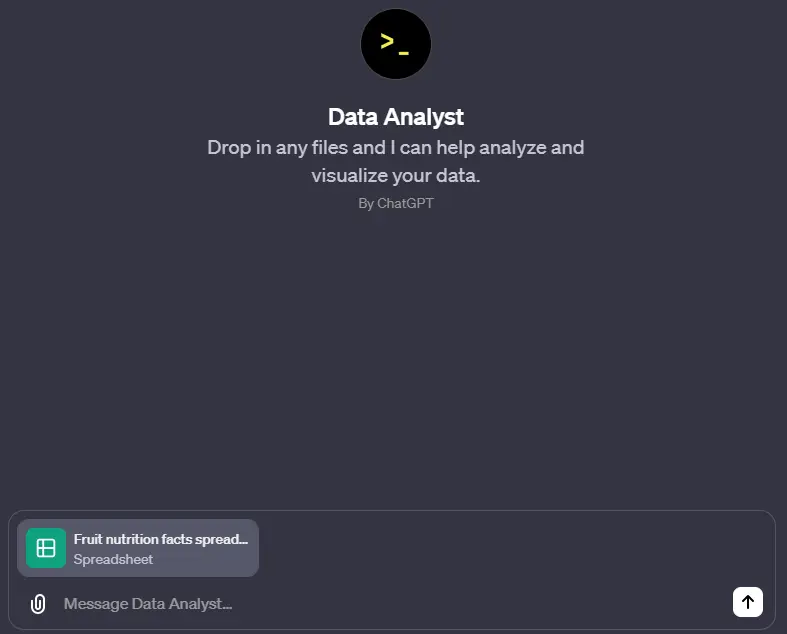
To begin, you can access ChatGPT’s Data Analysis tool through a web browser or an integrated platform that offers the tool. Make sure you have a dataset ready for analysis in a compatible format (e.g., CSV, Excel). Once you’re in the tool, you’ll find an option to upload your dataset. Click the paperclip icon and choose the file you want to upload, or drag and drop the file directly into the chatbox. (Remember that the maximum file size you can upload to any ChatGPT tool is 512 MB.)

chatgpt data analysis

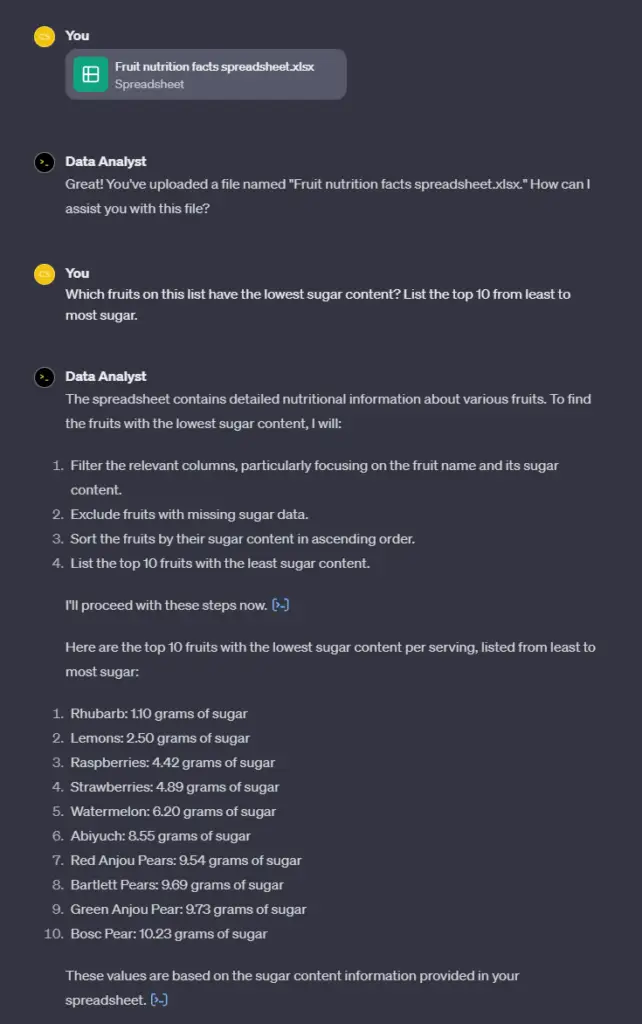
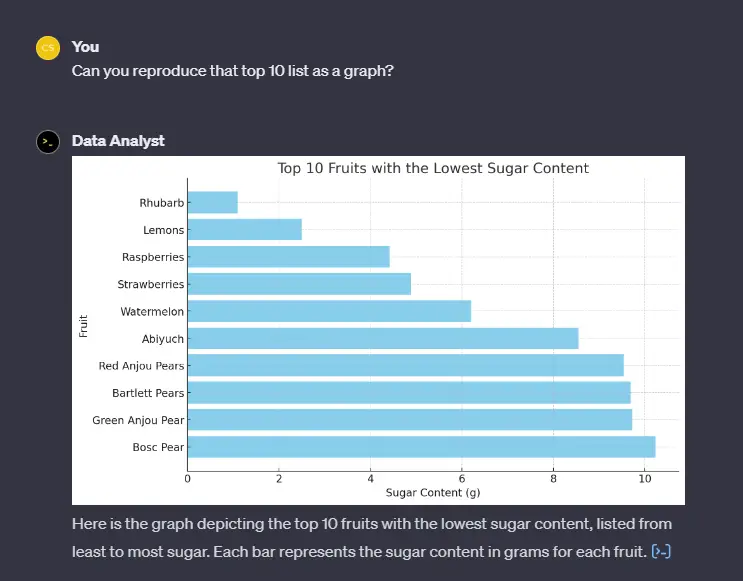
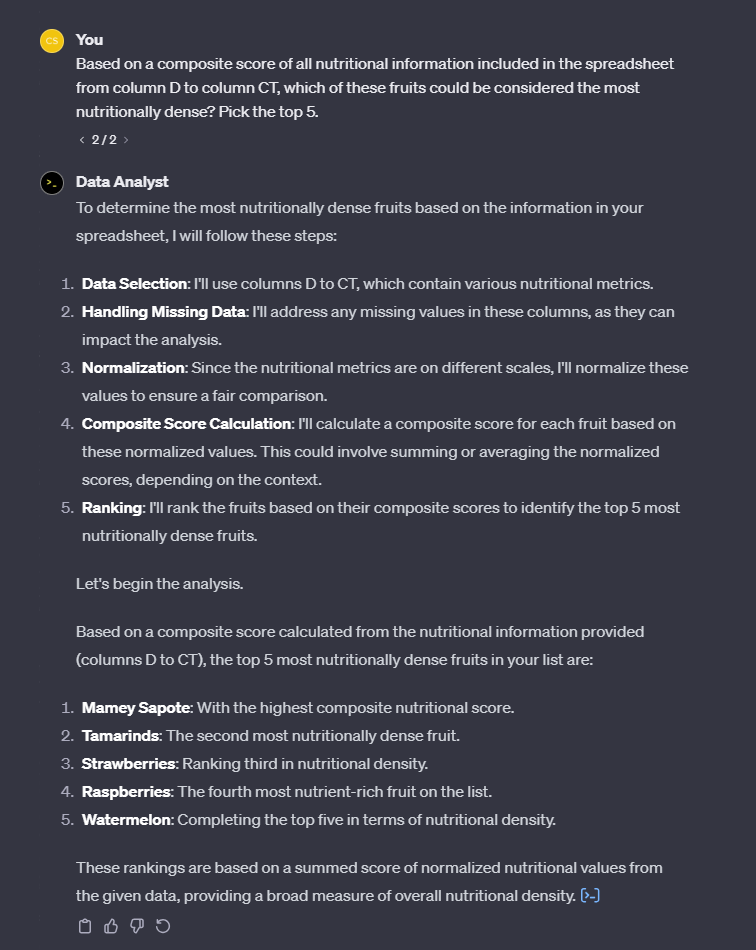
Here’s where the magic happens. You can start by asking the tool questions about your data. For example, you can inquire about the average, median, or sum of a particular column, or you can request a breakdown of your data by specific categories.

chatgpt data analysis

After posing your questions, ChatGPT’s Data Analysis tool will process the data and provide you with relevant insights. You can explore charts, graphs, and explanations to better understand your data.

chatgpt data analysis

Don’t hesitate to refine your questions and explore different aspects of your dataset. The tool is designed to be interactive, allowing you to iteratively analyze and refine your findings.

chatgpt data analysis

Once you’re satisfied with your analysis, you can export the results or share them with colleagues or stakeholders. This makes collaboration and decision-making more accessible.

Conclusion

The ChatGPT Data Analysis tool offers a straightforward approach to basic data analysis, making it accessible to individuals and professionals across various domains. With its intuitive interface, no coding requirement, time efficiency, and interpretation assistance, the tool empowers users to gain insights from their data without the steep learning curve associated with traditional data analysis tools.

Embrace the power of data analysis without the intimidation factor, and let this tool guide you in making informed decisions based on your data-driven discoveries.

Need a more in-depth look at your marketing data than ChatGPT can provide? Get in touch with our team today for expert help.


4Thought Marketing Logo   April 1, 2026 | Page 1 of 1 | https://4thoughtmarketing.com/articles/tag/data-analysis/