Campaigns don’t fail because marketers lack ideas. They fail because ideas get stuck. May be in approvals, in disconnected tools, or may be in endless revisions. Campaign velocity isn’t just about moving fast; it’s about building a culture that prioritizes execution, alignment, and adaptability. In a world where timing often beats perfection, the teams that win are the ones that launch smarter, not later.
Campaign velocity is no longer a nice-to-have metric. It’s a decisive mindset that separates growth-focused teams from the ones that are forever stuck in planning mode. At 4Thought Marketing, we see it every day: when execution gets faster, creativity doesn’t suffer, it thrives. Because speed, when paired with structure, doesn’t just get things done. It gets it moving.
The Landscape of Lag
Every marketer knows the rush of a great campaign idea and the agony of watching it collect dust in a backlog. The terrain between concept and launch is littered with hidden traps that slow even the most capable teams. We call this terrain The Landscape of Lag.
You’ve likely encountered a few of these along the way: The Bottleneck Bog, Approval Mountain, Integration Icefields, The Launch Cliff…
In this environment, momentum dies quietly. Not because of failure, but from friction. And when teams start to normalize delays, the real cost isn’t just speed, its creativity, morale, and marketing’s strategic value.
The Velocity Scorecard
Measure What’s Slowing You Down? What Could Be Lifting You Up?
Most marketing teams don’t set out to move slowly. But somewhere between campaign brief and launch, velocity starts leaking out. Not because people aren’t working hard but because the system they’re working within isn’t designed to support speed. If you don’t measure that drag, you’ll never know what it’s costing you.
That’s why smart marketing leaders are beginning to track campaign velocity not as a productivity stat, but as a health check for their operating rhythm.
Ask yourself these five high-impact questions:
Are campaigns piling up in the “almost done” stage?
What’s your average time from brief to launch?
How many people need to say “yes” before something goes live?
Where do campaigns typically get stuck — and who feels it first?
Can your current team scale up campaign output by 2x without burning out?
If the answer is no, you don’t have a velocity problem. You have a capacity design problem. That’s the difference between teams that ship more and teams that stall when demand rises.
The takeaway? Campaign velocity is a system-wide reflection of how your marketing engine performs under real-world conditions. It’s not about running faster. It’s about removing the weight that’s slowing you down and designing operations that support agility without sacrifice.
This is where 4Thought Marketing thrives. We partner with teams not just to launch more, but to launch smarter, cleaner, and faster with confidence. Because velocity, done right, isn’t chaos. It’s momentum by design.
Acceleration Tactics: Trail-Tested by 4Thought
Speed doesn’t come from just working harder. It comes from working smarter within a system designed for motion. Here are the core tactics that fast-moving marketing teams deploy and how 4Thought helps make them real:
Modular Campaign Templates – Launch faster with 80% of the work already done. We help you build reusable frameworks tailored to your needs.
Pre-Scoped Execution Pods – Skip the hiring cycle. Our ready-to-go teams plug into your workflow and deliver with precision.
Connected Martech Stack – No more tool friction. We integrate your platforms so data flows and triggers fire without delay.
Automated Workflows – Eliminate repeat blockers like approvals and routing with smart automation built around your real-world process.
Pre-Built Campaign Assets – From forms to landing pages, we supply ready-made components so your team focuses on strategy & not assembly.
These aren’t shortcuts. They’re velocity enablers that are designed to give your team the space and systems to move with confidence.
The Expert Guide Advantage
You don’t climb a mountain without a guide who’s seen the terrain before. And you don’t reclaim your campaign velocity by just working harder. You do it by working with someone who’s done it hundreds of times. At 4Thought Marketing, we don’t just “support” campaigns. We embed velocity into your process. Whether you’re launching five emails a week or managing global rollouts, our model is built for momentum:
Dedicated campaign units who know your systems and brand.
On-demand bandwidth that flexes with your marketing calendar.
Built-in compliance and QA, so campaigns don’t just go fast, they go right.
Strategic insight to improve every launch cycle, not just deliverables.
And because we operate behind the scenes, your team gets the credit. While we keep things moving like clockwork. This is our edge. Not just faster execution. But a trusted rhythm. A repeatable system. A mindset of velocity, baked into your marketing operations.
Reaching Base Camp: The Velocity Payoff
When campaign velocity becomes a mindset & not just a metric, everything changes. Ideas stop aging out before they launch. Teams feel energized, not overloaded. Marketing earns its seat at the strategy table because it delivers, again and again. And most importantly, the gap between what could be done and what gets done finally starts to close. Velocity doesn’t just improve throughput. It improves clarity, confidence, and trust across teams, stakeholders, and customers.
We’ve seen what happens when teams get their rhythm back:
Campaigns launch on time.
Teams feel supported.
Results compound faster.
Growth Accelerates.
Let’s Build Your Velocity Together
If this vision feels familiar, if you’ve got the ideas, the team, and the intent but still find campaigns stuck in the queue; then maybe what’s missing isn’t effort. It’s alignment. It’s systems. It’s velocity, by design. At 4Thought Marketing, we don’t just support marketing execution. We co-engineer it for speed, structure, and scale. Whether you need on-demand bandwidth, better campaign templates, or a fresh look at your workflows, we’ll help you clear the path. Let’s explore what campaign velocity could look like for your team and how to make it your competitive edge. Call Us. We Answer.
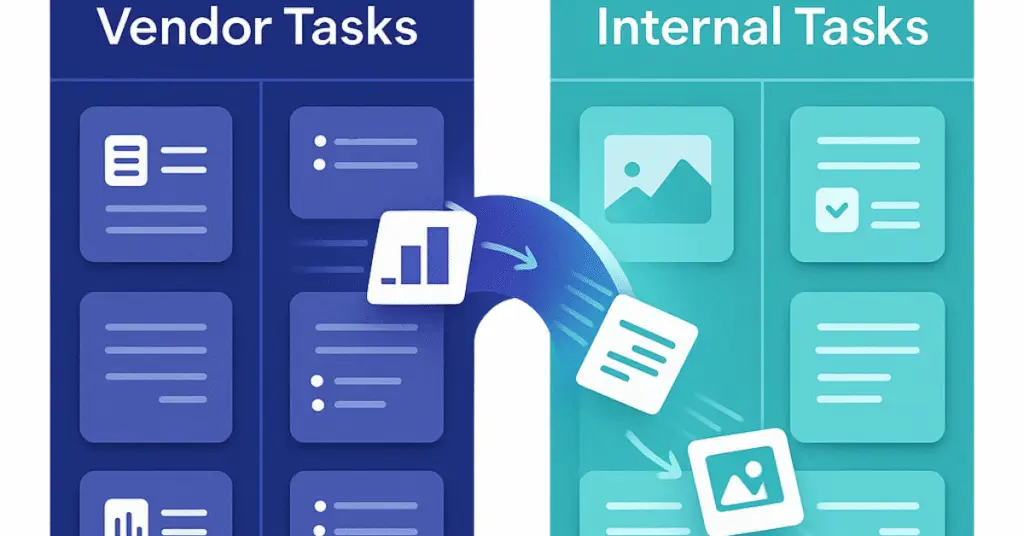
Mastering campaign deliverables requires precise vendor coordination and seamless B2B vendor collaboration. B2B marketing teams often rely on a network of specialized partners to execute complex campaign deliverables that demand agility, expertise, and scale. External vendors play a pivotal role by delivering services and assets that internal teams may lack the resources or skills to provide on their own. From content creation to marketing automation and analytics, vendors supply the building blocks that bring complex campaigns to life—and seamless vendor coordination ensures each piece lands exactly when and how it’s needed.
The Impact of Vendor Collaboration on Campaign Results
The successful integration of external vendors directly influences the outcome of campaign deliverables. Well‑orchestrated B2B vendor collaboration can mean the difference between meeting campaign objectives and falling short on quality, timelines, or compliance. When organizations effectively align vendor tasks with internal processes through robust campaign workflow integration, they not only increase operational efficiency but also support innovation and broader reach.
Common Challenges in Coordinating Campaign Deliverables
Every B2B team working with external vendors on campaign deliverables knows that obstacles are almost inevitable. While partnerships create opportunities for scalability and expertise, the coordination process is rarely seamless. Several recurring challenges can undermine the quality and timeliness of campaign outputs if left unaddressed:
Miscommunication and Mismatched Expectations
One core issue is miscommunication between internal stakeholders and vendors. Information may be incomplete, goals can remain ambiguous, or channels for feedback may not be established. This can create confusion about deliverable requirements and lead to teams working on different interpretations of the same brief. Clarity around approvals and feedback windows often suffers as a result, increasing frustration on both sides.
Timeline Delays and Missed Deadlines
Campaign schedules depend on multiple dependencies. When vendors lack visibility into shifting project priorities or when stakeholders do not provide timely input, delays accrue. The agile nature of modern marketing means deadlines often move, but unless all parties update their plans collaboratively, key assets may be late—or rushed at the expense of quality. Periodic status updates and shared project trackers help, but only if rigorously maintained.
Quality and Consistency Risks
Beyond delivery dates, quality assurance poses a significant risk. Vendors may use different standards or tools than the internal team, leading to inconsistencies across messaging, branding, or technical execution. Problems compound when multiple vendors contribute to a single campaign, raising the potential for incompatible file formats, off-brand visuals, or non-compliant messaging.
Fragmented Processes and Limited Oversight
Fragmented workflows make it hard to enforce accountability. If task tracking, communication, and asset management happen in silos, vital context slips through the cracks. For B2B marketing leaders, this adds pressure to implement integrated systems and standardized procedures. Solutions can bridge operational gaps, synchronize project flows, and support transparent vendor engagement from initial briefing to asset delivery.
Establishing Clear Objectives and Expectations
Aligning with external vendors relies on clarity from the start. Teams that invest time in setting transparent goals and deliverable standards see better overall results and less friction throughout campaigns. Without precise expectations, misunderstandings can lead to inconsistencies, missed deadlines, or outputs that fail to match a brand’s needs.
Defining What Success Looks Like
Every campaign should open with a discussion of what both sides expect. This goes beyond broad objectives; it means outlining the specific deliverables, timelines, and quality benchmarks. Effective vendor agreements cover:
Clear descriptions of each deliverable—file types, formats, branding, and functional requirements
Agreed timelines with review points or check-in milestones
Success metrics that are measurable, not subjective (such as turnaround time, compliance rates, or engagement goals)
Approval and revision workflows so all parties know what happens if requirements shift or deliverables need changes
Translating Objectives into Actionable Guidance
Templates, creative briefs, and checklists all help vendors understand how to meet expectations. Setting these up front reduces the likelihood of errors and rework, and gives teams a single reference point when questions arise. Open sharing of background information, brand guidelines, and campaign context also creates alignment from day one.
Early-stage consulting and documentation can be essential—especially for complex automation, data integration, or privacy-focused campaigns. This structure supports campaigns that not only launch on time, but also meet performance and quality metrics critical for B2B marketing success.
Building Strong Communication Channels
Miscommunication and fragmented workflows often undermine even the best vendor relationships. The solution lies in building strong communication channels that clarify progress, responsibilities, and expectations in real time. Direct conversation and structured processes help avoid small issues snowballing into missed deadlines or subpar deliverables.
Routine Check-Ins and Real-Time Updates
Short, regularly scheduled calls—whether weekly or aligned to project phases—allow both sides to review status, address blockers, and adjust priorities. These check-ins minimize ambiguity around task ownership and timing. For time-sensitive projects, real-time updates are critical. Shared dashboards or instant messaging platforms like Slack or Microsoft Teams facilitate transparent progress tracking. Tools with notification features help stakeholders respond quickly to time-sensitive questions.
Essential Collaborative Tools
Project Management Platforms: Systems like Asana, Trello, and Jira provide a centralized space for timelines, deliverable tracking, and feedback. They eliminate confusion by providing a single source of truth for everyone.
Document Sharing: Google Drive and Microsoft OneDrive streamline collaborative editing and asset approvals. Shared folders keep version control issues to a minimum and prevent miscommunications on asset status.
Approval Workflows: Setting automated approval workflows within project management or content review tools ensures that nothing moves forward without the right visibility and sign-offs.
To keep campaigns accountable and aligned, establish clear communication protocols at the outset—define what gets escalated, how, and when. Assigning a single point of contact on both sides supports faster decisions and reduces bottlenecks.
Organizations seeking to optimize these processes often partner with B2B consultancies. They can help teams set up integrated communication systems, streamline collaboration, and automate alerts or approvals, supporting faster, higher-quality campaign deliverables from external vendors.
Integrating Vendor Workflows with Internal Processes
Clear objectives and expectations form the groundwork for effective vendor relationships. Yet, bridging the gap between external partners and internal teams requires something further: practical systems that bring disparate workflows into consistent alignment. Misaligned processes slow down campaigns, introduce inconsistencies, and increase compliance risks.
Keys to Successful Workflow Integration
The first step is mapping how vendors fit into current marketing operations. This means documenting how work passes between internal and external teams—covering briefing, production, feedback, review, and final delivery. Standardizing these hand-offs reduces ambiguity and error rates. Organizations often benefit from:
Designating single points of contact for both internal and vendor teams to channel requests, updates, and queries
Synchronizing project management tools, such as Asana or Jira, to ensure both sides see the same deadlines, responsibilities, and feedback threads
Adopting shared folders or asset libraries for version control and consistent file organization
Standardizing formats and templates for creative briefs, assets, and reports to minimize rework and friction
Documenting clear escalation paths for issues that threaten compliance or campaign quality
Integrating Technology and Processes
Technology can close gaps between internal and external systems. Shared dashboards, for instance, give both parties visibility into status updates and review cycles. Automation helps transfer files or data, reducing manual mistakes. Integrations between marketing platforms and vendor systems—such as linking Eloqua or Marketo with creative production apps—ensure smooth data flow and version alignment.
Consultancies may help B2B teams audit and align workflows for each campaign stage. They introduce process automation, integration, and documentation tailored to the team’s tech stack and goals. This approach not only boosts consistency, but also prepares organizations for privacy audits and quality reviews. The result is fewer operational bottlenecks, and a higher certainty that vendors can deliver what’s required, when and how it’s needed.
Ensuring Data Security and Privacy Compliance
Coordinating with external vendors requires more than project management—organizations handling campaign deliverables must prioritize data security and privacy compliance at every engagement. B2B campaigns often exchange sensitive contact details, customer preferences, and performance analytics, all of which fall under tight regulatory expectations.
Understanding the Risks of Data Sharing
When vendors access or process marketing data, risks multiply. Shared files could contain personal information that is protected by regulations such as GDPR or COPPA. An unsecured file transfer, weak password, or unencrypted portal could expose confidential campaign data.
Potential breaches: Unauthorized access, data leaks, or mishandled files
Regulatory penalties: Fines and legal costs for non-compliance
Reputational damage: Loss of trust from prospects, partners, or clients
Best Practices for Data Management and Privacy
To safeguard sensitive information, teams must blend strong vendor selection with documented privacy standards. Practical steps include:
Limit access to data strictly to what vendors need for their tasks
Use secure file-sharing tools—such as encrypted cloud storage or SFTP
Require vendors to sign data processing agreements (DPAs) that outline privacy obligations
Establish incident response protocols for reporting and mitigating any suspected breaches
Train all stakeholders—internal and external—on compliance requirements relevant to every campaign
Leveraging compliance-focused solutions (like data anonymization and automated access controls), they ensure only pre-approved users can view or move sensitive assets. For B2B leaders, investing early in vendor onboarding and privacy tooling reduces operational risk while supporting transparent, legal, and reliable campaign execution. Learn more about privacy-first marketing best practices.
Leveraging 4TM Solutions for Seamless Vendor Collaboration
As campaign complexity increases, B2B teams need systems that bridge the gap between internal standards and external vendor capabilities. Technology and process consulting make the difference. 4Thought Marketing provides focused support for teams struggling with misaligned workflows, fragmented data, and uneven communication with outside agencies or service providers.
Optimizing Coordination Through Consulting and Tools
Consultants from 4Thought Marketing assess not just technology stacks, but also existing handoffs, approval processes, and data sharing practices. They help organizations:
Map and document current vendor interaction points
Identify workflow friction and inefficiency
Design integrated project plans that sync internal marketing roles with vendor schedules
Many organizations rely on multiple marketing automation tools and CRM systems. 4Thought Marketing supports integration with platforms like Eloqua and Marketo, helping ensure that vendors interact with up-to-date campaign data and standardized templates. The result is a reduction in duplicated effort and manual error, while timelines stay visible to all contributors.
Streamlining Approvals and Reducing Compliance Risk
Approval delays slow down vendor deliverables. 4Thought Marketing helps clients automate approval flows and asset review cycles, using cloud-based tools to centralize decision-making and feedback. This shortens delivery times, improves transparency, and makes it easier to trace who approved what and when—crucial for both quality assurance and privacy compliance.
Strengthening Data Management and Privacy Controls
When vendors access sensitive data, compliance and security become major concerns. 4Thought Marketing implements privacy solutions, like 4Comply, that let B2B teams share only the information necessary for campaign execution. This approach helps organizations meet strict data handling requirements and adapt to privacy laws without creating operational drag.
Bringing in an experienced consulting partner helps B2B organizations maintain control and consistency, even as they scale their campaigns and vendor networks. This makes high-value external collaboration a strength, not a liability, for marketing operations teams focused on accurate, on-time campaign deliverables.
Conclusion: Evolving Vendor Partnerships for Sustained Marketing Growth
Vendor coordination is not a static process. B2B marketing teams that consistently deliver on campaign goals view vendor relationships as living partnerships rather than transactions. Campaign deliverables improve over time when organizations treat every vendor interaction as a chance to strengthen collaboration, optimize shared workflows, and refine best practices.
Continuous Improvement in Vendor Relationships
The most resilient B2B marketing functions make deliberate efforts to review processes, gather feedback, and adjust expectations with external vendors. This commitment ensures that quality, speed, and compliance keep pace with evolving organizational goals. Key actions for sustained growth include:
Debriefing after major campaigns to identify bottlenecks or misalignments
Inviting vendor input on how joint processes might be simplified or tasks automated
Tracking quantitative metrics—such as turnaround times and error rates—to spotlight areas for improvement
Staying proactive about changing privacy requirements or technology integrations that may require new vendor training or protocols
Consistent communication and a willingness to iterate make campaign deliverables more reliable and scalable. Strong partnerships move beyond basic compliance to focus on shared growth and mutual learning, which drives both innovation and long-term performance.
Strategic Use of Technology and Consulting
Sustaining these benefits often requires technical investment and operational discipline. Technologies that automate routine handoffs, safeguard sensitive campaign data, and standardize content or asset workflows minimize mistakes. Incorporating external expertise, such as from 4Thought Marketing, allows teams to benchmark against industry standards, accelerate integration, and deploy proven frameworks for managing vendor relationships. B2B organizations ready to evolve should treat vendor management as a core capability—updating processes regularly, training new team members thoroughly, and leveraging consulting support for complex integrations or campaign rollouts. By embedding continuous improvement into the fabric of vendor engagement, marketing teams ensure that external partnerships contribute not just to tactical execution, but also to sustained competitive advantage and growth.
An Eloqua marketing campaign checklist helps prevent underperforming marketing campaigns from frustrating the teams that developed them and the companies that see little to no return on their investment. Unfortunately, there is no “silver bullet” that makes a marketing campaign a massive success every time. However, there are a few steps you can take to give yourself a better chance. For Eloqua users, one of the most essential steps is to create a marketing campaign checklist to follow during development.
Using an Eloqua marketing campaign checklist is essential for ensuring that your campaigns are successful and yield positive results. This Eloqua marketing campaign checklist helps you track all important aspects of your campaign.
Setting the Stage
You have an event next week, and not nearly as many people have registered as you’d hoped. What do you do?
While you might be tempted to send out another email blast to drum up interest, this can backfire. Your prospects and customers may be annoyed to receive another marketing email and might complain or even unsubscribe. Unfortunately, by now, this marketing campaign is likely a lost cause.
Implementing an Eloqua marketing campaign checklist can greatly enhance your marketing strategy, ensuring every element is in place before launching.
A comprehensive Eloqua marketing campaign checklist ensures that no detail is overlooked, allowing for a smoother execution of your marketing efforts.
The best thing to do to avoid a repeat is to understand what went wrong and how to fix your mistakes in the future. Let’s look at this step by step.
Step 1: Clarify Your Initial Campaign Goal
What, exactly, do you want to accomplish with this campaign?
To answer this question, remember the SMART framework. Your goal with any marketing campaign should be:
Specific: “Get more people to attend the webinar” is a vague, unhelpful goal. “Increase webinar registrations by 25%” gives you something concrete to aim for.
Measurable: This ties back in with having a specific goal. With numbers in mind, you’ll know if you hit your target and how significantly you missed or exceeded the goal.
Attainable: As nice as it would be, very few marketing campaigns result in 100% conversion. Be realistic about what you can accomplish without setting the bar too low or too high.
Relevant: What are the current market conditions? If a recession is looming, conversion rates might be lower.
Time-based: Set a definite timeframe for your goal. This lets you analyze your results and move on to better campaigns sooner.
These all sound basic, but many marketers are tempted to skip these steps. If you’re unsure how to set ambitious but realistic goals, consider using results from past campaigns to guide your planning.
Step 2: Assess Your Campaign Resources
The resources available for your campaign significantly impact your ability to reach your goals. For our purposes, we’ll consider three kinds of resources: data, tools, and skills.
Data quality and quantity: Generally speaking, aim for a list of 400-1000 contacts as the minimum threshold to run a test. If you have a smaller contact list, consider moving to a highly personalized account-based marketing approach.
Tools: What marketing automation, email marketing, and related tools do you have available to run your campaign? If your available tools are limited, it may be more difficult to run a demanding campaign.
Your experience level: If you are about to run a campaign to drive attendance at an event and you’ve never done that before, you may need to adjust your expectations. Likewise, if you are proficient in marketing automation but have weaker copywriting skills, this skill mix will affect the kinds of campaigns you can run. Consider partnering with another person who has the marketing skills you lack. Or seek help from an outside agency.
Step 3: Identify Barriers to Campaign Success
With an Eloqua marketing campaign checklist, you can easily track your resources and identify areas for improvement based on past campaigns.
After identifying your available resources, it’s time to look more closely at potential barriers. Risks are inevitable, and identifying potential obstacles upfront can help you identify, understand, and manage them to achieve your goals. For example:
Alignment with sales: If you don’t take the time to align with the sales team, they may perceive your campaign as a waste of time. We take a look at how to avoid 6 Common Sales & Marketing Alignment Mistakes.
Market sophistication: If the market is already saturated, your campaign may struggle. However, if your copy and messaging help distinguish your solution from your competition, customers may be more interested in your offerings.
Step 4: Perform a Sanity Check
The next step is to evaluate your initial goal in light of the barriers and resources you have identified. Go back to the SMART framework for a bit. Does the campaign goal still make sense? Is it achievable? If not, adjust the scope or timeline accordingly. Don’t forget to check back with your stakeholders and get their input.
Using an Eloqua marketing campaign checklist helps in identifying barriers early, allowing teams to pivot their strategies accordingly.
The importance of aligning your sales strategy with your Eloqua marketing campaign checklist cannot be overstated, as it enhances overall effectiveness.
Step 5: Remove Duplicates and Errors from Your Marketing Data
Bad data hurts marketing results in two ways. First, low-quality data means fewer appropriate prospects will see your message. Second, you will find it difficult to measure your results accurately and determine ROI.
To improve your marketing data, use the following techniques:
Clean your data: For Eloqua users, we recommend using the Contact Washing Machine. It’s a free tool included with Eloqua that helps ensure data coming into your system is as clean as possible
Assess the age of your marketing data: The accuracy of business contact data gradually declines over time as people move to new roles. If you are targeting businesses, keep in mind that the average employee tenure is 4-5 years, according to the Bureau of Labor Statistics.
Manually review: Yes, we suggest you manually review your campaign data set. Pick a few dozen contacts from your list and review them manually.
You might also consider using the Friendly CSV tool to clean your email list. It can help you remove “LLC” and similar data from company names and make other simple changes.
Your Eloqua marketing campaign checklist should include a verification step to ensure all data is accurate and up-to-date.
Step 6: Evaluate Need to Enrich Your Data
Does your marketing data only contain a name and email address? Two data points per contact are not much to build a campaign. Here are some options to consider:
Use a third-party data provider for lead enrichment: For B2B leads, you might find better data using solutions like BuiltWith.com for technology insights.
Build your own data enrichment tools: Besides paid services, you can also build solutions using the data you already have. For example, if you collect job title on every form, create a program to evaluate and segment your data by job function and level using data lookups and lookup tables. You can also use Eloqua Cloud Apps from 4Thought Marketing to populate job level and job role.
Adjust your campaign goal to get more insights: Instead of a direct sales call to action, make a content offer to your prospects. For example, you might offer a webinar aimed at an executive audience (e.g., “What CFOs Need to Know About Presenting to The Board”). Based on who responds to the offer, you will have a higher degree of confidence about which of your contacts fits an executive profile. The registration data will also help enrich your contact data.
Step 7: Check Privacy & Compliance Requirements
Businesses must consider how to address privacy and compliance regulations. Depending on where you do business, you may be subject to GDPR or other privacy laws. Any campaign should ensure compliance with the relevant privacy and data regulations.
Depending on the data you’ve collected, it might be tricky to determine where each contact lives and what laws apply. Check the IP address they used to subscribe or engage with your content for a rough idea of their location.
Step 8: Verify Your Campaign Tracking
Without tracking, you cannot tell if your marketing campaign succeeded. Ideally, you will want to track multiple metrics to identify relevant changes. In an email marketing campaign, you could track open rates, clicks, and replies. In a direct response style campaign, you may focus on the number of orders.
To verify your campaign tracking is correctly configured, send out messages to an internal company email list. We recommend sending it to at least two different email accounts.
Step 9: Start with a Small Marketing Test
Some marketing campaigns – such as running an annual event – do not lend themselves to smaller tests. For online marketing campaigns, we recommend you use the 10% rule. If you plan to engage 1,000 prospects, first send a test campaign to 100 contacts. In this test campaign, verify all the technology works properly and gauge market response to a degree. You might even want to start with a smaller campaign experiment.
Step 10: SLO – Subject Line Optimization
In an email campaign, you should test at least two subject lines. You may find that one variation yields significantly improved open rates. Likewise, you should consider testing multiple variations for a webinar landing page. And don’t forget using subject line testing tools like SubjectLine.com.
Step 11: STO – Send Time Optimization
Obviously, people check their email at different times. And with the sheer number of emails most people receive now, your targeted messages can get buried under so many others that the recipient may never see them. But there’s a way around this. A certain add-on tool for Eloqua can determine when your customers are most likely to engage with your messages and schedule the emails to arrive at the best time possible.
Whether you program your STO tool yourself or purchase it from Eloqua, take advantage of this opportunity! Don’t let your messages get buried.
Always refer back to your Eloqua marketing campaign checklist during the campaign launch to monitor performance and track progress.
Step 12: Adjust Your Content
Good subject lines get email opens. Good email content gets clicks and purchases. If you find your contacts are opening your emails but not taking any further steps, your email content may need an update.
This is also important to consider if your marketing team uses AI for content creation. Obviously AI-generated content looks and feels unnatural, and will be a turn-off to customers. Anything AI-generated in your marketing campaigns should be subject to the same level of editing and scrutiny as anything else. Use an AI detection tool as well – if the tool picks up on AI influence, you still have work to do.
Step 13: Launch Your Campaign
After you’ve carefully considered the items above, you should be ready to launch your marketing campaign! After completion, refer back to the first few steps of the checklist. Ask yourself how you performed against your goals – what went smoothly and where did you encounter problems. The insights you gain from this analysis will help you to plan your next campaign more effectively.
Step 14: Keep Improving Your Checklist
A checklist shouldn’t remain static. After each campaign, examine what went well and how to improve future campaigns. Make a point of asking how to update your checklist to drive better results based on your most recent experience.
Conclusion
An Eloqua marketing campaign checklist helps improve performance. While your checklist will be unique, it likely shares some common elements, including goal setting, resource analysis, risk assessment, and sanity checks. Ensure that your Eloqua marketing campaign checklist is thorough and effective to achieve the best results.
Ready to take your marketing campaigns to the next level? Get in touch with our team today and start using an Eloqua marketing campaign checklist to its full potential.
By updating your Eloqua marketing campaign checklist with each campaign, you ensure continuous improvement and a better chance of success.
In conclusion, an Eloqua marketing campaign checklist is vital for ongoing success in your marketing efforts, helping you adapt and refine your approach.
Start focusing on first-party data. Adapt! As we head into 2024, digital marketers will find themselves in an environment with stricter privacy laws and less reliance on third-party cookies. As a result, the industry is starting to see first-party data as the new go-to.
The main thing now is to get users’ permission and be clear about how data is handled, with a big emphasis on collecting and storing data ethically. This means embracing zero-party data collection and advertising methods that respect users’ privacy. These steps are vital for gaining consumers’ trust and will help businesses provide personalized experiences while keeping privacy intact. This change is in line with the evolving laws and the growing demand from consumers for responsible handling of their data.
Data is like the new oil. Refining it will drive the 21st-century engines of prosperity. Businesses that invest in first-party data platforms see an increase in marketing ROI.
Invest in building a robust first-party data infrastructure. Offer incentives for users to share data through loyalty programs, personalized experiences, or valuable content. Then, cultivate deeper connections through email marketing, social media engagement, loyalty programs, and personalized customer experiences. Finally, invest in creating valuable content, exceptional customer service, and genuine brand experiences that grow trust and loyalty. Loyal customers are more likely to share data and engage directly with your brand.
Provide value to customers and seek their consent. The discontinuation of third-party cookies doesn’t imply that businesses must halt data collection and utilization in their marketing efforts. Instead, the focus should be on optimizing the data voluntarily shared by individuals.
This data, commonly referred to as first-party data, is the information customers willingly provide on a digital platform you own, such as your website. Some businesses encourage users to create accounts to access software or view wholesale pricing. They may allow customers to create wish lists or mark items as “liked”—features that entice customers to register. Similarly, you can offer valuable content downloads or product demos in exchange for an email address and motivate subscribers to complete surveys or preference centers to provide additional data.
Offer customers valuable incentives or content to encourage them to willingly share their data. Once you have their explicit opt-in, you can personalize your approach or offers based on what you know about a visitor’s preferences or their past order history.
Focus on your mailing list as an internal business asset. It’s something that not a lot of businesses do, and it’s so crucial in developing your customer journeys and loyalty. 2024 is the year of the newsletter!
As third-party cookies phase out, marketers can focus on building first-party data through customer engagement strategies. Encourage users to share information by offering personalized experiences, exclusive content, or loyalty programs.
For the best results, create interactive and value-driven content. It incentivizes users to provide their data voluntarily. Once you have a decent list, you can send newsletters or subscription services over email.
This way, you can gather first-party data from users who have opted in. It’s a more reliable and privacy-compliant database than using cookies. You can leverage it to build relationships with your customers and establish a transparent channel of communication.
Focus on source-of-truth sales from your entire organization, tracked daily, and compared with the costs and results of your marketing activities, also tracked daily. This way, you’ll know over time which actions in your marketing efforts are correlated with more business-wide sales.
For more precise tracking, onboard a customer data platform and an attribution partner to get detailed insights about the performance of your advertising activities.
Aside from first-party cookies, a good strategy for marketers to develop or turn to would be contextual advertising. Contextual advertising leverages keywords and phrases within the content of a website or webpage to display relevant ads, rather than relying on user data from cookies.
This approach allows for more targeted and personalized advertisements without infringing on users’ privacy. It’s important for marketers to also focus on creating engaging and valuable content that will naturally attract their target audience, rather than solely relying on targeted ads. This can include utilizing social media platforms to build brand awareness and establish a strong online presence.
However, all strategies should be complemented with a strong understanding of and adherence to data privacy laws, and transparency and ethical practices when collecting and using user data. As technology evolves, marketers need to adapt and find innovative ways to reach their audience without compromising user privacy.
In the ever-evolving digital landscape, as the era of third-party cookies fades away, savvy marketers are setting sail toward the shores of personalized, permission-based marketing. Picture it like an exclusive club where customers willingly opt in to receive tailored content and experiences. This strategy focuses on building genuine relationships by putting the customer in the driver’s seat, allowing them to choose the level of engagement they’re comfortable with.
By fostering trust and delivering valuable content, marketers can create a bespoke experience that not only respects privacy but also resonates with the audience on a personal level. It’s like having a conversation with your favorite barista who knows just how you like your coffee—tailored, enjoyable, and built on mutual understanding. Welcome to the future of marketing, where permission is the new currency, and the customer is the VIP.
Marketers can pivot toward creating engaging and interactive content to encourage direct audience interaction. By fostering genuine connections and experiences, brands can build strong customer relationships without relying on third-party cookies for tracking, ensuring continued effectiveness in a cookie-less landscape.
Nurtures are the lifeblood of your marketing automation strategy, so tracking progression is a crucial metric. It provides feedback on how well you are aligned with the buyer’s journey. It also indicates how effectively you’re guiding leads through the process of learning about your business to prompt them to make a purchase.
Since journey nurtures are meant to align with the buyer’s journey, it’s important that marketers take a close look at where nurture campaigns are either succeeding or stalling, in order to improve future campaigns.
What Journey Nurture Progression Tells You
This metric gives you an indication of the overall quality of your content and messaging, as well as how well you’ve segmented your database. If there is an area where leads are not moving from one nurture stage into the next, it may be the wrong time to hit prospects with that particular message. Alternatively, maybe it is the right message, but going to the wrong audience.
If leads are not progressing nicely through the nurture journey, you’ll need to ask some basic questions:
Are we reacting to our potential customers’ digital behavior?
The answers can help you course-correct. In the process, you may also learn more about your potential customers and gain insights into market trends.
How Journey Nurture Progression Works
Every marketing automation platform has its own approach to tracking this KPI. Marketo, Salesforce, or other platforms will likely require you to set up nurture membership along with goals for stage progression. Oracle Eloqua generally tracks journey nurture progression by default. Whatever the case for your company, get familiar with how your platform of choice handles this KPI. Regularly evaluate your entire nurture setup. That way, you can make sure that your lead flow continues to improve.
Don’t be afraid to experiment or get creative. This is the perfect place to learn what resonates with potential customers at each stage and what doesn’t, and it’s relatively easy to course-correct.