With an average ROI of $36 for every dollar spent, email marketing remains one of the most lucrative campaign strategies. It’s every marketer’s dream to maintain an impressive ROI. But what happens when your existing strategies are falling short? In that case, it’s time to consider how to optimize email campaigns for your audience.

Are Optimized Email Campaigns Really That Important?

Simply defined, an optimized email marketing strategy empowers your team to create high-quality campaigns that not only land in recipients’ inboxes but also drive engagement and align with your business objectives. A poorly optimized email strategy hurts your campaigns. Customers won’t be as engaged, and your ROI will plummet.

Your email campaign may need a rework if you’re experiencing:

  • Low or decreasing email engagement rates
  • Elevated levels of customer complaints or spam reports
  • Drops in click-through rates or opens with no clear reason
  • Increased bounce or unsubscribe rates

Characteristics of an Optimized Email Campaign

On the other hand, an optimized email campaign includes the following characteristics:

  1. Effective list building: A healthy email program starts with your subscriber list and great segmentation. Everyone in your campaign should be genuinely interested in your offerings and ready to engage with your emails.
  2. Regular list maintenance: Inactive or invalid email addresses result in failed deliveries. Review your email database regularly and get rid of the unusable contact info.
  3. High deliverability: Your emails should reliably reach recipients’ inboxes rather than getting lost in spam folders.
  4. Smooth workflow: From ideation to design, production, and testing, the email creation process should flow seamlessly to minimize disruptions.
  5. Engaging campaigns: Whether it’s making a purchase or signing up for an event, your emails should drive recipients to a desired action. Keep your messages compelling, straightforward, and intriguing.
  6. Always improving: Experiment, learn, and refine your strategies accordingly. Keeping up with technological changes and customer preferences ensures you don’t get left behind.
  7. Watching for red flags: Keep an eye on your email metrics: click-throughs, bounces, spam reports, unsubscribes, etc. Addressing the problems quickly will help prevent them from snowballing.

Giving Your Email Marketing Strategy a Checkup

If you’re not sure how optimized your existing email marketing strategy is, it’s time for an audit. Use this checklist to determine what needs to change:

  1. Consistent engagement and deliverability: Are your emails being opened and clicked on? Are they reaching inboxes at all?
  2. Sender reputation score: Do email providers trust your company enough to display your messages?
  3. Authentication records: Are your SPF, DKIM, and DMARC records correctly configured?
  4. Integration and automation: Are your automated processes in the background running smoothly?
  5. Content functionality: Does your email properly load? Are the copy, images, and links all readily visible? Do the links lead to the right pages?
  6. Cross-client compatibility: Your contacts will use a variety of different email clients. Do your messages render correctly for each of them?
  7. Re-engagement effectiveness: Do your re-engagement campaigns get results?
  8. List health: Does your subscriber list include outdated or unusable data?
  9. Acquisition source documentation: How did your subscribers find you? Can you produce records?
  10. Tech stack documentation: Do your email toolset and technology stack work well together? Are they both functioning correctly on their own?
  11. Resource allocation: Does your team have everything they need to create regular email campaigns?
  12. Compliance: Do your campaigns follow relevant legal requirements for privacy, data usage, and message frequency?

Regular audits will help you identify areas that need improvement. More importantly, these audits will allow you and your team to proactively address any problems in their early stages.

Optimize Email Campaigns & Improve Your ROI

Maintaining a healthy email marketing program is crucial for maximizing the impact and ROI of your email marketing efforts. Regularly assessing key metrics, addressing issues promptly, and adopting best practices all go a long way toward keeping your email marketing strategy in the best shape possible.

Ready to optimize email campaigns for your business and keep your ROI high? Schedule a call with our team today for more information.



dynamic content

Email marketing still ranks among the most effective forms of marketing. With a remarkable ROI of $36 for every $1 spent, it has more than proven its worth. But part of that success comes from a specific aspect of email marketing: personalization.

Emails structured around a customer’s specific interests boast a significantly improved open rate and ROI compared to generic emails. And for marketers to take full advantage of this, they can turn to dynamic content.

What is Dynamic Content?

Dynamic content refers to digital content that changes and adapts based on various factors, such as user behavior, preferences, and real-time interactions. Unlike static content, which remains the same for all users, dynamic content provides a tailored experience for each individual. This goes hand-in-hand with segmentation. A few common examples include:

  • Content based on preferences: Personalizing emails with content relevant to a contact’s preferences avoids clutter and irrelevant information, providing a better user experience. For instance, an email can have different sections dynamically inserted based on the recipient’s indicated interests, such as different images or text tailored to their preferences.
  • Geographic relevance: Companies operating in multiple regions can use dynamic content to connect customers with local representatives. This is also a good way to promote live events near the recipient.
  • Industry-specific engagement: Emails can be tailored with images and content relevant to the recipient’s industry. For example, a furniture resale company might use dynamic images linked to specific types of furniture that interest the recipient, making the communication more relevant and avoiding unnecessary information.

Outcomes of Using Dynamic Content

Marketers who take advantage of dynamic content and personalization can see improvement very quickly. A few of the most prominent changes could include:

  • Enhanced user experience: Tailoring interactions to individual preferences and behaviors makes communications feel personal and directly relevant.
  • Increased engagement: Personalized content is more engaging, leading to higher interaction rates.
  • Higher conversion rates: Relevant information and tailored calls-to-action make it easier for recipients to connect with resources and make decisions.
  • Customer retention and loyalty: Personalized campaigns foster deeper connections with recipients, encouraging repeat business.
  • Data-driven decision making: Dynamic content provides real-time feedback and analytics, helping marketers make strategic decisions and align strategies with audience preferences.
  • Optimized marketing efforts: Continuous improvement through data-driven insights ensures that each campaign is more targeted and effective, maximizing marketing ROI.

Implementing Dynamic Content: A Checklist

To successfully implement dynamic content, consider the following checklist:

  • Default criteria rule: Ensure there is a generic default version of the email for recipients who do not meet any specific criteria.
  • Content style and fonts: Consistent styling and fonts are crucial to avoid rendering issues.
  • Data accuracy: Keep dynamic content updated and relevant to customer needs.
  • Live testing: Test dynamic content live to ensure all criteria are functioning correctly and to mitigate any issues before launching campaigns.

Dynamic Content: A Game-Changer

Dynamic content transforms a generic email into a highly personalized message that the recipient will appreciate. In turn, this improves user experience, boosts engagement, and ultimately achieves higher conversion rates. The near-instantaneous feedback from contacts also tells you what to change in future campaigns. For any marketer taking advantage of email marketing, dynamic content is a must.

To learn more about implementing dynamic content in your campaigns, or to get some expert help, contact the 4Thought Marketing team today.

dynamic content

Should your marketing team continue nurturing while your sales team works on opportunities? Listen as 4Thought Marketing CEO Mark LeVell discusses the pros, cons, and options that empower sales to influence marketing nurture behavior.

If you’d like expert help with both nurturing and selling, get in touch with us today and take your marketing game to the next level.


marketing kpis

Concrete data in the form of key performance indicators, or KPIs, is compelling evidence that your marketing team’s efforts are getting results. While it may seem like a daunting task to find the right KPIs to prove this, it’s far from impossible.

Today, we’ll look closer at two basic marketing KPIs your company should be tracking and what each means.

Marketing Qualified Lead (MQL) Conversion Rate

Delivering a thousand MQLs sounds fantastic, but not if the conversion rate is very low. When it comes to MQLs, quality trumps quantity.

While you still might set a goal for the number of MQLs that marketing creates, the focus should be on creating quality MQLs. You can determine whether you are delivering quality leads by measuring the number of leads against a conversion percentage goal.

What the MQL Conversion Rate Tells You

A low conversion rate tells you that you first should look at your MQL definition and whether your lead scoring program is set up to deliver leads that fit that definition. You may have too many requirements that an otherwise qualified lead won’t match, driving your numbers down.  Too few requirements and MQL quality declines, which causes sales to spend valuable time sifting through them.

Second, take a look at your nurture foundation. Is it truly engaging your audience, at their pace? You may need to rework some marketing plans.

Finally, how quickly does your sales team follow up? Warm leads can get cold pretty quickly. You’ll also want to know how many leads turn cold and why.

A good conversion rate tells you that your efforts are working. Unfortunately, it won’t tell you which efforts. To find this out, sort the MQLs by lead source and calculate the conversion rate for each source. This will show you which sources consistently convert more than others, and what parts of your marketing strategy need to improve.

Tracking Your MQL Conversion Rate

Once you pass an MQL on to sales, keep tracking it. Note how quickly the lead is accepted, and if it was rejected, why it was. If your workflows are already set up to track lifecycle stages, then you’re good to go. If not, setting this up should be your top priority.

Next, track the actions that the sales team can take. Generally, this is a field on the lead record in the CRM that gives the sales team the option to accept or reject the lead. From this information, you can easily generate a report to calculate your overall MQL conversion rate expressed as a percentage.

marketing kpis

Sales Qualified Lead (SQL) Conversion Rate

The SQL conversion rate measures how often a lead converts from an accepted lead into a sales-qualified lead. At this point, the sales team has created an opportunity for conversion. This metric is arguably even more important to track than the MQL conversion rate.

What the SQL Conversion Rate Tells You

By tracking the leads that make it from acceptance to the SQL stage, your marketing team can pinpoint the campaigns and content making an impact. This lets you identify high-value content. Better yet, you can turn this newly identified high-value content into multiple marketing messages, especially for the early stages of exposure where persistence is key. 

If the conversion rate is abnormally low, it’s time to initiate a conversation with sales to learn why.  It could be the qualification rules are incorrect, or you need additional nurture activities to better qualify for sales-ready leads.

Tracking Your SQL Conversion Rate

This essentially requires the same setup as your MQL conversion rate. In addition to tracking MQLs, ensure you’re also tracking the lifecycle stage and can update the stage as necessary.

Sales should still be able to reject an acceptable lead, as they might an MQL. However, at this stage, the acceptance can be automated. An SQL needs to be associated with an opportunity. This allows your marketing automation platform workflow to change the lifecycle stage to SQL when the contact is added to an opportunity. The final report generated will be the same as the MQL conversion report, with the added choice to filter on accepted leads or SQL stages.

This is an excerpt from our eBook: “Building KPIs That Matter: A Tried-and-True Guide for Marketers”. Download and read the full eBook for free here.


data segmentation for privacy

Data segmentation, the process of grouping customers based on interests and past activities, allows marketers to develop more targeted promotional materials. This is a tried-and-true part of professional marketing. However, data segmentation is also useful for customer data privacy. Let’s take a look at how that works.

Quick Review of Data Segmentation

Data segmentation is designed to turn a disorganized database of customers into a list of targeted groups based on factors such as past activities, displayed interests, geographic location, and other information. This is obviously invaluable for marketers. Combined with a robust marketing automation strategy, companies can create and send marketing materials designed to appeal to a particular group. This in turn increases customer interest and, hopefully, sales. The most successful campaigns are both timely and relevant.

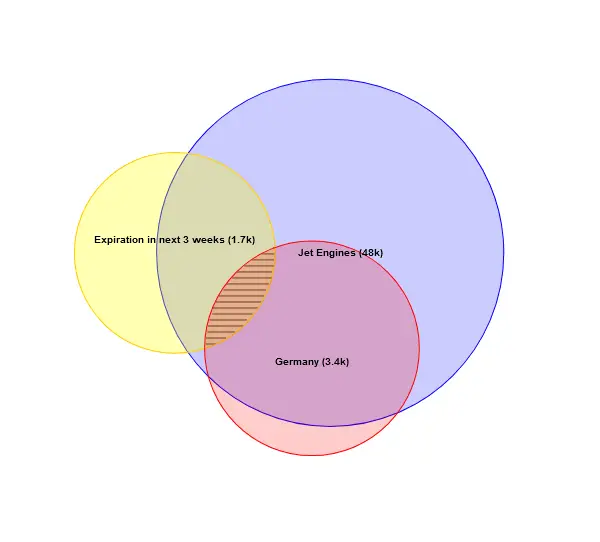
To illustrate, let’s look at a potential B2B scenario. You work for a company that manufactures and sells jet engines. You notice that Joe, a representative from a commercial airline in Germany, has used your website’s live chat feature to briefly talk to one of your sales reps. Joe did not grant explicit consent to receive communications from you. However, he was interested enough to ask questions about your product. Since Joe is subject to the GDPR, his actions would be considered a sign of “legitimate interest” or, in 4Comply terms, “permission”. You are allowed to email him about your products, but only for a limited time.

data segmentation for privacy

Tracking Consent in 4Segments

From a privacy perspective, data segmentation is an effective way to track both consent and permission. A powerful segmentation tool such as 4Segments makes the process much easier and is included with every 4Comply system. With a simple drag-and-drop gesture, you can begin building a new segment from your stored data.

Let’s continue our jet engine company example. After a few months, your marketing team wants to re-engage with contacts interested in jet engines but whose permission will soon expire. 4Segments makes it easy to collect this data. From there, 4Segments lets you take action with this data and send the whole group a reengagement email—for this example, we’ll say it’s an invitation to an upcoming webinar. Joe is free to simply ignore the message and allow his permission to expire. But if he signs up to attend the webinar, even without granting explicit consent, he has renewed his legitimate interest. You can continue contacting him about your products and services until his new permission expiration date.

data segmentation for privacy

Using Data Segmentation for Privacy

Proper data segmentation goes beyond simple marketing efforts. It also allows you to avoid sending communications to someone who no longer wants to hear from you. This not only gives them more direct control over how their data is used, but it also helps protect you from privacy-related complaints. Show your customers that you will honor their requests to the best of your ability.

Additionally, remember that many marketing automation tools (including Eloqua) charge per contact. Keeping contacts who no longer want to hear from you can literally cost you money! Segmenting customers with expired permission and removing their data is a wise step no matter your perspective.

Conclusion

Segmentation does more than help you optimize your marketing efforts. With the right data, you can also create segments that ensure you respect your customers’ consent or lack thereof in your marketing plans. Using data segmentation for privacy and consent management is a natural follow-up to using it solely for marketing and advertising.

Want to see privacy-focused segmentation in action? Contact us for a demo today.


data minimization

Historically, corporate approaches to customer data privacy have rarely gone smoothly. Marketers tend to collect as much customer data as possible to maximize their outreach. But customers aren’t always willing to provide this data, especially if there seems to be no good reason for them to share it. This kind of consumer behavior prompted marketers to adopt a new habit: data minimization.

What is Data Minimization?

Data minimization consists of two primary rules. First, and more famously: collect only as much data as you actually need. For instance, a company sending free T-shirts to its clients may need their shirt sizes, but not their birthdays.

Second: only retain the data as long as you need to fulfill its intended purpose. Continuing our T-shirt giveaway example, the company has no reason to retain their clients’ provided shirt sizes once the promotion ends. This is true even if they plan to give away more T-shirts in the future. They only need this data for a very specific purpose, and holding onto it outside that purpose is unnecessary. Future T-shirt giveaways can just request sizing information again.

Data Minimization’s Origins in Marketing

Data minimization has an interesting history in marketing. In the early days of online advertising, marketers relished the thought of getting every possible bit of customer data regardless of whether it was immediately needed or not. After all, maybe they could use it in the future. This led to the creation of very, very long online forms for customers to fill out. Someone might have to provide everything from their birthday to their favorite color just to subscribe to an email newsletter.

Unsurprisingly, this approach wasn’t popular with consumers. First of all, the painfully detailed forms just took a long time to fill out. Second, many of the questions seemed invasive and unnecessary. Customers were left wondering why a T-shirt giveaway form wanted their shoe size. Marketers looked for ways to improve form conversions and discovered through testing that short and noninvasive forms performed much better.  They less they asked, the more conversions they recorded. Marketers began adjusting forms accordingly. Forms became shorter and simpler, asking fewer questions and requiring less data. Conversion rates noticeably increased as more customers were willing to complete these shorter forms.

The original intent behind these changes was to increase leads and therefore revenue. But what marketers may not have known at the time was that they were practicing data minimization—a principle that meshes perfectly with modern data privacy laws.

data minimization

How Data Minimization Improves Customer Trust

Data minimization is an excellent way to gain customer trust for several specific reasons. First: data minimization requires companies to be very transparent about why they need certain information, rather than just requesting data for its own sake. Customers who are told they’ll be receiving a free T-shirt will happily provide their shirt size. Customers who don’t know why the company wants this information will be skeptical, perceive this over-reach as an invasion of their privacy, and may abandon the form entirely.

Second: data minimization shows that the company respects customers’ rights to not provide every single detail about themselves. This demonstrates that the company doesn’t just view its customers as points of data to be used. They recognize their customers are people and deserve the choice of what to do with their private data. This helps customer trust as people learn the company won’t exploit them.

Practicing Data Minimization in a Privacy-Focused World

The information age has made customers more aware than ever of just how fast and how far their data can spread. By implementing data minimization, your company can demonstrate that you understand your customers’ concerns and won’t betray their trust. Better yet, your marketing department will get more leads and your legal department won’t have to worry about unnecessarily collected data. Everyone wins!

For more information on data minimization and overall privacy compliance, give us a call and chat with our team of privacy experts.


marketing team development

Marketing success hinges on two critical factors: your customers and your team. Unfortunately, many marketers tend to prioritize the former while neglecting the latter.

Your marketing team is your most valuable asset, and investing in their development is critical to achieving better performance and results. In this blog post, we will explore a few simple, low-cost strategies to empower your team to excel through marketing team development.

Encourage Training

Provide your marketing team with access to a comprehensive library of training materials. Free or low-cost platforms such as LinkedIn Learning are a good place to start. While these platforms may lack in-depth content, they serve as an excellent introduction to continuous skill development. Empowering your team with self-paced learning opportunities enables them to expand their knowledge base and stay updated with the latest marketing trends.

Of course, the best or most in-depth training is rarely free. Consider offering a training stipend to your marketing team members or offering to cover the cost of approved self-development courses, books, events, or workshops. This allows employees to personalize their learning experiences while staying within budget.

Quarterly Workshops for Marketing Team Development

Your company likely has its own unique procedures or strategies that a generalized training program won’t cover. That’s where company-run workshops come into play. These events can be tailored to specific topics or tactics that require in-depth training, as well as provide collaborative and interactive learning experiences for targeted groups within your team. By investing in focused training, you equip your marketing team with the skills and knowledge necessary to excel in critical areas.

Individual Training

Recognize the key players in your marketing team who contribute significantly to your organization’s success. Consider offering them additional personalized training to further enhance their skills and unlock their full potential. This can not only improve individual performance, but also boost employee engagement and retention. When team members feel valued and supported, they are motivated to perform at their best and contribute to the team’s success.

marketing team development

Employee Socialization

Encourage your marketing team to have lunch together regularly. This simple act provides an opportunity for team members to connect, socialize, and foster stronger relationships. Additionally, hosting periodic lunch-and-learn sessions, where team members discuss their experiences or teach relevant topics, promotes sharing of skills and encourages a culture of continuous learning.

Companies with remote employees can accomplish this through virtual meetups. Whether it’s a Zoom call “lunch break” or an informal online chat about new ideas, a virtual marketing team meetup can be just as helpful as an in-person one.

Explore Hypothetical Scenarios

This is a fun and creative way to challenge your marketing team’s problem-solving abilities. By creating hypothetical scenarios and asking the team to strategize and react accordingly, you stimulate innovative thinking and explore alternative approaches. These exercises prepare your team to tackle unexpected situations and find effective solutions, ensuring their readiness in the face of real-world challenges.

Investing in Marketing Team Development

Elevating your marketing capabilities begins with investing in marketing team development. With these strategies, you can empower your marketing team to reach new heights of performance, collaboration, and morale. Start with one approach that aligns with your team’s needs and resources, and gradually explore the others. Remember, improving your marketing team doesn’t have to be complex or expensive – it simply requires a commitment to their growth and a willingness to foster a culture of continuous learning and innovation.

Interested in developing new training programs or strategies for your marketing team? We can help! Get in touch with our team today to schedule a call.


4Thought Marketing Logo   March 18, 2026 | Page 1 of 1 | https://4thoughtmarketing.com/articles/tag/marketing-roi/