dirty data

The High Cost of Dirty Data

Dirty data isn’t just an inconvenience—it’s a significant barrier to marketing success. Duplicate records, outdated information, inconsistent formatting, and incomplete fields can turn what should be a finely-tuned marketing machine into a costly, inefficient mess. Every day dirty data goes unaddressed is another day of lost opportunities, wasted budget, and skewed metrics. The consequences of dirty data are not just financial, but also strategic, as it can lead to misguided marketing decisions and missed opportunities.

The good news is that these issues can be tackled head-on. By addressing the root causes of dirty data and implementing effective data management practices, companies can transform their marketing efforts and start achieving their desired results, all in an efficient and effective manner.

Achieving marketing precision and maximizing ROI starts with clean, actionable data. Many businesses face challenges in succeeding with data-driven marketing due to hidden obstacles such as poor data quality and incomplete information. Dirty data can derail even the most well-crafted marketing strategies, draining resources and distorting results. By optimizing your database, ensuring compliance, and creating a streamlined contact list, you can drive meaningful engagement.

The Solution: Data Quality and Contact Optimization

Improving data quality means more than just cleaning up errors—it means building a leaner, higher-quality contact list that enhances engagement and efficiency. Here is our approach to improving data quality.

1. Data Cleansing and Segmentation

  • Data Cleansing & Deduplication: Identify and merge duplicate contacts, remove outdated details, and use automated validation tools to maintain the quality of your data.
  • Segmentation Strategy: Effective segmentation helps focus on the most relevant audiences. Create segments based on engagement, demographics, and behavioral data, ensuring your contact list is high-quality and highly relevant.
  • Engagement Scoring & Suppression: Build scoring models that rank contacts by engagement, allowing you to focus on active contacts and suppress or remove those with little value.

2. Data Quality Audits and Practical Solutions

  • Comprehensive Data Audits: Perform a full audit to identify common issues, such as misspelled email addresses, inconsistent formats, and duplicates. Automating these checks saves time and minimizes human errors.
  • Dirty Data Scorecard: To prioritize cleanup, develop a scorecard that categorizes data issues by severity. This targeted approach helps maintain efficiency and keeps the focus on fields with the most impact.

3. Ensuring Compliance and Privacy

Compliance with privacy laws is crucial for any contact database.

  • Privacy Audits (GDPR, CCPA, etc.): Conduct regular audits to ensure your contact data meets current regulations. Contacts that no longer meet privacy standards are automatically removed.
  • Contact Preference Management: By integrating preference centers, you ensure your contacts receive only the content they’re interested in and their preferences are respected. Automated workflows help manage contact suppression or deletion based on preference updates.

4. Engagement Optimization Services

Clean data means better engagement. Refine and target your campaigns effectively:

  • Targeted Re-engagement Campaigns: Identify low-engagement contacts and use tools to run re-engagement campaigns. If contacts do not respond, consider suppressing them to maintain an active list.
  • Personalization & Dynamic Content: Personalized messaging increases relevance and engagement. Use dynamic content to re-engage inactive contacts based on their previous interactions.

5. Long-Term Data Governance

Maintaining clean data is an ongoing process. Establishing a long-term data governance framework is crucial to keeping your contact list in top shape.

  • Data Quality Standards: Define standards to ensure consistency across departments and reduce the likelihood of errors.
  • Team Collaboration on Data Entry: Alignment between marketing, sales, and operations teams is crucial. Implement structured data entry protocols to improve data consistency, such as dropdowns instead of free-form fields.
  • Routine Data Cleansing: Regular data reviews remove outdated or incorrect information before it impacts a campaign. Automated and manual checks are combined for the best results.
  • Governance Framework: Establishing transparent data practices ensures ongoing quality control and prevents data issues from reoccurring.

Key Benefits of Data Quality Improvement

  • Lower Marketing Costs: A leaner contact list means reduced database costs.
  • Higher Engagement: Focus your resources on actively engaged contacts to boost campaign performance.
  • Improved Compliance: Stay on top of privacy regulations and minimize risks.
  • Better Campaign ROI: Clean, targeted data leads to more effective campaigns and a higher return on investment.

Take the Next Step with Data Quality Services from 4Thought Marketing

Don’t let dirty data hold your marketing back. Partner with 4Thought Marketing to optimize your database, reduce costs, and enhance your marketing success. Our tailored solutions will help you build a compliant, lean, and engaged contact list that drives results. Whether you need us to manage the entire project or tackle specific tasks, or if you want to empower your team with our training, we’re here to help. Contact us today to take the next step towards data-driven marketing success!


integrations

Modern marketers use a variety of tools and platforms to run campaigns. But none of these tools works in isolation. One critical part of your marketing system is integration, ensuring that all your tools work well together. Seamless data flow helps create genuinely effective marketing campaigns.

However, integrating these platforms requires careful attention to your data. Poor data management can cause an integration to fail and make your job much more difficult. Today, we’ll be looking at a few reasons why integrations fail, and what you can do to avoid them.

Why Do Integrations Fail?

The primary reason for integration failures is unhealthy data. When marketers create new forms or import records without considering the data requirements of all integrated systems, they risk feeding incorrect data into these systems. This oversight can result in significant issues, including:

  • Incorrectly classified data: CRM systems may reject entries because they don’t meet predefined criteria. For example, an entry labeled “PC maker” might not be a valid industry category, or “not interested” might not be a recognized job level.
  • Segmentation issues: Incorrect (or incorrectly classified) data can cause segmentation to fail. If the CRM passes incorrect options, it can lead to inaccurate targeting and campaign execution.
  • Closed-loop reporting failures: Discrepancies in campaign names, company names, or other critical fields can disrupt reporting, making it difficult to track the effectiveness of marketing efforts.

These errors can result in lost records, impacting sales and marketing activities. Even in well-designed systems, a lack of monitoring can mean that potential problems go unnoticed for far too long.

Ensuring Integration Success

1. Robust Error Tracking

A successful integration begins with a well-defined error-tracking system. This system should:

  • Record every error that occurs, maintaining logs for several months
  • Automatically notify the appropriate personnel when an error is detected

2. Structured Import Processes

Establishing clear processes for data imports is crucial. This involves:

  • Defining stringent protocols for importing data
  • Ensuring these protocols are consistently followed
integrations

3. Thoughtful Form Creation

Form creation should be a deliberate process that prioritizes data integrity across all systems. Key steps include:

  • Developing a process for form creation that considers the requirements of all integrated systems
  • Testing forms to ensure that data flows correctly through the CRM and other systems, validating all common options, especially new ones

4. Assigning a Data Steward

When issues arise, having a designated data steward can make a significant difference. This person’s responsibilities could include:

  • Identifying and resolving integration errors
  • Investigating the root cause of these errors, whether from forms or imports
  • Communicating with the responsible personnel to prevent future issues
  • Implementing a “data washing machine” to convert incorrect entries into valid, generic options

Training & Clear Processes

Many integration issues stem from turnover with the accompanying loss of domain experience and the introduction of new team members. By implementing clear, documented processes, you can mitigate these risks. Ensure that new personnel understand how to:

  • Create forms that align with data integrity standards
  • Perform imports that adhere to established protocols
  • Maintain the health of your integration data

Stay Proactive

Every marketer wishes that integrations went smoothly every single time. However, the reality is that your marketing platforms and tools simply work with the data that they’re given. It’s up to you to make sure that the data they have is accurate and compatible with all systems involved. Proactive data management goes a long way toward keeping your integrations smooth and your future marketing campaigns streamlined.

To learn more about integrating your systems and ensuring data quality, contact 4Thought Marketing today.


chatgpt data analysis

If you’ve worked in marketing for any period of time, then you know how much your team relies on data. Webpage visits, email clicks, customer purchases, event registrations, marketing consent or lack thereof—there’s no end to the information you have to sort through. And you have to make it all say something. How should your strategy change depending on all this data?

This is where data analysis comes in. Raw information on its own isn’t super helpful. You have to understand what the data means and how to read it. But what if you’re not a data analysis expert? Fortunately, a tool released in 2023 offers an efficient, user-friendly way to approach this task. This tool, of course, is the ChatGPT data analysis system.

Why Choose the ChatGPT Data Analysis Tool?

The ChatGPT data analysis tool offers several major benefits to anyone who needs a quick bit of basic data help, most notably:

  • Accessibility for all skill levels: Whether you’re a novice who has never analyzed data before or an experienced data analyst looking for a quick solution, the tool offers a straightforward and intuitive interface.
  • No coding required: You don’t need to write complex scripts or commands to analyze your data. Instead, you can interact with the tool using natural language queries, making it accessible to a broader audience regardless of their coding experience.
  • Time-efficient: Time is often a critical factor when working with marketing data. ChatGPT’s Data Analysis tool allows you to perform data analysis tasks quickly and efficiently. You can get insights from your data without the need for extensive setup or learning curves.
  • Interpretation assistance: Analyzing data is not just about running calculations—it’s about understanding the results and drawing meaningful conclusions. ChatGPT’s tool not only helps you crunch the numbers but also provides basic explanations and interpretations, making it easier to grasp the significance of your findings.

How to Use the ChatGPT Data Analysis Tool

Using ChatGPT’s Data Analysis tool is a straightforward process.

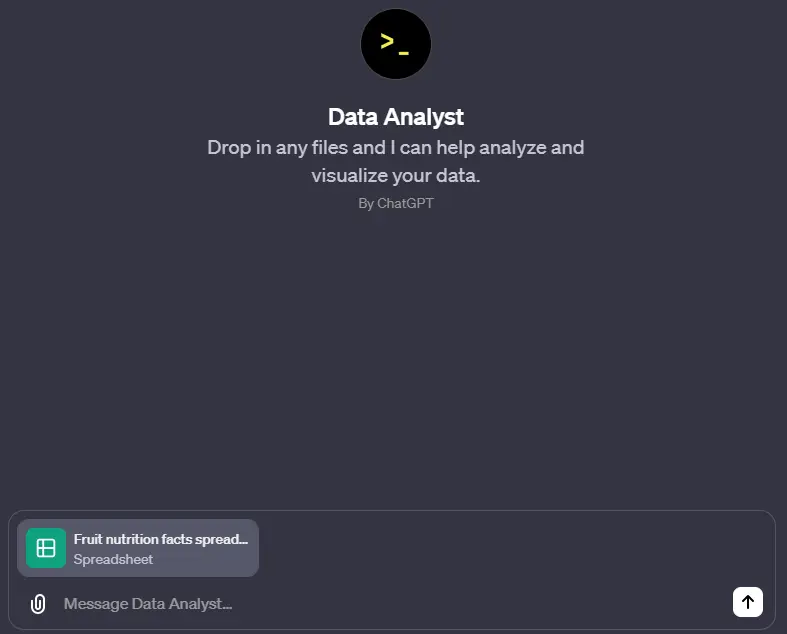
To begin, you can access ChatGPT’s Data Analysis tool through a web browser or an integrated platform that offers the tool. Make sure you have a dataset ready for analysis in a compatible format (e.g., CSV, Excel). Once you’re in the tool, you’ll find an option to upload your dataset. Click the paperclip icon and choose the file you want to upload, or drag and drop the file directly into the chatbox. (Remember that the maximum file size you can upload to any ChatGPT tool is 512 MB.)

chatgpt data analysis

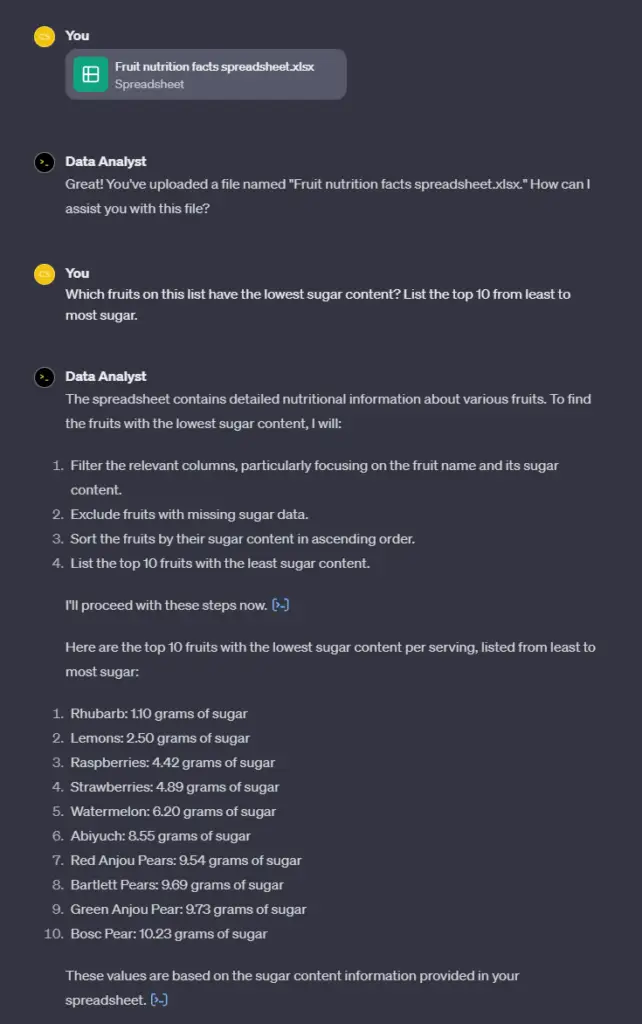
Here’s where the magic happens. You can start by asking the tool questions about your data. For example, you can inquire about the average, median, or sum of a particular column, or you can request a breakdown of your data by specific categories.

chatgpt data analysis

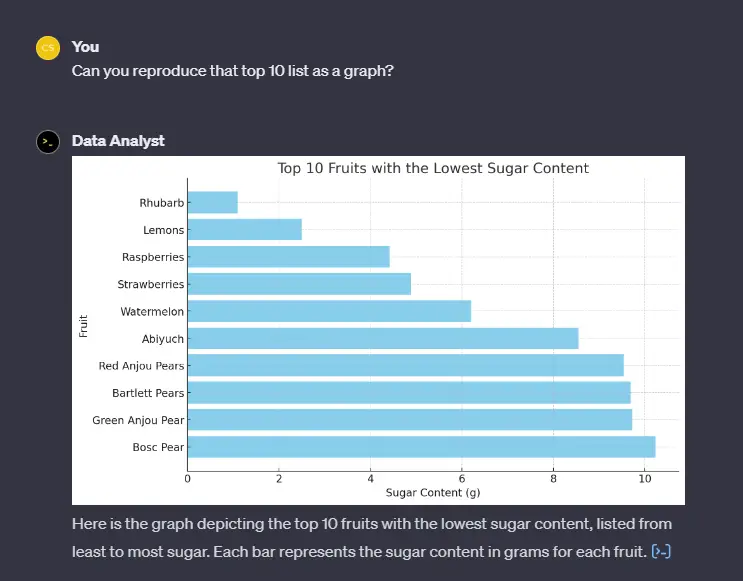
After posing your questions, ChatGPT’s Data Analysis tool will process the data and provide you with relevant insights. You can explore charts, graphs, and explanations to better understand your data.

chatgpt data analysis

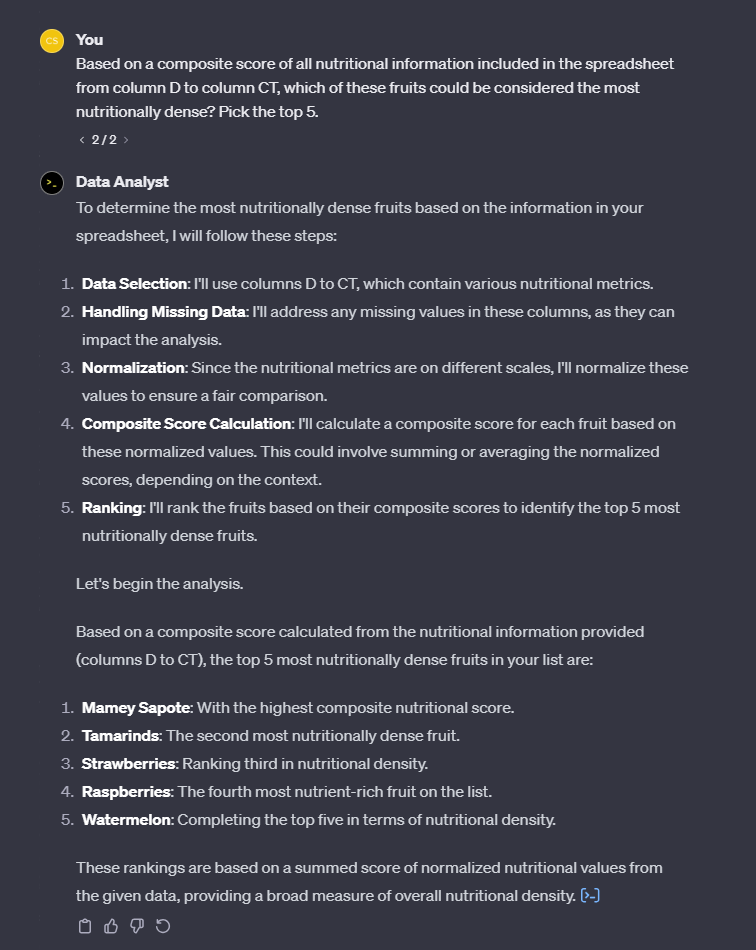
Don’t hesitate to refine your questions and explore different aspects of your dataset. The tool is designed to be interactive, allowing you to iteratively analyze and refine your findings.

chatgpt data analysis

Once you’re satisfied with your analysis, you can export the results or share them with colleagues or stakeholders. This makes collaboration and decision-making more accessible.

Conclusion

The ChatGPT Data Analysis tool offers a straightforward approach to basic data analysis, making it accessible to individuals and professionals across various domains. With its intuitive interface, no coding requirement, time efficiency, and interpretation assistance, the tool empowers users to gain insights from their data without the steep learning curve associated with traditional data analysis tools.

Embrace the power of data analysis without the intimidation factor, and let this tool guide you in making informed decisions based on your data-driven discoveries.

Need a more in-depth look at your marketing data than ChatGPT can provide? Get in touch with our team today for expert help.


data steward

Adobe Marketo, Oracle Eloqua, and other marketing users are accustomed to handling and manipulating large amounts of vital data. But in the day-to-day process of working in a marketing automation system, CDP, or CRM, it can be easy to forget that this data and integrations need regular check-ups. Rather than distributing this responsibility to several marketing team members, appointing a single expert to perform this task may be better. This, simply put, is the role of a data steward.

What Does a Data Steward Do?

A data steward plays an important role in data management and governance, as they help the organization leverage its data assets and processes to full capacity and avoid risks and costs associated with poor data quality and broken processes. They ensure the quality and fitness of your marketing data, such as contacts, accounts, and campaigns. They may also be responsible for ensuring the security and privacy of the data that an organization collects, uses, and shares. Their job duties include:

  • Defining and documenting data elements, standards, policies, and rules
  • Identifying and resolving data quality issues and conflicts
  • Monitoring and enforcing data governance practices and compliance
  • Educating and collaborating with data users and stakeholders
  • Advocating for and promoting data-driven decision-making and innovation

Data stewards also handle time-consuming but critical parts of data management, including but not limited to:

  • Data cleansing: removing or correcting inaccurate, incomplete, or duplicate data
  • Data normalization: standardizing the format or naming of data fields
  • Data enrichment: adding or updating relevant data attributes
  • Data integration: connecting and synchronizing data from different sources
  • Data analysis: measuring and reporting on data performance and insights
data steward

Improving Your Campaigns with a Data Steward

Given how important data is to every step of your marketing campaigns, it’s hard to overstate how important of a role the data steward plays. Ensuring your data is in expert hands will dramatically improve how that data is processed and used . The data steward’s contributions will help alleviate many of your marketing concerns, most notably:

  • Deliverability: ensuring your emails reach the intended recipients
  • Segmentation: reaching the correct, personalized audiences
  • Reporting: generating accurate and meaningful metrics and dashboards
  • Compliance: adhering to data privacy and security regulations
  • Satisfaction: meeting or exceeding customer expectations and needs

Is Your Marketing Data in Good Hands?

As a marketing professional, you understand the importance of accurate, easily accessible data. But you also know that you don’t have the time to manage your marketing campaigns and handle the massive amount of information that needs to be secured, quality-checked, or funneled to the appropriate places. An Eloqua data steward can handle all of that. All you have to do is find an expert—and we can help with that. Contact us today to learn more.


4Thought Marketing Logo   March 17, 2026 | Page 1 of 1 | https://4thoughtmarketing.com/articles/tag/data-management/