ai in marketing

AI is one of the most rapidly evolving segments of technology worldwide. As more companies adopt it in some form, its influence only grows. Of course, this raises the question of what AI means for the future of marketing.

This series of articles looks at several tangible ways AI can improve your marketing approach. Today, we’ll examine the potential role of AI in data analysis and marketing automation.

AI in marketing is a hot topic. But underneath all the hype lies the all-important question: what, specifically, can AI in marketing do? How can your team use it in day-to-day work?

Let’s explore a few clever ways to use AI in marketing and turn this buzzword into action.

Idea Generation & Brainstorming

AI can be a powerful tool for brainstorming based on available data. For instance, having an AI look over your most recent email marketing campaign might highlight suggestions for getting more clicks. This lets your marketing team explore options to test and refine upcoming campaigns accordingly. A human might not notice this pattern immediately, but an AI can quickly review the data and identify trends.

Beyond simple data analysis, an AI can also help with actual content creation. An AI can help your marketing team brainstorm content topics, assemble outlines, or even edit the tone of an article you give it. The AI can’t (and shouldn’t) write for you. However, it can give you valuable suggestions to improve the material you’ve already written.

An AI marketing tool can also sift through past company data, competitor campaigns, and even industry trends to see what’s worked in the past and what might work in the future. This proactive approach helps your marketing team move beyond relevance into pioneering.

Market Segmentation & Social Listening

One of AI’s most valuable contributions to marketing is its ability to analyze social media data at an unprecedented scale. An AI can examine your company’s social media posts and interactions to precisely identify critical patterns.

Much like the email marketing example, this kind of data analysis tells your team what works and for what customer segments. This kind of segmentation doesn’t have to stop with social media, either. Emails, text messages, and other marketing communications could benefit from a quick AI analysis to determine what’s working.

Personalization & Engagement

Customer interests shift—and so will their purchases from you. If you can’t keep up with what they want, they might lose interest and look elsewhere.

This is where an AI can help. With a detailed analysis of past customer behavior and preferences, your AI can suggest products or services a customer is more likely to be interested in. This can extend to offering discounts or promotions to re-engage inactive contacts or keep current ones interested. An AI can even identify the optimal time and communication method to reach a specific person.

Finally, AI can also facilitate real-time engagement with customers through chatbots. An AI-powered chat function on your website can provide instant customer support and address FAQs. Make sure that these AI-powered tools hand the conversation over to a human representative if more complex or sensitive matters arise.

Embracing AI for a Competitive Edge

As AI becomes more entrenched in marketing circles, those who leverage its capabilities will gain a competitive edge. However, the key to success lies in using AI to complement, rather than replace, human creativity. By applying AI in ideation, market segmentation, and personalization, marketers can enhance their campaigns, deliver more targeted and engaging content, and ultimately drive better results.

Get started with AI in marketing and stay ahead of the curve today! Contact our team of experts to learn more.

ai in marketing

ai data analysis

AI is one of the most rapidly evolving segments of technology worldwide. As more companies adopt it in some form, its influence only continues to grow. Of course, this raises the question of what AI means for the future of marketing.

This series of articles looks at several tangible ways AI can improve your marketing approach. Today, we’ll examine the potential role of AI in data analysis and marketing automation.

Marketing involves collecting, sorting, and using a lot of data. What exactly this data is used for varies. However, one thing holds true: raw data is not particularly useful. The collected data must be examined, refined, interpreted, and connected to other information to boost your marketing efforts. And what happens if your company’s data analytics expert is unavailable, or worse, you don’t have one?

Recent developments show promise in using AI to help your marketing team make the data more usable. This is especially true for those with a firm grasp of marketing analytics fundamentals but less than ideal experience using complex data analytics software.

What Can AI-Driven Data Analysis Do?

An AI can read a detailed spreadsheet of data in seconds. The tool can then assist with several key marketing functions that offer particular value.

First, an AI can perform a rapid quality check on your data and confirm if it’s accurate and usable. An AI can also highlight any potential errors or instances of anomalous or “dirty data” to remove and suggest improvements for future data collection.

Second, AI-assisted data analysis allows for detailed predictive analytics to be developed much faster than before, and compare the results with industry benchmarks. This allows your team to more accurately guess which direction the market may be going and what consumers will want in the near future. This leads to better decision-making that’s far more likely to capture and retain customer interest. It also saves precious time, allowing your team to be among the first to identify and capitalize on an upcoming trend.

Third, AI-driven customer data analysis allows for increased personalization. An AI tool can make connections or inferences from data points that a human might miss. It can also consider every minute piece of information, even things that might not seem immediately helpful. The result? Your marketing team can explore and construct more detailed customer profiles and create content that speaks directly to a customer’s pain points.

Finally, AI can simply uncover new insights from collected data that aren’t readily apparent, even things some expert data analysis might overlook. If you understand what the data contains but aren’t sure how to narrow it down to what you want, an AI can be an excellent tool.

Remember: while AI-driven data analysis offers valuable help to marketers who aren’t experts, the results still require human review and validation. AI still makes plenty of mistakes. Your data analytics expert can help locate and fix errors in the AI’s results.

Should You Consider AI Data Analysis?

If your business handles significant amounts of data, your team can benefit from using AI to do the busy work. Not only does this free up time, it also allows for more personalized marketing efforts and even unearthing new insights that a human might have overlooked. And AI isn’t going anywhere. Now is an excellent time to look into AI data analysis for your marketing team.

For expert help getting your AI data analysis system off the ground, get in touch with us today.

ai data analysis

dirty data

The High Cost of Dirty Data

Dirty data isn’t just an inconvenience—it’s a significant barrier to marketing success. Duplicate records, outdated information, inconsistent formatting, and incomplete fields can turn what should be a finely-tuned marketing machine into a costly, inefficient mess. Every day dirty data goes unaddressed is another day of lost opportunities, wasted budget, and skewed metrics. The consequences of dirty data are not just financial, but also strategic, as it can lead to misguided marketing decisions and missed opportunities.

The good news is that these issues can be tackled head-on. By addressing the root causes of dirty data and implementing effective data management practices, companies can transform their marketing efforts and start achieving their desired results, all in an efficient and effective manner.

Achieving marketing precision and maximizing ROI starts with clean, actionable data. Many businesses face challenges in succeeding with data-driven marketing due to hidden obstacles such as poor data quality and incomplete information. Dirty data can derail even the most well-crafted marketing strategies, draining resources and distorting results. By optimizing your database, ensuring compliance, and creating a streamlined contact list, you can drive meaningful engagement.

The Solution: Data Quality and Contact Optimization

Improving data quality means more than just cleaning up errors—it means building a leaner, higher-quality contact list that enhances engagement and efficiency. Here is our approach to improving data quality.

1. Data Cleansing and Segmentation

  • Data Cleansing & Deduplication: Identify and merge duplicate contacts, remove outdated details, and use automated validation tools to maintain the quality of your data.
  • Segmentation Strategy: Effective segmentation helps focus on the most relevant audiences. Create segments based on engagement, demographics, and behavioral data, ensuring your contact list is high-quality and highly relevant.
  • Engagement Scoring & Suppression: Build scoring models that rank contacts by engagement, allowing you to focus on active contacts and suppress or remove those with little value.

2. Data Quality Audits and Practical Solutions

  • Comprehensive Data Audits: Perform a full audit to identify common issues, such as misspelled email addresses, inconsistent formats, and duplicates. Automating these checks saves time and minimizes human errors.
  • Dirty Data Scorecard: To prioritize cleanup, develop a scorecard that categorizes data issues by severity. This targeted approach helps maintain efficiency and keeps the focus on fields with the most impact.

3. Ensuring Compliance and Privacy

Compliance with privacy laws is crucial for any contact database.

  • Privacy Audits (GDPR, CCPA, etc.): Conduct regular audits to ensure your contact data meets current regulations. Contacts that no longer meet privacy standards are automatically removed.
  • Contact Preference Management: By integrating preference centers, you ensure your contacts receive only the content they’re interested in and their preferences are respected. Automated workflows help manage contact suppression or deletion based on preference updates.

4. Engagement Optimization Services

Clean data means better engagement. Refine and target your campaigns effectively:

  • Targeted Re-engagement Campaigns: Identify low-engagement contacts and use tools to run re-engagement campaigns. If contacts do not respond, consider suppressing them to maintain an active list.
  • Personalization & Dynamic Content: Personalized messaging increases relevance and engagement. Use dynamic content to re-engage inactive contacts based on their previous interactions.

5. Long-Term Data Governance

Maintaining clean data is an ongoing process. Establishing a long-term data governance framework is crucial to keeping your contact list in top shape.

  • Data Quality Standards: Define standards to ensure consistency across departments and reduce the likelihood of errors.
  • Team Collaboration on Data Entry: Alignment between marketing, sales, and operations teams is crucial. Implement structured data entry protocols to improve data consistency, such as dropdowns instead of free-form fields.
  • Routine Data Cleansing: Regular data reviews remove outdated or incorrect information before it impacts a campaign. Automated and manual checks are combined for the best results.
  • Governance Framework: Establishing transparent data practices ensures ongoing quality control and prevents data issues from reoccurring.

Key Benefits of Data Quality Improvement

  • Lower Marketing Costs: A leaner contact list means reduced database costs.
  • Higher Engagement: Focus your resources on actively engaged contacts to boost campaign performance.
  • Improved Compliance: Stay on top of privacy regulations and minimize risks.
  • Better Campaign ROI: Clean, targeted data leads to more effective campaigns and a higher return on investment.

Take the Next Step with Data Quality Services from 4Thought Marketing

Don’t let dirty data hold your marketing back. Partner with 4Thought Marketing to optimize your database, reduce costs, and enhance your marketing success. Our tailored solutions will help you build a compliant, lean, and engaged contact list that drives results. Whether you need us to manage the entire project or tackle specific tasks, or if you want to empower your team with our training, we’re here to help. Contact us today to take the next step towards data-driven marketing success!


November 21, 2024

Using AI in MOPs, Privacy for Eloqua

This month, we discussed leveraging GenAI in Marketing Operations (MOPs) and insights into privacy compliance.

Our discussion will cover:

  • Key concepts in data privacy for marketing operations
  • Strategies to maximize marketing while staying compliant
  • Using GenAI to enhance productivity and quality in MOPs

holiday marketing

As the holiday season kicks off in full force, marketers have a unique opportunity. Obviously everyone wants to meet their end-of-year goals. But beyond that, holiday marketing offers your team a chance to establish customer relationships that will last long after the new year.

Let’s look at a few crucial steps toward holiday marketing success.

1. Start Early with a Clear Plan

Successful holiday campaigns are made long in advance. Planning early ensures you can develop a consistent theme across all touchpoints, from social media to email. Most importantly, the earlier you get started, the more time you have to test and adjust before the holiday rush begins.

2. Create Eye-Catching Discounts & Time-Sensitive Offers

Consumers are deal-driven during the holidays, actively seeking discounts. Match their sense of urgency with flash sales or week-long discounts. Online-only discount codes or similar offers also help to drive online sales. Not only will these promotions appeal to your current customers, but they can also attract plenty of new ones.

3. Make Gift-Giving Easy with Bundles & Guides

Holiday shoppers are often overwhelmed with choices. Providing curated gift guides or wish lists—whether in email campaigns or as a feature on your website—can ease decision fatigue. These guides should feature popular products segmented by recipient type or interest, making them shoppable with clear CTAs like “Shop Now.” Discounting these gift bundles will also streamline the experience and encourage future purchases.

4. Tap into Nostalgia

The holidays bring a desire for warmth and familiarity. Incorporating nostalgic elements—like vintage design, traditional holiday music, and classic imagery—allows your customers to associate those positive elements with your brand. Try using specific content like sepia-toned photos and traditional holiday elements in your marketing.

5. Build Customer Loyalty Through Personalization

While the holiday season is a great time to attract new customers, loyal ones are often the highest spenders. Personalized holiday emails for loyal customers can strengthen loyalty and encourage repeat purchases. Offer your top customers exclusive previews, special discounts, or even handwritten thank-you notes. These gestures demonstrate appreciation, helping keep your brand top-of-mind as they shop for gifts.

holiday marketing

6. Engage on Mobile & Social Channels

With more shoppers shopping on mobile devices and browsing on social media, optimizing both channels is essential. Focus on mobile-friendly shopping experiences with easy navigation and fast checkout processes. Social media, particularly Instagram, Pinterest, and TikTok, offers high engagement potential. Use these platforms to showcase visually appealing content, video product demos, and shareable holiday-themed posts that encourage interaction and sharing.

7. Offer Convenience & Value with Each Purchase

Today’s shoppers are not only looking for deals—they also value convenience. Offering features like free shipping, gift-wrapping, or seamless return policies can set your brand apart. Consider including perks like early access to holiday sales or fast, reliable shipping, as these are especially attractive during a busy season and can reduce the likelihood of cart abandonment.

8. Keep a Close Eye on Metrics

Finally, closely track the performance of your campaigns. Identify and analyze KPIs such as engagement rates, conversion rates, and ROI for specific promotions. Monitoring these metrics allows you to make data-informed adjustments, refine your campaign approach, and maximize your impact in real time.

The Challenge of Holiday Marketing

With a combination of early planning, customer-centric tactics, and thoughtful, authentic engagement, marketers can position their brands for holiday success. Embracing nostalgia, delivering convenience, and investing in loyalty-building strategies will not only drive revenue but also strengthen customer relationships, ensuring that the holiday season is both profitable and meaningful.

Don’t let the holiday season get away from you! Contact us today to get a head start.


grow your email contact list

Your email marketing campaign is only as good as your database of email addresses. Despite claims to the contrary, high-quality email lists with an engaged, interested audience cannot be purchased. Building an email list is not a one-off task, either. It is in constant flux as defunct email addresses are removed, people unsubscribe, new email addresses are added, and the list grows.

There are many strategies that marketers can employ to achieve a growing list of quality subscribers.

Shifting from Outbound Marketing to Inbound

People are inundated with email blasts. Often, the first reaction is to hit the delete button. In fact, 45% of spam receivers hit delete while a further 27% report unsolicited emails as spam.

Shifting strategies from outbound to inbound marketing allows you to actively engage the right audience as you build brand awareness and build genuine relationships with potential customers. Social media, SEO, and content creation are all inbound marketing strategies (demand generation strategies) which are further aided by lead generation.

Lead Generation Strategies

Lead generation is the part of the marketing funnel that helps capture customer data, including their email addresses. This allows marketers to create highly personalized campaigns to further engage an already interested audience.

Using demand and lead generation strategies allows marketers to collect valuable zero-party data i.e., information offered by the customers themselves. Using zero-party data and being transparent about its use builds trust with customers. It also helps marketers remain compliant with various data privacy laws around the world.

Collecting opt-in data isn’t as difficult as it sounds; it’s a natural follow-up to demand generation strategies.

Give Customers a Reason to Share Their Email Addresses

Gated content offerings are a popular way to collect email addresses and segment your audience by interests. According to Semrush, 17% of marketers and business owners claim that gated content is their top performing type of content.

Gated content needs to be carefully curated, high-value content that your target audience is looking for. Gated content typically comes in the form of whitepapers, original research publications, webinars, and online courses. Tools like calculators, presentation templates, workbooks, or free trials for programs are other forms of gated content to consider.

grow your email contact list

Make Sharing Easy

Make your emails easy to share by including a share button where clicking it takes reader straight to a compose email window to share it with friends and colleagues. An opt in button in the same email allows these friends and colleagues to subscribe to your emails with a single click and promotes organic growth. Social sharing buttons are also a great way to reach new subscribers. The more unique and interesting your content, the more shares you are likely to see.

Keep Forms Short

A long, complicated contact form is the quickest way to deter a prospective lead. Keep your forms short and use your nurture journey to gather more information as you go along.

Re-Engage Stale Contacts

If you have an old list of email addresses that you suspect are mostly stale leads, consider sending them an option to opt in for emails again. Alternatively, use a fresh approach and give them the opportunity to snooze emails for a while. This will allow you to re-engage old clients as well as scrub your list of disinterested parties and improve email deliverability as well.

Place CTAs Strategically

CTAs on your business’s home page, contact page, and even about page can encourage potential clients to sign up for your newsletter or a gated resource. Promote your gated content or offers on your marketing channels to drive viewership and engagement.

Craft your CTA text to show customers the value and benefits of signing up with you. Get creative and add a CTA to your employees’ email signatures to take people to an opt in landing page for a newsletter. Always A/B test copy and emails to see what works best.

Need help improving your email database? Get in touch with our marketing experts for more strategies on how you can build your email list with privacy compliant, zero-party data.


cetera find your fit

A long list of engaged, interested leads makes any marketer happy. After all, the more people interested in a company’s products or services, the better the bottom line. However, a broad and diverse pool of clientele can lead to an unexpected problem: the conventional marketing funnel doesn’t always apply.

This is the situation Cetera, a leading wealth management services provider, found itself in.

The Challenge: A Diverse & Rapidly Expanding Customer Base

Following rapid growth and multiple company acquisitions, Cetera wanted a way to connect to prospects with varying needs and preferences in a more bespoke way to better classify and route leads. Cetera’s existing methods relied on qualifying leads as part of the initial CSR engagement process, which wasn’t as efficient.  

“Our team was spending more time on the phone classifying leads than we wanted,” explained Merrill Varghese, Senior VP of Corporate Marketing. “We needed a better approach that allowed us to get right to a needs-focused conversation in that first call, so it could be more about how we could support the prospect’s needs.” Fortunately, the team didn’t have to wait long. What started as a project building an internal tool for mapping interest to available services became the spark for a client-facing, scalable, and self-selected approach.

The Solution: Implementing a Dynamic Customer Engagement Tool

Cetera knew what they needed. However, building and implementing the solution would take time—time the team couldn’t afford. To address this challenge, Cetera turned to the 4Thought Marketing team.

The 4Thought team used Cetera’s existing tech stack, including Adobe Marketo, to construct a tool to streamline the routing process. The “Find Your Fit” tool guided prospects through a series of questions, allowing them to identify their own needs and self-match with the most relevant offerings from Cetera.

The solution leveraged advanced algorithms and data-driven insights to categorize prospects based on their responses. This ensured that each prospect received a personalized recommendation, directing them to the top three programs that were the best match for their interests and needs. This approach enhanced the customer experience and streamlined Cetera’s internal processes.

How It Worked: A Personalized Journey for Every Customer

The system was a dynamic “choose your own adventure” experience. Prospects were prompted to answer questions upon visiting Cetera’s platform. Depending on their answers, the tool used predefined algorithms to categorize them into distinct customer segments.

For instance, if a prospect indicated an interest in tax and accounting services, the tool would direct them to content and service options specifically designed for tax professionals and accountants, ensuring they found exactly what they needed without unnecessary searching. This improved user satisfaction and increased the likelihood of conversion, as clients were more likely to engage with content directly relevant to their needs.

cetera find your fit

The Results: Enhanced Engagement & Higher Conversion Rates

It didn’t take long for Cetera to see an improvement. “The ‘Find Your Fit’ system made it easy for prospects to find exactly what they were looking for and understand how we could support their specific needs, and gave our sales team an immediate advantage. It was a game-changer for us and the prospect experience we were trying to create,” Merrill Varghese explains.

The implementation of the self-categorization tool yielded impressive results for Cetera:

  • Improved customer engagement: The tool significantly increased customer engagement and satisfaction by providing a more personalized experience.
  • Higher conversion rates: The tailored approach led to higher conversion rates, as prospects were directed to the most relevant services and support personnel from the start. This reduced the time and effort required for decision-making.
  • Operational efficiency: The tool allowed Cetera to manage a diverse customer base more efficiently. By automating the initial sorting and categorization of prospects, the tool reduced the workload on sales and marketing teams, allowing them to focus on more strategic tasks.
  • Data-driven insights: This approach also provided Cetera with valuable customer preferences and behavior data. This data was instrumental in refining marketing strategies and ensuring that each advisor segment received the most relevant content and offers.

Key Takeaways for Marketers

Cetera’s experience highlights several important lessons for marketers facing similar challenges:

  • Adaptability is crucial: As businesses grow and evolve, so too must their marketing strategies. A flexible approach that can accommodate diverse customer needs is essential for success in a dynamic market.
  • Personalization drives engagement: Tools that enable customers to self-identify their needs can significantly enhance the customer experience and improve engagement and conversion rates.
  • Leverage technology for efficiency: Automating the segmentation process improves accuracy and allows marketing teams to focus on strategy rather than administrative tasks.
  • Continuous learning and improvement: Using data to understand customer behavior is key to refining marketing strategies and ensuring long-term success.

If your company has the same challenge as Cetera, the answer might already be in your existing tech stack. We can help you find it and put it into practice. Get in touch with our team today to learn more and take the first step toward a long-term solution.


October 31, 2024

Driving Growth Through Collaboration – Eloqua Office Hours Replay

When Morningstar sought to kickstart a new lifecycle marketing strategy, they organized a two-day hackathon to spark innovative ideas and increase collaboration across teams. Mindy Chase from Morningstar and Colleen Lenahan of 4Thought Marketing will share how they planned and executed the event and the impressive results they’ve achieved so far.

You will learn about

  • The genesis for this event
  • Why they chose a hackathon format
  • How it was conducted
  • How the products of the hackathon are being used to shape strategy

With an average ROI of $36 for every dollar spent, email marketing remains one of the most lucrative campaign strategies. It’s every marketer’s dream to maintain an impressive ROI. But what happens when your existing strategies are falling short? In that case, it’s time to consider how to optimize email campaigns for your audience.

Are Optimized Email Campaigns Really That Important?

Simply defined, an optimized email marketing strategy empowers your team to create high-quality campaigns that not only land in recipients’ inboxes but also drive engagement and align with your business objectives. A poorly optimized email strategy hurts your campaigns. Customers won’t be as engaged, and your ROI will plummet.

Your email campaign may need a rework if you’re experiencing:

  • Low or decreasing email engagement rates
  • Elevated levels of customer complaints or spam reports
  • Drops in click-through rates or opens with no clear reason
  • Increased bounce or unsubscribe rates

Characteristics of an Optimized Email Campaign

On the other hand, an optimized email campaign includes the following characteristics:

  1. Effective list building: A healthy email program starts with your subscriber list and great segmentation. Everyone in your campaign should be genuinely interested in your offerings and ready to engage with your emails.
  2. Regular list maintenance: Inactive or invalid email addresses result in failed deliveries. Review your email database regularly and get rid of the unusable contact info.
  3. High deliverability: Your emails should reliably reach recipients’ inboxes rather than getting lost in spam folders.
  4. Smooth workflow: From ideation to design, production, and testing, the email creation process should flow seamlessly to minimize disruptions.
  5. Engaging campaigns: Whether it’s making a purchase or signing up for an event, your emails should drive recipients to a desired action. Keep your messages compelling, straightforward, and intriguing.
  6. Always improving: Experiment, learn, and refine your strategies accordingly. Keeping up with technological changes and customer preferences ensures you don’t get left behind.
  7. Watching for red flags: Keep an eye on your email metrics: click-throughs, bounces, spam reports, unsubscribes, etc. Addressing the problems quickly will help prevent them from snowballing.

Giving Your Email Marketing Strategy a Checkup

If you’re not sure how optimized your existing email marketing strategy is, it’s time for an audit. Use this checklist to determine what needs to change:

  1. Consistent engagement and deliverability: Are your emails being opened and clicked on? Are they reaching inboxes at all?
  2. Sender reputation score: Do email providers trust your company enough to display your messages?
  3. Authentication records: Are your SPF, DKIM, and DMARC records correctly configured?
  4. Integration and automation: Are your automated processes in the background running smoothly?
  5. Content functionality: Does your email properly load? Are the copy, images, and links all readily visible? Do the links lead to the right pages?
  6. Cross-client compatibility: Your contacts will use a variety of different email clients. Do your messages render correctly for each of them?
  7. Re-engagement effectiveness: Do your re-engagement campaigns get results?
  8. List health: Does your subscriber list include outdated or unusable data?
  9. Acquisition source documentation: How did your subscribers find you? Can you produce records?
  10. Tech stack documentation: Do your email toolset and technology stack work well together? Are they both functioning correctly on their own?
  11. Resource allocation: Does your team have everything they need to create regular email campaigns?
  12. Compliance: Do your campaigns follow relevant legal requirements for privacy, data usage, and message frequency?

Regular audits will help you identify areas that need improvement. More importantly, these audits will allow you and your team to proactively address any problems in their early stages.

Optimize Email Campaigns & Improve Your ROI

Maintaining a healthy email marketing program is crucial for maximizing the impact and ROI of your email marketing efforts. Regularly assessing key metrics, addressing issues promptly, and adopting best practices all go a long way toward keeping your email marketing strategy in the best shape possible.

Ready to optimize email campaigns for your business and keep your ROI high? Schedule a call with our team today for more information.


ai in marketing

AI has firmly cemented itself into the marketing world. Everyone knows about it, and most people are excited to use it. But this raises a question: what exactly can AI do? And more importantly, what’s the best way to use it in your particular company?

To answer these questions, we reached out to several marketing leaders to learn how they’re harnessing the power of AI. Here are a few of our favorite suggestions, offering a glimpse into how AI can drive success across various strategies and industries.

Experiment with Emerging Technologies

nicole denson ai in marketing

Nicole Denson, Marketing Manager, Big Leap

We value experimenting and testing with AI to make the best data-driven decisions possible. One specific way is by testing emerging technologies with some of our SEO processes to spur innovation and provide our clients with a competitive advantage. We believe that AI should assist our human-centered work and not completely replace efforts.

Enhance Keyword Research Efficiency

blake smith ai in marketing

Blake Smith, Marketing
Manager, ClockOn Australia

One way we use artificial intelligence to promote our products better and enhance the customer experience is through faster and more efficient keyword research. AI helps us analyze vast amounts of data to identify popular and trending keywords, allowing us to make informed decisions about the content we create. This approach boosts our search rankings and ensures we are providing valuable and timely information to our audience. The result is a more effective content strategy that drives organic traffic and enhances the overall customer experience.

Automate Candidate Communication

zach gagnon ai in marketing

Zach Gagnon, Marketing Manager, City Personnel

One specific way we are leveraging AI to promote our products and services and enhance the customer experience is by automating communication with our candidates when they are on assignment. We use AI to send timely updates and notifications to keep them informed throughout their placement.

Additionally, AI helps us ensure we follow up with both candidates and clients by sending automatic reminders to our team. Customizing messages to our customers is crucial, and AI has significantly reduced the time it takes to personalize these communications, allowing us to maintain high levels of engagement and satisfaction.

Leverage Predictive Analytics

ai in marketing

Jörg Dennis Krüger,
Author, Expert and Mentor, The Conversion Hacker®

One specific way I’ve leveraged AI to enhance conversion optimization and A/B testing is through predictive analytics. By using AI to analyze customer behavior patterns on my customers’ e-commerce sites, we can predict which elements—like product placements, calls-to-action, or content formats—are most likely to drive conversions. For example, on one client’s site, we implemented AI-driven heatmaps to understand where users were clicking and where they were dropping off.

This insight allowed us to redesign the layout, placing high-converting elements in the most engaging spots. We then A/B tested these changes, and the results were impressive: a 25% increase in conversion rates within a month. This approach isn’t just about leveraging data; it’s about making informed, strategic decisions that directly impact the bottom line. AI gives us the tools to anticipate customer needs and tailor their journey, making their experience seamless and significantly boosting conversions.

Implement Personalized Chatbots

ai in marketing

Kevin Dam,
Founder and CEO, Aemorph

One specific way I’m leveraging AI to enhance customer experience is through chatbots. We built a custom chatbot for a client in the e-commerce space. It wasn’t just for answering basic questions—it used AI to personalize product recommendations based on browsing history and past purchases. This resulted in a 15% boost in average order value and happier customers who felt like they were getting relevant suggestions, not generic pitches.

The key is using AI to enhance, not replace, human interaction. It frees your team to handle complex inquiries while the chatbot tackles FAQs and provides 24/7 support. So, if you’re looking for an AI tool that can truly impact your marketing, consider chatbots for personalized experiences and happy customers!

Monitor Social Media Sentiment

ai in marketing

Julien Salinas,
Founder and CEO, NLP Cloud

We are increasingly using AI in our marketing workflows. Our most successful approach is based on social listening: We leverage the KWatch.io platform to monitor social media and automatically apply advanced sentiment analysis (based on generative AI) to the social media posts and comments on Reddit, Twitter/X, LinkedIn, etc. This allows us to receive real-time alerts when potential customers mention our brand, our competitors, or any interesting topic related to our business.

Adopt Predictive Customer Service

ai in marketing

Valentin Radu, CEO & Founder, Blogger, Speaker, Podcaster, Omniconvert

I’ve successfully implemented Predictive Customer Service to enhance our customer interactions. By analyzing historical data, we anticipate customer needs and proactively address their concerns before they arise. This approach not only improves customer satisfaction but also significantly reduces response times.

For instance, we developed models that predict when customers are likely to need support, allowing our team to reach out with solutions before an issue escalates. This innovation has transformed our customer-experience strategy, ensuring that we stay one step ahead. Through this method, we have seen a marked increase in customer loyalty and retention, proving that understanding data can lead to meaningful, lasting relationships with our clients.

Optimize Campaigns with Custom GPT

ai in marketing

Dinesh Agarwal,
Founder, CEO, RecurPost

One specific way we leverage AI to promote our products and enhance customer experience is through our custom GPT, “Before You Write.” This AI tool conducts preliminary research by identifying potential customer questions, reviewing top-ranking sites, and assembling a comprehensive outline. Integrating “Before You Write” into our workflow has significantly improved the efficiency and consistency of our campaigns.

Automate PPC Ads

ai in marketing

Nick Valentino,
VP of Market Operations, Bellhop

The single most effective use we’ve found for AI in our marketing department is automating our PPC ads. With the right prompts, we’re able to quickly and efficiently adapt to changing pricing and performance data, helping us to get more bang for our buck in this area.

Recommend Personalized Content

ai in marketing

Ryan Kelly, Chief Marketing Officer, Easy Ice

It will be through personalized content recommendations. AI-driven algorithms can analyze customer behavior and preferences to suggest products or services that match their interests. This not only makes marketing more relevant but also improves the overall user experience. For example, AI tools can track browsing patterns and past purchases to deliver tailored email campaigns or on-site recommendations. This kind of personalization helps in engaging customers more effectively and boosting conversion rates by presenting them with exactly what they’re looking for, right when they need it.

Identify Content Gaps

We aren’t using AI to write our content, but AI is fantastic for identifying gaps between our own content and what our competitors are doing to outrank us within Google search. We are also using AI to put together more complete content outlines for blog posts, providing a more complete picture of what we’re trying to cover on any given page. That only increases and enhances our site’s overall authority and expertise in the eyes of the search engines, which helps us expand our organic footprint and further promote our products to prospective customers.

Streamline Writing Process

ai in marketing

Sead Fadilpašić, Cybersecurity Writer, Restore Privacy

I’m using AI to help me streamline my writing process. There are some great generative AI tools out there that can suggest some pretty interesting alternatives to your content, your writing structure, and more. I know people have been skeptical about the use of AI for content writing, but if you (the writer) know what you’re talking about, you can actually use AI to give you insights.

The expectations for content writers are pretty high in terms of delivery of content, and AI is certainly helping with that. While there are times when using AI can actually slow you down (because it simply doesn’t give you what you’re looking for), it’s mostly a great tool to assist you.

Improve Content Quality With AI

We’ve integrated AI into our content-creation process to analyze engagement metrics and handle proofreading and grammar checks. This approach ensures our articles are well-optimized and mistake-free, allowing us to focus on content that resonates with our audience. As a result, we save time and improve the quality of our content.

If you aren’t sure where to start with AI or how far to take it in your marketing strategy, don’t worry—you’re not alone. Get in touch with our marketing team today to take full advantage of this revolutionary tool.


merge contacts eloqua cloud app

Did Someone Say Oracle Eloqua Merge Contacts?

No, your eyes are not deceiving you. Up until this very moment, you probably only imagined, wished, even begged for an easy way to merge Eloqua contact records and preserve activity history. Since 2015, over 4,300 Eloqua users upvoted this idea on TopLiners.

Let that sink in:  Merge Contacts, and Preserve Activity History*. Bada Bing, Bada Boom.

Introducing the Eloqua Merge Contacts Cloud App

You might at first wonder how that could happen – well, here’s one example how: The first time they filled out a form, they gave their name as [email protected]. Then, a couple of weeks, or months later, they come back as [email protected]. All of their contact data is the same – but now you have two email addresses for the same person.

Watch a 3-Minute Demo

Get a 10-Day Free Trial

TL;DR?  Jump right in, get a 10-day free trial and see for yourself.

How to Merge Contacts

Merging contacts is easy using the Eloqua Merge Contacts Cloud App from 4Thought Marketing.

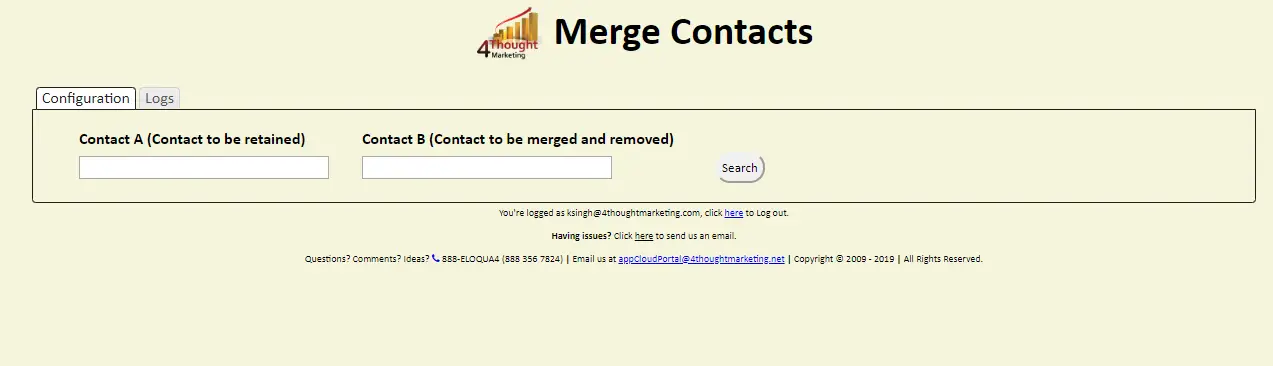
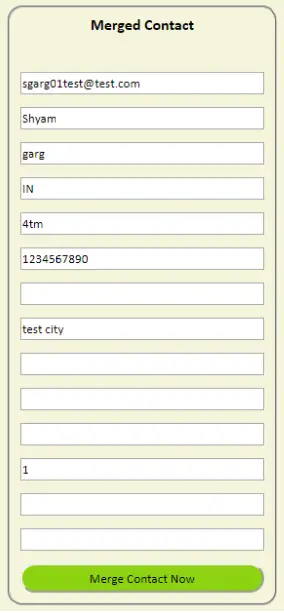
1. Select the records to merge

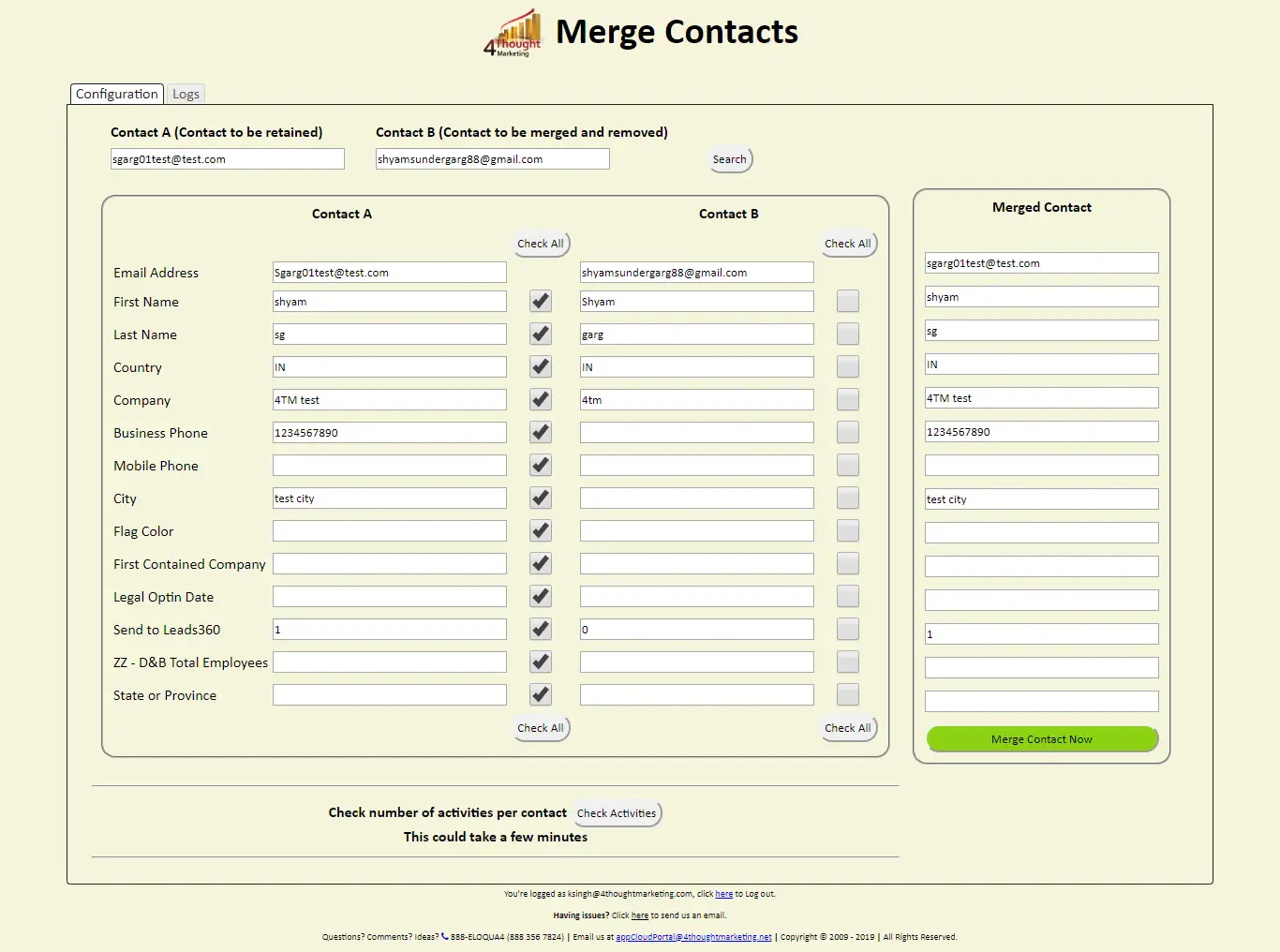
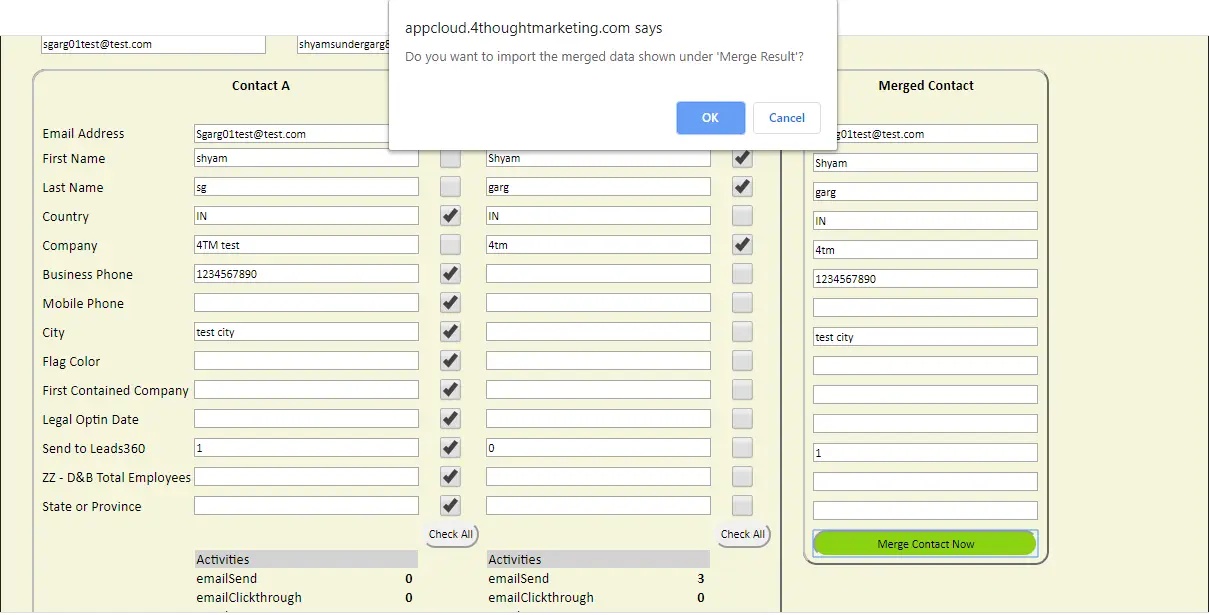
2. Select the fields to preserve from the original or the duplicate contact record

3. Retrieve existing records for each contact, choose which fields will be preserved

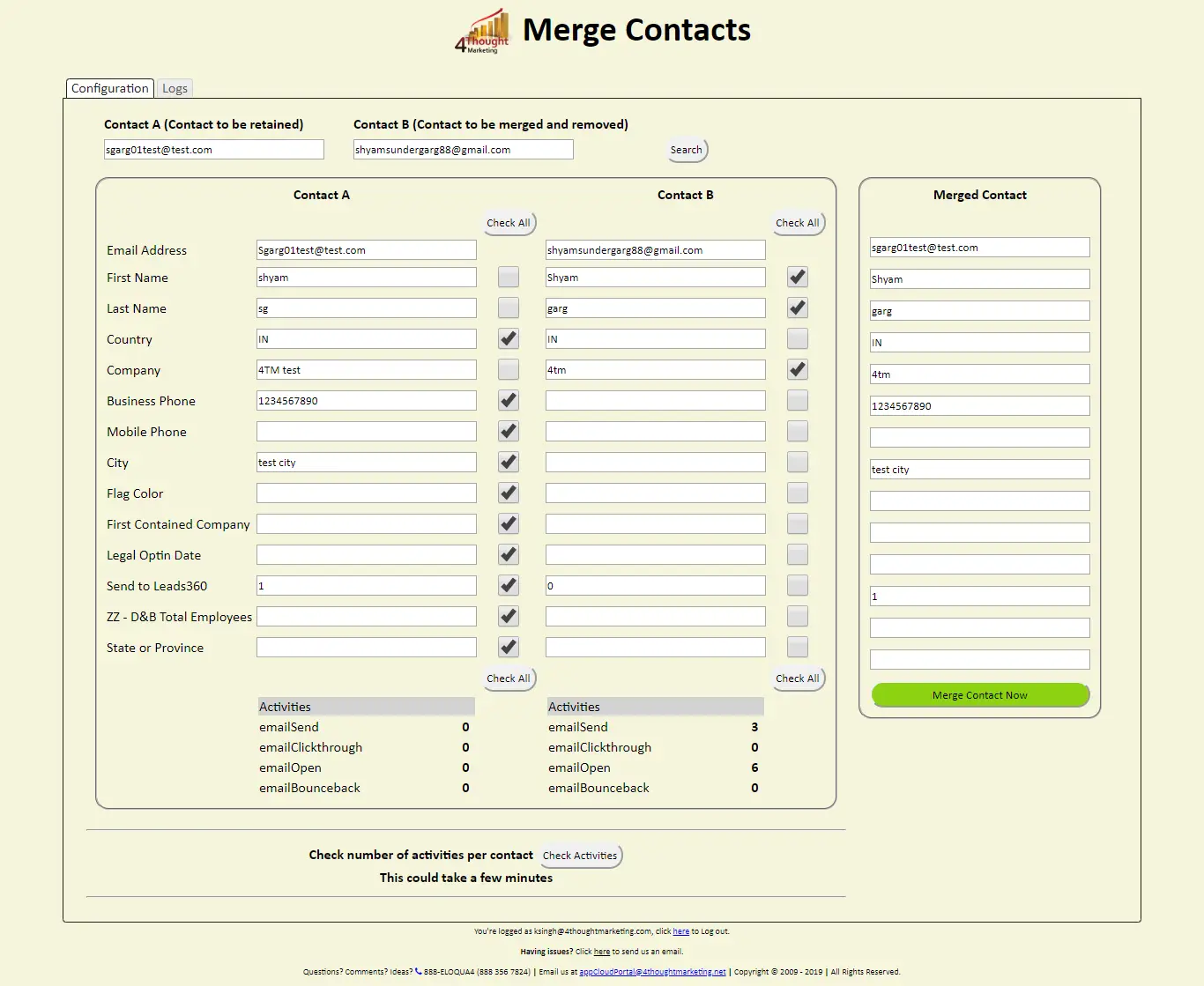
4. Preview how the merged contact record will appear, and make any necessary adjustments.

5. When ready, select Merge, and the processing will begin.

Processing takes from 2-3 minutes, but can also take longer depending on the number of activities.  Activities from the merged contact will be re-created as new external activities in Eloqua.

Please  Contact us if you are interested in our Merge Contact Cloud App, or any of our other products and services.


August 29, 2024

Addressing Unanswered Questions and Open Q&A – Office Hours

This month we answered some questions not previously answered on topics ranging from attribution to streamlining repetitive processes, unusual open rates due to spam and link checkers, and data privacy.


4Thought Marketing Logo   April 8, 2026 | Page 1 of 1 | https://4thoughtmarketing.com/marketing-automation/page/8/