When executives gather in boardrooms to discuss quarterly performance and strategic direction, the conversation inevitably turns to one critical question: how can we better align our marketing efforts with our corporate goals? The answer increasingly lies in comprehensive marketing ops adoption that transforms isolated marketing activities into a unified engine driving organizational success.
Marketing operations has evolved far beyond campaign management and lead tracking. Today’s marketing ops adoption represents a fundamental shift in how organizations approach revenue generation, customer engagement, and strategic alignment. Yet many companies struggle to move beyond departmental silos and achieve the kind of systematic implementation that truly moves the needle on c-suite goals.
Understanding the Strategic Imperative
The disconnect between marketing activities and corporate objectives often stems from fragmented systems, inconsistent processes, and misaligned metrics. When marketing operations exists in isolation, it becomes a cost center rather than a strategic driver. However, when marketing ops adoption occurs across the entire organization, it creates a multiplier effect that amplifies every business function.
Consider how marketing operations alignment impacts different areas of your business. Sales teams gain access to better qualified leads and more accurate forecasting data. Customer success teams receive detailed behavioral insights that improve retention strategies. Product teams understand market demands more clearly through comprehensive data analysis. Finance gains visibility into marketing ROI and can make more informed budget allocation decisions.
This interconnected approach transforms marketing operations from a tactical function into a strategic enabler of corporate goals. The key lies in creating adoption strategies that extend beyond the marketing department itself.
Building Executive Buy-In for Comprehensive Adoption
Successful marketing ops adoption begins at the top. C-suite executives need to understand how marketing operations alignment directly impacts their most pressing business objectives. This means translating marketing metrics into business language and demonstrating clear connections between operational improvements and financial outcomes. Start by identifying the specific c-suite goals that marketing operations can most directly influence:
Revenue Growth: Show how improved lead scoring, attribution modeling, and customer journey optimization drive measurable revenue increases.
Operational Efficiency: Demonstrate how automated workflows and standardized processes reduce costs across multiple departments.
Data-Driven Decision Making: Highlight how unified reporting and analytics capabilities improve strategic planning at the executive level.
Customer Experience Enhancement: Illustrate how integrated systems create more personalized and effective customer interactions.
The conversation should focus on business outcomes rather than marketing tactics. Executives care about market share growth, customer acquisition costs, lifetime value optimization, and competitive advantage. Frame your marketing ops adoption strategy in these terms to secure the leadership support necessary for organization-wide implementation.
Creating Cross-Functional Adoption Strategies
True marketing ops adoption requires breaking down departmental barriers and creating shared ownership of processes and outcomes. This means developing implementation strategies that acknowledge the unique needs and concerns of different business functions while maintaining overall alignment with corporate goals.
Sales teams, for instance, need to see immediate value in new systems and processes. They require training on how marketing operations improvements will make their jobs easier and more effective. Customer service teams need to understand how marketing data can help them provide better support and identify upsell opportunities. IT departments need clear integration requirements and security protocols.
The most successful adoption strategies create win-win scenarios for every department. When sales sees higher quality leads, when customer success gains predictive insights, and when finance receives clearer ROI reporting, resistance to change diminishes significantly. This requires careful change management and communication that emphasizes benefits specific to each team while reinforcing the larger organizational objectives.
Implementing Systematic Process Changes
Marketing operations alignment succeeds when it becomes embedded in daily workflows rather than existing as an additional layer of complexity. This requires thoughtful process design that integrates seamlessly with existing business operations while gradually introducing more sophisticated capabilities.
Begin with foundational elements that create immediate value across departments:
Unified Data Architecture: Establish single sources of truth for customer information, campaign performance, and sales metrics that all teams can access and trust.
Standardized Reporting Frameworks: Create consistent metrics and KPIs that align with corporate goals and provide transparency across all business functions.
Automated Workflow Integration: Implement processes that reduce manual handoffs and improve coordination between marketing, sales, and customer success teams.
Cross-Functional Communication Protocols: Develop regular touchpoints and feedback mechanisms that ensure ongoing alignment and continuous improvement
These systematic changes require patience and persistence. Organizations often underestimate the time needed for true adoption, but those that commit to comprehensive implementation see compound benefits that accelerate over time.
Measuring Success and Demonstrating Value
Effective marketing ops adoption creates measurable improvements in key business metrics that matter to executive leadership. However, measuring success requires establishing baseline performance levels and creating reporting systems that clearly demonstrate progress toward corporate goals.
The most compelling success metrics connect marketing operations improvements directly to business outcomes. Revenue attribution models show how marketing activities contribute to sales growth. Customer acquisition cost analysis demonstrates operational efficiency gains. Lifetime value calculations reveal the long-term impact of improved customer experiences. Pipeline velocity measurements illustrate how better alignment between marketing and sales accelerates revenue generation.
Regular reporting should tell a story of continuous improvement and strategic value creation. Executive dashboards need to show not just what happened, but why it matters for achieving c-suite goals. This ongoing demonstration of value reinforces the importance of marketing ops adoption and builds support for continued investment and expansion.
Overcoming Common Adoption Challenges
Even well-planned marketing ops adoption initiatives face predictable obstacles. Technology integration issues, resistance to process changes, and competing priorities can derail implementation efforts. Successful organizations anticipate these challenges and develop strategies to address them proactively.
Communication remains the most critical success factor. Teams need to understand not just what is changing, but why these changes matter for their individual success and the organization’s strategic objectives. Training and support must be ongoing rather than one-time events. Leadership must consistently reinforce the importance of marketing operations alignment and celebrate early wins that demonstrate progress toward corporate goals.
Resource allocation also requires careful attention. Marketing ops adoption often requires upfront investments in technology, training, and process development. Organizations must balance these costs against expected returns while maintaining momentum through inevitable implementation challenges.
The Path Forward
Driving marketing ops adoption across your organization represents more than a tactical upgrade to marketing capabilities. It creates a foundation for data-driven decision making, improved customer experiences, and accelerated achievement of corporate goals. The organizations that succeed in this transformation gain significant competitive advantages through better alignment, improved efficiency, and more strategic marketing operations.
The journey requires commitment from leadership, patience with the adoption process, and persistence through implementation challenges. However, the companies that achieve comprehensive marketing operations alignment position themselves for sustained growth and improved performance across all business functions. In today’s competitive environment, this systematic approach to marketing ops adoption has become essential for organizations serious about achieving their most ambitious c-suite goals.
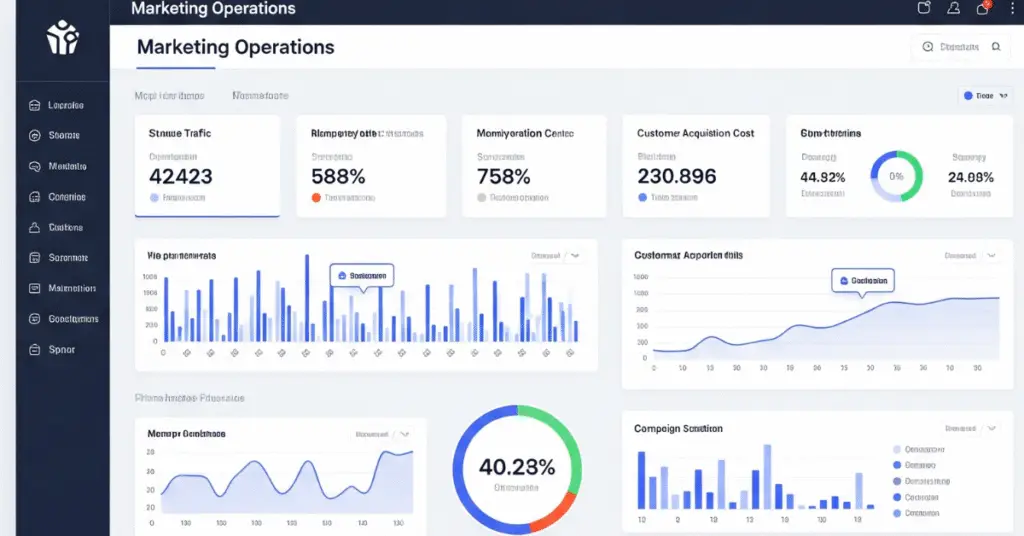
Ever wonder what truly gets the C-suite executives excited about marketing? It’s not just flashy campaigns; it’s a clear, quantifiable link between marketing efforts and the ultimate business objectives. They want to see how marketing directly impacts the bottom line and propels the company toward its big picture corporate goals. This is precisely where a well-crafted Marketing Ops dashboard becomes indispensable – it’s your marketing team’s secret weapon for demonstrating tangible value.
This isn’t just about reporting; it’s about strategic alignment. A C-suite approved dashboard acts as a nerve center, translating intricate marketing activities into clear, concise, and actionable insights that drive enterprise-wide decisions. It transforms marketing from a cost center into a recognized revenue driver.
Building such a dashboard requires a methodical approach, moving beyond superficial metrics to embed marketing operations directly into the pursuit of corporate objectives. We’ll break down this process into systematic phases, emphasizing how each step directly aids in achieving those overarching goals.
Phase 1:
Strategic Foundation – Understanding “Why” and Aligning with Corporate Vision
Building a C-suite dashboard starts long before you touch any data. This initial phase is about truly understanding the company’s strategic pulse. It’s not a marketing exercise; it’s a fundamental business discussion that ensures your dashboard doesn’t just report numbers, but tells a story of impact.
Immerse Yourself in Corporate Goals:
This begins with direct engagement. Schedule dedicated sessions with the CEO, CFO, and other key executives to gain an unequivocal understanding of the company’s highest-level strategic objectives. Are we aiming for aggressive revenue growth, expanding into new markets, boosting profitability, or perhaps enhancing customer lifetime value? Document these goals with absolute clarity. This crucial first step ensures that every subsequent decision, from selecting KPIs to designing visualizations, is deeply rooted in the company’s overarching mission, immediately positioning marketing as a strategic partner driving core business outcomes.
Translate Corporate Goals into Marketing Objectives and KPIs:
Once those corporate goals are crystal clear, the next critical step is to bridge the gap between high-level business aims and actionable marketing efforts. For every corporate objective, articulate a specific, measurable marketing objective that directly supports it. From these, you’ll derive the specific Key Performance Indicators (KPIs) that will be the cornerstones of your dashboard. For instance, if the company’s goal is to “Increase profitability by 10%,” a marketing objective might be to “Reduce Customer Acquisition Cost (CAC) by 15% without sacrificing lead quality.” Suddenly, “CAC” and “Marketing-Sourced Pipeline Value” become essential KPIs on your dashboard, directly linking marketing’s work to financial health.
Identify the Audience and Their Strategic Questions:
While it’s a C-suite dashboard, it’s crucial to acknowledge that different executives wear different hats and thus have different strategic priorities. A CFO will laser-focus on cost efficiency and ROI, while the CEO might be more concerned with market share and overall growth trajectory. Engage with each key executive to uncover their primary concerns and the questions they want the dashboard to answer at a glance. Tailoring the dashboard to address these specific needs ensures immediate relevance and usability, encouraging adoption and empowering faster, more confident strategic decisions that drive overall business success.
Phase 2:
Data & Technology – Building the Engine for Strategic Insights
With a solid strategic foundation, this phase shifts to the technical backbone of your C-suite dashboard. This is about identifying, integrating, and ensuring the integrity of the data that will power your strategic insights. Without robust and reliable data, even the most beautiful design won’t hold up.
Map Out All Relevant Data Sources:
Begin by conducting a comprehensive audit of all systems where your critical marketing and business data resides. Think broadly: your Customer Relationship Management (CRM) system, Marketing Automation Platform (MAP), web analytics tools, various paid advertising platforms (Google Ads, LinkedIn, Meta), email marketing services, and, crucially, financial systems for revenue and cost data. Identifying all these sources upfront provides a holistic view of performance, preventing blind spots and allowing for comprehensive reporting that showcases marketing’s full impact across the customer journey and its financial implications.
Ensure Data Accuracy, Consistency, and Seamless Integration:
This is perhaps the most critical technical step. Inaccurate or inconsistent data will quickly erode trust. Implement strong data hygiene practices, standardize naming conventions across platforms, and establish clear data entry protocols. Then, invest in a powerful Business Intelligence (BI) platform or a specialized marketing intelligence tool that can connect all these disparate data sources. These tools automate the extraction, transformation, and loading (ETL) process, ensuring your data is refreshed regularly and reliably. When executives trust the numbers, they can make confident, data-backed strategic decisions about resource allocation and market strategy, minimizing risks and accelerating progress toward corporate goals.
Select the Right Dashboarding Tool:
The choice of technology will significantly impact the dashboard’s usability and visual appeal for the C-suite. Options range from comprehensive BI tools like Tableau, Power BI, or Looker Studio, which offer powerful visualization, to specialized marketing intelligence platforms designed for cross-channel reporting. Prioritize tools that offer strong data connectivity, an intuitive interface, and robust security features. A well-chosen, user-friendly, and visually appealing dashboard encourages regular review and engagement from the C-suite, ensuring consistent oversight that allows for timely course correction and strategic adjustments to keep the company on track.
Phase 3:
Design & Presentation – Crafting the Story of Strategic Impact
This is where the raw data truly comes to life, transforming into a compelling, easy-to-understand narrative that resonates with executive decision-makers. It’s all about clarity, conciseness, and delivering immediate, actionable insight.
Lead with the Executive Summary and High-Level Strategic Outcomes:
The C-suite has limited time, so design the dashboard to present the most critical information immediately at the top. This typically includes overall Marketing ROI, the total value of marketing-sourced or influenced pipeline/revenue, and key indicators of overall business health driven by marketing. Think of it like a newspaper headline: immediate impact, followed by the supporting details. This instant strategic overview allows executives to quickly gauge overall performance against corporate financial and growth targets, enabling rapid assessment and identification of critical trends or areas needing immediate attention.
Organize by Strategic Themes or the Customer Journey:
Avoid simply throwing a jumbled collection of charts onto the screen. Instead, structure your dashboard logically around key strategic themes (e.g., Growth, Efficiency, Retention) or the stages of the customer journey (Awareness, Acquisition, Conversion, Retention). This creates a coherent flow, helping the C-suite understand performance across different aspects of the business and how marketing influences each, allowing for targeted resource allocation and operational improvements.
Prioritize Visualizations for Immediate Insight:
Raw tables of numbers aren’t C-suite friendly. Leverage intuitive charts and graphs: use line charts for trends over time, bar charts for comparing different channels or campaigns, and funnel charts to illustrate conversion rates and pinpoint bottlenecks. Gauges or single-number tiles are perfect for displaying current performance against specific targets. Visualizations simplify complex data, allowing for rapid comprehension and pattern recognition, which in turn accelerates decision-making at the executive level, enabling timely interventions and strategic shifts.
Provide Context, Comparisons, and Benchmarks:
Numbers alone mean little. For every KPI, include essential context: show current performance against predefined targets, include historical data (quarter-over-quarter, year-over-year) to illustrate trajectory, and, where applicable, compare your performance to industry benchmarks. Use intuitive color-coding (green for positive, red for underperforming) but ensure accessibility. Contextualized data empowers the C-suite to understand not just what is happening, but why it’s significant, allowing them to assess progress against strategic objectives and make informed decisions on resource allocation.
Phase 4:
Iteration & Adoption – Ensuring Sustained Strategic Value
Building the dashboard is a huge accomplishment, but ensuring it remains a living, trusted strategic asset for the C-suite is the final, ongoing phase. This is where your hard work truly pays off.
Test Thoroughly and Gather Iterative Feedback:
Before a full rollout, conduct pilot tests with a small group of key C-suite members. Observe how they interact with the dashboard, and actively solicit their input. Is anything unclear? Is something missing? This iterative refinement process is crucial for adoption. By involving the C-suite in this phase, you foster a sense of ownership and ensure the dashboard directly addresses their needs, leading to a more relevant and user-friendly tool that supports faster, more confident strategic decision-making.
Provide Training and Onboarding:
While your dashboard should be intuitive, a brief, guided onboarding session can significantly boost adoption. Explain the story behind the numbers, highlight key features, and demonstrate how to interpret the data for strategic insights. Reinforce the direct link between the dashboard’s metrics and overarching corporate goals. Effective training ensures all C-suite members are comfortable and proficient, maximizing the dashboard’s utility as a strategic tool for impacting corporate performance.
Establish a Rhythm for Regular Review and Refinement:
A dashboard is not a static report; it’s a dynamic strategic tool. Set a consistent cadence for reviewing it with the C-suite—perhaps monthly or quarterly, aligning with your strategic planning cycles. Actively solicit feedback on its continued relevance. As corporate goals evolve, so too must the dashboard’s KPIs and visualizations. Ensure automated data refreshes are in place to deliver timely information consistently. This ongoing adaptation ensures marketing operations can dynamically adjust its focus, securing continuous, optimized contribution to the company’s highest-level objectives, year after year.
Summary
Building a Marketing Operations Dashboard that truly earns the C-suite’s trust and becomes an indispensable strategic asset is a journey. It demands a deep understanding of business goals, rigorous data management, thoughtful design, and a commitment to continuous improvement. By meticulously following these phases, your marketing operations team can transition from merely reporting activities to demonstrating profound strategic impact, solidifying its position as a vital driver of corporate success.
Every marketing leader wants to confidently demonstrate ROI, optimize campaigns, and measurably contribute to business growth. This is where data hygiene steps in. We all strive to justify our strategies with clear, impactful results. Yet, many teams struggle with inconsistent performance reports and murky insights. Often, the core issue isn’t a flawed strategy, but the very foundation underpinning our decisions: our data.
It’s the often-overlooked but critical practice that ensures your marketing metrics are not just numbers, but truly reliable metrics. Without a commitment to clean data, efforts to refine your MOPS (Marketing Operations) and align them with overarching corporate goals are built on shifting sand.
Why Data Hygiene is Non-Negotiable for Reliable Metrics
The old adage “garbage in, garbage out” perfectly encapsulates the problem with dirty data. If your CRM or marketing automation platform is riddled with duplicates, outdated contact information, or inconsistent entries, every subsequent analysis will be flawed. Imagine calculating your lead conversion rate when a significant portion of your “new” leads are actually old, unqualified records. Or trying to assess campaign ROI with inflated audience numbers.
Unreliable marketing metrics lead directly to poor decision-making. You might misallocate budget, chase the wrong leads, or misinterpret campaign performance. Internally, a lack of trust in your data erodes credibility with sales teams and leadership, making it harder to secure buy-in for future initiatives. Achieving truly reliable metrics simply isn’t possible without diligent data hygiene.
The Direct Link to Marketing Ops & Corporate Goals
For any MOPS team focused on driving efficiency and impact, clean data is paramount. Robust data hygiene practices enable precise segmentation, personalized communication, accurate lead scoring, and seamless automation of workflows. These are the engines that power effective marketing operations.
Furthermore, aligning marketing operations with overarching corporate goals demands clear, measurable progress. How can you confidently report on your contribution to revenue targets or market share if your foundational data is suspect? Reliable metrics, powered by excellent data hygiene, provide the verifiable proof points needed to demonstrate marketing’s tangible contribution to the bottom line. It allows for accurate forecasting and robust accountability, essential for strategic planning.
Common Challenges
The journey to pristine data isn’t without its hurdles. Common challenges include:
Data Decay: Information ages rapidly; contacts change jobs, companies merge, emails bounce.
Manual Entry Errors: Human mistakes during data input are inevitable.
System Disconnects: Data silos between different marketing, sales, and customer service platforms lead to inconsistencies.
Lack of Standardization: Varied naming conventions or formatting across teams can make data integration a nightmare.
Duplicate Records: Multiple entries for the same individual inflate numbers and confuse engagement tracking.
Pillars of Effective Data Hygiene
Overcoming these challenges requires a systematic approach. Here are key pillars for building a robust data hygiene strategy:
Regular Data Audits & Cleansing: Schedule periodic reviews to identify and remove outdated, duplicate, or incorrect records. This isn’t a one-time task but an ongoing commitment.
Standardization & Governance: Establish clear rules for data entry, formatting, and ownership. Define what constitutes a complete record and ensure consistency across all touchpoints.
Data Enrichment: Proactively fill missing gaps in your records with valuable firmographic, technographic, or demographic data. This transforms basic contact information into actionable insights.
Leveraging Technology & Automation: Utilize your CRM and marketing automation platforms’ built-in features for de-duplication and validation. Explore specialized data quality tools that automate cleaning processes.
Team Training & Cultural Shift: Data hygiene isn’t solely an IT or MOPS responsibility. Foster a culture where every team member understands the importance of clean data and adheres to best practices.
The Strategic Payoff: From Clean Data to Clear Results
The effort invested in data hygiene pays dividends across your entire marketing ecosystem. With clean data, you gain:
Precision Targeting: Achieve highly effective segmentation and personalization.
Accurate Attribution: Confidently identify which marketing efforts truly drive results.
Optimized Campaigns: Make informed, real-time adjustments based on trustworthy performance data.
Confident Reporting: Present clear, defensible ROI and impact to leadership.
Conclusion
Data hygiene isn’t just a technical task; it’s the bedrock for truly effective marketing. Every marketing leader wants to confidently demonstrate ROI and align their efforts with overarching business goals, and when they have reliable metrics, they can make informed decisions that drive growth and secure leadership buy-in. But achieving this is impossible if their underlying data is dirty, inconsistent, or incomplete, leading to wasted resources, inaccurate insights, and missed opportunities. Therefore, investing in robust data hygiene practices is not just about cleaning spreadsheets; it’s about building a foundation for accurate marketing metrics, enabling precise MOPS, and ultimately, ensuring your efforts directly contribute to and achieve your corporate goals.
When marketing operations struggle with unclear accountability and overlapping responsibilities, corporate goals suffer. Projects miss deadlines, budgets stretch thin, and strategic initiatives lose momentum in the chaos of “who’s supposed to do what?” This is where RACI becomes a critical tool for aligning marketing operations with broader business objectives.
The RACI matrix marketing approach eliminates the operational friction that prevents marketing teams from executing on corporate strategy effectively. By creating clear role definitions through a marketing accountability framework, RACI ensures that every marketing initiative directly contributes to organizational success rather than getting lost in internal confusion.
Understanding RACI in Marketing Context
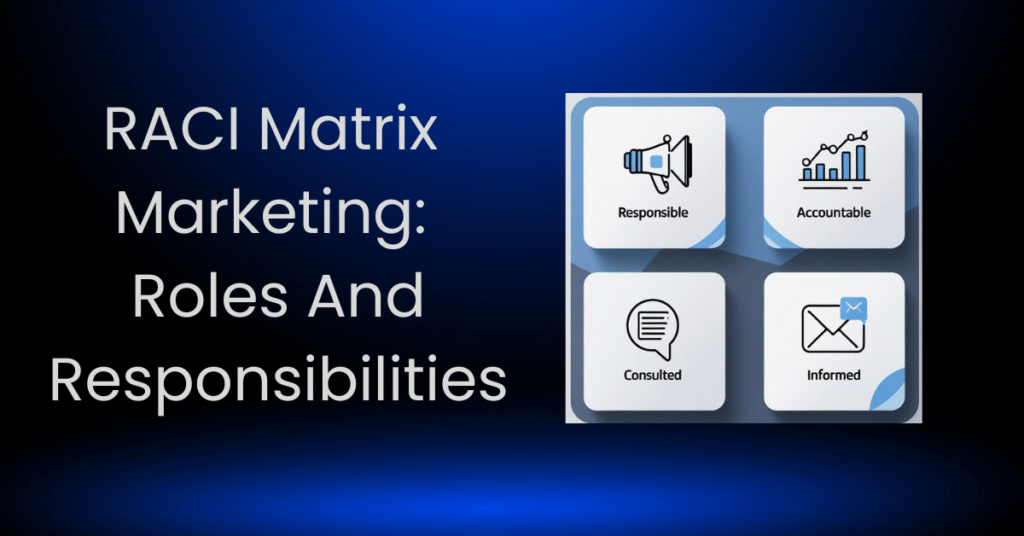
The RACI matrix marketing framework defines four distinct types of responsibility that, when properly assigned, create seamless execution pathways from corporate strategy to tactical implementation.
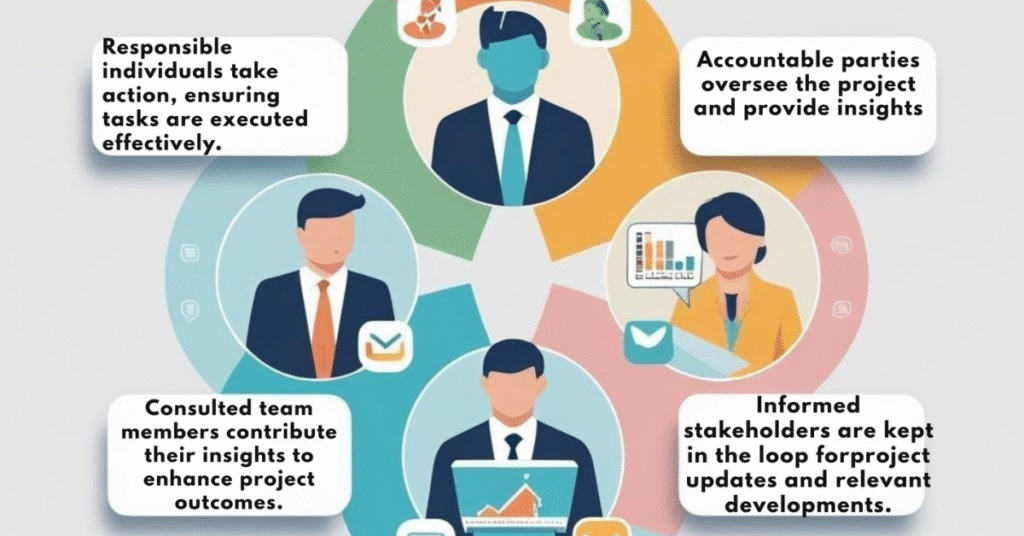
Responsible individuals execute the work. They’re the hands-on contributors who transform strategic directives into deliverable outcomes. Multiple people can share responsibility, but their coordination must be crystal clear to avoid duplicated efforts that drain resources and delay progress.
Accountable parties own the ultimate outcome. This single point of accountability ensures that corporate initiatives have clear ownership and that someone is personally invested in achieving the business results that matter to leadership. Without this clarity, strategic projects often drift without clear success metrics or timeline adherence.
Consulted stakeholders provide essential input before decisions are made. Their expertise shapes the quality of execution and helps avoid costly mistakes that could derail corporate objectives. However, over-consulting creates bottlenecks that slow strategic implementation.
Informed individuals receive updates on progress and decisions. Strategic communication flows efficiently when everyone knows who needs information versus who needs to provide input, preventing information overload while maintaining organizational alignment.
How RACI Drives Corporate Goal Achievement
The marketing accountability framework directly impacts corporate performance in several ways. First, it eliminates the resource waste that occurs when multiple people work on the same deliverable or when critical tasks fall through accountability gaps. This efficiency improvement allows marketing operations to do more with existing budgets, directly supporting financial objectives.
Second, the RACI framework accelerates decision-making by removing ambiguity about who has authority to move initiatives forward. When corporate priorities shift or market conditions change, marketing operations RACI implementation enables quick pivots because everyone understands their role in implementing new directions.
Third, the marketing accountability framework creates measurable accountability that aligns with corporate performance management. When individuals have clear ownership of outcomes, their performance directly correlates with business results, making it easier to identify and replicate successful approaches while addressing areas that need improvement.
RACI in Strategic Marketing Operations
Consider how the RACI matrix marketing approach transforms common marketing operations scenarios that directly impact corporate goals:
In demand generation campaigns, the Campaign Manager remains responsible for execution while the Marketing Operations Manager stays accountable for results that feed into revenue targets. Sales leadership gets consulted on lead qualification criteria that align with sales targets, while executive leadership stays informed about progress toward pipeline goals. This structure ensures that campaign activities directly support corporate revenue objectives rather than operating in isolation.
When implementing new marketing technology to improve operational efficiency, the Marketing Operations Analyst handles configuration and testing while the Director of Marketing Operations owns the project’s ROI impact. Finance gets consulted on budget implications, and IT provides technical expertise, but clear accountability ensures the implementation delivers promised productivity gains that support broader operational excellence goals.
For lead scoring model updates that improve sales conversion rates, the Marketing Operations Specialist builds and tests while the Marketing Operations Manager owns model accuracy. Sales teams provide consultation on qualification requirements, ensuring the scoring system supports corporate customer acquisition targets rather than generating leads that don’t convert.
Building Strategic RACI Implementation
Successful marketing operations RACI implementation for corporate goal alignment starts with mapping your most business-critical marketing processes. Focus first on activities that directly impact revenue generation, customer acquisition costs, and operational efficiency metrics that leadership tracks closely.
Identify Strategic Processes: Prioritize campaign execution, lead management, marketing technology optimization, and performance reporting that feed into corporate dashboards.
Map Stakeholder Impact: Include not just marketing team members but also sales leadership, finance, and executive stakeholders who need marketing operations to deliver specific business outcomes.
Assign Strategic Accountability: Ensure that accountable parties understand how their outcomes connect to corporate objectives and have the authority to make decisions that support those goals.
Create Communication Flow: Structure consulted and informed roles to support strategic decision-making without creating bureaucratic delays that slow corporate initiative implementation.
Your RACI matrix marketing implementation should reflect the reality that marketing operations serves broader business objectives. When assigning roles, consider how each person’s responsibilities contribute to customer acquisition, revenue growth, operational efficiency, and other key performance indicators that matter to corporate leadership.
Avoiding Implementation Pitfalls
The most common RACI failures in marketing operations stem from treating it as an internal exercise rather than a strategic alignment tool. When the marketing accountability framework assignments don’t connect to corporate objectives, the framework becomes administrative overhead rather than performance improvement.
Multiple accountable parties for the same outcome creates the same confusion the RACI matrix marketing approach was designed to eliminate. Corporate goals require single points of accountability who can be held responsible for specific business results. Similarly, over-consulting slows the rapid execution that competitive markets demand, while under-consulting leads to decisions that don’t align with broader business requirements.
Static marketing operations RACI matrices fail because both corporate priorities and marketing operations evolve. Regular reviews ensure that role assignments continue supporting current business objectives rather than outdated organizational structures.
Measuring RACI Impact on Corporate Performance
The true test of RACI effectiveness lies in improved business outcomes. Track how the marketing accountability framework implementation affects key performance indicators that matter to corporate leadership: faster time-to-market for campaigns, improved marketing qualified lead conversion rates, reduced operational costs, and better cross-functional project completion rates.
When marketing operations run more efficiently through clear role definition, resources get allocated to high-impact activities that drive corporate growth. Decision-making accelerates, allowing marketing to respond quickly to market opportunities and competitive threats. Most importantly, accountability clarity means that marketing operations’ contribution to corporate success becomes measurable and scalable.
The RACI matrix marketing approach transforms marketing operations from an internal support function into a strategic business driver. When every team member understands exactly how their role contributes to corporate objectives, marketing operations becomes a competitive advantage rather than an operational necessity. The marketing accountability framework ensures that organizational clarity supports business performance, making marketing operations an integral part of corporate success rather than just another cost center to manage.
A well-defined marketing operations governance model provides the structure needed for teams to align, execute efficiently, and reliably manage marketing assets and data—establishing a robust foundation for B2B marketing governance and ensuring marketing data compliance every step of the way. Fast-changing technology, tighter privacy laws, and higher expectations from buyers are reshaping how B2B teams run marketing operations. Without clear governance, even experienced teams face confusion, slowdowns, and risks from inconsistent data handling or compliance lapses. A well-defined governance model provides the structure needed for teams to align, execute efficiently, and reliably manage marketing assets and data.
Why Clear Governance Is Essential in Modern Marketing Operations
Effective governance in marketing operations defines who owns each process, which rules guide workflows, and how decisions get made. For B2B organizations, this structure helps limit errors, protects customer data, and makes sure campaigns reach the right audience at the right time. A governance framework that follows marketing ops best practices connects people, technology, and policies so teams work together and adapt to new challenges. Organizations often turn to expert consulting to establish or improve these models. With the right governance, marketing operations become more scalable, secure, and capable of driving growth—even as requirements shift.
Core Elements of a Strong Marketing Ops Governance Model
A strong marketing operations governance model shapes how your organization manages growth, adapts to change, and maintains quality. Each element works together to bring clarity, accountability, and consistency. Below, you’ll find the essential components that keep governance practical and sustainable while reflecting B2B marketing governance standards.
Policies: Clear Rules and Boundaries
Effective governance starts with well-defined policies. These formalize how teams handle data, execute campaigns, protect customer privacy, and comply with laws such as GDPR or CCPA. By codifying marketing data compliance rules around lead management and communication channels, you reduce risk and ensure consistent handling of sensitive information.
Processes: Standard Methodologies for Efficiency
Documented processes ensure teams complete tasks in a consistent, repeatable way. Outlining steps for campaign launches or data audits reduces ambiguity and speeds onboarding. Embedding marketing ops best practices into flowcharts or checklists keeps everyone aligned and accelerates execution.
Roles and Responsibilities: Defined Accountability
Assigning clear roles prevents overlap, miscommunication, and gaps in work. A governance model should detail who approves content, manages platforms, reviews compliance, and maintains databases. Using a RACI matrix (Responsible, Accountable, Consulted, Informed) can clear up questions about ownership across projects.
Data Management: Quality, Privacy, and Access
Governance is incomplete without strict data management practices. Set rules for data collection, protection, enrichment, and cleansing to ensure marketing data compliance. Define who can access sensitive information, how long data stays active, and which tools enforce these policies automatically.
Step-by-Step Process for Designing a Robust Governance Model
Building a marketing operations governance model requires a structured approach that matches your organization’s needs and current maturity. Start with clear alignment on why governance matters, then move step by step to create a practical and reliable framework your team will actually use.
Lay the Groundwork With Assessment and Alignment
First, evaluate your existing processes, pain points, and where gaps exist. Involve stakeholders from key teams—marketing, sales, IT, and compliance—to ensure you cover the entire cycle. Set clear goals that the governance model will achieve, such as improved data accuracy or reduced compliance risk. This early alignment builds commitment and reveals unique needs.
Define Policies, Processes, and Roles
Clarify every policy that will guide marketing operations. Outline processes for campaign creation, data management, and privacy compliance. Map out who does what at each stage, specifying responsibilities to eliminate confusion. Document these clearly so everyone can follow and reference them as needed. If you use platforms like Eloqua or Marketo, include how these tools will enforce or automate certain governance measures.
Document the Framework and Provide Resources
Write down your governance model in detail. Simple process charts, playbooks, and checklists all help drive consistency as your model rolls out. Develop onboarding content and quick-reference guides that make adoption easier, especially for new team members.
Roll Out With Training and Feedback Loops
Introduce the model gradually. Share the materials in small training sessions, and encourage feedback so you can adjust processes quickly. Make it easy for the team to report friction points or unclear steps—small tweaks can have a large impact on buy-in.
Leverage Automation Where Possible
Automating processes—such as approval flows, segmentation, or compliance tracking—removes repetitive work and reduces human error. If your team lacks in-house expertise with marketing automation platforms, consulting partners can help tailor process automation to your governance framework.
Driving Adoption: How to Get Stakeholder Buy-In
Securing genuine commitment to a governance model means addressing the needs and perspectives of those who use it every day. Leadership and team buy-in rely on clear communication, proven value, and practical involvement from the very start. Success often hinges on taking these approach-focused, pragmatic steps.
Build Early Trust With Open Communication
Transparent dialogue from the start can ease uncertainty. Share the rationale for governance openly—describe the risks of unclear roles, data errors, or compliance lapses, and the advantages of structure. Regularly update all stakeholders as the framework evolves. Invite questions and feedback to show that input matters, not just final results.
Tailor Your Pitch to Each Audience
Leadership: Highlight reduced risk, improved compliance, and better data for decision-making.
Marketing Teams: Emphasize faster onboarding, purpose-built processes, and fewer errors.
Technical Stakeholders: Focus on clarity around integration, data quality, and system performance.
Adjust the details and language to address each group’s priorities. Back up the benefits with examples or quick wins where possible.
Empower Champions and Involve Stakeholders
Identify respected team members to act as change champions. Their buy-in and participation set the standard for others and foster accountability. Engage a cross-functional group in defining roles and process maps early. By including real users in developing documentation or piloting policies, adoption becomes smoother and resistance drops.
Show Value and Support Adoption
When rolling out the governance model, offer clear, concise documentation and hands-on training sessions. Give teams quick access to support channels for fast answers. Highlight early improvements such as reduced mistakes or campaign delays. Effective adoption is less about mandates and more about enabling people to work better. Consistent engagement, feedback loops, and practical resources all play a crucial role in making governance something teams choose to follow, not something they feel forced to accept.
Maintaining and Scaling Governance Over Time
A governance model isn’t one-and-done. Schedule regular reviews and audits to confirm policies still meet marketing data compliance standards and support evolving campaign needs. Scale incrementally—adding roles or refining approval steps as your operation grows—while reinforcing marketing ops best practices through updated training.
Set Up Regular Reviews and Audits
Schedule periodic assessments to check if workflows, data policies, or roles still serve current needs. Bring in a mix of marketing ops, sales, IT, and compliance team members for these reviews, so you uncover any pain points from multiple perspectives. Use these sessions to:
Spot outdated policies or bottlenecks
Ensure compliance with new privacy laws
Verify that data quality rules continue to support campaign goals
Optimize Processes Proactively
Don’t wait for issues to force a change. Watch for early signals like repeated negotiation over roles, missed campaign launches, or data inconsistencies. Simple periodic surveys or feedback check-ins help flag areas where processes need adjustment. When optimizing, keep resources up to date and easy to find for all stakeholders—quick reference guides, process wikis, and updated documentation help prevent confusion as teams grow or change.
Scale Governance to Match Growth
As the marketing function expands, add structure incrementally rather than all at once. This can look like:
Defining new roles as more platforms, channels, or regions are added
Refining approval steps for increased campaign volume
Updating training and onboarding materials as technology or data requirements change
Automated tools make scaling easier. Automation can enforce new processes, trigger reminders, and keep policies consistent, even as operations become more complex. By planning for ongoing review and making small, targeted improvements, you support governance that remains practical and widely used—no matter how your organization evolves.
Ensuring Privacy, Compliance, and Data Integrity
Continuous growth in B2B marketing brings more attention to privacy and data quality. Strong governance ensures teams follow best practices for data protection while meeting regulations that change often. With growing oversight from laws like GDPR and CCPA, clear guidelines and automation keep you on track and lower risk.
Build Privacy into Every Marketing Process
Document the exact ways data is collected, stored, and processed. Map where sensitive data lives and clarify who can access each dataset. Require consent and provide easy ways for contacts to manage their preferences. Review vendor contracts and integrations to confirm third parties follow the same standards. Update policies as new regulations emerge or platforms evolve.
Support Compliance With Technology and Training
Maintain an audit trail for data changes, user access, and outbound communications. Regularly train your team—clarify what counts as personal data and how to handle access requests. Use segmentation and automation tools to minimize manual changes and support compliance efforts at scale. Platforms like Marketo, Eloqua, and privacy-focused apps such as 4Comply help automate key consent and record-keeping tasks, reducing human error.
Protect and Cleanse Data for Ongoing Integrity
Enforce rules for data entry and validation to catch errors early. Schedule routine data cleansing and enrichment to improve segmentation accuracy and campaign results. Limit admin access to high-risk data and archive or delete records you no longer need for business or compliance purposes. Assign roles for monitoring data flows and correcting exceptions as part of your governance structure. A governance model acts as a living record that supports privacy, compliance, and data standards as your marketing operation changes.
Measuring Success: KPIs and Continuous Improvement
Measuring governance means more than checking policy compliance or tracking project completion. Well-chosen key performance indicators (KPIs) and defined review cycles make governance part of everyday work and show clear progress over time. Setting up the right systems ensures that your governance model supports real business impact—not just box-ticking.
Identify Actionable KPIs for Marketing Operations Governance
Governance KPIs should be visible, simple to measure, and tightly linked to the objectives your model supports. The following KPIs help B2B teams monitor effectiveness and highlight opportunities for fine-tuning:
Policy Adherence Rate: Percentage of documented processes or policies followed across campaigns or projects.
Number of Policy Exceptions or Breaches: Frequency and type of governance violations identified during regular reviews.
Data Quality Metrics: Cleanliness of marketing databases—measured by bounce rates, duplicate records, or incomplete fields.
Compliance Task Completion: Percentage of required compliance tasks (audits, consent gathering, data cleansing) completed within given timeframes.
Process Cycle Time: Average time to complete standard workflows (like campaign approvals or data updates), before and after adopting governance processes.
Stakeholder Satisfaction: Team or leadership ratings on clarity, efficiency, and usability of governance documentation and support tools.
Choose KPIs relevant to your maturity, business size, and risk profile. Focus on metrics that tie back to business goals—such as reduced compliance risk, improved campaign speed, or higher-quality leads—so reporting has context and practical value.
Set Up Regular Review and Improvement Cycles
KPIs only drive improvement if you act on the results. Set calendar reminders for governance reviews at fixed intervals—quarterly, semi-annually, or annually, depending on your operation’s pace. Each review session should:
Compare actual results against target values for each KPI
Analyze trends and isolate areas where performance drops or risks increase
Gather qualitative feedback from process users and affected stakeholders
Define actions: update policies, adjust processes, or invest in automation and training as needed
Post-review, share updated results and changes with all relevant teams so everyone stays engaged and aware of the value governance activities bring.
Support Your Measurement With Tools and Guidance
Automation simplifies KPI tracking. Marketing automation platforms, CRM systems, and workflow tools can collect data on process performance and policy adherence. Integrating these platforms with specialized governance and compliance apps—such as 4Comply for privacy operations—makes auditing and reporting more reliable and saves time.
Iterate for Continuous Improvement
Use findings from each review period to drive small, specific improvements. Over time, your organization develops a stronger governance culture—one where strategies and daily work align for better results. Continuous measurement keeps your governance model relevant, scalable, and tightly connected to actual business needs. With the right foundation and follow-through, governance becomes a source of agility and growth for B2B marketing operations.
Effective B2B marketing automation starts with clear direction. SMART goals provide a proven framework for setting targets that shape your marketing automation strategies, align your team, and keep campaigns accountable. In a landscape where technology enables complex programs but results must always tie back to business objectives, using SMART goals is a cornerstone for sustainable success.
Core Components of SMART Goals
SMART is an acronym that stands for:
Specific: Clearly define what you want to achieve.
Measurable: Set criteria to track progress and outcomes.
Achievable: Make sure your goals are realistic and possible.
Relevant: Align goals with your business priorities.
Time-Bound: Assign a timeframe for accomplishment.
When B2B teams use SMART goals to guide their marketing automation, they gain clarity and build stronger connections between tactics and results.
Why SMART Goals Are Essential for Marketing Automation Programs
Clear targets are required in marketing automation to guide the entire program. SMART goals—specific, measurable, achievable, relevant, and time-bound—give structure. They help teams define what success looks like and ensure that automation tools and campaigns drive toward a meaningful end result.
Benefits of Using SMART Goals in Marketing Automation
SMART goals translate abstract business objectives into practical actions within automation platforms. For example, instead of aiming to “increase leads,” a SMART goal might be “generate 30% more qualified leads from email campaigns in Q3.” This creates shared focus and makes progress easy to track.
Specific: Prevents confusion about campaign goals by setting clear expectations.
Measurable: Ties actions to metrics like open rates, conversions, or sales, improving reporting and analysis.
Achievable: Keeps expectations realistic, reducing wasted resources and disappointment.
Relevant: Ensures that every automation initiative aligns with core business priorities, not vanity metrics.
Time-Bound: Drives urgency and creates a framework for regular review and adjustment.
Teams lacking SMART goals often struggle with unclear direction, inconsistent campaign performance, and difficulty measuring ROI. Goals that are not specific or measurable lead to unfocused automation, missed follow-ups, and wasted time refining processes that do not deliver results. In cases where multiple systems are integrated, such as Eloqua or Marketo with CRMs, clear objectives help maintain alignment across data sources and workflows.
Breaking Down the SMART Framework for Marketing Success
SMART goals translate abstract ideas into clear, trackable targets that guide every action in a marketing automation program. Each part of the framework serves a unique function, shaping how teams plan, execute, and measure their campaigns.
Specific: Defining Clear Marketing Objectives
Specific goals answer what, who, and how. Instead of saying, Improve lead generation, clarify the target: Increase qualified B2B leads from email campaigns by 15%. This level of detail eliminates confusion, sets team priorities, and removes ambiguity from marketing automation.
Measurable: Setting Quantifiable Milestones
A goal must include a metric. Without measurable outcomes, it’s not possible to confirm success or see progress. In a marketing automation context, this often means metrics like new contacts, open rates, lead scores, or conversion percentages. Using data-driven goals helps evaluate campaign performance at each stage.
Achievable: Balancing Ambition With Reality
An achievable goal requires realistic assessment of available resources, market conditions, and team capacity. Teams should review their current and past results to set challenging but realistic targets. For example, raising email click-through rates by 10% instead of aiming for a drastic change ensures practical and motivating progress.
Relevant: Aligning Goals With Business Priorities
Marketing automation goals matter only if they serve overall business priorities. Relevance ensures every campaign and workflow moves the business forward. For B2B teams, this might mean focusing on quality of leads for sales, rather than sheer volume. 4Thought Marketing often works with clients to sync automation goals tightly with sales and revenue objectives.
Time-Bound: Assigning Deadlines for Accountability
Deadlines create urgency and guide planning. Grow lead database by 15% over the next quarter sets a time frame for executing, reviewing, and refining automation. Time-bound goals help sequence tasks and make progress visible to everyone involved.
Step-by-Step Guide: Writing Effective SMART Goals for Your Program
Writing SMART goals provides a precise method to move from general ideas to targets that fit your marketing automation workflow. Every part of your goal must match the SMART criteria to guide your team and your platforms toward clear outcomes.
How to Create SMART Goals for Marketing Automation
Identify the Objective: Define what you want to improve or accomplish. Focus on one area—such as lead quality, campaign engagement, or data accuracy—so you can write a clear statement.
Make the Goal Specific: Describe exactly what needs to be achieved. Replace vague language like “improve engagement” with direct statements like “increase email open rates.”
Add Measurable Metrics: Choose quantifiable indicators. For example, use percentages, absolute numbers, or platform-specific stats (e.g., “achieve a 25% click-through rate on nurture emails”).
Check for Achievability: Confirm that your goal fits your team’s capacity and available resources. Consider historical campaign results and industry benchmarks, such as those shared by the Marketing Charts or the Statista platform.
Review Relevance: Align the goal with your strategic priorities. If you struggle with low sales-qualified leads, set goals that address this pain point rather than high-level vanity metrics.
Set a Time Frame: Decide on a realistic deadline such as “by the end of Q2” or “within 60 days of campaign launch.”
Template Example for Marketing Automation:
“Increase the number of sales-qualified leads from email campaigns by 20% (from 300 to 360) by the end of Q3, using improved segmentation and follow-up workflows in Marketo.”
Integrating SMART Goals into Your Marketing Automation Workflow
SMART goals shape every interaction, campaign, and process in a marketing automation platform. Embedding these goals in your day-to-day workflow ensures efforts drive toward clear outcomes instead of activity for activity’s sake.
Embed SMART Goals into Campaign Planning
Start campaign planning by translating business priorities into SMART goals. Define what success looks like, the timeframe, and the metrics that matter. In practical terms, document these goals within your campaign briefs and templates. Set up automation triggers and content flows based on the desired outcomes—not just on generic engagement or send frequency.
Operationalize SMART Goals in Automation Processes
Map every step of an automation journey to a SMART objective, from lead capture to nurture to handoff.
Configure workflows that include checkpoints for measurable milestones—such as a lead scoring threshold or segment membership change.
Assign responsibility for monitoring each stage, ensuring that campaign owners review progress against set targets, not just completion.
Streamline Performance Reviews with SMART Metrics
Integrate goal tracking into your marketing dashboards. Leverage built-in analytics in platforms like Marketo or Eloqua to align reports with your SMART criteria. When evaluating campaigns, focus on outcomes that match your original goals—for example, qualified leads added within a specific quarter—rather than vanity metrics. This creates a feedback loop where lessons and improvements tie back to concrete objectives. For B2B teams lacking the right tools or expertise, consulting firms help operationalize SMART goals within your platform, ensuring processes, reporting, and even training are configured to measure and achieve results that support strategic growth.
Common Pitfalls and How to Avoid Them
Teams working with marketing automation often stumble over a handful of common mistakes when setting SMART goals. Recognizing these pitfalls means you can build more effective objectives that lead projects and campaigns to measurable outcomes.
Lack of Specificity or Vagueness
Many goals fail because they are too generic, such as “improve engagement.” Without clear targets, your automation campaigns will lack direction, resulting in efforts that are difficult to track or optimize. Aim for explicit statements that define the outcome, channel, and audience.
Setting Immeasurable or Untracked Goals
If a goal lacks data points, you cannot evaluate its success. For example, increasing brand awareness is difficult to measure unless you define the benchmarks—such as growth in website visits or social shares. Always attach concrete numbers or meaningful metrics drawn from your marketing automation or analytics platform.
Overestimating Capabilities
Ambitious goals can stretch teams too far if they ignore available resources, data quality, or technical limits. Review historical campaign performance to determine a goal that challenges the team, but still fits actual constraints. Consulting services like those from 4Thought Marketing can help calibrate these goals using comparative industry data and real-world experience.
Ineffective Alignment With Business Priorities
Automation activities sometimes drift away from what matters most to the business. Avoid this by checking each goal against strategic objectives—such as sales pipeline growth or improved lead handoff to sales. Involve stakeholders beyond marketing when possible to validate alignment.
Neglecting Deadlines or Review Cycles
Without timeframes, teams delay or shift focus, making it harder to measure progress. Assign a due date or review period to each goal, and set reminders in your automation platform to evaluate outcomes and pivot when necessary.
Measuring Success: KPIs and Tracking Progress
Connecting SMART goals directly to key performance indicators (KPIs) streamlines how B2B teams evaluate progress and enable ongoing improvement for marketing automation programs. Once you define each SMART goal, you need a system for monitoring real results. This starts with clear links between your goals and the metrics that matter most.
Translating SMART Goals to Actionable KPIs
Each part of a SMART goal should match at least one measurable KPI. For example, if your goal is to “boost marketing-qualified lead conversions by 15% within Q2,” use:
Conversion rate from lead to marketing-qualified lead (MQL)
Volume of leads entering the funnel
Campaign-specific open or click rates tied to conversion workflows
Define these KPIs within your CRM or marketing automation platform, so they update automatically as data flows in.
Methods for Ongoing Tracking and Adjustment
Configure dashboards: Set up visual dashboards in your tools (like Eloqua or Marketo) to map goals directly to real-time performance. Track changes at regular intervals.
Schedule reviews: Hold recurring check-ins—weekly or monthly—to analyze whether current tactics are moving the right KPIs toward your goal.
Use automated alerts or reports: Many platforms allow you to set thresholds: if a KPI falls below target, the system prompts action for investigation or adjustment.
Refine based on insights: Adjust nurture flows, segmentation, or creative elements if performance lags. Continuous adjustment helps keep outcomes aligned with your objectives.
How 4Thought Marketing Helps You Achieve SMART Automation Goals
Establishing and reaching SMART goals in marketing automation requires a balanced combination of technology, process efficiency, and expert guidance. B2B organizations often face challenges such as system integration, aligning marketing with sales, meeting privacy regulations, and tracking meaningful results. This is where hands-on support and specialized solutions can make a substantial difference.
Strategic Support for SMART Goal Achievement
4Thought Marketing helps marketing teams define and implement SMART goals that fit their unique business priorities and existing technology stack. Consultants work directly with clients to:
Translate business objectives into actionable and measurable marketing automation targets.
Segment audiences and align campaign goals using visual tools for precision targeting, such as 4Segments.
Integrate platforms such as Oracle Eloqua, Marketo, and CRMs to enable accurate goal tracking and unified reporting.
Configure privacy compliance by building safeguards and auditable processes into automated workflows. For a closer look, review our 4Comply solution.
Building Efficiency Through Customized Solutions
Teams can leverage custom cloud apps and data management utilities to automate repetitive tasks, cleanse and enrich data, and streamline campaign execution. These tools ensure that each SMART goal remains both achievable and relevant, even as business requirements evolve.
For organizations with staffing shortages or limited in-house expertise, 4Thought Marketing provides training and support focused on getting the most from platforms such as Eloqua and Marketo. This makes setting, monitoring, and revising goals straightforward, so marketing teams can respond quickly to results and new priorities.
By combining experienced consulting with tailored technology, teams can ensure every automation program aligns closely with business outcomes—maximizing the impact of each campaign and delivering clear, measurable progress on SMART goals.
FAQs: SMART Goals for Marketing Automation Programs
Clear answers make applying SMART goals in B2B marketing automation more direct. Below are responses to frequent questions from marketing professionals aiming to get practical results from this framework:
What Makes a Goal Specific in Marketing Automation?
A specific goal defines the exact outcome and process you want to impact, such as “increase webinar registrations by 10% among existing leads using targeted email nurtures.” Avoid general objectives—detail the action, audience, and marketing channel.
How Do I Measure Marketing Automation Goals Effectively?
Attach clear metrics to each goal. These might include lead scores, conversion rates, click rates, form fills, or sales-qualified leads generated. Use the analytics capabilities built into your marketing automation platform to track these numbers over time.
What If a Goal Turns Out Unrealistic After Launch?
If you see slow progress, adjust your targets or tactics. Review past campaign data and consult industry benchmarks (for example, on HubSpot or Statista) to realign your goals. Shortening timelines or narrowing targets often restores momentum and improves outcomes.
Why Is It Important to Align Goals With Business Initiatives?
Relevant goals ensure your automation work supports company-wide strategies. For example, if sales wants more qualified leads, your automation goals should directly address lead scoring, faster handoff, or higher engagement with sales assets. This alignment prevents wasted effort and disconnected reporting.
How Often Should I Review and Update My SMART Goals?
Schedule regular goal reviews—monthly or quarterly—to compare progress against targets and tweak campaigns as needed. Use platform dashboards or scheduled reports for ongoing visibility. Agile review cycles keep your automation in sync with changes in strategy or market conditions.
Can 4Thought Marketing Help Implement and Track My SMART Goals?
Yes, 4Thought Marketing brings expertise in marketing automation strategy, goal setting, and ongoing performance management. Their consultants guide B2B teams through integrating clear goals into campaign workflows, configuring analytics, and building custom dashboards for real-time results monitoring. This support enables teams to move beyond theory and achieve measurable improvements in campaign execution, segmentation, and lead management.
Translating executive objectives into marketing operations metrics is now a fundamental business need. Without strong C-Suite marketing alignment and clear Executive objectives alignment, organizations risk wasted resources, conflicting priorities, and missed revenue targets. Marketing teams can run campaigns and generate reports, but if those efforts are disconnected from C-Suite strategy, the value gets lost in translation.
Critical Risks of Misalignment
Misalignment leads to several measurable challenges:
Revenue Impact: Teams may focus on vanity metrics or low-impact activities, stalling real growth when marketing alignment is missing.
Operational Inefficiency: Overlapping or duplicative processes creep in, slowing response times and undermining precise Marketing operations metrics.
Customer Experience: Disconnected objectives cause fragmentation across touchpoints—fragmentation that could have been prevented through effective executive objectives alignment—ultimately reducing satisfaction and loyalty.
Companies with tight alignment between business strategy and execution achieve higher profitability and faster growth. Every department, from marketing to sales to customer success, needs to measure success using the same terms and Marketing operations metrics that matter most to leadership. When marketing alignment is present, campaign outputs become measurable business outcomes—and teams stay focused on what drives real impact. For more insights on sales and marketing alignment, see Six Common Sales and Marketing Alignment Mistakes.
From Strategy to Metrics: Defining and Translating Corporate Goals
Achieving Executive objectives alignment between executive strategy and marketing operations starts with gathering clear input from the C-Suite. Marketing operations leaders should meet with executive stakeholders—often the CEO, CFO, and CMO—to document priorities such as revenue growth, margin improvement, efficiency, and customer satisfaction. These discussions are most productive when structured around tangible business outcomes, not just generic ambitions. Embedding C-Suite marketing alignment into the conversation ensures that marketing leaders are translating high-level goals into the right Marketing operations metrics.
Capturing Baselines, Targets, and Timelines
Turn broad objectives into actionable Marketing operations metrics by requesting a full context for each goal:
Baseline: What is the current performance or state?
Target: What specific result must be achieved?
Timeline: By when is the outcome expected?
For example, executives may set a goal to increase pipeline contribution from marketing by 8% in the next fiscal year or reduce cost-per-lead by 10% over six months. Document both current state and exact targets with dates so progress can be measured and actions prioritized—essential steps for true Executive objectives alignment.
Framework for Mapping Strategy to Metrics
Systematically converting these top-line priorities into marketing operations metrics requires a methodical approach:
List each corporate goal as stated by leadership, confirming that everyone understands the high-level vision.
Identify an operational marketing metric that represents movement toward that goal—such as lead conversion rate, campaign ROI, or customer feedback scores.
Set performance thresholds for each metric that align with executive priorities, reinforcing complete C-Suite marketing alignment.
Tools and consulting frameworks from firms (including those specializing in B2B) can support this process, helping teams avoid vague metrics. Instead, focus on clear, measurable progress aligned directly with what executives value most. This clarity ensures that all efforts reinforce the same strategic direction, closing the gap between C-Suite ambitions and daily execution through proper Executive objectives alignment.
Building KPIs That Reflect Executive Priorities
To move from high-level goals to operational impact, marketing teams need clear KPIs that directly reflect C-Suite objectives. Marketing KPIs for executives bridge the language gap between executive strategy and day-to-day marketing execution. This creates focus and ensures every campaign and project helps hit business targets.
Aligning Metrics with Executive Goals
Each corporate goal needs a matched set of relevant, actionable Marketing operations metrics. Rather than tracking every possible metric, teams should choose a concise set that measures what matters most to leadership—fueling C-Suite alignment:
Revenue Targets: Track marketing-sourced pipeline value, lead-to-opportunity conversion, and closed/won business volume.
Profitability: Measure campaign ROI, cost-per-acquisition, and marketing spend as a percent of revenue, strengthening C-Suite alignment by showing clear impact on the bottom line.
Operational Efficiency: Monitor campaign cycle times, proportion of campaigns automated, and resource utilization levels—key Marketing operations metrics that reflect how efficiently the team is executing.
Customer Experience: Use email engagement rates, Net Promoter Score (NPS), and average response times to quantify satisfaction, driving further Executive objectives alignment across departments.
Best Practices for Developing Custom KPIs
Custom KPIs should reflect business context and the company’s sales model. Avoid generic or vanity metrics. Instead:
Involve leadership early when defining metrics to ensure buy-in and relevance—cementing alignment from the start.
Document current baselines, targets, and expected timeframes for results, embedding Executive objectives alignment in every KPI.
Regularly review KPIs so they stay aligned with evolving business strategy and continue to be meaningful Marketing operations metrics.
As an example, B2B firms often use marketing automation insights and CRM data to connect campaign performance back to revenue growth goals. Consulting specialists, such as 4Thought Marketing, help organizations tailor KPI frameworks to their industry and maturity level—ensuring that reporting delivers the right insights to both marketers and executives and upholds alignment.
Crafting SMART Objectives for Marketing Operations
Clear KPIs only become actionable when translated into objectives that drive precise behavior and progress. This is where SMART criteria—Specific, Measurable, Achievable, Relevant, and Time-bound—focus efforts and remove ambiguity from marketing operations execution, reinforcing executive objectives alignment at every step.
Transforming KPIs into Actionable Commitments
Begin by reviewing each mapped KPI against top-level goals. For each, ask:
Is the objective clearly defined? (Specific)
Can success be quantified? (Measurable)
Is the goal realistic given available resources and constraints? (Achievable)
Does it support executive priorities? (Relevant to C-Suite marketing)
Is there a clear deadline? (Time-bound)
For example, replace a vague goal like “increase leads” with:
“Boost marketing qualified leads by 15% from last quarter’s baseline by the end of Q3, using three targeted outbound campaigns and improved lead scoring automation—in direct service of executive objectives alignment.”
Best Practices for SMART Objectives
Break down complex goals into smaller, linked milestones if timelines span many quarters—preserving both alignment and team motivation.
Assign clear ownership to ensure one person or team is accountable for each objective, making Executive objectives alignment transparent.
Document how results will be measured—identify the exact reports or data points so your Marketing operations metrics remain crystal-clear.
4Thought Marketing often helps clients refine draft objectives through workshops that walk stakeholders through each SMART component, exposing gaps or duplicate efforts. This collaborative approach leads to clearer commitments and reinforces alignment at all levels of the organization.
Used well, SMART objectives serve as a binding contract between the marketing operations team and executives. They clarify intent, drive accountability, and make progress easy to track and optimize as conditions change—ensuring ongoing executive objectives alignment.
Establishing Governance and Cross-Functional Collaboration
Aligning marketing operations with executive strategy requires clarity in decision-making—and structured collaboration across teams. Securing executive sponsorship is the first step. A committed C-Suite sponsor provides access to resources, directs budget allocation, and signals the importance of marketing operations in company-wide priorities—crucial for maintaining C-Suite marketing alignment.
Setting Up Steering Committees and Decision Structures
Effective cross-functional collaboration depends on more than informal alignment. Establishing a cross-departmental steering committee—drawing members from marketing, sales operations, IT, finance, and customer success—creates accountability and oversight. The committee reviews major initiatives, scores projects on strategic value, and reallocates resources as needs shift, ensuring Executive objectives alignment remains on track. Monthly meetings keep decisions tethered to executive priorities and make it easier to see which Marketing operations metrics truly matter.
Clarifying Roles and Responsibilities with RACI
Ambiguity around who owns what leads to duplicated effort or missed steps. Using a RACI matrix (Responsible, Accountable, Consulted, Informed) clarifies ownership for every major process:
Campaign Approval: Marketing Operations (Responsible)—aligned with marketing alignment, Marketing Director (Accountable), IT (Consulted), Sales Leadership (Informed)
Lead Handoff: Marketing Operations (Responsible)—ties directly to Executive objectives alignment, Sales Operations (Accountable), Marketing (Consulted), Finance (Informed)
Data Audits: IT (Responsible), Finance (Accountable)—key for accurate marketing operations metrics, Marketing Operations (Consulted), Executives (Informed)
This approach speeds decisions and ensures everyone understands expectations across the workflow—reinforcing C-Suite marketing alignment and making sure the right Marketing operations metrics are used at each stage.
Consulting partners often help set up these governance structures, facilitating executive buy-in, running initial steering meetings, and benchmarking committee effectiveness. Codified governance and cross-team clarity make it possible to consistently connect C-Suite strategy to measurable marketing results through effective executive objectives alignment.
Optimizing Technology Stack and Process Standardization
Choosing and optimizing the technology stack underpins every aspect of marketing operations. Without the right tools—or consistent processes—teams face data disconnects and unreliable reporting, jeopardizing both Marketing operations metrics and C-Suite marketing alignment. Start with an objective look at your marketing automation and CRM requirements. Consider the need for scalability, integration with existing systems, cost, and the level of analytics and reporting detail required. Compare real solutions—like Marketo, Eloqua, HubSpot, and Salesforce—on these criteria using a decision matrix to avoid vendor lock-in and short-term fixes.
Integrating Data for a Unified View
Disjointed data slows decision-making and increases errors. Integrate all core platforms so that campaign, sales, and customer data synchronize regularly. Store consolidated data in a central repository—such as a data warehouse—giving every stakeholder access to the same source of truth. Establish strong data governance policies that assign data owners, define data entry standards, and set guidelines for data cleansing and validation. This improves trust in reporting—key for accurate Marketing operations metrics—and keeps regulatory compliance on track, preserving Executive objectives alignment.
Standardizing Workflows and Documentation
Define core campaign workflows and document every process: from campaign setup to lead handoff and performance reporting—each tied directly to Marketing operations metrics. Create clear, simple service-level agreements (SLAs)—for example, specify lead routing within one business day or dashboard refresh intervals. Use process flowcharts or checklists to reduce variability and speed up onboarding. Documented procedures and SLAs ensure teams deliver predictable results even as staff or business requirements change, sustaining C-Suite marketing alignment at scale.
Many B2B organizations work with consultant partners to audit, standardize, and integrate their tech stacks. This ensures not just technical compatibility, but also consistent process execution and strong governance, leading to fewer reporting errors and smoother collaboration—ultimately bolstering Executive objectives alignment.
Performance Measurement and Continuous Optimization
Effective measurement and optimization keep marketing operations aligned with high-level objectives, closing the gap between strategy and real-world results. Teams that adopt structured, ongoing review processes—rather than one-time reporting—gain early insight into what works and where to adjust resources. Clear Marketing operations metrics and C-Suite marketing alignment are at the heart of this process.
Designing Dashboards Around Corporate Objectives
Begin by building dashboards that make the connection to executive OKRs explicit. Executive-level views should focus on a handful of metrics—like marketing-sourced revenue, pipeline growth, campaign ROI, and progress to quarterly targets—that embody your key C-Suite marketing alignment. For day-to-day decision-making, operational dashboards break down results by channel, campaign, or lead source, showing where optimization will have the biggest impact. Clearly link each dashboard element back to one or more corporate priorities so teams see exactly how their activities move the business forward and how Marketing operations metrics translate into executive value.
Establishing Recurring Review Cadences
Schedule structured check-ins to keep visibility and momentum high—each timed to reinforce Executive objectives alignment:
Weekly reviews: Surface quick wins, risks, and urgent issues—ideal for short-term pivots.
Monthly reviews: Analyze trends, deviations from SMART objectives, and assess resource use—ensuring the right Marketing operations metrics are top of mind.
Quarterly strategy sessions: Step back to assess alignment with executive goals (i.e., confirming C-Suite marketing alignment) and adjust plans as needed.
Assign clear meeting owners and document action items to maintain accountability between sessions. This regular rhythm makes continuous optimization a natural part of marketing ops.
Embedding Experimentation and Feedback Loops
Make iteration part of daily operations. Standardize experimentation with templates that include hypothesis, success criteria, and learning goals—each tied back to overarching Executive objectives alignment. Document results centrally so insights compound and inform future campaigns. By coupling performance data with structured test-and-learn cycles, teams can rapidly optimize messages, audiences, and tactics—speeding improvement where it matters most. Clear Marketing operations metrics guide each experiment, linking learnings directly to executive priorities.
Consultancies specializing in B2B marketing operations, such as 4Thought Marketing, help organizations implement dashboard frameworks, establish regular review rhythms, and scale experimentation processes. This combination enables continuous alignment, keeps improvement on track, and provides the feedback executive teams expect for confident decision-making—ensuring robust C-Suite marketing alignment.
Change Management and Fostering a Data-Driven Culture
Maintaining the impact of technology and process improvements requires a coordinated approach to change and a continuous focus on building a culture that values evidence-driven decisions. Teams adopt new routines faster when training, incentives, and access to analytics are fully aligned with operational priorities—reinforcing Executive objectives alignment across every level.
Launching Training and Certification Initiatives
Develop structured onboarding and upskilling programs for both new and seasoned staff. Offer foundational training for key platforms—such as marketing automation or CRM systems—and introduce advanced modules that cover data governance, reporting, and campaign optimization—each module emphasizing relevant Marketing operations metrics and how they tie to executive goals. Certification tracks can motivate employees to deepen expertise in tools like Eloqua or Marketo, and a learning management system tracks progress and identifies skills gaps. Tying these certifications to C-Suite marketing alignment helps employees understand why each metric matters.
Embedding Incentives and Recognition
Align compensation, recognition, and reviews with operational KPIs—such as campaign ROI, lead quality, and data integrity—that reflect true Marketing operations metrics and demonstrate Executive objectives alignment. Employee recognition programs, like quarterly data quality awards or highlighting high-performing teams in company meetings, shift attention toward consistent, measurable performance improvements tied directly to C-Suite priorities.
Enabling a Data-First Mindset
Make actionable analytics widely available through self-service dashboards, sandbox environments, or regular “data exploration days”—all structured to emphasize relevant Marketing operations metrics and foster C-Suite marketing alignment. Encourage ongoing learning by having teams share insights or successful experiments in monthly sessions. Establishing data governance councils helps maintain standards and fosters collaboration on data-related challenges, strengthening overall Executive objectives alignment.
Partners such as 4Thought Marketing help companies design scalable training and analytics access or facilitate culture shifts by guiding change-management strategy. By investing in people and operational habits, organizations reinforce the value of evidence-based decisions—helping marketing operations stay aligned with C-Suite objectives as markets and priorities evolve.
How 4Thought Marketing Accelerates Alignment and Results
Many B2B teams struggle to move from strategic ambition to concrete marketing operations results without outside guidance. 4Thought Marketing steps in by bridging this gap through proven methods, practical tools, and direct engagement with client teams—ensuring robust C-Suite marketing alignment.
Industry-Proven Frameworks for Fast Alignment
Rather than starting from scratch, organizations benefit from tested frameworks that map C-Suite goals to operational metrics and actionable plans—maintaining continual Executive objectives alignment. 4Thought Marketing facilitates executive workshops to clarify top-line objectives, then translates these into measurable Marketing operations metrics that fit existing tools and processes. This approach helps unify marketing, sales, and technology leaders around a shared set of outcomes—accelerating adoption without lengthy trial and error and reinforcing ongoing C-Suite marketing alignment.
Hands-On Support for Operational Change
In practice, change often stalls without active guidance. 4Thought consultants work alongside internal teams to:
Audit data flows, campaign processes, and existing technology stacks for gaps or inefficiencies—linking every finding to clear Marketing operations metrics.
Standardize process documentation, RACI matrices, and workflow automations to support scalable, predictable execution—cementing Executive objectives alignment across functions.
Deliver practical training sessions so teams understand new tools, dashboards, and reporting standards—showcasing how each new capability furthers C-Suite marketing alignment.
This hands-on approach speeds up the deployment of necessary changes while minimizing day-to-day business disruption, preserving continual Executive objectives alignment.
Continuous Insight and Optimization
4Thought Marketing brings an external perspective to regular reviews, offering benchmarking against industry best practices and emerging trends. By providing real-time feedback on what works—and where improvements are needed—teams can adapt faster and sustain alignment as organizational needs change. This ongoing support ensures that strategic intent is consistently reflected in daily marketing operations, supporting long-term business growth by anchoring Marketing operations metrics to executive strategy and maintaining steadfast C-Suite marketing alignment.
Conclusion: Turning Vision into Measurable Impact
Effective alignment between high-level strategy and marketing operations turns ambitions into results. Throughout this guide, the path from C-Suite vision to measurable progress relies on a few clear practices: define goals in precise terms, build KPIs that reflect true business priorities, and break objectives into SMART, actionable commitments—each step reinforcing Executive objectives alignment.
Once metrics and intent are clear, strong governance enables teams to move quickly and with shared purpose—making use of steering committees, clear roles, and organization-wide standards to ensure efforts never drift from executive direction and sustaining consistent C-Suite marketing alignment.
Ensuring Consistency and Growth
Consistency in technology choices, process documentation, and data integrity forms the backbone for scalable operations. When organizations centralize system data, clarify reporting protocols, and establish strict SLAs, executive teams gain reliable visibility into campaign and revenue performance through accurate Marketing operations metrics. Standardized measurement, review cadences, and embedded experimentation make it easy to identify what works, optimize fast, and demonstrate daily progress against key outcomes.
Maintaining Alignment as Business Evolves
Businesses continue to adapt over time. New regulations, products, or customer expectations keep the pace of change high. Ongoing training and updated incentives help teams keep skills sharp and reinforce evidence-based decisions—solidifying Executive objectives alignment. Making analytics accessible and encouraging regular data sharing solidifies the data-first mindset and keeps staff invested in both quality and results. Cross-functional collaboration and regular review cycles ensure that as priorities shift, operations remain flexible and relevant to executive needs, preserving strong C-Suite marketing alignment.
Sustained alignment calls for routines and systems, but also for expert support. Many organizations benefit from consulting partners like 4Thought Marketing, who bring outside experience, guide process improvement, and enable advanced solutions for integration, segmentation, and compliance. This access to expertise and tools keeps internal efforts calibrated with both the latest best practices and the realities of the market—ensuring long-term Executive objectives alignment.
Summary
Translating strategy into measurable, operational impact is an ongoing effort—supported by frameworks, collaboration, and a results-oriented culture. Organizations that master this conversion see improved revenue, greater efficiency, and a stronger link between every marketing initiative and the goals that matter most to leadership—achieving enduring C-Suite marketing alignment through clearly defined Marketing operations metrics and unwavering Executive objectives alignment.
Every B2B marketing operation relies on data. Raw data often lacks context, accuracy, or the depth required for targeted actions. Data enrichment solves this gap by enhancing records with valuable, up-to-date third-party or internal information, turning basic profiles into smarter, more actionable insights for marketing teams.
In a marketing analytics context, data enrichment means supplementing contact or account records with details like company size, industry, buyer intent, social profiles, or compliance opt-in status. These additional fields help marketing operations filter and segment prospects, deliver relevant messaging, track buyer journeys, and measure campaign performance more accurately. Understanding and applying data enrichment is crucial for B2B teams trying to connect their marketing platforms, CRM systems, and analytics tools. With reliable, enriched data, teams can improve pipeline quality, target the right decision-makers, and reduce compliance risks.
Why Data Enrichment Matters for B2B Marketing Teams
After understanding what data enrichment is, it’s important to see why it has become a core part of B2B marketing success. Reliable, complete customer data enables marketing teams to deliver focused campaigns, meet privacy standards, and make faster, more informed decisions.
Benefits of Data Enrichment for Marketing Operations
Improved Segmentation: Enrichment processes add firmographic and behavioral details to contact records, turning basic lead lists into well-defined segments. Marketing teams can group prospects by company size, industry, or intent signals, making outreach more relevant and effective.
Enhanced Targeting: With a unified and updated dataset, marketers tailor messages to the right audience at the right time. Enriched data reveals job roles, decision-maker levels, and engagement history, cutting wasted spend on unqualified leads and increasing response rates.
Better Lead Conversion: Sales teams benefit from accurate data about prospects’ needs and buying stages. Detailed records allow for faster lead assignment and personalized follow-up. This not only raises conversion rates but also makes handoffs to sales smoother.
Stronger Privacy Compliance: Enrichment helps maintain compliance by identifying data gaps and verifying contact permissions. Consistently updated profiles support adherence to regulations like GDPR and CCPA while reducing the risks of misuse and errors.
Data enrichment can be managed manually or through cloud-based automation. Tools offered by consultancies help streamline enrichment, connecting external sources with marketing automation platforms. This creates an integrated, privacy-conscious approach that benefits both marketing effectiveness and compliance efforts.
Common Use Cases
Many B2B marketing teams encounter data gaps that block effective targeting, segmentation, and reporting. Data enrichment addresses these gaps by adding reliable, actionable fields to lead and account records. This expanded data drives better decision-making and supports advanced tactics across the marketing stack.
Personalized Campaigns
Enriched profiles empower teams to deliver more relevant messaging. When records include details like company size, industry, or recent engagement, marketers can tailor emails and ads for each segment. For example, knowing a lead’s job title and region lets you promote the right event or content offer at the right time, increasing engagement rates.
Account-Based Marketing (ABM)
ABM strategies demand accurate and complete account data. Data enrichment identifies which contacts belong to target accounts, fills in missing roles, and surfaces buying signals. This process helps prioritize the best-fit accounts and ensures personalized outreach to key decision makers. Enhanced intent signals or firmographic data also support cross-functional alignment between sales and marketing teams.
CRM Integration and Data Hygiene
Maintaining clean and complete data is a challenge for any CRM. It enables smoother integrations by standardizing fields, deduplicating contacts, and ensuring consistent formatting. Sales and marketing teams can rely on one source of truth, reducing confusion and wasted effort. B2B consultancies streamline enrichment and integration between platforms such as Eloqua, Marketo, and Salesforce, helping teams avoid manual work and system errors.
Other practical uses include audience suppression to meet privacy rules, scoring models based on enriched behavior data, and feeding real-time insights into marketing dashboards. Each scenario benefits from proactive enrichment, making campaigns more precise and operations less prone to error.
How Data Enrichment Streamlines Marketing Operations
Marketing operations often face roadblocks caused by poor data quality, duplicate records, and disconnected information between platforms. Data enrichment transforms these fragmented inputs into integrated, actionable datasets, making it easier for teams to focus on execution instead of fixing data issues.
Eliminating Inefficiencies With Enriched Data
Manual processes for managing and cleaning data are slow and error-prone. Automated enrichment services update lead and contact data at scale, ensuring accuracy on details like company size, industry, and valid contact channels. This reduces the time lost on list cleaning, manual research, and fixing incomplete records—freeing marketers to concentrate on campaign strategy.
Increasing Conversion Rates
Inaccurate or incomplete information leads to failed outreach and weak engagement. Enriched data helps marketers identify key decision-makers, segment audiences precisely, and tailor campaigns based on firmographics or behavioral signals. As a result, teams can create personalized journeys that move leads faster through the pipeline. This targeted approach consistently delivers higher conversion rates than broad, untargeted efforts.
Simplifying System Integrations
Disconnected marketing and CRM systems create bottlenecks for both reporting and handoffs. Data enrichment delivers unified, consistent profiles that flow seamlessly no matter which tool a team uses. Solutions like 4Thought Marketing’s integration of Eloqua and Marketo with leading CRMs allow information—such as updated opt-ins, intent signals, and segmentation tags—to move automatically across all platforms. This ensures every system has current, reliable data for lead management, reporting, and compliance.
With these improvements in place, marketing operations become more predictable, campaigns reach the right people, and reporting produces results teams can trust.
Best Practices
Effective data enrichment routines depend on precise execution and ongoing attention to detail. When marketing operations teams follow clear practices, they avoid common pitfalls like incomplete records, privacy breaches, or automation errors.
Select High-Quality Data Sources
Enriching your records starts with credible data providers. Consider these points when choosing sources:
Review data accuracy and refresh rates—outdated or error-prone data harms campaigns.
Assess provider reputation and compliance posture to ensure legal and ethical handling.
Match enrichment fields to your segmentation and reporting needs, like industry, intent, or job title.
Test samples before full-scale imports to check for data gaps or integration issues.
Prioritize Data Privacy and Compliance
Staying compliant with rules like GDPR or CCPA is essential. To support privacy in enrichment:
Document consent and permissions for enriched records.
Minimize unnecessary personal data—focus on relevant, non-sensitive attributes.
Regularly audit data flows and retention policies to reduce risk.
Automate Enrichment and Monitor Data Quality
Manual enrichment cannot scale for high-volume B2B operations. Automate wherever possible using trusted platforms or cloud apps. Automation offers:
Trigger-based updates to keep records current.
Field mapping, deduplication, and standardization tools to maintain consistency.
Built-in error alerts for missing or mismatched data.
Combining reliable data sources, strict privacy controls, and ongoing automation will produce actionable, trustworthy enriched data and support more agile B2B marketing operations.
How 4Thought Marketing Empowers B2B Organizations
Precise, reliable data forms the backbone of every successful B2B marketing operation. But as businesses scale, the challenge is not just gathering information—it’s making that information useful across complex technology stacks and evolving privacy rules. 4Thought Marketing focuses on helping organizations close the gap between raw data and actionable insights at every stage of the marketing lifecycle.
Expert Services and Consulting
4Thought Marketing offers tailored consulting to identify data quality gaps, architect automation solutions, and streamline integrations between platforms like Eloqua, Marketo, and major CRMs. Consultants provide guidance on everything from designing data hygiene routines to optimizing segmentation strategies, allowing B2B teams to stay focused on core campaigns rather than manual fixes.
Cloud Apps and Software Solutions
Through purpose-built cloud apps, 4Thought Marketing automates common data enrichment tasks such as deduplication, field standardization, and real-time updates from trusted external data providers. Marketers gain tools to segment audiences visually, monitor enrichment results, and maintain unified profiles across systems—all essential for consistent engagement and effective lead management. See available Cloud Apps
Data Privacy and Compliance Tools
Managing regulatory requirements becomes easier with solutions like 4Comply, which enables automated enforcement of privacy preferences and consent handling. These tools support ongoing compliance with laws such as GDPR and CCPA, reducing risk by tracking permission fields and automating audience suppression for non-compliant contacts.
B2B teams can lean on 4Thought Marketing for both operations expertise and practical technology. The result is faster campaign execution, higher lead quality, and sustained privacy compliance—all built on a foundation of enriched, ready-to-use data.
Choosing the Right Data Enrichment Solutions
With data enrichment now a core part of B2B marketing, selecting the right platform or partner is critical. The right tool should support your marketing goals, fit your existing tech stack, and simplify ongoing management. Consider these key points as you evaluate solutions:
Assess Your Marketing Challenges and Data Needs
Start by identifying which data gaps or workflow bottlenecks you need to address. Are you missing firmographic data for segmentation, struggling with CRM integrations, or facing compliance risks? Clarify these needs so you can focus on solutions that deliver direct improvements.
Check Compatibility With Existing Tools
Choose enrichment tools that integrate smoothly with marketing automation and CRM systems already in use. For most B2B organizations, this means platforms like Oracle Eloqua, Adobe Marketo, or Salesforce. Native integrations help avoid extra manual steps and reduce errors.
Evaluate Data Quality and Provider Reputation
Review how often the provider updates their data.
Check references and case studies for customer outcomes.
Confirm adherence to privacy standards and local regulations.
Consider Scalability and Automation
Look for solutions that automate routine enrichment, deduplication, and field mapping. Automation is essential for supporting high-volume campaigns and long-term data hygiene. 4Thought Marketing offers consulting, cloud apps, and direct integrations that work with major platforms, helping teams resolve segmentation, privacy, and data management challenges with less overhead. Reach out to providers with proven B2B expertise to get tailored advice based on your industry and stack.
Frequently Asked Questions: Data Enrichment in B2B
Teams adopting data enrichment for B2B marketing face frequent questions related to security, ROI, managing enrichment processes, and fitting everything into daily operations.
Query: How Secure Is Data Enrichment?
Security is a top concern. All enrichment activities must use encrypted transfers, secure storage, and access controls. Work exclusively with providers who mirror or exceed your organization’s privacy standards. Review compliance with GDPR, CCPA, and local regulations. Cloud-based solutions minimize exposure by restricting the movement of sensitive information and providing regular audits.
Query: What Is the ROI of Data Enrichment?
ROI depends on how well the new data supports your segmentation, targeting, and automation needs. Teams often measure returns by tracking improvements in lead conversion rates, campaign engagement, and time saved on manual data tasks. As enriched data improves targeting accuracy, teams typically see faster pipeline movement and lower cost per lead.
Query: How Often Should Data Be Enriched?
Enrichment is not a one-time project. The best results come from automating updates at regular intervals—monthly or quarterly—based on sales cycles and database activity. Ongoing enrichment ensures records stay accurate through changes in buyer behavior, personnel, or company details.
Query: How Do You Manage Data Enrichment at Scale?
Automated enrichment, integrated with your marketing and CRM platforms, offers scale without manual effort. Use standardized field mapping and validation routines to avoid inconsistencies. Platforms and consulting expertise can help connect data sources, automate enrichment workflows, and monitor outcomes without disrupting daily operations.
By addressing these questions up front, teams create a clear framework for enriched data that supports secure, high-quality marketing operations.
Summary
Using enriched data is now essential for any B2B marketing team aiming to improve accuracy, speed, and compliance. As you focus on driving better campaign results and more efficient operations, use these steps to launch data enrichment within your team:
Plan and Align Your Data Goals
Set clear objectives before starting any enrichment project. Identify which areas—such as lead scoring, segmentation, or sales handoff—will benefit most. Work directly with stakeholders in sales and compliance to map goals and processes.
Audit and Prepare Your Data
Review current records for gaps and errors. Clean your database by removing duplicates and obsolete contacts. This lays a reliable foundation for successful enrichment and helps avoid passing inaccurate data into your downstream systems.
Select Trusted Enrichment Sources and Tools
Choose reputable data providers and enrichment platforms that match your use case and integrate with your marketing stack. Prioritize solutions proven in B2B environments—especially where privacy compliance is a factor. Consider automation tools to scale efficiently as your contact lists grow.
Integrate and Automate
Leverage software or cloud apps to automate the enrichment cycle. Align data mapping with your CRM and marketing platforms. Create processes for real-time updates and rule-based segmentation, reducing manual intervention and errors.
Monitor Data Quality and Stay Compliant
Set routines that regularly monitor for quality issues, track field completion, and update permissions. Ensure your data flows match regulations like GDPR or CCPA to protect your team from compliance risks. Proper documentation and consent management tools help maintain trust with your audience.
B2B teams often rely on partners such as 4Thought Marketing for guidance and technology stacks that speed up implementation and improve integration across systems. Specialist support can be crucial for managing complex environments, ensuring you can focus on growth and engagement while keeping your data reliable and compliant. Contact 4Thought Marketing for support
Launching a successful data enrichment program begins with clear planning and the right resources. Apply these steps to make your marketing operations more precise and automated—and ensure you’re prepared for changing market demands and regulatory shifts over time.
Corporate goals depend on effective marketing operations to turn strategy into measurable outcomes. Far beyond simple campaign management, marketing operations shapes how teams collaborate, how data is governed, and how every process aligns with overarching objectives. By establishing clear frameworks and workflows, it delivers the clarity and structure B2B organizations need to execute with precision.
By connecting tools, people, and processes, marketing operations puts control directly into the hands of decision-makers. Teams track performance, refine workflows, and stay focused on what moves the needle most. This integrated approach makes it possible to spot inefficiencies, shift resources quickly, and create a culture where accountability becomes second nature.
With organizations under constant pressure to do more with less, the value of marketing operations becomes even more clear. It acts as the backbone of scalable practices, making sure everyone—from marketing to sales—works from the same playbook. For insights on integrating strategy and best practices, see our Marketing Strategy offerings.
The Strategic Role of Marketing Ops in Hitting Corporate Targets
In today’s business environment, marketing operations connects strategy and results for B2B organizations. Its influence begins with setting clear organizational KPIs—the measurable benchmarks that track marketing’s impact on revenue, pipeline growth, and customer acquisition. With operations guiding campaign setup, channel execution, and reporting cadence, teams can directly link program activity to corporate goals.
Aligning Teams for Unified Goals
Marketing operations creates common standards for measurement and communication across marketing, sales, and revenue teams. Shared dashboards and custom reporting remove ambiguity, allowing all departments to see progress against key targets:
Lead conversion rates and sales cycle velocity
Campaign and channel performance
Customer retention and expansion metrics
Contribution to overall revenue
This transparency drives quicker decision-making and course correction. Instead of siloed or conflicting data, all teams access information that is consistent and actionable. For many B2B organizations, this approach is what moves the needle from incremental results to meaningful growth. Learn more about segmentation and marketing automation strategies.
Supporting Revenue Growth and Differentiation
Beyond reporting, marketing operations supports initiatives that differentiate a brand. Data-driven segmentation, audience insights, and process automation mean campaigns reach the right buyer at the right time. As a result, organizations not only hit sales numbers—they build positioning that stands out in crowded markets.
Through integration with tools such as Oracle Eloqua or Marketo, and advanced segmentation and analytics, they help clients set up frameworks that consistently measure and increase impact. By establishing this kind of strategic alignment, companies see improved efficiency and can pursue new opportunities with confidence.
Driving Efficiency and Accountability Across Teams
As businesses grow, so do the risks of teams working in isolation and processes becoming inefficient. Marketing operations confronts these risks by introducing a clear framework for how work gets done and who is responsible for each step. Instead of ad-hoc communication, tasks move through well-defined workflows that everyone can see and understand.
Breaking Down Silos and Streamlining Collaboration
In B2B organizations, miscommunication between marketing, sales, and data teams can stall growth and slow down campaign execution. Marketing operations counters this by standardizing language, documentation, and process. When everyone operates from the same set of procedures, the risk of duplicated efforts fades. Shared dashboards and unified project management tools replace scattered spreadsheets and personal task lists, making progress visible to all stakeholders. See how effective system integration can break down silos.
Building Accountability With Workflow Clarity
With defined processes and measured milestones, marketing operations promotes real accountability. Teams understand who owns which tasks and when deliverables are due. Review cycles and automation reduce manual bottlenecks, ensuring that nothing falls through the cracks. Accountability also means knowing who to consult when roadblocks appear—directly supporting faster resolution and better outcomes. Platforms like Oracle Eloqua or Adobe Marketo, when configured properly, can track responsibilities and task status through every campaign phase.
Efficiency Through Automation and Training
Efficiency gains come when organizations automate repetitive tasks or implement tools that save time. Marketing operations identifies these opportunities and scales best practices quickly. For example:
Automated approval workflows for fast campaign launches
Segmented data management for targeted communications
Automated reporting to eliminate manual metrics collection
Rapid deployment of technology and well-trained personnel are crucial for these improvements. With the right expertise, organizations replace makeshift fixes with sustainable, well-documented operations that adapt as needs change. Discover our training services to empower your team.
Marketing Ops as the Bridge Between Data and Results
Data alone does not deliver value. Raw metrics pile up across marketing automation, CRM, and analytic platforms—yet without skilled orchestration, these numbers stay disconnected from business impact. Marketing operations solves this gap by connecting every step of the data journey, from collection to the insights that shape actions and results.
Turning Data Into Decisions
Marketing operations oversees the flow of data between systems. This includes external sources—like CRM records, web analytics, and third-party platforms—and internal campaign and customer engagement data. The team standardizes formats, cleanses lists, and enforces data governance polices. Organized data becomes accessible, reliable, and ready for analysis.
With this foundation, analytics moves beyond just tracking activity. Operations establishes automated dashboards, performance benchmarks, and reporting routines. Teams move from making assumptions to making informed choices based on pre-defined marketing KPIs. Leaders quickly see which campaigns drive pipeline, which audience segments convert, and where investment delivers the best return.
Driving Performance and Accountability
When reporting is consistent and insights are clear, performance gaps become visible. Teams know exactly where to double down and when to pivot strategy, so resources stay focused. Marketing ops enables swift feedback loops by integrating data visualization tools and scheduling automated alerts on performance shifts.
Organizations looking to strengthen this bridge between data and outcomes turn to partners like 4Thought Marketing. Through integration with tools such as Oracle Eloqua, Marketo, or cloud-based analytics, they support ongoing data hygiene, custom dashboard creation, and the automation of complex reporting. These capabilities mean more reliable insight, faster campaign optimization, and a direct line from strategy to measurable results. Read about our Reporting & Analytics services.
Enabling Compliance and Privacy in a Complex World
Mounting pressure from growing privacy regulations and rising customer expectations means B2B marketers must treat compliance and data privacy as core requirements. Marketing operations stands at the center, translating complex legal requirements into daily practice and creating transparent data processes that protect both the organization and its customers.
Building Trust Through Transparent Data Practices
Modern buyers expect organizations to handle personal data responsibly. Poor privacy practices not only risk fines but can erode customer trust overnight. Marketing operations ensures only necessary data is collected, stored, and processed, and sets clear rules for usage throughout campaigns and sales programs. Consistent data stewardship sends a simple message: the organization values client privacy and takes regulatory compliance seriously.
Meeting Global Privacy Standards
B2B organizations face a shifting landscape of rules such as the General Data Protection Regulation (GDPR), the California Privacy Rights Act (CPRA), and guidance from authorities worldwide. Marketing operations bridges legal and technology teams, implementing data consent strategies, automating data subject rights, and documenting all processes to support audit readiness.
Automation to honor opt-outs and consent choices
Auditable tracking of all data collection and disclosures
Central registry of processing activities and access requests
Solutions like 4Comply from 4Thought Marketing provide frameworks for managing privacy controls within platforms such as Eloqua or Marketo, giving organizations peace of mind that compliance is more than a checkbox—it’s a built-in part of operations.
Risk Reduction for Long-Term Growth
By embedding compliance and privacy processes directly in workflow, marketing operations reduces the risk of regulatory penalties and reputational harm. Proactive monitoring and regular training help keep teams current on new regulations and best practices. The result is a more trustworthy brand—and stronger, longer-lasting relationships with customers and partners.
Accelerating Growth Through Technology Integration
Organizations aiming for faster, smarter growth are increasingly relying on the integration of advanced marketing technologies, automation, and cloud solutions. With the volume and complexity of marketing data rising, these integrations allow teams to respond quickly to changing market conditions and evolving customer needs.
Driving Innovation Through Martech Adoption
Modern marketing stacks often include platforms such as Oracle Eloqua, Adobe Marketo, Salesforce, and cloud-based analytics tools. When these systems work together, marketing operations teams automate manual tasks and create seamless customer experiences. Campaign personalization, lead nurturing, and segmentation become scalable, reducing repetitive work and freeing staff to focus on strategy and creativity. See how 4Segments enables advanced segmentation for marketing teams.
Automation accelerates campaign delivery, supports consistent messaging, and supplies real-time feedback on engagement.
Cloud solutions provide teams with secure access to data, ensuring that insights flow to all stakeholders regardless of location.
Integration connects marketing, sales, and customer service platforms, allowing organizations to track the complete customer journey and optimize touchpoints.
Achieving Responsiveness and Scale
Marketing operations orchestrate tools to create repeatable processes and enable agile campaign adjustments. For growing organizations, scale depends on the ability to launch new programs quickly and manage multiple channels without adding unnecessary complexity. Automation ensures that campaigns stay consistent, while analytics highlight opportunities for optimization in real time.
Integrations with platforms, streamline automation, and ensure that data is secure and actionable. These improvements turn technology from a scattered set of tools into a coordinated engine for growth. Explore our Cloud Apps for scalable marketing solutions.
How 4Thought Marketing Elevates Your Marketing Operations
In B2B organizations, technology and process gaps often slow down marketing success, especially with rising expectations around data, compliance, and measurable results. Many internal teams lack the bandwidth to deploy integrations, manage campaign execution, or adapt quickly to new privacy rules. This is where expert support offers real value.
Comprehensive Marketing Operations Consulting
4Thought Marketing works closely with B2B teams to assess where current processes break down and which technologies can unlock better performance. They focus on aligning marketing strategies with organizational goals, setting a clear operational roadmap, and guiding change management. With deep experience in Oracle Eloqua, Marketo, and CRM platforms, consultants provide tailored recommendations so teams build on proven best practices for workflow, tracking, and reporting.
Advanced Technology Integration and Automation
System integration is a core challenge for growing businesses. Disconnected platforms lead to lost data, poor segmentation, and manual work. By connecting marketing automation platforms to CRMs and other business systems, 4Thought Marketing helps teams automate lead management, trigger personalized campaigns, and centralize analytics. This integration eliminates data silos, making every touchpoint measurable and every workflow scalable. Their custom cloud apps fill platform gaps—managing compliance, launching complex campaigns, or automating tasks so teams can focus on strategy.
Privacy Compliance and Data Governance Expertise
With evolving privacy laws such as GDPR and CPRA, B2B marketers need robust solutions that go beyond checklists. 4Thought Marketing’s 4Comply solution embeds privacy compliance directly into campaign workflows, automating consent management, record-keeping, and rights fulfillment. Teams benefit from auditable processes and training that keeps them ahead of compliance risks. This layer of expertise helps organizations protect reputations while building trust with buyers.
Experienced consulting, purpose-built tools, and a focus on both strategy and execution let 4Thought Marketing deliver real results. Their partnership model supports teams facing complex challenges—giving marketing operations the edge needed to drive lasting success in a changing environment.
Ready to Turn Marketing Ops Into Your Competitive Edge?
Organizations often invest in channels, messaging, and content, but real progress depends on the engine behind it all—marketing operations. Teams who give marketing ops a central role in strategy see better alignment, sharper insight, and consistent execution. Instead of wrestling with disconnected processes, they gain the power to act with focus and adapt quickly as priorities shift.
Why Now Is the Time to Prioritize Marketing Operations
Marketing ops delivers visible gains across:
Cross-team collaboration and accountability
Reliable data and actionable reporting
Compliance with privacy and regulatory standards
Campaign agility and technology integration
B2B teams facing market pressure, regulatory changes, or rapid growth will find that mature operations bring stability and clarity. When these practices are a priority, companies move faster and avoid costly missteps that can come from outdated workflows and manual processes. The ability to measure what matters and optimize as you go becomes a routine part of business, not an afterthought.
Practical Next Steps for Marketing Leaders
Reflect on the current state of your marketing operations. Are systems and data aligned to your business goals? Do workflow and reporting hold up as programs scale? Are new privacy and compliance risks addressed with confidence? Honest assessment dispels guesswork and reveals where new investment or support is necessary.
If you identify areas where integration, automation, or compliance processes fall short, consider external expertise. Consulting partners like 4Thought Marketing help B2B organizations reinforce their operations, connect siloed technology, and integrate privacy compliance. Whether you need advanced segmentation for campaigns, better lead management, or automated privacy workflows, working with a specialist brings speed and insight you can measure.
Marketing ops will only become more central as business complexity grows. Making it a core business driver today positions your organization for long-term, sustainable growth and stronger customer trust tomorrow.
Lead management is at the core of modern B2B marketing. Businesses generate leads daily through campaigns, inbound requests, and targeted outreach. Turning these leads into real opportunities requires more than just initial contact—it takes a structured process that aligns marketing and sales toward a shared goal.
Why Lead Management Matters in B2B Marketing
Effective lead management improves response times, increases conversion rates, and keeps data organized for reporting and analysis. In B2B environments, deals often involve long cycles and multiple decision-makers. Missed follow-ups or poor data quality often result in wasted opportunities. This is where disciplined management of leads delivers clear benefits at every stage, from capture through conversion.
Understanding the B2B Lead Management Process
The B2B lead management process relies on a structured approach to turn potential contacts into valuable customers. Each stage plays a role in improving conversion rates and supporting alignment between marketing and sales teams.
Core Stages of the B2B Lead Management Process
Lead Generation: Businesses attract prospects through digital campaigns, content offers, events, referrals, or outbound outreach. The aim is to gather a list of potential leads interested in the product or service.
Lead Capture: Effective tools such as web forms, chatbots, or event registrations collect vital contact details. It’s essential to gather clear, actionable data at this step to support future qualification.
Lead Qualification: Using scoring frameworks and criteria, the team evaluates if a lead has the right fit and intent. Scoring models often consider job title, company size, engagement with marketing assets, and readiness to buy.
Lead Nurturing: Through targeted emails, retargeting, and educational content, teams build trust and move leads closer to a sales conversation. Segmentation is key here so that messaging remains relevant.
Lead Conversion: Sales accept marketing-qualified leads (MQLs), conduct direct outreach, and guide them toward a business deal. This step leverages timely follow-ups and tailored proposals.
Key Challenges in B2B Lead Management
B2B organizations face several persistent hurdles that can undermine even well-designed lead management programs. These challenges span both technology and process, impacting the efficiency of lead flow and the accuracy of reporting.
Integrating Marketing Automation with CRM
Most B2B companies use separate marketing automation platforms and CRM systems. A lack of integration often results in data silos, slow lead transfer, and inconsistent communication. When systems don’t sync reliably, sales teams miss out on hot leads while marketers lose visibility into handoff and outcome. Companies must invest in robust connectors and establish unified processes to ensure data moves seamlessly between platforms.
Data Quality and Integrity Issues
Effective lead management depends on reliable, organized data. Duplicate records, incomplete fields, and outdated contact info create confusion in scoring and routing. Data issues can cause missed follow-ups and lower conversion rates. B2B teams should schedule regular data cleansing and adopt standard formats for lead details to avoid these pitfalls. Tools from service providers, such as automated data hygiene routines, can simplify these efforts and enhance accuracy.
Privacy Compliance Pressures
Regulations like GDPR and CCPA require that companies protect personal data, honor consent, and track every action. For global B2B teams, this means implementing strict protocols for lead capture, processing, and storage. Non-compliance risks fine and erodes trust.
Lead Management Best Practices for B2B Organizations
Transforming leads into sales-ready opportunities in B2B environments depends on a blend of proven strategies and efficient teamwork. Several best practices stand out for improving lead management at each stage of the pipeline.
Segment Leads for Higher Relevance
Not every lead shares the same needs or timeline. Grouping leads by firmographic details, industry, behavior, and engagement level supports more targeted messaging. This type of segmentation helps prioritize resources and tailor nurturing programs to each audience group, increasing the chances of conversion.
Apply Lead Scoring Consistently
Lead scoring ranks prospects based on key criteria. Consider factors like company size, job role, and digital engagement to clarify which contacts are most likely to move forward. A uniform scoring system supports consistent handoff between marketing and sales so no quality lead gets overlooked.
Track Lead Lifecycle Status
Maintaining a clear view of each lead’s journey—new, engaged, nurtured, or ready for sales—avoids confusion and duplicate outreach. Lifecycle tracking also provides actionable data for continuous process improvement and sharper campaign targeting.
Foster Sales and Marketing Collaboration
Regular communication and shared goals between sales and marketing remove common roadblocks. Joint planning around lead definitions, feedback on converted leads, and alignment of handover criteria streamline the entire process.
Integrating Marketing Automation and CRM
Integrating marketing automation platforms with CRM systems bridges the gap between marketing activities and sales processes. Many B2B teams rely on different solutions, such as Oracle Eloqua, Marketo, or Salesforce. When these platforms work in isolation, teams struggle with delayed lead follow-up, duplicate data, and missed opportunities. Connecting automation and CRM means every lead and activity syncs in near real-time, supporting immediate action and detailed reporting.
Main Steps for Effective Integration
Define the lead lifecycle in both marketing automation and CRM so that every stage is mapped clearly.
Use native connectors or middleware (like Zapier, Tray.io, or Workato) for secure, bidirectional data flow.
Establish field-mapping standards to maintain consistency in lead information and reduce manual corrections.
Automate lead assignment rules to get qualified leads to the right sales reps instantly.
Integrated systems enable teams to score leads based on behaviors from multiple touchpoints, update lead statuses centrally, and trigger personalized campaigns as leads progress. This connectivity reduces manual handoff steps and keeps the pipeline responsive.
Maintaining Data Hygiene and Ensuring Privacy Compliance
Data hygiene and privacy compliance stand at the center of efficient B2B lead management. As volumes of prospect and customer data grow, consistent processes support both reliable outreach and regulatory protection.
Strategies for Clean Lead Data
High-quality lead data increases sales outcomes and creates less friction during nurturing and conversion. To sustain database integrity:
Schedule routine deduplication and field standardization—automate this with tools or through consulting partners.
Validate data at the point of entry using required fields, dropdowns, and automated enrichment to prevent errors.
Archive or remove records that are outdated, unqualified, or fail engagement benchmarks rather than letting them linger.
Ensuring Regulatory Compliance
Regulations such as GDPR and CCPA compel organizations to secure all personal and behavioral data gathered from prospects and clients. Core practices include:
Collect clear consent at every capture point and store audit trails for each.
Maintain granular preference management for communications and data use.
Establish protocols for timely access, deletion, or correction at subject request.
Automated compliance tools, like those within the 4Comply platform, ensure privacy workflows remain current and auditable. By joining solid data hygiene standards with robust privacy processes, B2B organizations minimize risk and support more trusted relationships with every lead.
Innovative Tools and Solutions for Lead Management
The right mix of technology strengthens every stage of lead management, from initial capture to detailed analytics. B2B teams can choose from established platforms or emerging tools to boost efficiency and gain better insight into prospect behavior.
Lead Capture and Form Tools
Accurate data entry starts with smart capture systems. Tools like Eloqua and Marketo offer customizable web forms for landing pages, events, and gated content. These platforms integrate with CRMs, feeding all captured information directly where it’s needed. This minimizes manual effort and reduces the risk of lost or incomplete leads.
Marketing Automation and Nurturing
Solutions like Oracle Eloqua, Marketo, and HubSpot automate campaign workflows, personalize nurturing sequences, and manage lead scoring. Visual segmentation platforms, such as those offered by 4Thought Marketing, help marketers create audiences for tailored interactions—no coding required. Automated nurturing keeps prospects engaged and moves them closer to a sales-ready stage without constant manual outreach.
Analytics and Reporting Tools
Measuring results guides ongoing improvement. Analytics tools, including Google Analytics and integrated dashboards within CRM or automation systems, provide insights into campaign effectiveness and conversion rates.
Expert Tips and Consulting Insights for B2B Marketers
B2B teams see better results when they follow strategies backed by real-world consulting experience. Experts stress the importance of regular process reviews and transparent feedback loops between marketing and sales. Start by scheduling short, frequent meetings to review conversion rates, discuss lost leads, and refine qualification criteria. This improves alignment and makes it easier to adjust tactics quickly as market conditions shift.
Key Recommendations from Lead Management Experts
Map your lead flow from initial capture through close, identifying all handoff points to expose bottlenecks or breakdowns.
Use clear, shared definitions for lead stages and success metrics so marketing and sales teams work from the same playbook.
Test and optimize lead scoring regularly by reviewing outcomes and updating models with recent behavioral data.
Audit your nurture programs at least quarterly to ensure content remains relevant and automation rules deliver leads at the right time.
Invest in platforms that support visual reporting and real-time data exchange, reducing manual steps and the risk of error.
Measuring and Optimizing Lead Management Effectiveness
Clear measurement and continual optimization drive ongoing gains in B2B lead management. Regular tracking of performance helps teams understand what works, identify issues, and allocate resources more effectively. Setting focused KPIs ensures each stage of the lead journey aligns with business goals and supports marketing-to-sales handoff.
Lead Management Metrics That Matter
Lead Source Performance: Track which channels deliver the highest volume and quality of leads.
Lead-to-MQL Conversion Rate: Measure how many leads become marketing-qualified leads to gauge nurturing effectiveness.
MQL-to-SQL Conversion: Assess the transition from qualified marketing leads to sales-ready status.
Sales Cycle Length: Monitor the time from lead creation to closed deal, identifying bottlenecks.
Cost per Lead: Calculate the average expense per new lead for budget efficiency.
Using analytics dashboards, such as those built into CRM or marketing automation platforms, helps visualize trends and compare campaign results. When advanced needs arise, custom reports and integrations offer deeper visibility and process refinement without extra manual work. Consistent data review, feedback loops between teams, and visual reporting drive ongoing process improvement, making lead management strategies more effective over time.
How 4Thought Marketing Empowers B2B Lead Management
B2B marketing teams often struggle with disconnected systems, manual data entry, and privacy risks. 4Thought Marketing addresses these operational gaps by providing specialized consulting, system integrations, and cloud applications built for lead management. With expertise in leading platforms like Oracle Eloqua, Marketo, and common CRM systems, their consultants enable seamless data movement and clean handoffs from marketing to sales. The result is reduced friction across campaign execution and more consistent follow-up with prospects.
Consulting and Strategy for Smarter Campaigns
4Thought Marketing’s advisors help refine lead scoring models, build segment strategies, and implement automated workflows. By tailoring solutions to each business, they make everyday campaign management and reporting more efficient—especially for teams facing staff shortages or stretched internal resources.
Cloud Apps and Integrations for Better Data and Compliance
Their suite of custom cloud tools supports routine database hygiene, duplicate removal, and real-time record updates. Visual segmentation tools allow marketers to rapidly organize audiences without technical barriers. For privacy compliance, solutions like 4Comply automate consent tracking and data subject requests so companies align with regulations such as GDPR and CCPA. By integrating strategy, technology, and privacy support, 4Thought Marketing empowers B2B organizations to manage leads more effectively.
Conclusion: Building a Future-Proof Lead Management Strategy
Strong lead management stands as the foundation for lasting B2B growth. Adopting clear processes and the right technology lets teams respond quickly, follow up precisely, and ensure data supports every stage of the buyer journey. Building a future-proof strategy means committing to continuous review and adaptation. Successful teams review conversion results, update their scoring models, and refresh database hygiene processes on a regular basis. They remain active in adopting new technologies and refining workflow integration, especially as new privacy laws or buyer habits emerge.
Modern email service providers recognize and filter out spam messages. Emails from unfamiliar IP addresses, especially many at once, send up red flags that trigger the filter. Unfortunately, an overzealous filter might wrongly flag your legitimate marketing emails. How can you ensure your messages reach the intended recipient?
For new systems, IP warming is one of the most critical steps in ensuring your emails land in inboxes—not spam folders. This strategic process gradually builds the credibility of your IP address, paving the way for successful email delivery. Here’s everything you need to know about IP warming and how to execute it effectively.
Action Required: Prepare for Outlook’s New Rules
Big news for email senders! Outlook is dropping stricter authentication rules (SPF, DKIM, DMARC) after May 5th, 2025, especially for high-volume senders. No authentication = straight to junk! This makes warming up your IP and building trust absolutely ESSENTIAL right now. Don’t get left behind!
What Is IP Warming?
IP warming is the gradual process of increasing the volume of emails sent from a new or dormant IP address. The goal is to establish a positive sender reputation with internet service providers like Gmail, Yahoo, and Hotmail. Without proper warming, ISPs may flag your emails as spam due to an unproven reputation.
Why is this so crucial? ISPs and email filters rely on sender behavior and engagement metrics to determine email deliverability. A sudden surge in email volume from an unfamiliar IP address could trigger alarms, leading to deliverability issues. Proper IP warming prevents this by demonstrating consistent, high-quality sending behavior over time.
Major email providers like Outlook are increasingly getting strict about email authentication. Starting May 2025, high-volume senders must have SPF, DKIM, and DMARC properly configured to avoid the junk folder. Considering that a significant portion of cold email senders neglect these crucial steps, the importance of building a positive sender reputation through IP warming becomes even clearer for new IP addresses.
How to Warm Up Your IP Address
Start Slow
Begin with small, controlled batches of emails sent to your most engaged recipients. Focus on new subscribers and those who have opened or clicked on one of your marketing emails within the last six months. Avoid sending to older or less active addresses, as these are more likely to trigger spam complaints or hit spam traps.
Are you wondering which subscribers to target first? Your best bet is recent purchasers, frequent website visitors, and those who’ve explicitly opted in within the last 30 days. These folks are practically waiting to hear from you!
Focus on High-Quality Content
In this early stage, the more engaging content you share, the higher your chances of getting clickthrough. Use campaigns designed to increase recipient interest, such as:
Welcome emails for new subscribers.
Awareness campaigns promoting your new sender identity (e.g., encouraging recipients to add your email to their address books).
Proven content that has performed well in past campaigns.
Follow a Gradual Volume Increase
Use a phased approach to increase daily email volumes across your subscriber base. As your reputation improves, you can expand your reach to re-engage older contacts. For example:
On day one, send 200 emails to Gmail and 500 to smaller ISPs.
By day seven, gradually ramp up to 7,000 emails to Gmail and 14,000 emails overall.
The key is maintaining steady volumes for a few days at each stage before scaling up further.
IP Warming Calendar Template
You may follow the below given IP warming calendar template for your IP warming strategy. Based on list size of your subscribers & clients the numbers can be varied proportionally.
Day
Gmail Recipients
Yahoo/Outlook Recipients
Other ISPs
Total Daily Volume
1-2
200
200
500
900
3-4
500
500
1,000
2,000
5-7
1,000
1,000
2,000
4,000
8-10
2,500
2,500
4,000
9,000
11-14
5,000
5,000
7,000
17,000
15-21
7,500
7,500
10,000
25,000
22-30
10,000+
10,000+
15,000+
35,000+
Monitor and Adjust
Track metrics such as bounce rates, open rates, and spam complaints regularly. If performance declines, slow down the warming process or refine your recipient list to exclude problematic addresses. Seeing those bounce rates creep up? That might be a sign to slow down your volume increases. Remember, it’s better to take an extra week warming up than to rush and damage your sender’s reputation.
Advanced Ramp-Up Strategies
After successfully completing the warming phase, you can move into the ramp-up phase to reach your full sending capacity. This phase involves incremental increases in volume over several weeks. Depending on your level of aggressiveness, volume can be increased by 25% to 50% every 2-3 days. However, proceed with caution—poor-quality data or overly aggressive ramp-ups can harm your IP reputation.
Common IP Warming Pitfalls to Avoid
Going Too Fast
The most common mistake we see is rushing the process. Even if your marketing calendar is packed, stick to the plan. Those emails won’t help if they never reach the inbox.
Ignoring Warning Signs
If you notice a sudden drop in open rates or increase in spam complaints, don’t push forward. Take a step back, analyze what’s happening, and adjust your approach.
Sending to Cold Subscribers
That list of 50,000 subscribers who haven’t engaged in 18 months? Save them for later—much later—in your warming process, if at all.
Using Low-Quality Content
Your very best content should go out during warming. This isn’t the time to test that experimental campaign you’ve been unsure about.
Industry-Specific Warming Tips
B2B marketers often require longer warming periods due to reduced engagement rates. Consider implementing a 6–8 week plan instead of a 4-week one.
E-commerce – Focus initial sends on recent purchasers and cart abandoners—they have the highest engagement potential.
Financial Services – Be extra cautious with volume increases, as many financial domains have stricter spam filtering policies.
Troubleshooting Guide:
What to Do If…
Your Bounce Rate Exceeds 5%
Immediately halt volume increases and review your most recent subscriber additions. You must also check for sending domain issues and consider temporarily decreasing the volume.
Your Emails Are Being Bulked (Sent to Spam)
Focus exclusively on your highest-engagement segments. Simplify email design and reduce the image count. Check your authentication records (SPF, DKIM, DMARC) and review your content for spam trigger words.
Engagement Suddenly Drops
Verify your sending domain isn’t on any blacklists. Then check for recent content for any potential rendering issues across devices. You may try to reduce your sending volume temporarily while you fix the issues before resuming your IP warming. Switching to your highest performing email template may also aid in overcoming the issues.
Key Takeaways for Successful IP Warming
Engagement is king: Target only highly engaged recipients to maximize positive feedback and minimize complaints.
Slow and steady wins the race: Abrupt increases in volume are a surefire way to raise red flags with ISPs.
Stay vigilant: Monitor your performance metrics and adjust your approach as needed.
By following these best practices, you’ll establish a strong sender reputation and set your email marketing campaigns up for long-term success.
Final Words
Successfully reaching your audience’s inbox is crucial for any new marketing push or when transitioning to a new IP. However, without careful preparation, deliverability can be a significant hurdle. Taking the time to properly warm up your IP is therefore a vital investment. This foundational step ensures your emails are welcomed, ultimately leading to stronger engagement and the success of your email campaigns.
The marketing playbook has undergone a fundamental shift. No longer can data be collected and utilized without explicit consideration for individual privacy. Consumers are more informed and protective of their digital footprint, and regulations worldwide are tightening the reins on data handling. This evolving environment, marked by the increasing awareness of data privacy and the rise of global regulations like GDPR, CCPA, and the e-Privacy Directive, makes building trust and ensuring transparency paramount for effective marketing. Enter the Consent Management Platform, not just as a tool for compliance, but as a crucial ally guiding marketers through the complexities of privacy and paving the way for ethical and sustainable engagement.
For any modern marketing strategy, understanding the pivotal role of a Consent Management Platform is now essential to meet evolving user expectations. A well-implemented Consent Management Platform can significantly enhance user trust and engagement.
What is CMP?
A Consent Management Platform serves as the central nervous system for managing user consent across all digital interactions. It empowers businesses to obtain, meticulously record, and honor user preferences regarding data collection and processing. However, the value of a CMP extends beyond mere adherence to legal frameworks. It’s a catalyst for enhanced user experiences, stronger brand relationships built on trust, and, ultimately, more meaningful marketing outcomes.
A Consent Management Platform integrates seamlessly with existing marketing technology stacks, acting as a trusted record of consent and bridging the gap between anonymous and known user interactions. Implementing a robust CMP is a significant step towards building a privacy-first marketing approach and realizing a strong return on investment.
The Crucial Roles of a Consent Management Platform in Modern Marketing
Fortifying Legal Compliance and Avoiding Pitfalls
At its core, a Consent Management Platform acts as a shield against legal vulnerabilities. It provides the necessary infrastructure to obtain verifiable consent for the use of cookies, tracking technologies, and various data processing activities, ensuring adherence to regulations such as GDPR, CCPA/CPRA, and other regional mandates like the LGPD. This proactive approach significantly minimizes the risk of substantial fines and reputational damage associated with non-compliance, making a CMP an indispensable tool.
Moreover, leveraging a Consent Management Platform enables businesses to adapt to changing regulations and consumer expectations, ensuring that their marketing strategies remain effective and compliant.
Cultivating Trust Through Transparency with Your Consent Management Platform
By integrating a robust Consent Management Platform, companies can also provide users with transparency on how their data is used, ultimately enhancing user trust and satisfaction.
In an era where data breaches and privacy violations erode consumer confidence, a Consent Management Platform fosters transparency. By providing users with clear, accessible information and granular control over their data, businesses demonstrate a commitment to respecting individual privacy rights. This builds invaluable trust, strengthening brand loyalty and fostering long-term customer relationships, all facilitated by an effective CMP. A user-centric approach to consent, facilitated by a CMP, is crucial here.
Elevating User Experience with Seamless Integration
A well-implemented Consent Management Platform prioritizes user convenience. It offers intuitive interfaces, clear and concise language, and easily manageable consent preferences. By empowering users with control over their data in a seamless manner, businesses enhance the overall user experience, leading to more positive interactions with their websites and applications. The user-centric design of a good CMP is key to this, ensuring consent is freely given, specific, informed, and unambiguous, avoiding intrusive or misleading requests.
Enhancing Data Quality for Precision Marketing with a CMP
When users willingly provide their consent through a Consent Management Platform for specific data processing purposes, the resulting data is inherently more valuable. This opt-in data reflects genuine interest and intent, leading to improved data accuracy and reliability. Marketers can then leverage this higher-quality data for more effective audience segmentation and targeted campaigns. By integrating with Customer Data Platforms (CDPs), a CMP ensures that all data used in marketing is backed by explicit consent, making it both usable and compliant, ultimately improving conversion rates.
Enabling Ethical Personalization Through Your Consent Management Platform
Personalization remains a powerful marketing tool, and a CMP facilitates its ethical application. By respecting user consent preferences, marketers can still deliver relevant and engaging content tailored to individual needs and interests. This consent-driven personalization fosters stronger connections without compromising privacy. CMPs enhance Marketing Automation Platforms (MAPs) by enabling the creation of email segments based on consent, ensuring campaigns are both targeted and compliant. This aligns with the future of consent management, allowing for AI-driven personalization within privacy boundaries.
Establishing Robust Audit Trails for Accountability with a CMP
A well-structured Consent Management Platform not only streamlines compliance but also empowers users, making them feel more in control of their personal data.
Consent Management Platforms maintain comprehensive records of user consent, including timestamps and specific consent details. This detailed audit trail serves as crucial documentation for demonstrating compliance to regulatory bodies and effectively addressing any potential privacy inquiries or concerns. The audit capabilities of a CMP are vital for accountability and long-term cost savings by avoiding non-compliance penalties.
Centralizing Consent Control Across Channels with a Unified CMP
A Consent Management Platform provides a unified platform for managing consent across various digital touchpoints, including websites, mobile apps, and other online channels. This centralized approach ensures consistency in data privacy practices and simplifies consent management for both users and marketing teams. This also complements Customer Identity and Access Management (CIAM) systems by managing the consent layer and ensuring data collection aligns with user preferences, all orchestrated by the CMP. Key features to look for in a CMP include customizable banners, granular options, automatic blocking, easy withdrawal, integration capabilities, multi-language support, and robust reporting.
Conclusion
Marketers aim to forge genuine connections with their audience, and a Consent Management Platform offers the pathway to achieve this ethically and with impact. Navigating the intricacies of data privacy can seem daunting, but a well-implemented CMP not only addresses these complexities therefore it unlocks a significant opportunity: building enduring trust and superior user experiences, which are essential for sustained marketing success in today’s privacy-aware environment.
To effectively address your privacy concerns and build these stronger customer relationships, explore how 4Comply, a 4Thought Marketing’s CMP platform, can guide you. With the right Consent Management Platform, businesses can build stronger customer relationships and unlock the full potential of their marketing strategies.
March 12, 2026 | Page 1 of 1 | https://4thoughtmarketing.com/marketing/page/4/