A strong marketing automation strategy starts with clear goals.
Platform choice matters less than your process design.
Most B2B teams underuse the tools they already pay for.
Segmentation and personalization drive real revenue impact.
Managed services fill critical gaps without adding headcount.
4Thought Marketing helps you build automation that actually converts.
Most marketing teams don’t have an automation problem. They have a strategy problem and they’re using automation to make it run faster.
B2B organizations spend significant budget on platforms like Oracle Eloqua and Adobe Marketo Engage, configure campaigns, then wonder why leads aren’t converting. The technology is capable. The intention is right. But without a deliberate marketing automation strategy underneath it all, even the most powerful platform becomes an expensive email tool. The good news: fixing this doesn’t require ripping out your tech stack. It requires stepping back, clarifying what you’re actually trying to accomplish, and building automation around outcomes, not activity. That’s exactly what we help clients do at 4Thought Marketing.
The Real Reason Your Automation Isn’t Working
You optimized for setup, not outcomes
When marketing ops teams first implement a platform, the goal is usually to get campaigns running. That’s understandable. But campaigns built for deployment speed rarely account for lead lifecycle, buyer intent signals, or what happens to a contact after they click.
Why it matters: Automation built without a clear strategy produces activity metrics; opens, clicks, form fills, but rarely drives pipeline. And when leadership asks for ROI, there’s nothing meaningful to report.
Your segments are too broad
Sending the same nurture stream to a first-time visitor and a returning prospect who downloaded three assets is a missed opportunity. Effective B2B marketing automation relies on granular segmentation; by role, industry, funnel stage, and behavior to deliver messages that actually resonate.
What to do: Audit your current segments. If you can’t articulate who is in a segment and why they’re receiving a specific message, the segment isn’t working hard enough for you.
What a Stronger Marketing Automation Strategy Actually Looks Like
Start with the buyer journey, not the tool
Before touching your platform, map out every stage your buyer moves through; from first awareness to closed deal. Identify where they get stuck, where they drop off, and what information they need at each point. That map becomes the blueprint for your automation.
Real example: One mid-market SaaS client we worked with had a 60-day nurture program but no re-engagement path for contacts who went cold after week two. After rebuilding the workflow around actual buyer behavior in Eloqua, their reactivation rate increased substantially within one quarter.
Let data drive personalization
Personalization doesn’t mean using a first name in a subject line. It means serving relevant content based on what a contact has done, what they care about, and where they are in the decision process. Marketo Engage and Eloqua both support dynamic content and behavioral triggers but most teams never configure them beyond the basics.
Quick win: Start with a single high-traffic nurture track and add one behavioral branch for example, a different content path for contacts who visit a pricing page versus those who don’t. Measure the difference. Then expand.
Where Marketing Automation Consulting Pays Off
Many teams know what they want to accomplish but don’t have the internal bandwidth or platform expertise to build it correctly. That’s where martech consulting and managed services close the gap not by taking over, but by accelerating what your team already has the instincts to do. At 4Thought Marketing, our managed services work sits at the intersection of platform expertise and strategic thinking.
We don’t just execute campaigns, we help clients build the operational infrastructure that makes every future campaign easier, faster, and more effective. Whether that’s building a scalable lead scoring model in Eloqua, configuring Marketo’s engagement programs, or auditing an existing instance for efficiency, the goal is always the same: get more value from the investment you’ve already made.
Conclusion
A great marketing automation strategy isn’t a feature of your platform, it’s a decision you make before you ever log in. When you build automation around your buyer’s actual journey, use data to drive personalization, and close capability gaps with the right expertise, the results speak for themselves. If your current setup isn’t delivering the pipeline impact you expected, the platform isn’t the problem. Contact us at 4Thought Marketing and let’s figure out what is and fix it.Contact 4Thought Marketing to schedule a complimentary strategy review.
Frequently Asked Questions (FAQs)
What is a marketing automation strategy and why does it matter for B2B?
A marketing automation strategy is a plan that defines how your automation platform supports your buyers at every stage of the sales cycle. Without one, B2B teams tend to automate activity rather than outcomes — sending emails on a schedule without a clear purpose. A strong strategy connects platform execution to revenue goals, ensuring every workflow earns its place.
How do I know if my current marketing automation strategy is working?
Look beyond open and click rates. If your automation isn’t contributing to measurable pipeline growth, MQL-to-SQL conversion, or accelerated deal velocity, it’s likely underperforming. A simple audit — reviewing which workflows are active, who they target, and what action they drive — will surface gaps quickly.
What is the difference between marketing automation consulting and managed services?
Consulting typically focuses on strategy and architecture: designing how your platform should work, what your workflows should accomplish, and how to configure your instance for scale. Managed services is ongoing execution support — running campaigns, managing database hygiene, building new programs — so your team can focus on higher-level priorities without losing operational momentum.
Can I improve my marketing automation strategy without switching platforms?
Almost always, yes. Most underperformance issues come from how a platform is configured and used, not from the platform itself. Oracle Eloqua and Adobe Marketo Engage are both powerful tools that most teams use at a fraction of their capability. Optimizing your strategy and workflows within your existing platform almost always yields faster ROI than migrating.
How long does it take to see results from a revised marketing automation strategy?
It depends on the scope of changes, but meaningful improvements are typically visible within 60 to 90 days. Quick wins — like refining segmentation or adding a behavioral trigger to an existing nurture — can show results even faster. More structural changes, like rebuilding a lead scoring model or standing up a new engagement program, take longer but compound over time.
What should I look for in a marketing automation consulting partner?
Look for a partner with deep, platform-specific expertise — not just general martech knowledge. They should ask about your buyer journey before they ask about your tech stack, and they should be able to point to specific examples of how they’ve improved measurable outcomes for similar organizations. Credentials with Oracle Eloqua or Adobe Marketo Engage are a strong signal of technical depth.
Key Takeaways
AI converts design files into HTML templates instantly.
Eliminates coding dependencies and technical delays completely.
Supports screenshots, mock-ups, and hand-drawn sketches.
Available free to all Marketo Engage customers.
Your marketing ops team shouldn’t be waiting on developers to build email templates. You shouldn’t be blocked from shipping campaigns because of someone else’s timeline. Marketo image to email template feature, powered by AI, gives you that control back. Upload a design image, and AI converts it into a fully responsive HTML template in seconds. You own the entire process. No developer requests. No revision cycles. No dependencies. Your team launches campaigns on your schedule. Your brand stays consistent. You move at the speed you need to move.
Adobe Marketo Engage has introduced the Marketo image to email template feature that fundamentally changes this equation through artificial intelligence. The Marketo image to email template capability leverages AI to convert any visual design into fully editable, brand-compliant, responsive HTML templates within seconds.
What Is Marketo’s Image to Template Feature and How Does It Work?
The Marketo image to email template functionality is an AI-powered solution that instantly transforms visual designs into production-ready templates. The system accepts any image file—such as PNG, JPEG, a screenshot, or a design mock-up—and automatically generates structured HTML with editable content blocks.
The Marketo image to email template workflow operates through five straightforward steps. Upload your design file directly into the interface. Select your Brand Theme containing pre-defined design guidelines. The AI processes your image and generates the HTML structure. Customize the generated template using the drag-and-drop editor. Test and deploy your campaign immediately without additional development cycles.
Adobe’s AI analyzes visual hierarchy, identifies functional elements like buttons and navigation, recognizes text blocks versus imagery, and applies appropriate HTML structures based on email best practices.
Why Do Marketing Teams Need Faster Email Template Production?
Traditional workflows create operational friction that impacts business outcomes. When template creation requires more than two days, marketing teams miss time-sensitive opportunities, and competitive windows close.
Technical dependencies represent the primary constraint. Marketing operations professionals often lack HTML coding expertise, which requires them to submit tickets to IT departments or engage external agencies. The Marketo image to email template approach eliminates these bottlenecks completely.
Product launches miss market timing when announcement emails lag behind availability. Event marketing suffers when registration campaigns deploy late. Customer lifecycle programs experience gaps when triggered emails require weeks to build rather than hours.
Agency retainers for routine template builds divert budget from strategic initiatives. Internal development resources spend time on repetitive tasks rather than platform optimization.
How Does This Technology Benefit Marketing Operations?
The Marketo image to email template technology transforms how teams work by removing technical barriers. Marketing automation managers gain complete autonomy over template production, enabling rapid response to business needs.
Templates that previously consumed days now generate in seconds through the Marketo image to email template system, fundamentally changing what becomes possible within campaign timelines. B2B marketers can respond to breaking news or competitive developments with same-day email campaigns.
Brand Themes function as centralized design systems within Marketo, ensuring every generated template automatically conforms to approved guidelines using the Marketo image to email template feature. This capability proves especially valuable for enterprise marketing teams managing multiple regions or business units.
Organizations redirect agency spending toward strategic creative development rather than routine template builds. Internal engineering resources focus on platform enhancements or integration projects instead of repetitive HTML production through email template automation.
Content specialists, campaign managers, and regional marketers who lack coding knowledge can produce professional templates independently using the Marketo image to email template capability. This distributed capability increases organizational agility while reducing bottlenecks.
What File Types and Design Tools Work with This Feature?
The system accepts diverse input formats. Standard image formats including JPEG and PNG files work seamlessly regardless of resolution. Screenshots captured from any application process without conversion requirements into the Marketo image to email template generator.
Design mockups from professional tools integrate directly into the Marketo image to email template workflow. Figma exports, Adobe XD artboards, Sketch files saved as images, and PowerPoint slides all serve as valid inputs.
The AI handles low-fidelity inputs effectively. Marketo’s product team demonstrated this through their “paper napkin test,” where a hand-drawn email layout sketched with pen on paper successfully generated a functional template complete with image blocks, text sections, and call-to-action buttons.
Marketing operations professionals should establish minimum standards around input quality. Designs with clear visual section boundaries, consistent element spacing, and distinct functional components produce more accurate initial templates.
How Can Marketing Teams Implement This Feature Successfully?
Successful implementation of the Marketo image to email template feature begins with Brand Theme configuration. Marketing automation managers should invest time creating comprehensive Brand Themes that capture complete design systems including color palettes, typography hierarchies, spacing standards, button styles, and header-footer templates.
Establishing internal standards for design files improves output quality when teams use the Marketo image to email template system. Teams benefit from documented guidelines covering minimum resolution requirements, visual section boundaries, element naming conventions, and annotations for interactive components.
Brief enablement sessions should cover how to prepare optimal design files, select appropriate Brand Themes, refine generated templates, implement quality control checkpoints, and execute testing protocols before deployment of any Marketo image to email template output.
Workflow documentation supports organizational adoption. Process maps showing step-by-step template creation procedures help teams maintain consistency as usage scales.
Generated templates should undergo standard email testing procedures including rendering verification across major email clients, responsive design validation on mobile devices, and link functionality confirmation before deployment.
Conclusion
The Marketo image to email template feature eliminates technical bottlenecks that have constrained email marketing operations for years. This innovation transforms workflow efficiency while maintaining brand consistency through systematic application of design standards. Enterprise marketing teams gain agility to respond to market opportunities in hours rather than weeks using the Marketo image to email template capability.
The future of email production has arrived through the Marketo image to email template solution, delivering measurable improvements in campaign velocity, operational costs, and competitive responsiveness. If you’re ready to transform your processes and eliminate production bottlenecks permanently, 4Thought Marketing specializes in helping organizations optimize their marketing automation platforms—contact us to discuss how we can accelerate your marketing operations.
Frequently Asked Questions (FAQs)
Is the Image to Template feature available to all Marketo customers?
Yes, the Marketo image to email template feature is included at no additional cost for all Marketo Engage and Journey Optimizer B2B Edition customers starting November 7, 2025.
Do I need coding skills to use this feature?
No technical expertise is required. The Marketo image to email template system handles HTML generation automatically, and the drag-and-drop editor allows non-technical marketers to customize templates easily.
How does the feature maintain brand consistency across templates?
Brand Themes serve as centralized design systems that automatically apply approved colors, typography, spacing, and style standards to every template generated through the Marketo image to email template process.
Can the AI recognize hand-drawn sketches or only professional design files?
The Marketo image to email template technology processes various input types including professional mockups, screenshots, and even hand-drawn sketches, as demonstrated by Marketo’s paper napkin test.
What happens if the generated template needs modifications?
All templates open in the Marketo Engage email designer where you can customize content blocks, swap images, modify text, add personalization tokens, and adjust layouts using drag-and-drop tools.
How long does it take to generate a template from an uploaded image?
The Marketo image to email template generation completes in seconds, dramatically reducing the days or weeks typically required through traditional development workflows.
Key Takeaways
Learn why duplicate leads damage campaigns, reporting, and compliance.
Understand root causes across data entry, sync timing, and system gaps.
Discover prevention tactics using governance, smart forms, and CRM setup.
Explore advanced detection and resolution with automation and review.
See how Dynamics 365 and Salesforce integrations handle duplicates differently.
Seamless data flow between Adobe Marketo and Dynamics 365 or Salesforce represents the ideal state: accurate reporting, optimized spend, consistent customer journeys, and strong compliance. That ideal often collapses when duplicate records creep into integrations, quietly multiplying costs, distorting insights, and eroding trust. Resolving Lead Duplicate Issues means uncovering the causes, assessing the risks, and applying proven strategies that keep data consistently clean across platforms. This article unpacks exactly that!
What business damage do duplicate leads actually cause?
Duplicate leads undermine almost every marketing and sales function. They fragment the customer view, leaving sales teams blind to full engagement histories. Marketing spend is wasted when prospects receive multiple communications, while reporting metrics become inflated and unreliable. Worse, duplicate email sends damage brand trust and may even result in compliance violations if opt-outs are missed. In short, duplicate leads don’t just clutter your database—they harm revenue, relationships, and reputation.
Where do lead duplication causes originate?
The sources of duplication are varied:
Inconsistent data entry: “John Smith” in marketing versus “J. Smith” in sales.
Multiple lead sources: Web forms, trade shows, purchased lists, and social channels all structure data differently.
Timing and sync delays: Leads created in CRM before Marketo syncs can result in new records instead of updates.
Weak matching rules: Relying only on email addresses misses alternate emails and typos.
System limitations: Default deduplication tools may not fit every business process.
By understanding these lead duplication causes, teams can design controls that stop issues before they cascade.
How can Dynamics 365 Marketo integration prevent duplicate leads in CRM?
Dynamics 365 Marketo integration provides opportunities to enforce governance if configured correctly. Establish naming conventions, standardized field mappings, and validation rules for all capture points. Enable Dynamics 365 duplicate detection and configure Marketo to recognize multiple match fields such as email + company + last name. Using the lead qualification mapping feature, users can connect new submissions to existing Contacts or Accounts, preventing redundant records. With these steps, Dynamics 365 duplicate detection and Marketo de-duplication work together to maintain clean, consistent data.
How does Salesforce Marketo integration handle duplicate leads differently?
Salesforce Marketo integration offers a different set of tools. Administrators can set up Salesforce duplicate management using Matching Rules and Duplicate Rules. For example, a rule might block new leads with the same email and company name, or alert users when potential duplicates appear. Configuring lead conversion properly ensures existing Contacts are updated instead of creating new ones. These controls rely on aligning Salesforce duplicate management policies with Marketo’s dedupe logic to ensure both systems agree on a single source of truth.
Which deduplication tactics are most effective across platforms?
Effective strategies combine prevention and detection:
Governance standards: Define required fields and validation rules.
Smart form design: Use progressive profiling and hidden attribution fields.
Lead routing rules: Assign records based on qualification and scoring models.
Advanced detection: Apply fuzzy logic, multi-field analysis, and behavioral recognition.
Automated workflows: Merge duplicates by recency, completeness, or lead score.
These strategies ensure duplicates are caught early, routed correctly, and resolved without losing history.
How do advanced detection techniques strengthen duplicate management?
Modern duplicate detection goes beyond simple email checks. Fuzzy logic matching identifies “Robert” versus “Bob,” or formatting differences in phone numbers. Multi-field analysis scores similarities across domains, job titles, or industries. Behavioral recognition looks at recurring engagement patterns, such as identical form submissions or browsing behaviors. When applied together, these techniques deliver higher accuracy and allow automated deduplication workflows to operate with confidence.
What are the best practices for resolving duplicates once they are found?
Resolution requires clear rules:
Priority-based merging: Favor the most recent activity, highest score, or most complete profile.
Data consolidation logic: Merge custom fields and activity histories without losing attribution.
Audit trails: Maintain logs of merges to preserve compliance transparency.
Manual review dashboards: Flag complex cases for human oversight, with SLAs and approval workflows.
By blending automation with controlled manual intervention, organizations ensure accurate data without sacrificing speed or compliance.
Why does the Dynamics 365 Person-model create unique challenges?
In Adobe Marketo, every individual is a Person record, whether they appear in Dynamics 365 as a Lead or Contact. When D365 qualifies a lead, it creates Contact, Account, and Opportunity records—sometimes generating duplicates if not linked properly. Meanwhile, Marketo continues linking to the original Person, creating misalignment. Without governance, this breaks customer journeys and distorts reporting. Using the D365 qualification feature to map leads to existing Contacts or Accounts avoids duplication and keeps Marketo associations intact.
How should Salesforce and Dynamics 365 strategies differ?
While both CRMs integrate with Marketo, each has unique nuances. Salesforce depends heavily on Matching and Duplicate Rules, while Dynamics 365 relies on lead qualification mapping. Organizations using both should document their rules separately, ensuring teams understand the differences. Training, governance standards, and cross-system audits are essential for long-term success in preventing duplicate leads in CRM.
What governance and measurement practices sustain clean data long-term?
Governance ensures the process does not break after initial setup. Define RACI responsibilities across Marketing Ops, Sales Ops, and IT. Set SLAs for reviewing duplicate queues—such as resolving high-value duplicates within 24 hours. Train staff on correct merge procedures. Measure success with KPIs like duplication rate, auto-merge rate, and unsubscribe integrity. Dashboards should track progress so leadership sees the ongoing impact of de-duplication strategies.
Conclusion
Duplicate leads are not just a technical annoyance—they are a barrier to revenue growth, customer experience, and compliance. And while they arise from multiple causes, organizations using Marketo with Salesforce or Dynamics 365 have clear paths to prevention, detection, and resolution. By combining governance, configuration, and advanced workflows, businesses can turn fragmented databases into unified customer views. If you’re ready to tackle duplicates and strengthen your CRM–Marketo integration, connect with 4Thought Marketing today to explore solutions tailored to your systems.
Frequently Asked Question (FAQs)
1. What is the best approach to Resolving Lead Duplicate Issues in Dynamics 365 Marketo integration?
The best approach involves strong data governance, field mapping, and duplicate detection rules within Dynamics 365 Marketo integration. Aligning CRM and Marketo de-duplication ensures accuracy and consistency.
2. How can Salesforce Marketo integration help prevent duplicate leads in CRM?
Salesforce Marketo integration allows you to set duplicate rules, use advanced matching, and apply Salesforce duplicate management policies. These steps prevent duplicate leads in CRM and keep records clean.
3. What are the most common lead duplication causes across CRM and marketing systems?
Lead duplication causes often include inconsistent data entry, sync timing gaps, and poor matching criteria. Using Dynamics 365 duplicate detection and Marketo de-duplication reduces these risks significantly.
4. Which de-duplication strategies are most effective for automated deduplication workflows?
Effective de-duplication strategies include fuzzy logic matching, multi-field analysis, and automated deduplication workflows. These approaches reduce manual effort while improving lead routing accuracy and CRM integrity.
5. How does merging duplicate records in CRM impact customer engagement?
Merging duplicate records in CRM ensures a unified view of the customer journey, prevents double outreach, and maintains accurate reporting. This directly addresses the impact of duplicate leads on sales performance.
6. Why are lead routing best practices and data privacy important when managing duplicates?
Lead routing best practices ensure leads reach the right teams quickly, while respecting data privacy and duplicate records. Together, these prevent compliance risks and improve customer experiences.
Key Takeaways
Translating Eloqua terms to Marketo equivalents.
Match list logic precisely: Smart Lists versus Segments.
Replicate outcomes, not user interfaces or labels.
Surface consent rules and processing step differences.
Pilot one journey; validate events end‑to‑end.
You speak ‘Eloqua.’ Your new team speaks ‘Marketo.’ This Eloqua to Marketo glossary translates the terms so you can ship campaigns without learning the hard way. Although both tools are mature, tiny terminology gaps derail builds. But when you lead with a glossary—not a feature battle—you cut onboarding time, prevent consent mistakes, and keep reporting intact. Use this Eloqua to Marketo guide for day‑one productivity.
What This Eloqua to Marketo Glossary Covers
Below is a concise translation table for Eloqua to Marketo shift with usage notes and common gotchas. Use it to map your mental model quickly and ship a first campaign safely.
Eloqua term
Marketo equivalent
Where to click (Marketo)
Usage tip
Gotcha
Campaign Canvas
Program + Smart Campaigns
Marketing Activities → Program → Smart Campaigns
Break a canvas flow into coordinated Smart Campaigns
Mirror entry criteria and wait steps exactly
Shared List
Static List
Marketing Activities → Program → New → Local Asset → List
Use for fixed membership (imports, QA cohorts)
Won’t update dynamically—don’t expect rules
Segment (Shared Filter)
Smart List
Program/Workspace → Smart List
Rule‑based audience that updates continuously
Filters run often; watch processing volume
Program (Eloqua)
Program (Marketo)
Marketing Activities → New → Program
Same name, different categories and tokens
Align naming, channel, period cost model
Form (Processing Steps)
Form + Flow Action via Smart Campaign
Design Studio → Forms; then Smart Campaign Flow
Keep fields on form; move logic into Flow
Beware double processing if both run
Lead Scoring Model
Score fields + Smart Campaign rules
Admin/Field Mgmt; Smart Lists/Flows
Express model as field updates via flows
Reconfirm MQL thresholds with sales
External Activities
Custom Activities
Admin → Database → Custom Activities
Track non‑native events consistently
Plan API volume and retention
Custom Objects
Custom Objects
Admin → Database → Custom Objects
Mirror multi‑row data like products
Map relationships before syncing
Email Editor/LP Editor
Email Editor/LP Editor
Design Studio
Similar concepts; token patterns differ
QA tokens and snippets per template
CRM Integration App
Native CRM Sync (SFDC/Dynamics)
Admin → CRM
Document field ownership and cadence
Sandbox first; watch sync errors
Why a Shared Vocabulary Speeds Marketo Onboarding
When you arrive in a Marketo shop with Eloqua habits, the fastest wins come from naming things the way your teammates do. A shared vocabulary for Eloqua to Marketo removes the constant mental translation during builds, speeds reviews and handoffs, and prevents subtle errors—like using a Static List where a Smart List was intended or expecting “processing steps” to live on the form. It also anchors consent handling and field governance, so attribution, suppression, and CRM sync behave predictably across campaigns.
Onboarding speed: People move faster when terms match their muscle memory.
Lower risk: Misnamed fields or mismatched triggers lead to over‑mailing, lost consent, or bad attribution.
Repeatability: Teams can port proven campaigns across regions with fewer regressions.
Governance: A glossary anchors naming conventions, tokens, and audit trails.
How to Onboard from Eloqua to Marketo in 90 Minutes
Skim the Eloqua to Marketo glossary. Highlight terms you use daily; confirm the Marketo equivalents.
Rename and tag. Adopt team naming for Programs, Lists, and Smart Campaigns.
Rebuild one audience. Convert an Eloqua Segment into a Smart List; compare counts.
Translate one journey. Break a known Canvas into Smart Campaigns inside a Program; mirror waits and entry rules.
Port scoring. Recreate your scoring model as explicit Flow updates; align thresholds with sales.
Harden forms/consent. Keep fields on the form; shift processing to Smart Campaign Flows; verify opt‑in storage.
QA telemetry. Validate events (form submit, click) into CRM. Check deliverability settings and API limits.
Compliance checkpoints: centralize consent logic, store proof, run regional suppression checks, and version assets.
Best Practices for Using This Glossary
This Eloqua to Marketo glossary is a working tool, not a one‑time read. Keep it open while you build and review so translations become muscle memory and small terminology gaps don’t become production issues for the Eloqua to Marketo transition.
Keep the glossary in split‑screen when building Programs and Smart Campaigns.
When translating an Eloqua term, confirm the Where to click path before cloning assets.
Use Smart Lists for dynamic, rule‑based audiences; reserve Static Lists for imports and QA cohorts.
Keep fields on the Form and route post‑submit actions in Smart Campaign Flows to avoid double processing.
Express scoring as Score field updates; align MQL thresholds with sales and document the rules.
Add team‑specific Usage tip/Gotcha notes to the table as you discover edge cases.
Conclusion: One Language, Faster Campaigns
This Eloqua to Marketo glossary isn’t a side note—it’s the most useful, day‑one resource for translating Eloqua experience into Marketo results. By standardizing language, you reduce rework, avoid consent mishaps, and keep attribution clean. The faster your team speaks the same terms, the sooner campaigns move from reviews to results.
Put it to work: Keep the Eloqua to Marketo glossary open while building Programs and Smart Campaigns, align a few shop‑specific terms with your admins, and translate one production‑adjacent journey end‑to‑end. Then, capture what you learn back into the table so the next campaign ships even faster.
If your business is planning—or even exploring—a shift from Eloqua to Marketo, this terminology exchange is the best starting point. And when you’re ready to accelerate, 4Thought Marketing can help you cruise through the transition, a piloted Marketo Program with QA and consent checkpoints, CRM/integration validation, and hands‑on training for your builders. Contact 4Thought Marketing to schedule your onboarding session and first pilot.
Frequently Asked Questions (FAQs)
What is the Marketo equivalent of Eloqua Campaign Canvas?
Use a Program containing coordinated Smart Campaigns. Mirror entry rules, wait steps, and flow actions; use Channel/Program Status for reporting and progression.
How do I convert an Eloqua Segment (Shared Filter) to Marketo?
Rebuild it as a Smart List. Replicate each filter/logic operator, test people count on a sample, and cache key lists for performance. Use Member of List for fixed cohorts. Use a Program containing coordinated Smart Campaigns. Mirror entry rules, wait steps, and flow actions; use Channel/Program Status for reporting and progression.
Where do Eloqua Form Processing Steps live in Marketo?
Keep fields on the Form and route actions in a Smart Campaign with the u003cemu003eFills Out Formu003c/emu003e trigger. In the Flow, update fields, set program status, send alerts, and add to lists. Avoid double processing.
How do I migrate Eloqua lead scoring into Marketo?
Create Score fields (e.g., Behavior Score, Demographic Score, Total Score) and implement rules via Smart Campaigns (batch + trigger). Reconfirm MQL thresholds with Sales and sync to CRM.
What replaces Eloqua Shared Lists in Marketo?
Static Lists (fixed membership) and Smart Lists (dynamic rules). Migrate Shared Lists to Static Lists; recreate Shared Filters as Smart Lists. Choose Static for imports/QA and Smart for audiences.
How do I rebuild an Eloqua nurture in Marketo?
Use an Engagement Program with Streams and Cadences. Place content as Emails or nested Programs; use transition rules and Smart Campaigns to move people between Streams.
How do I track Eloqua External Activities in Marketo?
Define Custom Activities (Admin → Database) with a primary attribute, then send events via API. Plan retention and naming so reporting is consistent.
Modern B2B teams want faster launch cycles and tighter CRM alignment, and many look to Marketo Engage for standardized programs, ABM, and reliable analytics continuity. But switching from Eloqua is rarely a lift-and-shift—field models diverge, program channels map imperfectly, and consent or deliverability can slip if the move is rushed. That’s why this guide outlines an Eloqua to Marketo migration you can run step by step—discovery, mapping, pilot, cutover, and stabilization—using clear quality gates to preserve attribution, opt-ins, and campaign velocity.
What is an Eloqua to Marketo migration?
An Eloqua to Marketo migration is a structured replatforming of audiences, assets, automations, and reporting from Eloqua into Marketo Engage. The objective is continuity: transfer account and contact data, custom objects. Maintain consent, attribution, scoring, and funnel health while modernizing your stack. A strong plan defines scope, sequencing, owners, and quality gates to keep risk low.
Why switch from Eloqua to Marketo?
Teams switch when they want tighter CRM alignment, richer ABM, or simpler program architecture. If you are evaluating a switch from Eloqua to Marketo, consider Marketo vs Eloqua on four dimensions: data model, channels, governance, and ecosystem. Your findings should feed the business case and the plan that sets expectations for time, cost, and ROI.
Planning your migration strategy
Start with a current-state assessment. Audit data structures, custom fields, segments, integrations, and automation workflows in Eloqua. Align stakeholders across marketing, sales, IT, and compliance to confirm scope and success criteria. Set clear goals for Marketo adoption, including campaign velocity, lead management precision, and reporting clarity. Identify resource gaps and training needs early so your Marketo implementation for former Eloqua users starts smoothly. In practice, some objects aren’t apples to apples between the platforms—like program membership, shared lists, or custom objects—so using a partner familiar with both systems reduces surprises and speeds translation.
Pre-migration checklist
Complete a data inventory: people, accounts, custom objects, lists, and activity histories.
Map Eloqua fields to Marketo fields; normalize picklists and naming conventions.
Review dependencies: lead scoring, segments, and shared lists that may need reconfiguration.
Prioritize data cleansing: remove duplicates, outdated records, and non-compliant profiles.
Document scope, timelines, owners, and risks; publish a communication plan.
How does the Eloqua to Marketo transition process work?
Think in phases. This blueprint converts complexity into predictable sprints:
Design and mapping – Create your Eloqua to Marketo data migration schema: field-by-field mappings, picklist normalization, program channel mapping, and success step conversions. Document how lead statuses, program membership, and campaign types translate.
Build and configure – Stand up workspaces or partitions, branding domain, SPF, DKIM, DMARC, CRM sync rules, and Sandboxes. This is where Marketo implementation for former Eloqua users shines—align engagement programs and smart campaigns to your existing buyer journey.
Migration and QA – Execute the data migration for a pilot cohort. Validate consent states, unsubscribe flags, channel tags, and UTMs. Rebuild email and page templates only where needed; refactor nurtures into engagement programs. Extend testing to forms, routing, and alerts.
Cutover – Freeze changes in Eloqua, enable program syncs, and switch DNS for branded tracking links. Run parallel sends for one cycle to confirm deliverability and attribution. Announce migration completion to stakeholders with clear rollback criteria.
Stabilize and optimize – Monitor volumes, spam complaints, bounces, and campaign performance. Update the plan with lessons learned. Schedule a 30-day retrospective focused on analytics parity and team workflows.
Data Quality, Privacy, and Compliance
Validate field formats and required attributes during mapping. Confirm opt-in status and regional preferences so consent translates accurately. Document lawful bases and retention rules to align with GDPR and CCPA. Use secure transfer protocols and limit access during migration to reduce risk. Treat the Eloqua to Marketo data migration as a governance exercise as much as a technical one.
Training and Adoption
Transitioning means new workflows and reporting. Create a role-based training plan that covers program setup, segmentation, engagement programs, and reporting in Marketo. Provide hands-on workshops and quick-reference guides. Encourage knowledge transfer through internal champions and office hours so former Eloqua users become confident in Marketo.
Best practices for a Resilient Plan
Preserve consent first: ensure lawful basis, opt-in timestamps, and regional preferences migrate cleanly during the move.
Refactor, do not clone: engagement programs replace many Eloqua campaign patterns—use this as a modernization moment.
Design for operations scale: standardize program templates, channel tags, and reporting so the implementation accelerates onboarding.
Prove parity fast: track a golden cohort from first touch to pipeline to verify KPIs survived the switch.
Communicate clearly: publish a week-by-week update during the migration to maintain confidence.
Common Pitfalls and How to Avoid Them
Poor data mapping leads to data loss or misclassification; verify mappings with samples.
Lack of sandbox or phased testing allows errors to propagate; pilot first, then scale.
Insufficient communication creates rework; run weekly check-ins and publish decisions.
Ignoring privacy requirements risks violations; validate consent data at every step.
Inadequate training slows adoption; schedule role-based sessions and follow-ups.
Post-migration Stabilization and Optimization
Conduct a full audit of automations, triggers, segments, and reports. Manually test forms, emails, and landing pages in their new context. Monitor CRM sync health and tracking links. Leverage new Marketo capabilities such as engagement programs and dynamic content. Define new benchmarks for opens, clicks, MQLs, and pipeline so you can measure lift after optimization.
Update your Marketo migration plan with lessons learned and a 30-day retrospective; codify improvements into templates, SLAs, and QA checklists. Ready to move? Book a 45-minute migration assessment with 4Thought Marketing. We’ll validate scope, propose a pragmatic Marketo migration plan, and outline an implementation that protects deliverability and reporting from day one.
Frequently Asked Questions (FAQs)
What is the best way to migrate from Eloqua to Marketo?
Use a phased approach anchored by a documented plan: discovery, mapping, pilot, cutover, and stabilization. This reduces risk for global teams in the US, EU, India, and APAC.
How long does this migration take?
Most mid-market replatforms take 8–12 weeks, depending on asset volume and integrations. A disciplined plan shortens timelines and protects deliverability.
What data and assets migrate from Eloqua to Marketo?
People, accounts, custom objects, program membership, templates, and consent. Prioritize accuracy, then selectively rebuild nurtures and preference centers to fit Marketo patterns.
Do I need a dual-run cutover when moving to Marketo?
For complex stacks, yes—parallel sends confirm inbox placement and reporting before you fully switch.
How should I compare the two platforms?
Score requirements for CRM sync, engagement programs, ABM, and governance. “Marketo vs Eloqua” findings should guide whether to switch from Eloqua to Marketo now or later.
Key Takeaways
Score the journey: sequence, synergy, stickiness.
Add team signals and integrations to see intent.
Keep it explainable—show what moved the score.
Set thresholds → trigger plays you’ll actually run.
Start small, measure lift, and tune monthly.
Your portfolio spans multiple products, and revenue depends on how customers stitch them into daily workflows. A multi-product PLG score turns scattered signals into a PLG scoring model operators can act on. Teams often track an account health score and run Eloqua and Marketo lead scoring, yet expansion is driven by cross-product usage and collaboration—the patterns that convert activity into timed, targeted actions.
What is the multi-product PLG score?
A composite built from how customers move across products and work as a team. Core inputs:
Adoption sequences (what starts the journey, what consistently follows)
Feature synergy (pairs/clusters used in the same window)
Stickiness across tools (repeat multi-product use vs one-offs)
Point rules on single features flatten behavior and miss timing. A PLG scoring model that incorporates the cross-product pattern and collaboration becomes an early, defensible indicator for upsell, cross-sell, and save plays. Explainability is essential so sales and success can see which events moved the number.
How to build the score (fast path)
Instrument the event dictionary (feature used, integration added, workspace created) with reliable user/team/product IDs.
Select 4–6 inputs from the signals above; set light initial weights and test on a sample cohort.
Define thresholds and actions: tiers (nurture, assisted, high-touch) with specific outreach, offers, and handoff rules.
Enable real-time triggers for material score changes; log the reason each trigger fired.
Explain & improve: show local drivers to field teams; use feedback to tune inputs and thresholds.
What are Best practices & governance?
Cadence: monthly drift check, quarterly retrain with change log.
Overrides: allow exceptions with guardrails and approvals; maintain an audit trail.
Documentation: model card, training snapshots, validation results.
Feedback loops: capture false positives/negatives from sales and success and fold into the next retrain.
Is marketing automation suitable? It depends.
Marketing automation can absolutely accept product events and power scoring-driven programs—but suitability depends on latency, volume, identity complexity, and model type.
Use MA alone when you have a small set of high-value events, near-real-time to daily latency, rules-based logic, and person-level updates that roll up cleanly.
Supplement MA (warehouse/CDP + scoring service) when you need sequence-aware or graph-aware scoring across multiple products, robust account-level rollups, heavier event volumes, or sub-minute reactions. Compute externally; write the score back for orchestration.
Can I push in-app product usage to Marketo/Eloqua for scoring?
Yes. Define a compact event dictionary, stream to your CDP or warehouse, normalize IDs, and sync scoring fields into the systems of action. Smart Campaigns/Program Canvas can react immediately. Teams typically map usage into Marketo lead scoring for behavioral adjustments and Eloqua lead scoring for structured engagement inputs, qualify into lifecycle stages, and alert sales. Start with a handful of high-value events and a closed-loop report to verify lift.
Future-ready extensions
Market-aware adjustments for pricing or competitor moves
Cold-start aids (transfer learning) for new products
Coverage expansion to include partner usage and marketplace add-ons
Conclusion & next steps
Growth depends on seeing the whole pattern—how products and people come together, in what order, and with what staying power. A multi-product PLG score embedded in a PLG scoring model gives you an actionable signal instead of a noisy dashboard. Put it to work by auditing events, defining a lean schema, wiring thresholds to concrete plays, and enabling real-time triggers with explanations so every move is timely and defensible. Keep the account health score current for executive roll-ups, and align lifecycle programs with Eloqua and Marketo scoring so marketing automation and field execution move in lockstep.
If you want a fast start, 4Thought Marketing can lead a focused sprint to map your product graph, finalize inputs and thresholds, pilot on a controlled segment, and return a model card plus playbooks ready to deploy.
Frequently Asked Question (FAQs)
What is a multi-product PLG score?
A multi-product PLG score combines signals from how customers move across products and collaborate as a team. Core inputs include adoption sequences, feature synergy, stickiness across tools, integration depth, and collaboration intensity.
Why use a PLG scoring model?
A PLG scoring model turns cross-product behavior and collaboration into a single, defensible signal for prioritization. It supports tier thresholds and playbooks while keeping explanations visible to sales and customer success.
How does an account health score relate to a PLG scoring model?
An account health score provides an executive-friendly roll-up of retention and expansion risk, while a PLG scoring model focuses operationally on cross-product behavior and collaboration to trigger specific actions.
Can I push in-app product usage to Marketo/Eloqua for scoring?
Yes. Define a compact event dictionary, stream events to your CDP or warehouse, normalize IDs, and sync fields into systems of action. Teams commonly map product usage into Marketo lead scoring for behavioral adjustments and Eloqua lead scoring for structured engagement inputs.
Is marketing automation suitable for PLG scoring?
It depends on latency, volume, identity complexity, and model type. Marketing automation can ingest key product events and support rules-based scoring; when you need sequence-aware or graph-aware scoring at account level and lower latency, compute externally and write the score back for orchestration.
Automation vs Autonomy. What’s the Future?
For years, marketing operations have chased the promise of automation: faster workflows, fewer errors, and repeatable processes. Automated email triggers, CRM updates, and scheduled reports have been the backbone of modern marketing teams. Yet, as markets evolve at breakneck speed, a new reality is clear: automation alone isn’t enough.
While automation executes rules, it can’t think. It doesn’t adapt to sudden compliance changes, shifting buyer behavior, or market disruptions without manual intervention. To stay competitive in a world where data changes by the hour, marketing operations must evolve beyond rule-based efficiency into autonomy, where systems learn, adapt, and self-optimize with minimal human oversight.
This is the shift from automation vs autonomy, and it will define the next era of marketing performance.
Automation vs Autonomy: What’s the Difference?
Automation is rule-based. It follows predefined instructions: send an email when a lead fills out a form, trigger a nurture sequence, update a record. This approach is efficient but static, and it often collapses under market complexity.
Autonomy, by contrast, is adaptive and self-learning. Leveraging AI in marketing strategy, autonomous systems can:
Analyze performance and adjust campaigns without manual rewrites
Refine audience segments as behavior changes in real time
Recommend next-best actions—or even execute them—without waiting for team intervention
For example, platforms like Oracle Eloqua or Adobe Marketo Engage can move beyond traditional rule-based triggers by integrating with AI layers that monitor performance patterns and initiate automated adjustments.
In short, automation repeats, autonomy evolves. In an era where B2B buying cycles are long, privacy rules are tight, and channels change rapidly, the ability to adapt instantly is the new competitive edge.
Why Rigid Automation Is Holding Teams Back
Most marketing teams have reached automation saturation. Adding more workflows or triggers brings only marginal gains. Common pain points include:
Slow responses to market shifts – A new regional privacy law or platform update often requires manual workflow reconfiguration.
Siloed data and disconnected tools – Automation can’t orchestrate across fragmented Martech stacks, leaving insights untapped.
Lost creative bandwidth – Teams spend hours maintaining automations instead of driving strategy or innovation.
Gartner reports that marketers use only 33% of their martech stack’s functionality—a staggering underutilization that drags on strategic agility and underscores the limitations of traditional automation.
This is especially true in legacy deployments of tools like Eloqua and Marketo, where over-reliance on rigid workflows has made agility difficult. Without augmentation through AI and real-time data integration, these platforms struggle to deliver timely, context-aware experiences.
How AI Is Powering Autonomous Marketing Operations
The rise of AI in marketing strategy is the catalyst behind true autonomy in marketing operations. Today’s advanced platforms like Salesforce, Adobe, and GPT-powered systems don’t just automate tasks; they interpret data, learn from outcomes, and adjust strategy on the fly.
Rather than relying on static workflows, autonomous systems reshape operations through continuous feedback loops and real-time optimization. Here’s how:
Real-Time Segmentation – Machine learning models automatically refine audience segments as behavior shifts, ensuring targeting stays accurate without constant manual intervention.
Dynamic Journey Mapping – AI adapts each customer’s journey in real time, adjusting touchpoints, messaging, and timing based on engagement signals and intent—no need for pre-scripted flows.
Self-Optimizing Campaigns – Content, channels, and delivery timing evolve automatically based on performance data, allowing campaigns to improve continuously without human input.
This shift unlocks decision agility; the ability to respond to new data immediately, not after weeks of analysis or manual reconfiguration. Marketing teams move from firefighting workflows to strategizing for growth, with AI acting as a real-time optimization engine.
Shifting from Automation to Autonomy: Where to Start
Transitioning to autonomous marketing operations isn’t about replacing your team with AI. It’s about freeing them from repetitive oversight so they can focus on high-value strategy.
Here’s how to start:
Audit Your Current Workflows – Identify where rules-based automation creates bottlenecks or requires constant human intervention.
Invest in Adaptive AI Tools – Choose platforms that learn and self-optimize—from segmentation to campaign timing.
Unify Data Across Your Martech Stack – Connected data fuels autonomous decisions. Break silos between CRM, email, and analytics platforms.
Redefine Team Roles – Shift talent from “workflow maintenance” to insight analysis and creative innovation.
Foster a Learning Culture – Encourage experimentation and trust in AI-driven insights to build confidence in autonomy.
When implemented correctly, existing automation platforms like Marketo or Eloqua can serve as strong foundations; especially when paired with AI engines that enable dynamic content assembly, real-time prioritization, and predictive orchestration.
The Future: Decision Agility as a Competitive Advantage
Markets are accelerating, privacy laws are tightening, and customer expectations are rising. Incremental automation will no longer differentiate marketing teams.
The organizations that win will:
Embrace decision agility through autonomous systems
Operate on real-time learning and self-optimization
Free their teams to focus on creative strategy, not workflow firefighting
Autonomy doesn’t replace human marketers; it elevates them. By letting machines handle adaptation, your marketing ops can finally think forward instead of chasing fixes. The next evolution of marketing operations isn’t just about doing things faster; it’s about doing the right things, automatically.
Envision having comprehensive access to every Marketo campaign metric—extending as far back as necessary—to power your reports and dashboards. However, because Marketo retains data for only 24 months (a safeguard designed to preserve real-time performance), teams often resort to manual CSV exports or fragile scripts just to keep pace. The Marketo archiver app resolves this limitation by leveraging the Secure Marketo API to extract precisely the fields you specify and staging them for immediate ingestion into your BI platform. With this cloud-based solution in place, you will no longer be constrained by a two-year data horizon.
Why archiving is the smarter choice
Optimized for scalability. By design, Marketo’s 24-month retention cap ensures optimal instance performance but isn’t built for long-term analysis. The Marketo archiver app offloads historical records to a high-capacity system, enabling queries across decades of data in seconds.
Tailored data selection. Archive only the campaign metrics and lead attributes you truly need—keeping your archival footprint minimal and query speed at its peak.
Flexible automation. Schedule exports hourly, daily, or weekly; the secure engine handles extraction and delivery to your staging area, eliminating manual intervention and reducing human error.
Core benefits at a glance
Comprehensive time-horizon reporting. Analyze seasonality, monitor multi-year growth trajectories, and benchmark performance over three, five, or even ten years without worrying about data gaps or manual backfills.
Unified analytics. Merge long-term Marketo archives with CRM and web metrics to gain a holistic view of the customer journey—from initial touch to final conversion.
Simplified compliance. Maintain a complete, audit-ready record of every campaign, ensuring you meet governance requirements without scrambling for data at the last minute.
With the Marketo archiver app in place, your team can eliminate tedious data maintenance and harness the full potential of your marketing history—no complex scripts, no performance drag, just dependable, analysis-ready data whenever you need it. By automating the entire archiving process, you free up your marketing operations team to focus on strategic initiatives rather than manual exports.
Whether your organization is a small marketing department or a large enterprise with an extensive tech stack, this solution scales to meet your needs. The streamlined workflow ensures that every historical data point is available for ad hoc queries, advanced modeling, and executive dashboards, transforming the way you leverage Marketo data for long-term business insights.
Optimizing Marketo is essential for B2B marketing teams as the platform remains a cornerstone of modern campaigns, yet rapid shifts in technology, privacy regulations, and buyer expectations demand constant evolution. In 2025, true optimization goes beyond simple automations or basic integrations—marketers need scalable, data-driven processes that are easy to maintain and deliver measurable business impact.
What to Expect for Optimizing Marketo
This guide introduces ten actionable strategies to optimize your Marketo instance in 2025, focusing on key areas such as audience segmentation, data quality, CRM integration, personalization, campaign orchestration, privacy compliance, AI-driven insights, efficient execution, analytics, and ongoing system health. Each strategy incorporates proven best practices and expert tips tailored for B2B success, aiming to provide practical steps you can implement immediately. For further exploration of current marketing automation trends, be sure to visit our Blog.
Here are the ten strategies and their key features and primary benefits:
Automating Segmentation: Employs Dynamic Smart Lists for faster, more relevant audience targeting.
Enhancing Data Quality: Leverages Automated Data Hygiene to ensure cleaner, deduplicated records.
Integrating With Salesforce: Establishes Stable Data Sync for a unified view of leads and reporting.
Advanced Personalization: Utilizes Velocity Scripting within Advanced Tokens for deeper personalization at scale.
Multi-Touch Campaigns: Implements Engagement Programs for improved nurture and conversion rates.
Consent and Compliance: Features Automated Consent Capture for reduced risk and easier audits.
AI-Driven Lead Scoring: Integrates Behavioral and Demographic AI Signals for higher conversion and sales efficiency.
Campaign Templates: Offers Reusable Program Blueprints for faster launches and fewer errors.
Custom Dashboards: Provides Tailored Analytics for actionable data and better decisions.
Regular Health Audits: Involves Systematic Process Review for proactive identification of issues.
1. Automating Segmentation with Dynamic Smart Lists
Dynamic smart lists transform how you segment audiences in Marketo by automatically updating membership based on real-time data. These lists use filters and rules that adapt whenever a lead’s information changes, ensuring your groups remain accurate without manual updates. This approach streamlines audience creation for B2B teams and allows for fast, precise targeting as your database evolves.
How Dynamic Smart Lists Support Scalable Personalization
Instead of static lists, dynamic smart lists let you deliver highly personalized email and nurture campaigns at scale. You can use profile, behavior, and engagement criteria to build advanced segments, such as:
Industry or job function
Recent engagement (webinars, content downloads)
Geographic region or account ownership
For large organizations, combining smart lists with program templates accelerates campaign launches and minimizes segmentation errors. Advanced segmentation also supports compliance initiatives, allowing you to isolate and manage sensitive or regulated audiences with precision. To further analyze and visualize your segmentation data, consider exploring 4Segments. By aligning smart list logic with business rules, you can improve response rates and better measure campaign performance.
2. Enhancing Data Quality Through Automated Data Hygiene
Clean, reliable data forms the backbone of every effective Marketo strategy. In 2025, automated data hygiene makes ongoing maintenance simple and scalable—ensuring you engage only the right contacts with the most up-to-date information.
Key Tactics for Automated Data Hygiene
Automation Workflows: Set up recurring data cleansing campaigns that catch duplicates, purge incomplete records, and standardize data fields using Marketo’s flow steps and Zapier integrations.
Deduplication Tools: Integrate services like RingLead to automate detection and merger of duplicate records across both Marketo and your CRM.
Field Normalization: Use smart campaigns to auto-correct variations in key fields, such as job titles or country codes, improving segmentation and reporting accuracy.
Data Enrichment: Connect Marketo to platforms like Clearbit for enriched, validated contact and company data, reducing manual research and boosting personalization.
For advanced solutions tailored to your data management needs, visit our Data Services page.
3. Integrating Marketo Seamlessly with Salesforce CRM
Critical Sync Foundations for Stable Data Flow
To achieve seamless integration between Marketo and Salesforce CRM, marketing operations teams in 2025 should focus on stable, two-way syncs and uninterrupted lead data flow. Start by precisely mapping fields and record types—aligning lead, contact, and account objects—to ensure information moves accurately and consistently between platforms. A clear, standardized data model reduces sync errors and accelerates troubleshooting.
Optimizing Lead Lifecycle Management
Best practice is to implement automated triggers for lead status changes, assignment, and nurture tracks. This approach moves leads efficiently through lifecycle stages and keeps sales teams updated in real time. Teams can extend automation with activity-based rules—such as Salesforce tasks for campaign responses or closed-loop feedback on opportunity status—to better coordinate marketing and sales efforts.
Unified Reporting and Error Prevention
Consistent integration enables unified reporting dashboards, giving full visibility into lead sources, campaign impact, and revenue contribution. It also helps identify and resolve duplicate, orphaned, or mismatched records. For more on connecting your platforms, see our 4Bridge Integration Connector.
4. Leveraging Advanced Tokens for Hyper-Personalization
Personalize at Scale Using Marketo Advanced Tokens
Marketo’s advanced tokens, especially when enhanced through velocity scripting, unlock true hyper-personalization across emails and landing pages. Standard tokens pull basic data like a lead’s name or company, but advanced tokens allow conditional logic, custom content blocks, and calculations that adapt each communication based on behavior, demographics, or lifecycle stage. This means a single campaign can deliver hundreds of unique experiences automatically.
With velocity scripts, you can show custom product offers, adjust messaging for industry or job title, or even integrate external data sources within your content. Example use cases include:
Setting fallback values for missing fields
Tailoring webinar follow-up messages by attendee type
Injecting regional compliance footers based on location
Displaying purchase history or account status dynamically
B2B teams gain higher engagement rates and improved conversion by delivering content that feels truly relevant. Plan variable logic, write velocity code, and keep tokens organized for long-term reuse—removing guesswork and supporting sustainable personalization at scale.
5. Orchestrating Multi-Touch Campaigns with Engagement Programs
Building Multi-Touch Journeys with Marketo Engagement Programs
Managing complex B2B buying journeys requires more than a single email or touchpoint. Marketo Engagement Programs give you the control to deliver coordinated, multi-step communications across several channels—ensuring that leads receive the right content at the right time based on their behavior and stage.
To maximize nurture outcomes in 2025, use the following steps to set up multi-touch programs that adapt as prospects interact with your marketing:
Map the buyer journey and identify key touchpoints (email, retargeting, SMS, webinars).
Structure Marketo Engagement Programs with nested streams, each targeting a specific stage or persona.
Set transition rules to move leads between streams automatically, based on actions like content downloads or event attendance.
Integrate third-party tools like ON24 for webinars or AdRoll for retargeting to expand channel reach.
Monitor engagement with Marketo’s analytics to refresh content and rebalance touchpoints regularly.
The result is a consistent experience that delivers higher conversion and nurtures prospects until they are sales-ready. Discover more about optimizing campaign orchestration with our Campaign Production services.
6. Managing Consent and Compliance for Global Privacy Laws
Privacy requirements continue to evolve in 2025, making automated consent management a priority for Marketo users. B2B teams face greater accountability for tracking consent status, honoring global opt-in laws, and delivering proof of compliance on demand.
How to Automate Consent Collection and Normalization
Centralize Consent Fields: Standardize consent and communication preference fields in your Marketo instance to ensure reporting consistency across regions and legal bases.
Automate Capture: Use form integrations or webhooks to immediately store and timestamp consent interactions. This includes all capture points—web forms, landing pages, and preference centers.
Normalize Disparate Data: Deploy smart campaigns to convert diverse opt-in types and values (yes/no, true/false, checkboxes) into common formats for reliable segmentation and global marketing logic.
Create an Audit Trail: Maintain a log of consent activities tied to each contact by storing reasons, methods, and time of consent, making it easy to demonstrate compliance during audits.
Consent solutions like 4Comply can supplement Marketo’s capabilities for complex enterprise requirements to simplify compliance, reduce risk, and keep your entire database in line with local and international privacy laws.
7. Implementing AI-Driven Lead Scoring Models
Why AI-Driven Lead Scoring Sets New Standards
Manual lead scoring often misses valuable buying signals, resulting in missed opportunities or wasted sales effort. Using AI and machine learning in Marketo transforms lead scoring by continually analyzing both behavioral and demographic patterns—such as web activity, content downloads, job role, and company size—to calculate a conversion likelihood score in real time.
AI-powered models evaluate thousands of data points, finding patterns humans cannot reliably track. As a result, B2B teams quickly identify the most sales-ready leads while routing lower-priority contacts to ongoing nurture tracks. This reduces response time, increases pipeline quality, and supports higher marketing-to-sales conversion rates.
Integrate AI scoring tools like Leadspace or Lattice Engines for advanced modeling within Marketo.
Leverage in-platform AI features to weigh actions and attributes based on recent campaign engagement.
Test and recalibrate models quarterly to ensure relevance as buyer behaviors change.
Consulting partners such as 4Thought Marketing support AI model optimization by aligning scoring logic with B2B sales cycles and integrating external enrichment data. This structured approach boosts accuracy and makes marketing programs more accountable to revenue results. To learn more about Marketo lead scoring and nurturing, see our article on Marketo Nurture & Lead Scoring: Pipeline Growth.
8. Streamlining Campaign Execution with Marketo Program Templates
Efficiently launching campaigns starts with building and standardizing program templates in Marketo. Templates provide a repeatable framework that ensures every campaign includes the right assets, settings, and workflows—reducing time to launch and minimizing setup errors across teams. In 2025, B2B marketing teams rely on templates to support consistent branding, compliance, and scale their output without adding manual work.
Define campaign types—like webinars, email blasts, and nurtures—with dedicated templates for each use case.
Include pre-built assets: emails, landing pages, forms, and tracking tokens to speed setup and enforce branding guidelines.
Embed standard operational flows such as lead assignment, follow-up rules, and reporting triggers for uniformity.
Document template usage and version control so teams can easily update or retire assets as requirements change.
Scalable templates help new team members launch campaigns with confidence and allow teams to experiment with less risk. Leading consultancies work with B2B organizations to design, audit, and maintain robust Marketo program templates that reflect evolving best practices. This approach keeps execution agile as campaign volume grows or business needs shift. Keep your team up to date and efficient with our focused Training offerings.
9. Improving Reporting Accuracy with Custom Analytics Dashboards
Track KPIs and Uncover Insights with Custom Dashboards
Relying on standard reports in Marketo often limits visibility into the metrics that matter most for B2B teams. Custom analytics dashboards allow you to define, display, and drill into KPIs tailored to your campaigns, lead lifecycle, and revenue impact. With these dashboards, teams can quickly see which assets perform, where leads drop out, and how individual campaigns contribute to pipeline.
To get actionable insights, focus on:
Choosing Metrics That Drive Action: Track conversion rates, campaign responses, and sales-qualified leads, not just email opens or clicks.
Building Role-Based Views: Create separate dashboards for marketers, sales, and executives to show what each group needs at a glance.
Integrating Data Sources: Connect tools like Tableau or Power BI to merge Marketo data with Salesforce and web analytics for a unified reporting environment.
This approach eliminates manual data pulls, reduces reporting errors, and enables faster decision-making based on facts, not guesses. Explore more about optimizing reporting with our Reporting & Analytics offerings.
10. Ensuring Continuous Improvement Through Regular Health Audits
Proactive Marketo optimization relies on scheduled health audits that examine every layer of your system—processes, assets, integrations, and compliance. Regular reviews uncover problems like outdated triggers, broken links, redundant fields, or assets that impact deliverability and reporting accuracy before these issues disrupt campaigns.
What a Marketo Health Audit Should Cover
Asset Reviews: Check landing pages, emails, smart campaigns, and forms for outdated branding, compliance language, or non-working links.
Process Validation: Confirm workflows, scoring models, and nurture routes reflect current business needs and best practices.
Integration Health: Ensure active CRM, data enrichment, and consent system integrations—like Salesforce or Clearbit—maintain clean data flows without sync errors.
Compliance Checks: Audit consent fields, subscription centers, and storage logs to verify regulatory alignment across global privacy requirements.
By documenting findings and acting on recommendations, teams resolve technical debt, stay compliant, and maximize platform value. a checkup on your MarTech stack, check out our Health Checks & Analysis services.
How 4Thought Marketing Drives Marketo Optimization Success
Many B2B teams succeed with Marketo when they use outside support for technical setup, strategy, and ongoing management. 4Thought Marketing helps organizations address the real-world issues that slow down marketing operations and impact results. Their consultants guide clients from planning to execution, making advanced features—like data hygiene, dynamic segmentation, and privacy automation—easier to use in day-to-day campaigns.
Expert Consulting Across Marketo’s Core Challenges
Integration Services: 4Thought Marketing designs and maintains reliable connections between Marketo, Salesforce CRM, and other key platforms, enabling unified data and stable reporting.
Data Management: With custom workflows and cloud apps, B2B teams automate deduplication, normalization, and enrichment, which reduces errors and boosts campaign readiness. Learn more about these capabilities with our Cloud Apps.
Privacy Solutions: The privacy compliance app, 4Comply, streamlines consent collection and audit trails for global regulations, helping organizations avoid manual tracking or legal uncertainty.
Strategy and Training: Teams gain in-depth training, template creation, and scalable execution frameworks for predictable performance and faster launches.
By focusing on automation, accuracy, and privacy, 4Thought Marketing helps clients implement each optimization strategy efficiently. This approach enables B2B teams to focus their resources on insights and growth, rather than technical issues.
Moving From Strategy to Action
Each strategy offers a direct, actionable way to improve process, efficiency, and results with Marketo. Teams often see the greatest benefit by combining these approaches, creating a system where automation, compliance, and analytics support each other. Expert partners like 4Thought Marketing make this shift easier by providing hands-on consulting, integration support, and solutions built specifically for B2B operations.
Whether tackling legacy integrations, building new campaign workflows, or updating privacy frameworks, working with dedicated specialists helps keep your Marketo instance aligned with today’s best practices and ready for what’s next. Consistent attention to these ten strategies helps teams maintain a high-performing Marketo environment, adapt rapidly in a changing landscape, and drive measurable, long-term success in their marketing operations.
Conclusion: Elevate Your 2025 Marketo Strategy
The strategies listed above address the core challenges and opportunities for B2B marketing teams relying on Marketo in 2025. By automating segmentation with dynamic smart lists, you ensure campaigns reach the right audiences as your database evolves. Automated data hygiene keeps your contacts reliable, supporting accurate targeting and better reporting. Seamless Salesforce CRM integration maintains a unified view of leads and pipeline while preventing costly sync issues. Advanced tokens bring personalization to every message, raising engagement at scale. Multi-touch campaign orchestration guides prospects along long B2B journeys, adapting to how and where they interact.
Privacy compliance now shapes every marketing operation. By managing consent proactively, teams limit risk and respond confidently to shifting regulations. AI-driven lead scoring allows for smarter sales prioritization, using real-time data to surface your best opportunities. Reusable program templates cut launch times and errors, helping teams respond quickly to new needs and opportunities. Custom dashboards transform raw data into immediate insights, guiding both strategy and day-to-day decisions. Regular health audits, often overlooked, are critical for uncovering technical debt and preventing issues before campaigns suffer.
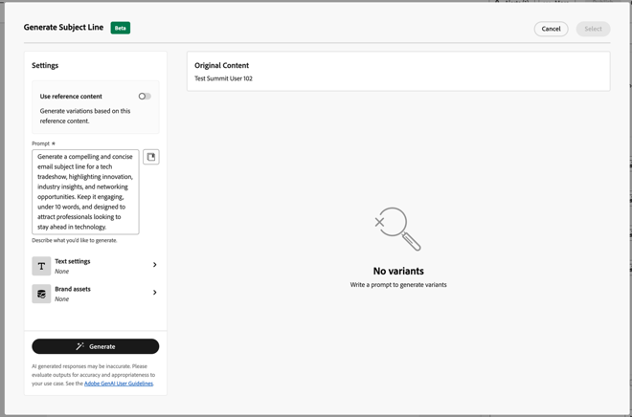
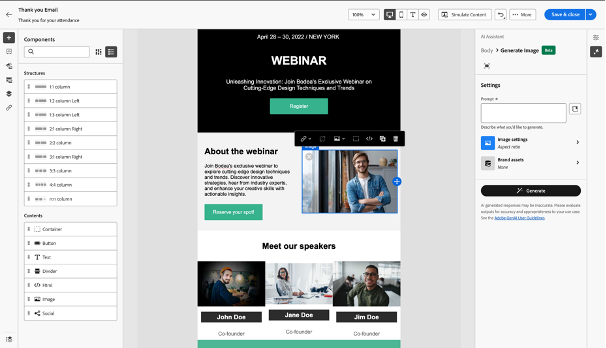
Marketo email editor has undergone a remarkable transformation, integrating cutting-edge generative AI marketing capabilities that are changing how professionals approach email campaigns. This powerful combination of the Marketo’s email editor with gen AI marketing technology addresses the growing demand for personalized, engaging content delivered at scale—a challenge many marketing teams struggle to meet with traditional approaches.
The Evolution of Email Marketing Through AI Integration
The latest version of the email editor represents a significant advancement in how marketing teams conceptualize and execute email campaigns. Marketo has positioned its email editor as a comprehensive solution for content creation challenges by incorporating generative AI marketing tools directly into the workflow. This evolution of the email editor doesn’t just streamline processes—it fundamentally transforms what’s possible within email marketing automation.
Marketers who have traditionally spent hours crafting email copy can now leverage the Marketo’s email editor’s gen AI marketing capabilities to produce initial drafts in minutes, freeing up valuable time for strategy and creative refinement. This shift in approach demonstrates how gen AI marketing is becoming essential rather than optional in competitive business environments.
Key Features of the AI-Enhanced Marketo Email Editor
The revamped Marketo email editor includes several generative AI marketing features that deliver immediate value to marketing professionals:
Intelligent Content Generation
The editor now offers sophisticated content generation capabilities powered by generative AI marketing algorithms. Users can input campaign parameters and target audience characteristics, and the Marketo email editor will produce tailored email copy, subject lines, and call-to-action text that aligns with marketing objectives.
A B2B technology provider recently implemented these gen AI marketing tools within their email editor workflow and reported reducing initial draft creation time by 65% while seeing improved engagement metrics—clear evidence of how gen AI marketing enhances rather than diminishes content quality.
Adaptive Content Recommendations
Beyond static content creation, the Marketo email editor employs gen AI marketing technology to analyze recipient data and past engagement patterns. This allows the editor to suggest content modifications likely to resonate with specific segments of your audience, enabling truly dynamic content creation that evolves with your audience’s preferences.
Financial service marketers using the email editor have found that these gen-AI marketing recommendations consistently outperform traditionally created content in both open rates and click-through performance, demonstrating the data-driven advantage that generative AI marketing brings to email campaigns.
Automated Testing Optimization
The email editor now includes generative AI marketing features that recommend specific elements to test and generate variations based on historical performance data. This gen AI marketing capability within the Marketo email editor takes the guesswork out of A/B testing, providing test options and predictive insights about which variations might perform best with certain audience segments.
Healthcare companies utilizing the editor’s generative AI marketing testing capabilities have reported 30% improvements in campaign performance metrics after implementing AI-suggested variations—tangible results that highlight the value of integrating gen AI marketing into the email creation process.
Visual Content Creation
The email editor now incorporates visual generative AI marketing tools that allow users to create and modify images without leaving the platform. This integration within the Marketo editor eliminates workflow disruptions and ensures visual elements align perfectly with AI-generated text content, creating a cohesive message that reinforces brand positioning.
Retail marketers have particularly embraced this aspect of the Marketo email editor, using its generative AI marketing capabilities to produce customized promotional imagery that previously would have required dedicated design resources, demonstrating how Marketo is evolving into a comprehensive content creation center.
Brand Voice Consistency
Maintaining consistent messaging across multiple campaigns and team members has traditionally been challenging. The Marketo’s email editor now includes generative AI marketing tools that help ensure all content aligns with established brand guidelines. By analyzing previously approved content, the editor can suggest edits that bring new copy in line with your organization’s voice and tone.
Global enterprises with distributed marketing teams have found the Marketo’s email editor’s generative AI marketing features invaluable for maintaining consistent messaging despite having dozens of content creators contributing to campaigns across different regions and product lines.
Multilingual Content Support
For organizations operating in multiple markets, the Marketo’s email editor’s generative AI marketing capabilities extend to multilingual content creation. These features go beyond simple translation to account for cultural nuances and regional preferences, allowing the Marketo email editor to serve as a global marketing tool.
Human-AI Collaboration: The Optimized Workflow
Organizations achieving the greatest success with the Marketo email editor understand that its generative AI marketing capabilities are designed to enhance rather than replace human creativity. The most effective implementation of the email editor involves a collaborative approach where:
Marketing teams define campaign objectives and audience insights
The email editor uses generative AI marketing technology to produce initial content options
Human marketers refine these suggestions, applying their understanding of brand and customer relationships
The gen AI marketing features within the email editor learn from these refinements, becoming more aligned with organizational voice over time
This collaborative workflow preserves the essential human elements of marketing while eliminating much of the production work that traditionally consumed marketers’ time, demonstrating how the Marketo’s email editor and gen AI marketing technologies complement each other perfectly.
Implementation Best Practices
Organizations seeing the greatest benefits from the Marketo email editor’s gen AI marketing capabilities typically follow several best practices:
Start with clear campaign objectives to provide direction for the Marketo’s email editor’s gen AI marketing algorithms
Feed the email editor examples of your best-performing content to help its gen AI marketing system understand what works for your audience
Begin with smaller campaigns to familiarize teams with the new email editor workflow before scaling
Maintain human oversight of the email editor’s gen AI marketing outputs to ensure quality and brand alignment
Use performance data to continually improve how you leverage the Marketo’s email editor’s gen AI marketing features
The Future of AI-Powered Marketing Content
The current capabilities of the Marketo email editor represent just the beginning of gen AI marketing’s potential impact on content creation. As these systems evolve, we can expect the email editor to incorporate even more sophisticated personalization, predictive optimization, and cross-channel coordination powered by advancing gen AI marketing technology.
Conclusion
The Marketo’s email editor has transformed email marketing automation through its integration of powerful generative AI marketing capabilities. Marketing teams across industries have embraced these tools to create more personalized, engaging content while significantly reducing production time and resources. Since, maintaining the human strategic element remains crucial for creating truly meaningful customer connections that drive business results. Thus, the most successful approach treats the Marketo editor and its gen AI marketing features as collaborative tools rather than replacements for human creativity—combining the efficiency of artificial intelligence with the strategic insight that only experienced marketers can provide.
As the Marketo’s email editor and gen AI marketing technologies continue to evolve together, organizations that establish effective human-AI collaborative workflows today will be well-positioned to leverage even more powerful capabilities in the future, creating competitive advantage through both content quality and operational efficiency.
Your marketing automation platform can be a sophisticated engine, capable of orchestrating complex campaigns and delivering personalized experiences with impressive efficiency. But like any high-performance machine, its true potential hinges on the quality of its fuel: quality and complete data.
It’s the strategic process of taking the foundational information you possess about your audience and layering it with rich, contextual insights. This transformation goes far beyond simply amassing more data; cultivating smarter data that empowers your automation to understand, connect with, and ultimately convert your audience on a deep human level.
Data enrichment bridges the gaps and adds essential dimensions to your existing information managed by Adobe Marketo, Oracle Eloqua, or other marketing automation systems. They capture engagement patterns on your website, the specific content they’ve downloaded, and their purchase history. Imagine knowing their industry and even the technologies their company utilizes.
While you may already possess some of this data, enrichment takes it a step further by expanding your data points. This deeper understanding enables better segmentation and allows you to transcend generic outreach, ultimately leading to interactions that are genuinely relevant and impactful.
Unpacking the Layers: What Exactly Does Data Enrichment Entail?
Data enrichment isn’t a one-dimensional process. It involves several key layers that work together to create a comprehensive and actionable view of your audience:
Filling in the Blanks
Often, initial data capture leaves crucial fields empty. Enrichment processes automatically append this missing information, whether it’s a phone number, a job title, the size of their organization, or their geographic location. Completing these profiles ensures you have the necessary details for effective communication and segmentation.
Ensuring Accuracy and Freshness
Data is dynamic. People change jobs, companies evolve, and contact information becomes outdated. Data enrichment includes ongoing verification and updating processes to cleanse your database, correcting inaccuracies and ensuring you’re reaching the right individuals with current information. This prevents wasted efforts and maintains the integrity of your data.
Adding Contextual Depth
This is where the real magic happens. Enrichment appends entirely new categories of data that provide invaluable context about your audience:
Behavioral Insights: Tracking website visits, content consumption, email engagement, and past purchase history reveals a prospect’s interests and intent, allowing for highly targeted follow-ups.
Firmographic Details (for B2B): Information like industry, annual revenue, employee count, and company growth trajectory enables precise targeting of ideal customer profiles.
Technographic Data: Understanding the software and hardware a company uses can be crucial for offering relevant solutions and tailoring your messaging.
Demographic Information (for B2C): Details such as age, gender, location, income level, and lifestyle preferences allow for nuanced personalization of consumer-focused campaigns.
Social Signals: While requiring careful consideration of privacy, understanding a prospect’s social media activity can offer additional insights into their interests and engagement patterns.
Standardizing for Seamless Integration
Inconsistent data formats across various sources can create headaches for analysis and automation. Enrichment processes standardize this information, ensuring your marketing automation platform can seamlessly utilize data from all touchpoints.
Data Enrichment Elevates Your Marketing Automation
Investing in data enrichment isn’t just about having “nicer” data; it translates directly into tangible benefits that significantly impact your marketing effectiveness and drive business growth:
Hyper-Personalization That Resonates
Gone are the days of generic email blasts. With enriched data, you can segment your audience with incredible granularity and craft highly personalized messages, content recommendations, and offers that speak directly to individual needs, challenges, and aspirations. This level of personalization builds stronger connections and significantly boosts engagement.
Smarter Lead Scoring and Sales Alignment
Imagine being able to identify your hottest leads with greater precision. Enriched data provides a holistic view of a lead’s profile and behavior, enabling more sophisticated and accurate lead scoring models. This ensures your sales team prioritizes the most promising prospects, leading to higher conversion rates and a more efficient sales process.
Precision Targeting Across Channels
Whether you’re running targeted email campaigns, social media advertising, or account-based marketing initiatives, enriched data empowers you to reach the right audiences with the right message at the right time and on the right platform. This minimizes wasted ad spend and maximizes the impact of your marketing efforts.
Nurturing Leads with Context and Care
Generic nurturing sequences often feel impersonal and ineffective. With enriched data, you can tailor your nurturing content to address specific pain points, interests, and where a lead is in their buyer’s journey. This builds trust, educates prospects effectively, and guides them naturally towards conversion.
Crafting Exceptional Customer Experiences
Understanding your customers deeply through enriched data allows you to provide more valuable and relevant interactions at every touchpoint. From personalized support to proactive recommendations, you can create a seamless and positive customer experience that fosters loyalty, advocacy, and repeat business.
Boosting Data Quality and Trustworthiness
The very process of data enrichment often involves data cleansing, deduplication, and validation, resulting in a more accurate and reliable database. This reduces errors, improves the accuracy of your reporting, and ensures your marketing decisions are based on sound information.
Unlocking Deeper Insights and Strategic Advantages
With richer and more complete data, your marketing automation platform can generate more insightful reports and analytics. This allows you to gain a deeper understanding of campaign performance, identify emerging trends, and make data-driven decisions to continuously optimize your marketing strategies.
Orchestrating Seamless Omnichannel Experiences
Enriched data provides a unified view of each customer across all the ways they interact with your brand. This enables you to deliver consistent and relevant messaging regardless of the channel, creating a cohesive and impactful omnichannel experience that strengthens brand engagement.
Navigating the Data Enrichment Landscape: Tools and Best Practices
Implementing data enrichment effectively requires the right tools and a thoughtful strategy:
Selecting Right Tools: A wide array of data enrichment tools exists, from specialized platforms to integrated features within CRM and marketing automation systems. Carefully consider your specific requirements, budget, and the types of data you need to enrich when making your selection.
Define Enrichment Objectives: What specific data points will have the biggest impact on your marketing and sales goals? Having clear objectives will ensure your enrichment efforts are focused and measurable.
Uphold Data Privacy and Compliance: Always prioritize data privacy regulations (like GDPR and CCPA) throughout your data enrichment processes. Ensure you have the necessary consent and maintain transparency with your audience regarding data collection and usage.
Establish a Continuous Enrichment Cycle: Data isn’t static. Implement a regular process for data enrichment to ensure your information remains accurate, up-to-date, and valuable over time.
Leverage Your Internal Data First: Don’t underestimate the value of the data you already possess. Analyze your CRM, website analytics, and past campaign performance to identify opportunities for internal data enrichment before seeking external sources.
The Future of Marketing is Data-Driven and Human-Connected
In conclusion, data enrichment is not just a technical add-on for marketing automation; it’s the very foundation upon which truly effective and human-centric marketing is built. By investing in enriching your understanding of your audience, you unlock the full potential of your automation platform, enabling personalized interactions, smarter targeting, and ultimately, stronger customer relationships and sustainable business growth. In an increasingly noisy digital world, enriched data allows you to cut through the clutter, connect with your audience on a meaningful level, and transform your marketing automation from a mere tool into a powerful engine for engagement and conversion. Embrace the power of enriched data, and watch your marketing efforts flourish.
Effective lead nurturing is a critical component of successful B2B marketing strategies. Distributing content without a targeted framework often leads to inefficient resource allocation and suboptimal lead conversion. This article will delve into the powerful integration of Marketo Nurture Stream Programs and Lead Scoring, demonstrating how these steps can be leveraged to establish meaningful relationships with leads and drive measurable revenue growth. We will examine the mechanics of these tools and illustrate their capacity to automate converting potential clients into valuable, sales-ready prospects.
The Magic of Marketo Nurture Streams:
Marketo Nurture Stream Programs facilitate a refined, gradual engagement approach akin to the meticulous preparation of a custom blend. Rather than employing indiscriminate email campaigns, these programs deliver highly personalized content tailored to each lead’s specific stage within the buyer’s journey. This strategy prioritizes relationship cultivation over unsolicited mass communication. The operational framework of these programs can be summarized as follows:
Strategic Stream Segmentation: Marketo Nurture Streams are structured into distinct pathways, such as ‘Top of Funnel,’ ‘Middle of Funnel,’ and ‘Bottom of Funnel,’ to accommodate varied lead progression.
Dynamic Content Delivery: Each stream is configured with a unique cadence, targeted content, and transition rules, ensuring timely and relevant communication.
Scalable Personalization: Leveraging tokens, snippets, and intelligent segmentation, Marketo enables the efficient deployment of personalized marketing initiatives, achieving a high degree of individualization at scale.
Through these steps, marketers can effectively guide leads through the sales pipeline, enhancing engagement and fostering a more productive sales environment.
Marketo Nurture & Lead Scoring: Your Intent Decoder
A key aspect of successful lead management is recognizing when a lead moves from the nurturing phase to being sales-ready. Without a robust scoring mechanism, marketers operate without precise indicators of buyer intent, resulting in inefficient resource allocation. Lead scoring provides a quantitative methodology to assess and prioritize leads based on predefined criteria, facilitating a more targeted sales engagement strategy. The key elements of this scoring process are outlined below:
Demographic Qualification
This assesses the alignment of a lead with the ideal customer profile, considering factors such as job title, company size, and geographical location. This ensures that sales efforts are focused on prospects that match strategic business objectives.
Behavioral Engagement Analysis
This measures the level of interaction a lead has with marketing assets, including website visits, form submissions, and email engagement. This provides insights into the lead’s active interest and readiness to engage further.
Threshold-Driven Sales Enablement
Upon reaching a predefined scoring threshold, automated alerts are triggered to notify the sales team, and leads are seamlessly transitioned through the nurture streams. This facilitates a streamlined handoff process, ensuring timely and effective sales engagement.
By implementing a structured lead scoring framework, organizations can optimize their sales pipeline, enhancing the efficiency of their sales teams and maximizing conversion rates.
The Power Couple: Marketo Nurture + Lead Scoring
The true efficacy of Marketo‘s capabilities is realized through the integrated application of Marketo nurture programs and lead scoring. This synergy creates a robust revenue generation system, optimizing the lead-to-customer conversion process. By systematically nurturing leads and accurately identifying sales-ready prospects, organizations can prioritize quality interactions over mere volume, significantly enhancing the efficiency of their sales pipeline.
Strategic Implementation Recommendation
Rigorous A/B Testing: Conduct comprehensive A/B testing to determine optimal content and messaging strategies, ensuring data-driven decision-making.”
Periodic Scoring Model Refinement: “Implement quarterly reviews of the lead scoring model to adapt to evolving buyer behaviors and market dynamics, maintaining relevance and accuracy.
Cross-Functional Alignment: Foster seamless alignment between sales and marketing teams, establishing shared objectives and metrics to ensure cohesive lead management and revenue generation efforts.
Automated Lifecycle Management: Utilize intelligent transition rules to automate lead progression through the lifecycle, optimizing resource allocation and enhancing operational efficiency.
By adhering to these strategic recommendations, organizations can maximize the return on their marketing automation investments and achieve sustainable revenue growth.
Conclusion:
Achieving meaningful growth starts with connecting your marketing efforts to real buyer intent. Marketo Nurture Stream Programs and Lead Scoring offer a powerful framework to identify, prioritize, and engage the right leads at the right time. When used effectively, these tools move your strategy beyond guesswork and vanity metrics, enabling consistent, relevant communication that builds trust and accelerates pipeline. This article explores how to shift from reactive marketing to a data-driven approach that drives measurable impact and long-term success.