
AI Use Policy for Marketing Teams: What to Put in Writing (With a Template)
An AI use policy for marketing turns vague company rules into clear steps for tools, human review, disclosure and records. Here is what to include, plus a one-page template.


Data privacy shapes every B2B campaign. Learn what data privacy in marketing means, what your privacy policy must include, and the practical steps that keep...

CCPA compliance has covered B2B contacts since 2023. Learn what California's privacy law requires from your email program, from data requests to opt-outs, and how...

B2B email compliance means meeting four laws from one database. Learn which law applies to each contact, the five requirements every program shares, and how...

An AI use policy for marketing turns vague company rules into clear steps for tools, human review, disclosure and records. Here is what to include,...

Is your AI privacy safe? Learn what customer data to keep out of AI tools, how to keep AI use inside consent, and how data...

An Eloqua AI asset cleanup lets AI sort your inventory and flag unused emails, landing pages, and forms, while a person checks dependencies and approves...
An AI use policy for marketing turns vague company rules into clear steps for tools, human review, disclosure and records. Here is what to include, plus a one-page template.
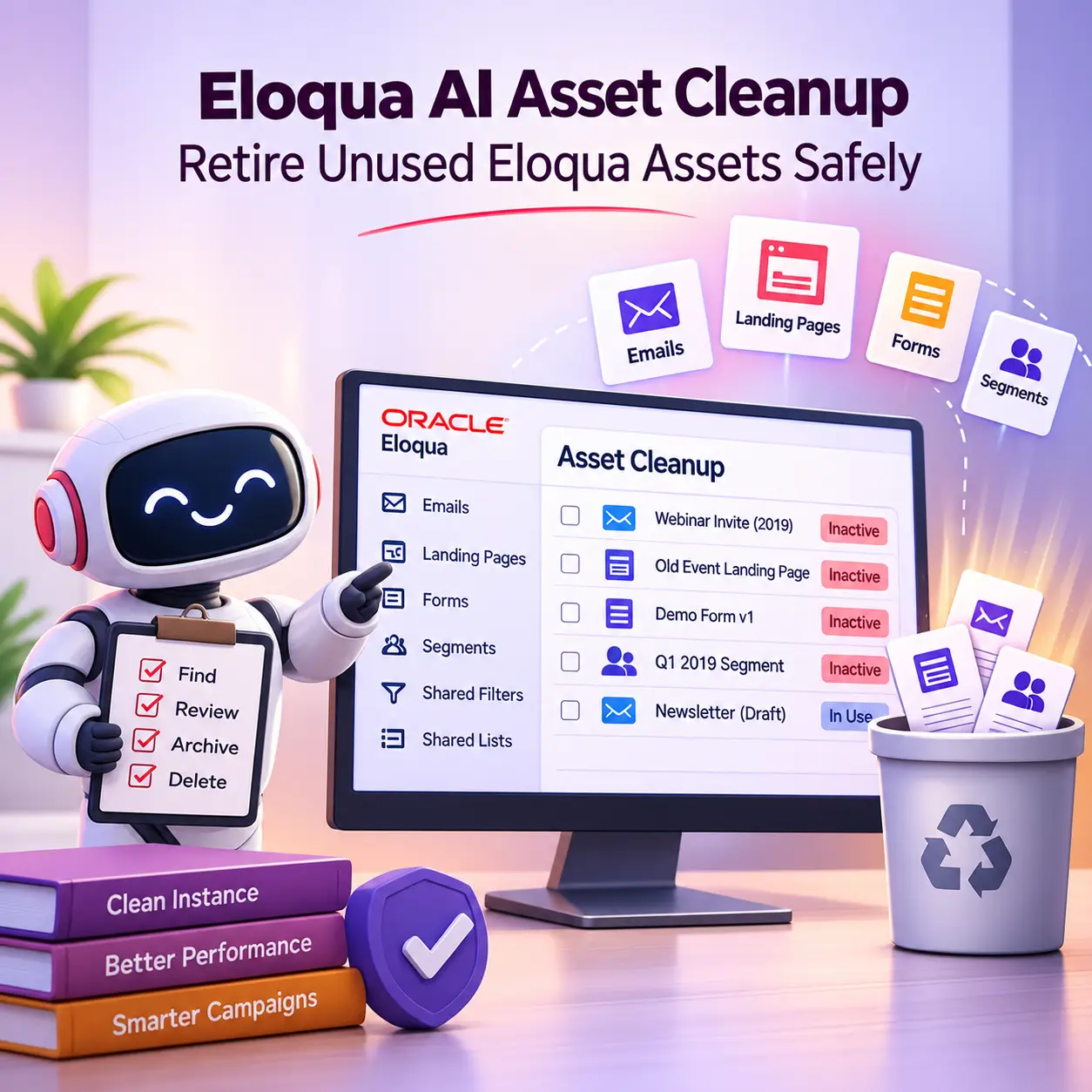
An Eloqua AI asset cleanup lets AI sort your inventory and flag unused emails, landing pages, and forms, while a person checks dependencies and approves every archive or deletion.
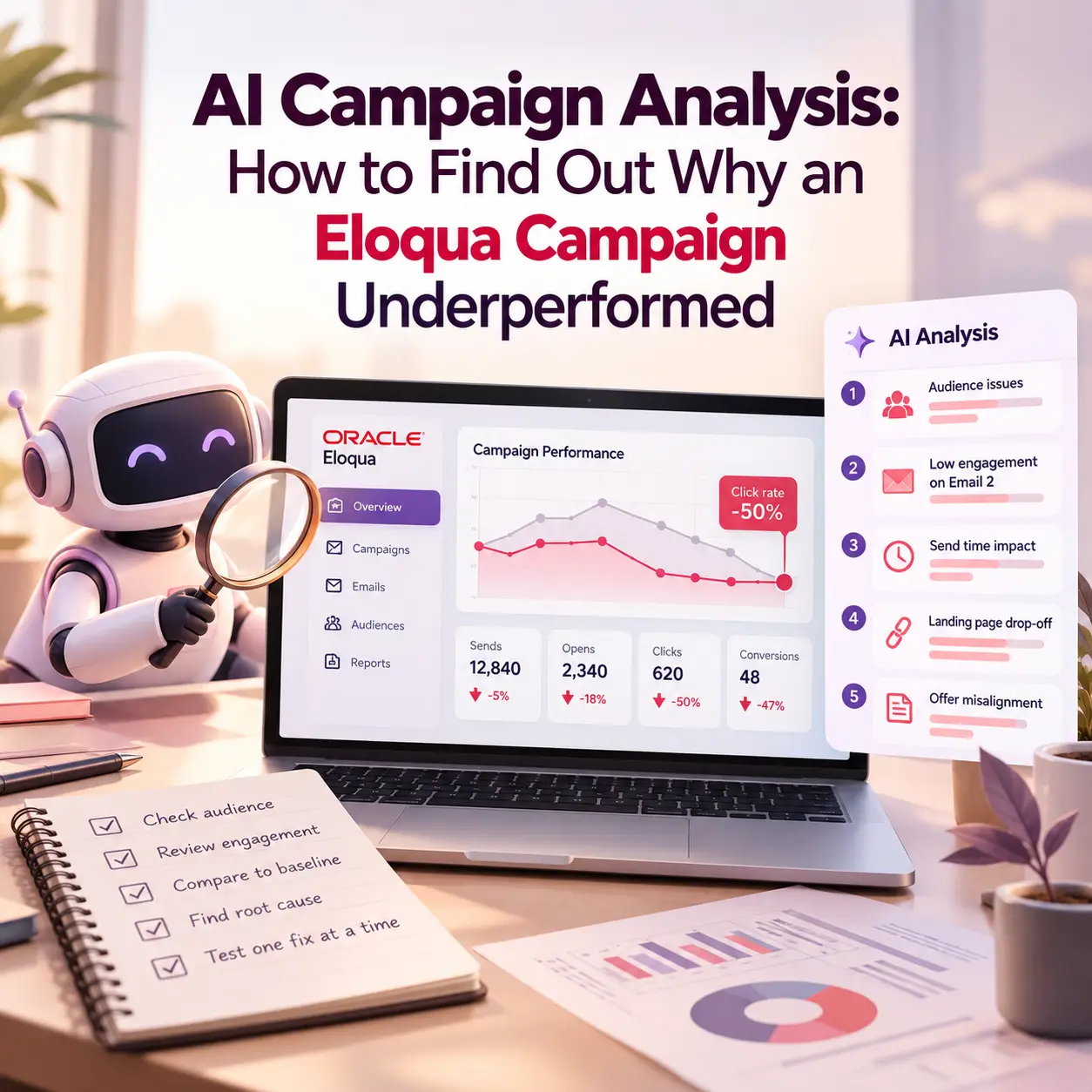
AI campaign analysis helps you find out why an Eloqua campaign underperformed: set a baseline, export the right reports, check five failure points, and verify ranked explanations before you fix anything.
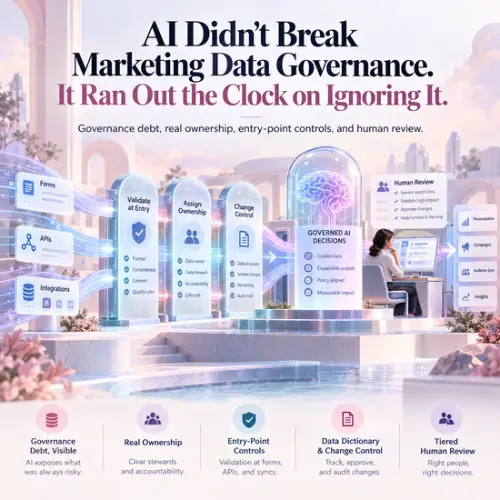
AI didn’t break marketing data governance; it exposed the debt. Here is how to build an AI data governance framework with real owners, entry-point controls, and tiered human review.

Building an AI-ready MOPs instance takes more than a new tool. It takes clean data, defined governance, and a retrained team before any agent gets access.

Bot form submissions are quietly inflating MQL counts and lead scoring accuracy. Here’s how to detect them and fix your scoring model.
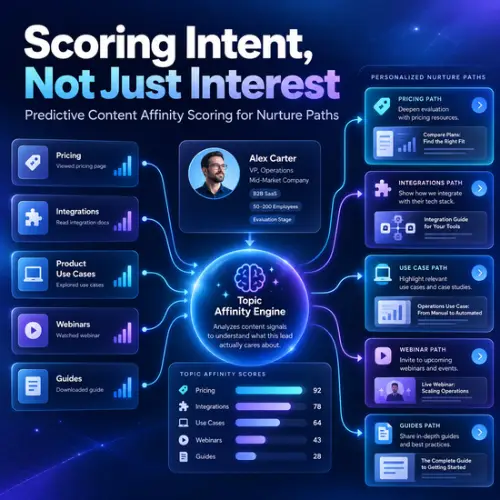
Content affinity scoring tracks which topics a lead actually cares about, not just how often they engage, so nurture paths can be built around real interest instead of raw activity.

Scoring model drift erodes lead score accuracy quietly, with no built-in alarm. Here’s why catching it takes a recurring human audit, not an AI feature, and how to build that discipline.
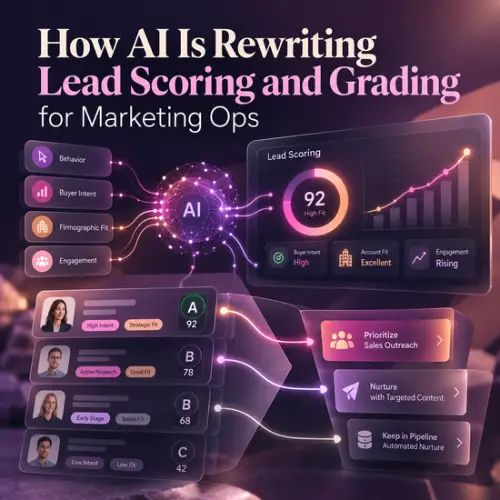
AI lead scoring and grading only works when it re-weights data marketing ops already trusts. Here is how to separate the two, keep the model auditable, and fix the sales handoff.

MQL follow-up automation turns a qualified lead’s score into a specific, AI-recommended next action, closing the gap between when a lead qualifies and when someone actually follows up.

A lead’s grade is only as trustworthy as the blended lead scoring data behind it. Here’s how marketing ops teams can audit the blend before AI-era scoring makes bad data harder to catch.

Standard dashboards report on a schedule; AI anomaly detection flags a stalled sync, a silent segment, or a drifting metric while there is still time to fix it.