





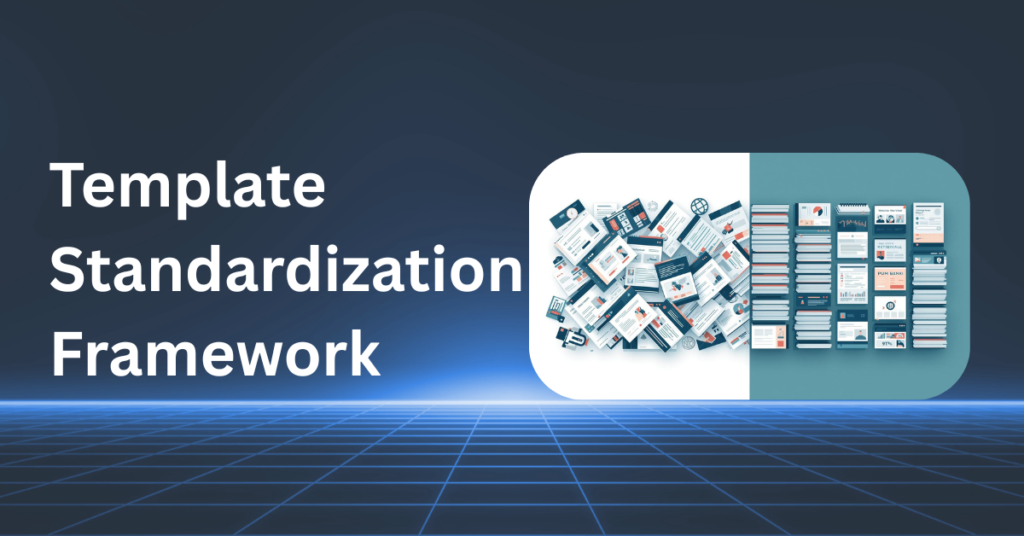
Key Takeaways
- Template libraries decay without systematic governance frameworks
- Fourteen warning signs reveal operational bottlenecks and efficiency losses
- Template standardization balances creative flexibility with brand consistency marketing
- Four-phase methodology addresses technical and organizational challenges
- Measurable outcomes validate framework effectiveness across platforms
Marketing teams invest in template libraries expecting accelerated production and brand consistency. Yet selecting the correct one or proposing a new design is the biggest challenge, timelines extend rather than compress, and brand inconsistencies multiply. This deterioration happens gradually and silently. Without realizing it, organizations accumulate template debt that erodes velocity, fragments brand execution, and slows production. As detailed in our marketing automation audit guide, template standardization intersects with workflow architecture and data governance—two critical health factors that determine system scalability.
What Template Inventory Red Flags Indicate Library Deterioration?
1. Your Template Library Contains More Variations Than Campaigns Launched Last Quarter
This pattern indicates template proliferation without governance—organizations create variations continuously while never retiring obsolete assets.
2. Production Teams Spend 20+ Minutes Searching for “The Approved Version”
When locating the correct starting point requires navigating multiple folders, comparing versions, and consulting colleagues, the library has become an obstacle rather than accelerator.
3. Templates Reference Outdated Branding, Products, or Legal Language
Templates containing outdated branding, discontinued products, or superseded legal language indicate governance failure—each organizational change should trigger systematic updates across the library.
4. Teams Bypass the Template Library and Build Emails from Scratch
Template bypassing often reflects absent stakeholder accountability rather than template quality issues. Without executive enforcement—such as CMOs declaring approved template versions mandatory—individual managers will request custom designs regardless of standardization investments.
What Governance Gaps Create Template Management Failures?
5. No Approval Process Exists Before Templates Enter Production Use
Approval workflows ensure templates meet brand, legal, and technical standards before production use. Without gates, libraries accumulate non-compliant assets.
6. Template Ownership Is Unclear When Updates Are Needed
Ambiguous ownership stalls template evolution. When brand guidelines change, privacy policies update, or technical issues surface, organizations need clear accountability for implementing corrections.
7. Version Control Doesn’t Exist—Teams Modify Templates in Place
Editing production templates directly rather than maintaining version history eliminates change reversibility, prevents conflict resolution when multiple editors work simultaneously, and makes troubleshooting nearly impossible.
8. Brand Consistency Guidelines Exist but Templates Don’t Enforce Them
Brand guidelines specify color palettes, typography, spacing, and imagery usage—but if templates don’t encode these rules automatically, enforcement depends entirely on individual compliance.
9. Template Documentation Is Missing, Outdated, or Stored Separately
Templates without accompanying usage guidelines, customization boundaries, and technical specifications create adoption barriers preventing effective use and consistent application.
What Efficiency Bottleneck Symptoms Reveal Operational Impact?
10. Campaign Production Timelines Haven’t Improved Despite Template Investments
Stagnant or declining campaign build times indicate templates add process overhead without delivering promised acceleration.
11. Different Business Units Maintain Separate Template Libraries
While business units may require specialized content, foundational elements like headers, footers, legal disclaimers, and structural components should centralize. Separate libraries multiply maintenance effort, prevent cross-team reuse, and complicate governance.
12. New Team Members Require 3+ Weeks Before They Can Use Templates Independently
If new campaign managers need extensive training before confidently using templates, the library structure, naming taxonomy, or documentation needs simplification.
13. Landing Page Templates Don’t Match Email Templates Stylistically
Visual inconsistency between email and landing page templates fragments customer experience. Prospects clicking email CTAs should arrive at landing pages with consistent design language, creating seamless journeys.
14. Template Requests Create Bottlenecks with Design or Operations Teams
When campaign managers must request new templates from centralized teams, and those requests accumulate into multi-week backlogs, template library management has created dependency rather than enabling autonomy.
The 4TM Template Standardization Framework
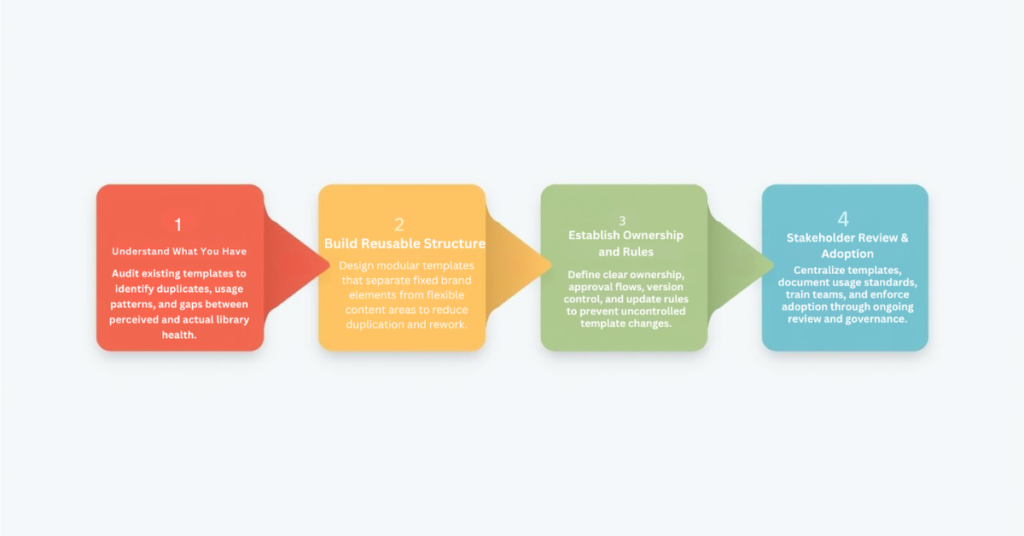
Organizations move from template chaos to operational efficiency through four structured phases addressing what exists, how it should work, who maintains it, and how teams adopt it.
Phase 1: Understand What You Have
Audit existing templates to identify volume, usage patterns, duplicates, and governance gaps. This reveals the gap between what organizations think they have and actual library health.
Phase 2: Build Reusable Structure
Create modular templates separating fixed brand elements from flexible content zones. Establish clear taxonomy (email types, landing page purposes, form functions) and version control preventing modification chaos.
Phase 3: Establish Ownership & Rules
Define who approves templates, who maintains them, and how updates happen. Assign clear ownership for template requests, brand evolution, training, and systematic retirement of outdated assets.
Phase 4: Stakeholder Review
Implement centralized library with documentation, secure stakeholder review and approval of standardized templates, communicate mandatory usage expectations, train teams on proper usage, and conduct quarterly audits. Capture feedback loops showing what works and what needs evolution
Measuring Success
Organizations track three outcome categories:
Efficiency: Campaign production time (30-40% reduction target), template search time (under 3 minutes), new team member ramp time (under 1 week).
Quality: Brand compliance score (95%+ target), template utilization rate (80%+ adoption), library health ratio (60%+ active templates).
Operations: Template request backlog (under 10 days), cross-team reuse patterns, documentation completeness (100% for production templates).
Conclusion
Template standardization represents the intersection of workflow architecture, data governance, and operational efficiency. Organizations recognizing these fourteen warning signs early implement systematic frameworks preventing template libraries from becoming operational liabilities.
4Thought Marketing’s Campaign Services team has implemented this methodology across platforms, industries, and organizational scales. Whether your diagnostic revealed early warnings or critical red flags, remediation begins with comprehensive assessment and continues through sustainable governance frameworks.
Frequently Asked Questions (FAQs)
What causes template libraries to deteriorate over time?
Template decay results from absent governance allowing uncontrolled creation and quality drift, poor documentation making templates difficult to use, and organizational changes not systematically reflected in updates.
How long does template standardization typically take to implement?
Comprehensive standardization requires 3-5 months: discovery and assessment (2-4 weeks), architecture and design standards (4-6 weeks), governance implementation (3-4 weeks), and adoption with training (4-8 weeks), varying by inventory size and organizational complexity.
Can organizations standardize templates without limiting creative flexibility?
Yes—modular architecture separates required brand elements from flexible content zones, establishes clear customization boundaries, and provides sufficient variety addressing legitimate campaign diversity without unnecessary proliferation.
What’s the difference between template governance and template control?
Governance establishes frameworks ensuring quality and consistency while enabling appropriate flexibility, whereas control restricts usage through centralized bottlenecks that create dependency.
Should different business units maintain separate template libraries?
Business units should share foundational templates (headers, footers, legal components) while potentially maintaining specialized templates for unique needs—complete separation prevents efficiency gains and complicates brand consistency.
How do organizations prevent template libraries from becoming chaotic again after standardization?
Sustainable standardization requires quarterly audits removing unused templates, systematic update processes when requirements change, usage analytics identifying adoption patterns, continuous training for new members, and designated ownership maintaining library health.