Lead generation and demand generation may sound like the same thing. In practice, they can be similar. However, the differences are critical for any marketer to understand. Let’s compare lead generation vs. demand generation and see how they differ, and what that looks like practically.
What is Demand Generation?
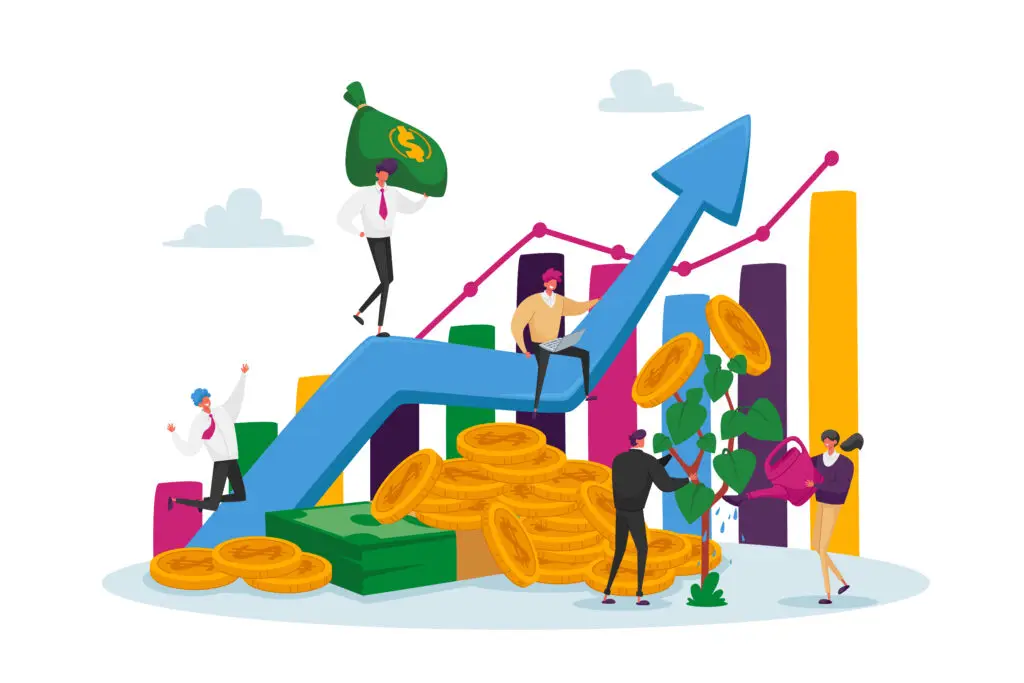
Marketers must view demand generation as the bigger picture and lead generation as one element of the wider demand generation function.
Demand generation is the process of increasing awareness and demand for your company’s service or product. The focus here is getting your brand name out there and drumming up interest in what your brand has to offer.
In other words, demand generation is bringing new visitors to your business or website. The goal is to establish your target audience, get them thinking or talking about you, and build trust with them through thoroughly planned content and interactions.
One common method of demand generation is creating ungated content, meaning customers don’t have to commit to anything to access the content. Examples of this can include:
- Blog posts
- Case studies
- Interviews
- Infographics
- Press releases
- Social media posts
- Resource pages
- Videos
This content aims to increase the brand’s or company’s profile and attract attention to it. You can build trust and connect with your target audience through engaging content. That will encourage them to come to you.
What is Lead Generation?

Lead generation requires a specific skill set, as it is about conveying interest to leads and guiding them through the funnel. It could be described as a way to funnel through eventual buyers of your service or product. Its purpose is to capture personal data.
Remember that lead generation strategies are used to obtain names, email addresses, and phone numbers, with the hope that some of these people will convert into qualified leads. Hence, gated content is the main priority here, meaning people must sign up and share their contact information to download or receive the content.
The most typical types of lead generation content include:
- Email subscriptions
- Ebooks
- Research papers
- Online courses
- Product demos and free trials
- PDF guides
- Cheat sheets or checklists
- Whitepapers
- Viral contests
Where Do Lead Generation & Demand Generation Fit into the Sales Process?
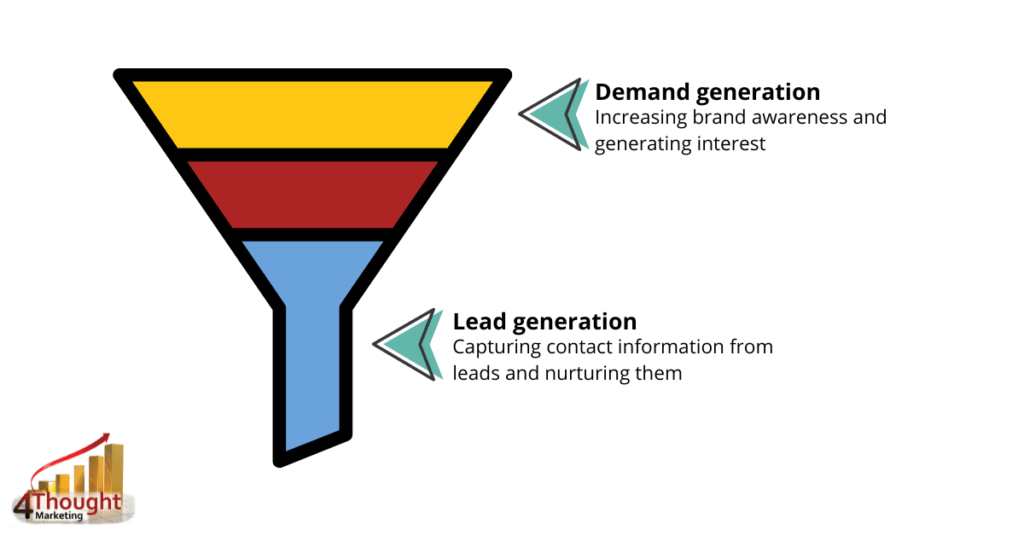
Comparing lead generation vs. demand generation efforts is essential to tracking the impact of your B2B sales process. These strategies involve applying research, building credibility, and addressing consumer challenges through your content. Well-produced demand-generation content offers solutions and helps connect your target audience, resulting in more leads.
Demand generation marketing techniques let you reach a big audience with impactful messaging in different ways. The goal is to raise visibility for your digital presence, solidify your position as a thought leader, and keep your business at the forefront of your mind. Demand generation thus fits well into the research and prospecting part of the sales process.
Meanwhile, lead generation strategies enable better access to set up a first sales consultation or product demo for interested parties. It also keeps the sales pipeline filled with qualified leads you can move throughout the sales process. Identify where those leads are in the sales funnel and personalize the approach according to their interest level. That will help you close more deals and establish better long-term client relationships.
Running Both Strategies Together

What you need to bear in mind about lead generation and demand generation is that they are both essential to your B2B marketing strategy. They are made to work well together, along with lead generation, to support the work completed by demand generation.
Other organizations may focus on lead generation to acquire contacts and email addresses to hit sales targets. However, the ideal approach is to deploy both lead and demand generation simultaneously. This is because you cannot produce leads to your fullest potential or sustainably if there is no demand in the first place. People must know who you are and the products or services you provide.
Similarly, demand generation requires the further push of lead generation. Otherwise, all the hard work to get people interested in your brand could go to waste if you cannot convert them into leads.
Lead Generation and Demand Generation: Better Together
So, should you pursue lead generation or demand generation?
Realistically, you should pursue both. Without demand gen, you will have trouble getting leads into your funnel to convert a significant number into customers. On the other hand, you may end up attracting poor-fit customers who won’t help you grow your brand and business without quality lead-gen strategies.
With strong inbound and organic marketing processes to raise awareness of your site and excellent lead-generation practices to identify best-fit customers, you will be well on your way to huge growth.
How 4Thought Marketing Can Help
Determining what your prospects want and what they need to conquer their challenges will help your sales efforts. Deliver information that supports your solutions and demonstrates their effectiveness. Those ongoing lead and demand generation efforts drive high-quality engagements with qualified leads and continuously connect with new prospects.
At 4Thought Marketing, we are well-versed in B2B sales and can guide you on the tools, strategies, and techniques essential to flourish in your B2B sales process. Get in touch with us today to get your marketing strategy on the path to success.