


Frequently Asked Questions

Email Unsubscribe Requests & Reduction Strategies

Why do customers unsubscribe from marketing emails?

Customers typically unsubscribe because they feel they are receiving too many emails or the emails are not relevant to them. Both reasons stem from a desire for control over communication frequency and content relevance. (Source: Original Webpage)

What are the main reasons for email unsubscribe spikes?

The main reasons for spikes in unsubscribe requests are sending too many emails and sending emails that lack relevance to the recipient. (Source: Original Webpage)

How can companies reduce email unsubscribe requests?

Companies can reduce unsubscribe requests by offering customers more choices, such as preferred communication methods and topics of interest, and by personalizing email content to make it timely and relevant. (Source: Original Webpage)

What choices should companies offer to customers to reduce unsubscribes?

Companies should offer choices such as communication method (email or text), topics of interest, and frequency of communication. This empowers customers to control their experience and reduces the likelihood of unsubscribing. (Source: Original Webpage)

How does personalization impact email unsubscribe rates?

Personalization, such as addressing recipients by name and tailoring content to their interests, increases relevance and engagement, which can significantly reduce unsubscribe rates. (Source: Original Webpage)

What elements of an email can be improved to reduce unsubscribes?

Improving the subject line, greeting, email body, message relevance, and call to action (CTA) can make emails more engaging and reduce unsubscribe requests. (Source: Original Webpage)

How can Custom Objects help personalize marketing emails?

Custom Objects can be used to personalize messages for each recipient, making emails more relevant and increasing the likelihood that customers will remain subscribed. (Source: Original Webpage)

Why is it important for emails to stand out in appearance and content?

With customers receiving a large volume of emails, standing out in both appearance and content is critical to capturing attention and reducing unsubscribes. Personalized, visually appealing emails are more likely to be opened and acted upon. (Source: Original Webpage)

How can preference management pages help reduce unsubscribes?

Preference management pages allow customers to easily select their communication preferences, topics, and frequency, which increases satisfaction and reduces the likelihood of unsubscribing. (Source: Original Webpage)

What role does the call to action (CTA) play in reducing unsubscribes?

The CTA guides customers to the next logical step and keeps them engaged. A clear, relevant CTA increases the value of the email and reduces the chance of unsubscribing. (Source: Original Webpage)

How does 4Thought Marketing help reduce email unsubscribe requests?

4Thought Marketing offers solutions like 4Comply and Eloqua to help companies send personalized, relevant messages that reduce unsubscribe requests and improve customer engagement. (Source: Original Webpage)

What is the impact of irrelevant emails on customer retention?

Irrelevant emails can lead to quick deletions and increased unsubscribe rates, negatively impacting customer retention and future sales opportunities. (Source: Original Webpage)

How can segmentation improve email relevance?

Segmentation allows marketers to target specific groups based on interests and behaviors, increasing email relevance and reducing unsubscribe rates. (Source: Original Webpage)

What is the benefit of allowing customers to choose their topics of interest?

Allowing customers to choose their topics of interest ensures they receive content that matters to them, increasing satisfaction and reducing the likelihood of unsubscribing. (Source: Original Webpage)

How can companies make it quick and convenient for customers to manage their email preferences?

Companies can provide easy-to-use subscription management pages where customers can quickly update their preferences, topics, and frequency of communication. (Source: Original Webpage)

What is the importance of aligning email content with customer lifestyle?

Aligning email content with customer lifestyle increases relevance and engagement, making customers feel valued and less likely to unsubscribe. (Source: Original Webpage)

How can companies use experimentation to optimize email content?

Companies can experiment with email length, subject lines, and personalization to find the optimal balance that maximizes engagement and minimizes unsubscribes. (Source: Original Webpage)

What is the role of marketing automation in reducing unsubscribe requests?

Marketing automation platforms help companies deliver personalized, timely, and relevant emails, which reduces unsubscribe requests and improves customer engagement. (Source: Original Webpage)

4Thought Marketing Products & Services

What is 4Comply and how does it help with privacy compliance?

4Comply is software designed to maximize marketing effectiveness while ensuring privacy compliance. It helps organizations adhere to privacy laws and regulations. (Source: Original Webpage)

What are Cloud Apps from 4Thought Marketing?

Cloud Apps are innovative solutions that enhance the capabilities of Marketing Automation platforms, enabling marketers to do more with their existing tools. (Source: Original Webpage)

What is 4Preferences and how does it support preference management?

4Preferences is a solution that centralizes preference management across an organization, making it easier for customers to control their communication preferences. (Source: Original Webpage)

What is 4Segments and how does it help marketers?

4Segments provides visual segmentation tools for marketers, enabling them to target audiences more effectively based on interests and behaviors. (Source: Original Webpage)

What is 4Bridge and what systems does it integrate?

4Bridge offers integration solutions for Eloqua, Marketo, CRM, and other systems, streamlining data flow and marketing operations. (Source: Original Webpage)

What platforms does 4Thought Marketing support?

4Thought Marketing supports marketing platforms like Marketo, Oracle Eloqua, PathFactory, CRM platforms such as Microsoft Dynamics and Salesforce, and AI platforms including n8n, ChatGPT/OpenAI, Anthropic, and Gemini. (Source: Original Webpage)

What strategic services does 4Thought Marketing offer?

Strategic services include marketing strategy, lead generation, conversion optimization, reporting & analytics, and data privacy consulting. (Source: Original Webpage)

What campaign services are available from 4Thought Marketing?

Campaign services include campaign production, help desk support for Eloqua and Marketo, training, health checks & analysis, and email efficacy evaluation. (Source: Original Webpage)

What technical services does 4Thought Marketing provide?

Technical services include platform implementation, data management, system integration using connectors and custom APIs, and web & app development. (Source: Original Webpage)

How can I contact 4Thought Marketing for support or inquiries?

You can contact 4Thought Marketing by phone at 888-356-7824 or by email at [email protected]. (Source: Original Webpage)

Where can I find resources and documentation from 4Thought Marketing?

Resources and documentation are available at the Resource Center and Documentation pages on the 4Thought Marketing website. (Source: Original Webpage)

How can I manage my email preferences with 4Thought Marketing?

You can manage your email preferences at https://info.4thoughtmarketing.com/preference-center. (Source: Original Webpage)

Where can I check the system status for 4Thought Marketing services?

System status can be checked at https://stats.uptimerobot.com/EqBP9f23v. (Source: Original Webpage)

Where can I find information about privacy and legal policies?

Privacy and legal policies are available at https://4thoughtmarketing.com/legal/privacy-statement/ and https://4thoughtmarketing.com/legal/. (Source: Original Webpage)

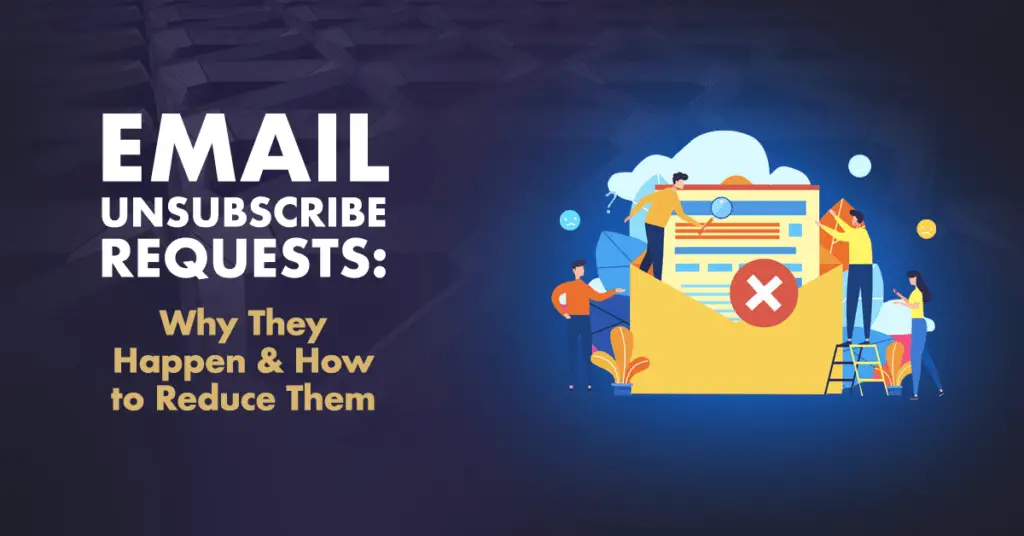
Email Unsubscribe Requests: Why They Happen & How to Reduce Them

Email Unsubscribe Requests: Why They Happen & How to Reduce Them 5

You’ve just spent days crafting the perfect marketing email. You’re proud of the content, the design, the personalization, and everything else in this message. You schedule it to send at the correct time and sit back to wait for the results.

But instead of a spike in sales, you see exactly what you didn’t want to see: a spike in email unsubscribe requests.

Why Do Customers Unsubscribe from Marketing Emails?

There are a variety of reasons customers might unsubscribe, but the vast majority are ultimately based on one of these two points:

  • They feel they’re receiving too many emails
  • They feel the emails they’re receiving aren’t relevant to them

Both reasons stem from a desire for control. Customers want to be able to control how often they receive marketing emails from you, after all, and they also want to control (to an extent) what those emails say. The more successful companies invite their customers to choose their topics of interest, and make it quick and convenient on their preference management page.

Offering Your Customers More Choices

Instead of giving your customers an all-or-nothing choice on communications, encourage them to refine their preferences. Offer choices such as:

  • Method of communication: Some customers prefer emails, while others prefer text messages. They’re far more likely to check messages from you when they’re sent via the preferred method of communication.
  • Topics: A home chef will appreciate a message about a sale on cooking supplies far more than a message advertising a pair of expensive speakers. Ask your customers what they want to hear about, and do your best to provide it.

Crafting an Appealing Email

To reduce unsubscribe requests, send timely, relevant emails. Look at every part of your current marketing email template. Where can you improve?

  • Subject line: This is the first part of your email that a customer sees. Make it engaging and intriguing! An intrigued customer will open your message. You may even be able to put their name in your subject line
  • Greeting: A generic “Hi!” won’t cut it here. Instead, address the email recipient by name.. This simple step goes a long way.
  • Email body: Make this too short and you risk not getting your point across, but make it too long and you risk a quick “Nope” and trip to the trash bin. Do some experimenting to find the perfect middle ground.
  • Message: The customer may not want to make a purchase right now, but if they feel like the email is relevant to them or their lifestyle, they’ll feel happy you thought of them. And happy customers are more likely to continue receiving emails and consider future purchases from you. Once again, Custom Objects can help you personalize the message to each recipient.
  • Call to Action (CTA): The CTA is the most important part of your email—from your point of view. For the customer, the CTA guides them to the next logical step as they continue their journey.

Conclusion

Customers already receive a staggering number of emails, both solicited and unsolicited, from a variety of sources. Emails from your competitors may be in their inbox too. That’s why it’s so absolutely critical for your emails to stand out, both in appearance and content. Showing your customers that you take the time to appeal to them specifically puts you ahead of any competitors more concerned with sending as many emails as possible.

Ready to start sending personalized messages that get results and reduce email unsubscribe requests? Contact us today to learn how 4Comply and Eloqua can help.

[Sassy_Social_Share]

Related Posts