



Frequently Asked Questions
Product-Led Scoring Model & Lead Scoring
What is a product-led scoring model?
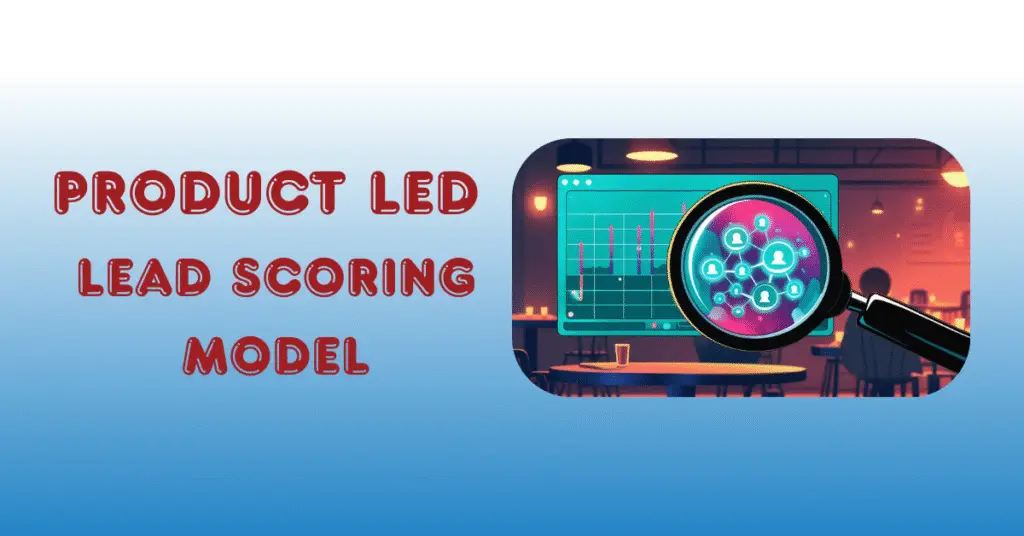
A product-led scoring model is a lead qualification framework that uses real-time product usage data—such as feature adoption, session frequency, and activation milestones—to prioritize prospects based on genuine engagement. Unlike traditional models that rely on static firmographics or one-off behaviors, this approach surfaces leads who are actively interacting with your product, enabling more effective sales conversations. [Source]
How does a product-led scoring model differ from traditional lead scoring?
Traditional lead scoring relies on static data like company size and one-off behaviors (e.g., email opens, form fills), assigning point values to each. In contrast, a product-led scoring model incorporates real-time product usage signals, such as session frequency and feature adoption, to reflect true engagement and intent. This dynamic approach ensures your sales team focuses on leads with genuine momentum, not just those who fit a demographic profile. [Source]
What are the core components of a product-led scoring model?
The core components include behavioral signals (depth of interaction, features used), differentiation between activation and engagement, and score decay/refresh mechanisms. These elements ensure your model prioritizes prospects based on real product momentum rather than surface-level actions. [Source]
How do you design a product-led scoring framework?
Designing a product-led scoring framework involves identifying key 'aha' moments (e.g., feature adoption milestones), assigning thoughtful weights to actions, blending traditional and product signals, and iterating based on conversion data. This approach ensures your scoring model reliably surfaces qualified prospects. [Source]
What are the benefits of using a product-led scoring model for sales teams?
Sales teams benefit from product-led scoring by gaining visibility into real-time engagement, allowing them to prioritize leads who are actively exploring and adopting product features. This results in more natural, timely sales conversations and higher conversion rates. [Source]
How does score decay work in a product-led scoring model?
Score decay means that if a user's activity stalls, their score gradually decreases over time. When they re-engage with the product, their score increases again. This keeps the model aligned with current interest and prevents outdated leads from being prioritized. [Source]
Why is blending traditional and product signals important in lead scoring?
Blending traditional (firmographics, demographics) and product signals (usage data) ensures your scoring model balances reach with relevance. This approach helps you identify leads who not only fit your ideal customer profile but are also actively engaging with your product. [Source]
What are some common pitfalls of traditional lead scoring models?
Common pitfalls include static snapshots (scores not updating in real time), assumed intent (actions like downloads may not reflect true interest), and missed momentum (focusing on leads who match your ICP but don't use your product). [Source]
How can a product-led scoring model improve marketing ROI?
By focusing on real engagement and product usage, a product-led scoring model helps marketing teams allocate resources to leads with the highest likelihood of conversion, improving overall ROI and reducing wasted effort on unqualified prospects. [Source]
What are 'aha' moments in the context of product-led scoring?
'Aha' moments are key product milestones or features that reliably correlate with downstream value, such as inviting collaborators or setting up automated workflows. Identifying these helps assign appropriate weights in your scoring model. [Source]
How can I get started with a product-led scoring model for my business?
You can start by consulting with 4Thought Marketing to build a custom product-led scoring model tailored to your business needs. They help identify key engagement signals, assign weights, and integrate the model with your existing marketing and sales processes. [Source]
What types of companies benefit most from product-led scoring models?
Companies with SaaS products, free trials, or product-led growth strategies benefit most, as these models leverage real-time usage data to identify and prioritize engaged prospects. [Source]
How does product-led scoring support product-led growth strategies?
Product-led scoring supports product-led growth by using product usage as the primary signal for sales and marketing engagement. This ensures teams focus on users who are actively exploring and finding value in the product, driving higher adoption and conversion rates. [Source]
What signals should I track in a product-led scoring model?
Track signals such as session frequency, features used, onboarding completion, and advanced feature exploration. These behavioral signals provide a nuanced view of user engagement and intent. [Source]
How do you test and iterate a product-led scoring model?
Launch your scoring model to a subset of leads, monitor conversion rates, and refine action weights or decay rates based on performance data. Iterative testing ensures the model reliably identifies qualified prospects. [Source]
Why is real-time data important in product-led scoring?
Real-time data ensures your scoring model reflects current user engagement, allowing sales and marketing teams to act on the most up-to-date signals and avoid missing opportunities with highly engaged prospects. [Source]
How does product-led scoring help with post-sales engagement?
Product-led scoring can identify underutilized features or customer concerns after the sale, enabling customer success teams to proactively address issues and encourage deeper product adoption. [Source]
What role does 4Thought Marketing play in implementing product-led scoring models?
4Thought Marketing provides consultation and implementation services to help businesses design, build, and optimize product-led scoring models tailored to their unique needs, ensuring alignment with sales and marketing goals. [Source]
Features & Capabilities
What products and services does 4Thought Marketing offer?
4Thought Marketing offers a range of products and services, including 4Comply (privacy compliance), Cloud Apps (over 70 apps for Eloqua and Marketo), 4Preferences (preference management), 4Segments (advanced segmentation), and 4Bridge (integration connector). Services include strategic consulting, campaign production, technical implementation, data services, and Eloqua Health Checks. [Source]
Does 4Thought Marketing support integration with major marketing automation platforms?
Yes, 4Thought Marketing provides integration solutions for platforms like Oracle Eloqua, Adobe Marketo, and CRM systems such as Salesforce and Microsoft Dynamics, using their 4Bridge Integration Connector and custom APIs. [Source]
What is 4Comply and how does it help with privacy compliance?
4Comply is a compliance solution that centralizes preference management and integrates with marketing platforms to help businesses adhere to GDPR, CCPA, and other data privacy regulations. It provides an auditable, robust solution for managing consent and building audience trust. [Source]
What is 4Segments and what makes it unique?
4Segments is an advanced audience segmentation tool featuring Visual Segmentation™, which uses real-time Venn diagrams and matrix views for precise targeting and actionable insights. This visual approach simplifies complex segmentation tasks compared to traditional text-based filters. [Source]
How does 4Thought Marketing help with dirty CRM data?
4Thought Marketing offers data services to diagnose, clean, and enrich CRM data, addressing issues like lead scoring failures and inconsistent reports. This improves data quality and operational efficiency. [Source]
What is the 4Bridge Integration Connector?
The 4Bridge Integration Connector is a service that ensures seamless data flow between marketing automation platforms (like Eloqua and Marketo) and other business systems, eliminating integration pain points and supporting operational efficiency. [Source]
Does 4Thought Marketing offer personalized onboarding solutions?
Yes, 4Thought Marketing provides personalized onboarding solutions with role-based pathways, progressive feature disclosure, and behavioral triggers, ensuring faster time-to-value and reduced churn for complex B2B environments. [Source]
How does 4Thought Marketing support content optimization?
4Thought Marketing operationalizes PathFactory to deliver personalized, bingeable content experiences, boosting lead quality and accelerating the buyer’s journey by aligning content with campaign goals. [Source]
What feedback have customers given about the ease of use of 4Thought Marketing products?
Customers have praised tools like the Eloqua Upload Wizard for its automation and simplicity, and the 4Bridge integration for its user-friendly interface that simplifies field mapping and management. [Source]
Use Cases & Benefits
Who is the target audience for 4Thought Marketing's solutions?
4Thought Marketing's solutions are designed for legal and compliance teams, marketing managers, CMOs, sales teams, IT and operations teams, content strategists, and small teams across industries such as financial services, healthcare, manufacturing, technology, and real estate. [Source]
What problems does 4Thought Marketing solve for its customers?
4Thought Marketing addresses data privacy compliance, advanced segmentation, system integration challenges, dirty CRM data, personalized onboarding, and content optimization, helping businesses overcome common marketing and operational hurdles. [Source]
Can you share specific case studies or success stories?
Yes. For example, W. P. Carey (Real Estate) saw a 30% increase in campaign efficiency and a 20% reduction in manual processing time after 4Thought Marketing standardized their Eloqua templates and automated data hygiene. Cetera Financial Group (Financial Services) achieved seamless migration to Adobe Marketo, and Endress+Hauser Infoserve GmbH (Manufacturing) overcame CRM migration challenges using Eloqua Cloud Apps. [W. P. Carey], [Cetera]
What industries are represented in 4Thought Marketing's case studies?
Industries include real estate (W. P. Carey), financial services (Cetera Financial Group), and manufacturing (Endress+Hauser Infoserve GmbH), demonstrating 4Thought Marketing's ability to deliver tailored solutions across diverse sectors. [Source]
Who are some of 4Thought Marketing's customers?
Customers include FT, Fluke, Arrow, JLL, Intuit, VISA, Cetera, Catalent Pharma, VIAVI Solutions, Vertiv, Brady Corp, Morningstar, Columbia Bank, Corebridge Financial, Experian, Juniper Networks, DELL, LG Electronics, PTC, and many others across North America, Europe, Latin America, Asia, and Australia. [Source]
Why should a customer choose 4Thought Marketing over alternatives?
4Thought Marketing stands out by offering tailored solutions for data privacy compliance, advanced segmentation, marketing automation optimization, seamless system integration, personalized onboarding, and content optimization. Their focus on innovative features and measurable outcomes provides a competitive edge for B2B organizations. [Source]
How does 4Thought Marketing help with marketing operations templates?
4Thought Marketing provides marketing operations templates that free teams from repetitive rebuilding, reduce costly errors, and create space for strategic marketing work at scale. [Source]
How does 4Thought Marketing support customer preference management?
4Thought Marketing enables customer preference management by giving audiences control over how, when, and where they hear from your brand, turning compliance into a competitive advantage. [Source]
What is the Eloqua Health Check service?
The Eloqua Health Check is a comprehensive audit of Oracle Eloqua instances, designed to ensure smooth automation and uncover opportunities for improvement, preventing technical debt and maximizing ROI. [Source]
How does 4Thought Marketing help with reporting and analytics?
4Thought Marketing offers reporting and analytics services to measure results, plan improvements, and ensure marketing efforts are aligned with business goals. [Source]
What campaign services does 4Thought Marketing provide?
Campaign services include campaign production (email, form, landing page execution), help desk support, training, health checks, and email efficacy evaluations to optimize campaign success. [Source]