





Frequently Asked Questions

Features & Capabilities

What is AI-optimized retargeting and how does it differ from traditional retargeting?

AI-optimized retargeting replaces rule-based approaches with dynamic, learning systems that analyze vast datasets to predict user behavior. Unlike traditional retargeting, which treats all visitors the same, AI-driven methods prioritize high-intent users, personalize messaging, and optimize timing and spend for better results.

How does predictive audience segmentation work in AI-optimized retargeting?

Predictive audience segmentation uses AI to build granular, behavior-based audiences in real time. It identifies patterns that signal intent, such as users who spend significant time on product pages or those who download resources, enabling marketers to target segments like "High-Intent Researchers" or "Nurture-Ready Prospects."

What is Dynamic Creative Optimization (DCO) in AI-optimized retargeting?

Dynamic Creative Optimization (DCO) is an AI-driven process that automatically mixes and matches headlines, images, and calls-to-action to find the best combination for each user segment. This enables more personalized and effective ad experiences across multiple channels.

How does AI-optimized retargeting improve budgeting and bidding?

AI-powered bidding algorithms analyze conversion probability for every ad impression, automatically allocating budget toward users and placements most likely to drive results. This approach drastically improves Return on Ad Spend (ROAS) by reducing waste and focusing spend on high-value prospects.

Can AI-optimized retargeting personalize messaging for different user segments?

Yes, AI-optimized retargeting enables marketers to deliver personalized messaging to granular segments based on real-time behavior and intent signals, ensuring each user receives relevant content that increases the likelihood of conversion.

How does AI-optimized retargeting operate in a cookieless world?

AI-optimized retargeting pivots from relying on third-party cookies to interpreting contextual signals, device types, and on-site engagement patterns. It leverages consented, anonymized first-party data and contextual intelligence to serve relevant ads without tracking individual cookies.

What types of data does AI-optimized retargeting use for improved targeting?

AI-optimized retargeting uses rich first-party data from sources like Customer Data Platforms (CDPs), including purchase history, support ticket status, loyalty program activity, and unified online/offline behavior. This enables more accurate predictions and targeting.

How does AI-optimized retargeting unify customer signals across channels?

By integrating with a CDP, AI-optimized retargeting unifies online behavior (such as website visits) with offline data (like in-store purchases or event attendance), creating a holistic customer view and enabling seamless retargeting journeys across channels.

What is the role of creative assets in AI-optimized retargeting?

While AI handles mechanical optimization, human creativity remains essential. Teams provide high-quality creative assets (images, headlines, CTAs) for the AI to test and deploy, ensuring campaigns remain engaging and effective.

How does AI-optimized retargeting help reduce ad fatigue?

AI-optimized retargeting minimizes ad fatigue by dynamically adjusting messaging, timing, and creative based on user behavior and intent, ensuring ads remain relevant and engaging rather than repetitive or intrusive.

Use Cases & Benefits

Who can benefit from AI-optimized retargeting?

AI-optimized retargeting is ideal for marketing teams seeking to re-engage lost customers, maximize ad spend efficiency, and deliver personalized experiences at scale. It is especially valuable for organizations with access to rich first-party data and a desire to move beyond basic rule-based retargeting.

What problems does AI-optimized retargeting solve for marketers?

AI-optimized retargeting addresses issues such as uniform messaging, static timing, manual optimization, ad fatigue, wasted spend on low-intent users, and missed opportunities with high-value prospects. It enables smarter, more efficient campaigns that drive measurable results.

How does AI-optimized retargeting increase conversion rates?

By prioritizing high-intent users, personalizing messaging, and optimizing timing, AI-optimized retargeting increases conversion rates by focusing resources on prospects most likely to convert, rather than treating all visitors equally.

Can AI-optimized retargeting help improve customer lifetime value (CLV)?

Yes, AI-powered retargeting can reactivate dormant customers and increase repeat purchases by personalizing offers and messaging, thereby measurably improving overall customer lifetime value (CLV).

How does AI-optimized retargeting support privacy compliance?

AI-optimized retargeting leverages consented, privacy-compliant identifiers such as hashed email addresses and first-party data, ensuring effective targeting across platforms without relying on third-party cookies.

What are the benefits of integrating AI-optimized retargeting with a CDP?

Integrating AI-optimized retargeting with a Customer Data Platform (CDP) enables the use of rich, unified first-party data for more accurate predictions, holistic customer views, and intelligent retargeting journeys that drive retention and revenue.

How does AI-optimized retargeting help marketers adapt to industry changes?

AI-optimized retargeting enables marketers to adapt to industry changes such as the phase-out of third-party cookies by leveraging first-party data, contextual intelligence, and privacy-compliant identifiers for effective targeting and measurement.

What is the impact of AI-optimized retargeting on Return on Ad Spend (ROAS)?

AI-optimized retargeting improves ROAS by focusing spend on high-intent users, dynamically adjusting bids, and reducing waste, resulting in more efficient campaigns and measurable revenue growth.

How does AI-optimized retargeting enable personalization at scale?

AI-optimized retargeting leverages real-time data and predictive analytics to deliver personalized messaging and offers to each user segment, enabling marketers to scale personalization across large audiences efficiently.

Implementation & Technical Requirements

What are the key steps to implement AI-optimized retargeting?

Key steps include starting with high-quality data, maintaining a well-managed CDP, setting clear and measurable objectives, providing creative assets for AI testing, and adopting an always-on optimization mindset to monitor and refine campaigns.

How important is data quality for AI-optimized retargeting?

Data quality is critical; AI is only as powerful as the data it receives. Clean tracking and a well-maintained CDP ensure accurate predictions, effective segmentation, and successful retargeting campaigns.

What metrics should marketers use to measure AI-optimized retargeting success?

Marketers should use advanced metrics such as incremental lift (via holdout groups), reduction in cost per acquisition (CPA), increase in customer lifetime value (CLV), and improved attribution across multiple touchpoints to measure success.

How does AI-powered attribution improve retargeting measurement?

AI-powered attribution analyzes countless conversion paths to more accurately assign credit across multiple touchpoints, providing a clearer picture of retargeting's impact on customer journeys and revenue.

What is a holdout group and how is it used in AI-optimized retargeting?

A holdout group is a small audience intentionally not shown ads, allowing marketers to compare conversion rates with targeted groups and scientifically measure the true lift and incremental revenue generated by campaigns.

How can marketers set clear objectives for AI-optimized retargeting?

Marketers should define success using advanced metrics, such as aiming for a specific incremental lift, reducing cost per acquisition (CPA), or increasing customer lifetime value (CLV), and align these objectives with business goals.

What is the role of always-on optimization in AI-optimized retargeting?

Always-on optimization means AI continuously learns and adapts, requiring marketers to monitor performance holistically, provide strategic direction, and interpret the "why" behind the data for ongoing campaign improvement.

How does 4Thought Marketing help clients implement AI-optimized retargeting?

4Thought Marketing assists clients in building the data foundation and strategic framework for AI-optimized retargeting, including CDP integration, creative asset management, and campaign measurement to ensure successful adoption and measurable results.

What platforms does 4Thought Marketing support for AI-optimized retargeting?

4Thought Marketing supports integration with leading marketing automation platforms such as Marketo, Oracle Eloqua, PathFactory, Microsoft Dynamics, Salesforce, and AI platforms including n8n, ChatGPT/OpenAI, Anthropic, and Gemini.

Support & Services

What strategic services does 4Thought Marketing offer for AI-optimized retargeting?

4Thought Marketing offers strategic services including marketing strategy alignment, lead generation, conversion optimization, reporting & analytics, and data privacy consulting to support AI-optimized retargeting initiatives.

What campaign services are available from 4Thought Marketing?

Campaign services include email, form, and landing page execution, deliverability and reporting, help desk support for Eloqua and Marketo, custom training, health checks & analysis, and email efficacy evaluation to enhance campaign performance.

What technical services does 4Thought Marketing provide?

Technical services include platform installation, change management, success planning, data management and stewardship, system integration using connectors and custom APIs, and custom cloud app, HTML template, JavaScript, and responsive email development.

How can clients contact 4Thought Marketing for AI-optimized retargeting support?

Clients can contact 4Thought Marketing via phone at 888-356-7824 or email at [email protected] for support and consultation regarding AI-optimized retargeting and related services.

Does 4Thought Marketing offer free trials for its cloud apps?

Yes, 4Thought Marketing offers free trials for select cloud apps, such as the Update All Contacts COs and Contact to CO Updater, enabling clients to test solutions before committing.

What resources are available for learning about AI-optimized retargeting?

4Thought Marketing provides a resource center, documentation, email preferences, and system status updates, as well as articles and blog posts covering AI-optimized retargeting, marketing automation, and strategy topics.

How does 4Thought Marketing ensure privacy and legal compliance?

4Thought Marketing maintains privacy and legal compliance through dedicated privacy statements, legal documentation, and data privacy consulting services to help clients adhere to relevant regulations.

From Rules to Revenue: Why Your Retargeting Needs AI Now

AI-optimized retargeting, AI in digital advertising, Retargeting strategies, Dynamic Creative Optimization (DCO), Return on Ad Spend (ROAS)

Your retargeting campaigns are running, budgets are being spent, and ads are being served. But are they working as hard as they could be? Many marketers are starting to notice a plateau. Traditional retargeting still works—but it works the same for everyone, often treating a casual visitor the same as someone ready to buy. That’s beginning to change. Smarter, AI-driven approaches to retargeting (AI-Optimized retargeting) are making it easier to prioritize the people most likely to convert—without completely overhauling your strategy. It’s not about replacing what works, but improving how it works.

Instead of reacting to every site visit the same way, AI-optimized retargeting lets you shift toward more precise, more timely engagement—helping you spend more efficiently and connect when it counts. It’s not the future; it’s starting to happen now.

The Limitations of Traditional Retargeting Logic

For years, retargeting has operated on a simple quid pro quo: a user visits a page, they see an ad. This rule-based approach was effective, but it’s a blunt instrument in a world that demands precision. The limitations, highlight why AI-optimized retargeting is climbing up as the need of the hour; as its core limitations are now a significant drag on performance and budget:

  • Uniform Messaging: It treats a user who spent 10 minutes comparing product features the same as someone who bounced in seconds.
  • Static Timing: It serves ads for a fixed duration (e.g., 30 days) without knowing if the user is even in a buying mindset.
  • Manual Optimization: It relies on marketing teams to manually analyze data, segment audiences, and A/B test creatives—a slow process that can’t keep pace with real-time user behavior.

This inefficiency leads to ad fatigue, wasted spend on low-intent users, and missed opportunities with high-value prospects.

How AI Transforms Re-engagement into a Science

AI-optimized retargeting dismantles the old rule-based framework and replaces it with a dynamic, learning system. By analyzing vast datasets, machine learning models don’t just see what a user did; they predict what they are likely to do next.

Predictive Audience Segmentation – AI-Optimized Retargeting

Instead of broad buckets like “website visitors” or “cart abandoners,” AI builds granular, behavior-based audiences in real-time. It identifies patterns that signal intent, creating segments like:

  • “High-Intent Researchers”: Users who have viewed multiple products and spent significant time on-page.
  • “Price-Sensitive Scanners”: Visitors who focus on sales pages or use comparison tools.
  • “Nurture-Ready Prospects”: Individuals who downloaded a resource but haven’t returned.

Dynamic Creative & Channel Orchestration

AI-optimized retargeting takes A/B testing to a new level with Dynamic Creative Optimization (DCO). The system automatically mixes and matches headlines, images, and CTAs to find the perfect combination for each user segment. Furthermore, it orchestrates this across channels, ensuring a consistent and compelling experience whether the user is on social media, checking email, or browse a news site.

Intelligent Budgeting and Bidding

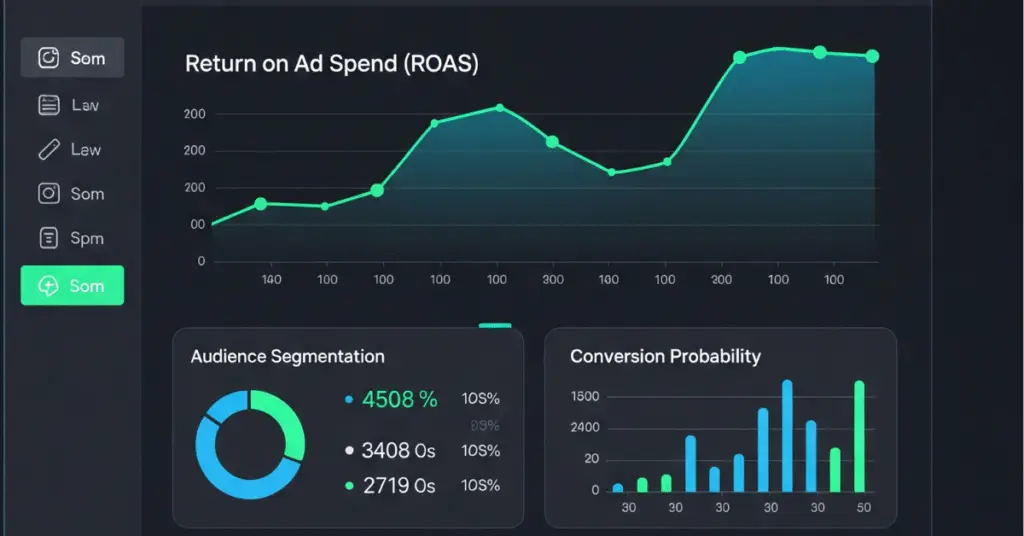
Perhaps the most significant impact of AI-optimized retargeting is on your budget. AI-powered bidding algorithms analyze conversion probability for every single ad impression. This means your budget is automatically allocated toward the users and placements most likely to drive results, drastically improving your Return on Ad Spend (ROAS) by cutting waste.

But this predictive power is only as good as the data it receives, which is why its integration into your core Martech stack is critical.

Integrating AI-optimized Retargeting with Your CDP

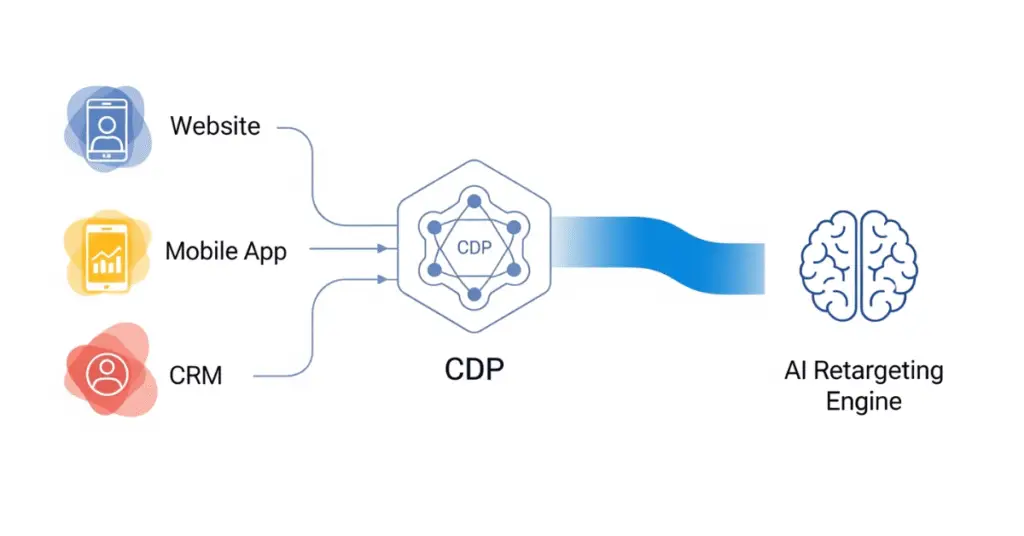
AI-optimized retargeting doesn’t exist in a vacuum. Its true power is unlocked when it’s fed high-quality, unified data from a central source like a Customer Data Platform (CDP).
From Rules to Revenue: Why Your Retargeting Needs AI Now 7
  • The Power of First-Party Data: Connecting to a CDP to AI-optimized retargeting allows the AI to leverage rich first-party data—like purchase history, support ticket status, and loyalty program activity—that a simple website pixel cannot see. This creates an incredibly detailed profile for more accurate predictions.
  • Unifying Customer Signals: A CDP unifies online behavior (website visits) with offline data (in-store purchases or event attendance), feeding the AI a truly holistic customer view. This enables you to retarget a user who saw a product in-store but didn’t buy.
  • Triggering Intelligent Journeys: With a CDP, you can build granular segments (e.g., “high-value customers at risk of churn”) that automatically trigger a specific, nuanced retargeting journey designed to retain them. This creates a seamless link between your data strategy and advertising execution.

With a foundation of rich, first-party data, you’re also perfectly positioned to tackle the next major industry disruption: the end of the third-party cookie.

AI-optimized Retargeting in a Cookie-less World

The phase-out of third-party cookies is rendering much of traditional retargeting obsolete. AI-powered strategies, especially those built on a CDP, are the solution to this challenge.

  • Shifting from Identity to Intent: AI helps pivot from relying on individual cookies to interpreting thousands of other signals, including contextual data (the topic of the page a user is on), device type, and on-site engagement patterns to predict intent.
  • Leveraging Consented, Anonymized Data: In a cookieless world, first-party data is king. AI can use consented, privacy-compliant identifiers like hashed email addresses to effectively reach users across platforms without relying on cookies.
  • Contextual Intelligence: Instead of following a user with cookies, AI can serve a relevant ad based on the content they are consuming in that exact moment. This makes the ad timely and helpful, not intrusive.

Operating effectively in this new landscape requires not just new technology, but new ways of measuring success.

Beyond ROAS: Measuring the True Lift of Intelligent Retargeting

Marketing leaders are constantly asked to prove their impact. An AI-driven approach provides the tools to demonstrate value far beyond simple Return on Ad Spend (ROAS).
AI-optimized retargeting, AI in digital advertising, Retargeting strategies, Dynamic Creative Optimization (DCO), Return on Ad Spend (ROAS)
  • Incremental Lift and Holdout Groups: True AI platforms can run controlled experiments by creating a “holdout group”—a small audience of users who are intentionally not shown ads. By comparing the conversion rates of the targeted group to the holdout group, you can scientifically measure the true “lift” and incremental revenue generated by your campaigns.
  • AI-Powered Attribution: Machine learning is revolutionizing attribution. It can analyze countless conversion paths to more accurately assign credit across multiple touchpoints, finally proving the value of retargeting efforts that influence a customer early in their journey.
  • Measuring Impact on Customer Lifetime Value (CLV): The goal isn’t just one more sale. By personalizing offers and messaging, AI-powered retargeting can reactivate dormant customers and increase repeat purchases, measurably improving overall CLV.

Key Considerations for Implementation

Transitioning to an AI-optimized model requires a strategic approach.

  • Start with High-Quality Data: As emphasized, AI is only as powerful as its data. Ensure your tracking is clean and your CDP is well-maintained.
  • Set Clear, Measurable Objectives: Define success using the advanced metrics above: aim for a specific incremental lift, a reduction in cost per acquisition (CPA), or an increase in CLV.
  • Fuel the System with Great Creative: AI handles the mechanical optimization, but human creativity remains essential. Your team’s role shifts from manual tweaking to providing high-quality creative assets for the AI to test and deploy.
  • Embrace an ‘Always-On’ Optimization Mindset: AI continuously learns and adapts. Marketers must monitor performance holistically to provide strategic direction and interpret the “why” behind the data.

Conclusion: Start Planning the Strategic Leap

The ambition for any marketing team is straightforward: re-engage lost customers and ensure every dollar of ad spend contributes directly to revenue and loyalty. It’s the core objective that drives our daily efforts.

Yet, continuing to rely on outdated, rule-based retargeting actively works against this ambition. It’s a strategy that leaves money on the table, frustrates potential customers with irrelevant ads, and fails to distinguish casual browsers from your most valuable prospects.

This is precisely why a strategic leap to an AI-optimized approach has become a requirement for success in modern digital advertising. By leveraging predictive analytics, CDP integration, and advanced measurement, you can move beyond these limitations. It allows you to finally deliver the kind of personalization at scale that turns potential into profit, ensuring the right message reaches the right user at the perfect time. The question isn’t if AI will transform retargeting, but how quickly you can harness its power to gain a competitive edge. If you’re ready to move from basic rules to intelligent revenue growth, the team at 4thought Marketing can help you build the data foundation and strategic framework for success.

[Sassy_Social_Share]

Related Posts