Key Takeaways
- Preference centers let subscribers control content, frequency, and channel.
- Topic-level options retain contacts a global unsubscribe would lose.
- Preference data is zero-party data: explicit, accurate, and freely given.
- Good preference center design is frictionless, mobile-first, and subscriber-forward.
- Eloqua and Marketo both support preference center strategy builds natively.
- A well-designed preference center is a retention and segmentation engine.
Table of Contents
You spend hours crafting the right email. Your segmentation looks solid. The subject line is tested. You hit send, and then the unsubscribes come in.
Most of those contacts did not want to stop hearing from you entirely. They wanted fewer emails, or content on different topics, or a break until the quarter turns. Without a preference center, they had no way to tell you that. So they left.
A well-built preference center design changes that dynamic entirely. This guide explains what a preference center is, what good preference center design looks like in practice, and how to treat it as a retention and segmentation asset rather than a compliance formality.
What Is a Preference Center?
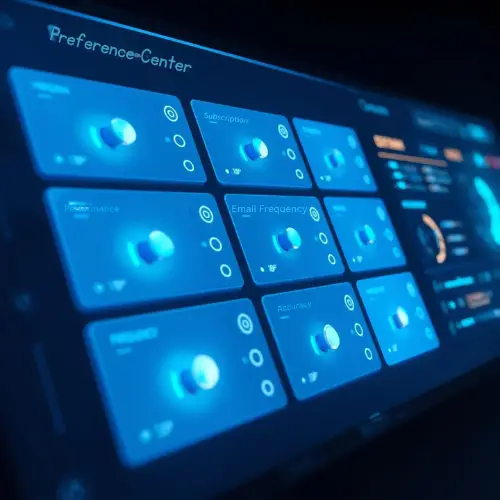
A preference center is a subscriber-facing page that allows contacts to manage how they communicate with your brand. At its most basic, it offers a choice beyond the binary of receiving everything or unsubscribing. At its most strategic, it becomes the foundation for zero-party data collection, richer segmentation, and personalization at scale.
Think of it as the standing agreement between your marketing program and your audience. Your subscribers tell you what they want. You honor those choices in every campaign you send. The result is a list that stays engaged because it has genuine reasons to.
What a preference center typically includes
Communication types: Subscribers choose which categories of content they want to receive, such as product updates, industry insights, event invitations, or promotional offers. Each type maps to a specific segment or send list inside your platform.
Frequency options: Rather than sending at whatever cadence your calendar dictates, you let subscribers set how often they hear from you. Weekly, monthly, or quarterly. This single option alone can significantly reduce fatigue-driven opt-outs.
Channel preferences: If your organization sends via SMS, direct mail, or push notification alongside email, giving subscribers control over channel reduces irritation and increases engagement on the channels they actually want.
Global unsubscribe: Every preference center must include a clear and accessible global opt-out for compliance with CAN-SPAM, CASL, and GDPR. The goal of good preference center design, however, is to make this option the last resort, not the first instinct.
What Good Preference Center Design Looks Like
Most preference centers fail not because of missing options, but because of poor design choices that make them confusing, difficult to find, or untrustworthy. The Litmus guide to email preference center identifies clarity and accessibility as the two most consistent differentiators between preference centers that reduce churn and those that do not.
Clarity over complexity
Your preference categories should reflect how your subscribers think about your content, not how your internal teams organize it. Labels like “Marketing updates,” “Product news,” and “Events” communicate value clearly. Internal identifiers like “Batch 3 nurture stream” do not.
Keep the number of options manageable. Five to eight distinct content types is typically the right range for B2B audiences. More than that, and the cognitive load becomes a barrier to completion rather than an invitation to engage.
Topic-level unsubscribe over global opt-out
This is the single most important structural decision in preference center design. A contact who receives too many emails on a topic they no longer care about should be able to opt out of that topic without disappearing from every other communication.
As explored in the email preference management guide on this site, every unsubscribe that happens because a subscriber had no other option is a relationship that did not need to end. Topic-level control is the mechanism that prevents that loss.
Mobile-first access and frictionless entry
According to Oracle’s annual email marketing trends report, preference centers play a proven role in re-engaging subscribers after periods of inactivity, yet many organizations still bury them in footers behind a login wall.
Your preference center should be accessible via a tokenized link in every email footer, with no login required. The link should pre-populate the subscriber’s current settings so they are updating preferences, not re-entering them from scratch. The page should render cleanly on mobile. These are not nice-to-haves. They are the baseline for a preference center that actually gets used.
Consistent branding and real-time updates
A preference center that looks like a generic ESP form, with no connection to your website design, signals to subscribers that their choices do not matter much. Brand the page. Use your logo, colors, and tone.
Updates should propagate immediately. A subscriber who reduces their frequency from weekly to monthly should not receive a weekly email two days later. Real-time synchronization between your preference center and your marketing automation platform is what makes the center feel trustworthy and worth using.
Three Gaps That Undermine an Otherwise-Good Preference Center
An email preference center that is easy to use can still be unsafe if the link that opens it is not built carefully. Three gaps trip up otherwise-solid designs, and closing them protects both your subscribers and your program.
The URL pre-population security gap
A modern preference center pre-populates each subscriber’s current settings so they are adjusting choices, not re-entering them. That convenience becomes a liability when the link identifies the subscriber with something guessable, such as an email address or a sequential contact ID sitting in the query string. Anyone who edits that value in their browser can load, view, and change another person’s preferences. In practice, a curious recipient — or an automated scanner — can step through IDs and tamper with records that are not theirs. The exposure is quiet: nothing looks broken, and you may not find out until a subscriber reports settings they never chose.
Opaque tokens: the fix for guessable links
The fix is to identify each subscriber with an opaque token instead of a readable identifier. An opaque token is a long, random, non-sequential string that maps to a contact only inside your platform. It carries no meaning on its own, cannot be guessed by incrementing a number, and can be set to expire or be single-use so an old link cannot be reused later. Well-built subscription preference management tooling generates and validates these tokens for you, so your team keeps the pre-populated convenience without ever exposing a contact identifier in the URL. If you are evaluating a build or a platform, treat opaque, expiring tokens as a baseline requirement, not an advanced feature.
Mid-send changes: honoring opt-downs before the next send
The last gap is timing. A subscriber can update their preferences in the middle of a campaign that is already going out. If your systems only pick that change up on a nightly sync, the subscriber keeps receiving mail they just opted down from — sometimes minutes after they asked you to stop. Real-time enforcement closes the gap: the moment a change is saved, it updates the fields and suppression rules that govern the active send, so the very next message respects the new choice. This is a preference-enforcement problem — making sure subscriber choices are honored immediately. Where you also need a legally provable record of consent and an audit trail, that is a separate compliance-layer job handled by 4Comply, kept distinct from the preference center itself. Closing these three gaps is part of a mature preference center strategy, not an afterthought. For a full walkthrough of wiring real-time sync into an Eloqua build, see our guide to building a next-generation Eloqua preference center.
Preference Center Strategy: From Compliance Checkbox to Retention Asset
This is where most organizations leave significant value on the table. A preference center built only to satisfy compliance requirements does the minimum. A preference center built as a strategic asset does something far more powerful: it makes your entire program smarter with every subscriber interaction.
Zero-party data and what it means for your program
Zero-party data is information a subscriber deliberately and proactively shares with you. Unlike behavioral data, which infers interest from clicks and opens, zero-party data is explicit. A subscriber who tells you they want to receive content about demand generation strategy is giving you a signal that no amount of open-rate analysis can match.
Preference centers are the most natural and trusted mechanism for collecting this data. The customer preference management overview on this site makes the case that the brands building competitive advantages today are not those collecting the most data, but those collecting the most accurate data directly from their audience.
Using preference data to drive segmentation
Every preference a subscriber sets is a segmentation signal. A contact who selects “webinars only” belongs in a different nurture track than one who selects “all content types.” A contact who reduces frequency to quarterly is telling you they are still engaged but overwhelmed.
Build your segments in Eloqua or Marketo to dynamically reflect preference data. This is not advanced configuration. It is the basic premise that your systems should know and honor what your subscribers have told you. The best practices for email preference center post outlines how this maps to practical list architecture.
Re-engagement using preference signals
When a contact goes quiet, most teams default to a re-engagement campaign with generic messaging. A preference-driven strategy is more precise. You know what they signed up for. You know which topics they selected or deselected over time. Use that data.
A contact who opted out of promotional content but kept their product update subscription is still interested in the platform. A re-engagement email focused on product updates, referencing their stated interest, is more likely to convert than a blank “are you still there?” message. The guide on discovering your customers’ email preferences covers this approach in depth.
Preference Center Examples: What Good and Bad Looks Like in Practice
Preference Center Examples clarify principles faster than definitions. Here is how the contrast plays out in real B2B contexts.
What good preference center design looks like
A well-designed B2B preference center presents five to seven clearly labeled content categories, each with a brief description of what that content includes. Frequency options appear as radio buttons, not sliders or open text fields. The page loads pre-populated with the subscriber’s current settings. A global unsubscribe link appears at the bottom, visually distinct but accessible. The page matches the brand’s website in font, color, and tone. Changes save without requiring a confirmation email.
In Eloqua, this is typically built as a custom landing page with form fields mapped directly to contact-level subscription groups. Conditional visibility rules let you show or hide sections based on earlier selections. In Marketo, subscription preference management uses native subscription center functionality, enhanced with custom fields and smart list logic to reflect preference-driven segmentation in real time.
What bad preference center design looks like
A bad preference center is a single page with one option: unsubscribe from all emails. There are no topic categories, no frequency controls, no channel options. It is discovered only after clicking an unsubscribe link at the bottom of an email. It is not branded. It does not confirm whether the update was saved.
This design fails both the subscriber and the marketer. It converts everyone who arrives with a nuanced preference into a hard opt-out. In multi-brand or multi-business-unit environments, the risk compounds significantly. The post on how marketing automation audits expose preference management failures documents how fragmented preference architectures lead to broken suppression logic, duplicate communications, and compliance exposure.
Conclusion
A preference center is not a compliance checkbox. It is the operational layer that determines whether your relationship with each subscriber grows, stagnates, or quietly ends. When preference center design is done well, it turns a potential opt-out moment into a signal that makes your entire program smarter. If your current preference center amounts to a single unsubscribe link, the opportunity to retain contacts, collect zero-party data, and personalize at scale is sitting unused. To explore how a purpose-built preference management platform connects your preference center directly to Eloqua, Marketo, and your CRM, visit 4Preferences or contact the 4Thought Marketing team.
About 4Thought Marketing
We're a B2B marketing automation and AI consultancy with a thing for getting complex tech to actually work. Since 2008, we've helped hundreds of organizations across financial services, technology, manufacturing, and real estate get more from Eloqua, Marketo, and their CRM integrations. We serve our clients across marketing automation strategy, lead lifecycle, AI, compliance, preference management, and more. Explore our services or get in touch.
Frequently Asked Questions
What is a preference center in email marketing?
A preference center is a subscriber-facing page that allows contacts to control what types of content they receive, how frequently they hear from a brand, and through which channels. It is the operational alternative to a binary global unsubscribe, allowing marketers to retain subscribers who want less rather than nothing.
What is the difference between a preference center and an unsubscribe page?
An unsubscribe page removes a subscriber from all communications. A preference center gives subscribers options to adjust rather than exit entirely. They can reduce frequency, switch content topics, or opt out of specific channels while remaining reachable on others. The goal of a preference center is retention through control, not removal.
What options should a B2B preference center include?
At a minimum, a B2B preference center should offer content type selection (such as newsletters, product updates, or event invitations), frequency controls (weekly, monthly, or quarterly), and a visible but non-prominent global unsubscribe option. More advanced implementations add channel preferences, language selection, and role-based content options aligned to job function.
How do you build a preference center in Eloqua or Marketo?
In Eloqua, a preference center is typically built as a custom landing page with form fields mapped to contact subscription groups. Form processing steps update field values and trigger entry into or exit from segment-based send lists. In Marketo, the native subscription center handles core functionality, with smart lists and custom fields used to create preference-driven segments for targeted campaign logic.
How does a preference center help with GDPR and CASL compliance?
A preference center supports compliance indirectly by giving subscribers a clear, self-service way to choose the topics, frequency, and channels they want. Those choices are timestamped and stored in your marketing automation platform, which helps you honor what each contact asked for and reduces the risk of sending to people who opted down. The preference center is not, however, your compliance system of record: provable consent capture and the audit trail regulators expect are a separate job for a dedicated compliance layer. Preference management and consent management work best designed together, each in its own lane.