






Key Takeaways
- One to one marketing strategy now demands compliance-first frameworks
- Global privacy laws redefine data collection and usage practices
- Consent-based workflows protect brands while preserving trust
- Transparency and accountability separate market leaders from laggards
A one to one marketing strategy has always promised remarkable results: perfectly timed messages that respond to browsing behavior, purchase history, and what customers might want next. Marketing teams have built sophisticated tools to deliver the right message to the right person at the right time. Yet many now face a growing challenge. Campaigns get paused because consent is unclear. Legal teams raise red flags about how customer data is collected and stored. Customers ask uncomfortable questions about who has access to their information and why. The creative vision remains strong, but proving that every email, every offer, and every interaction follows the law becomes nearly impossible.
This is where modern one to one marketing strategy transforms the landscape. By integrating privacy compliance directly into the creation and management of campaigns, organizations can deliver personalized experiences that customers trust while meeting the stringent requirements of regulations such as GDPR and CCPA. The way forward combines precision with responsibility, transforming legal obligations into a foundation for stronger and more transparent customer relationships.
One to One Marketing Now Requires a Compliance Framework
What does privacy-first personalization actually mean?
Privacy-first personalization means that every marketing decision—from how you segment your audience to what message you send—must be traceable back to a legal reason for using that customer’s data. Think of it as having receipts for everything. When someone signs up for your newsletter, you record what they agreed to receive. If they only wanted product updates but not promotional offers, your system must respect that choice automatically. This approach also means collecting only the information you genuinely need. If you don’t need a customer’s birthday to deliver value, don’t ask for it. And when someone asks you to delete their data, you must be able to find and remove it from every system you use.
This framework does not limit creativity. It provides clear boundaries that protect both your customers and your organization. Leading brands now map exactly where customer data flows—from the moment someone fills out a form to how that information gets used in email campaigns, website personalization, and analytics tools. They identify risky activities and build automatic controls. For example, if someone withdraws consent, the system immediately stops using their data in active campaigns.
Key compliance pillars for personalization:
- Explicit consent capture at every touchpoint where personal data is collected.
- Real-time preference synchronization across platforms
- Automated suppression when consent is withdrawn
- Audit logs documenting consent activity
How do global privacy regulations reshape marketing workflows?
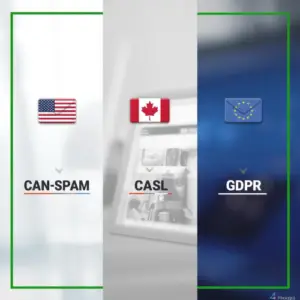
Privacy laws, such as GDPR in Europe and CCPA in California, have changed the rules for how businesses handle customer information. GDPR requires companies to demonstrate that they are following the rules, not just claim to be doing so. Before launching a campaign, marketers should be prepared to provide evidence of their legal right to contact those customers.
Under CCPA, customers can ask what information you have about them, how you use it, and demand that you stop selling it to others. Global privacy regulations in marketing mean you cannot assume someone wants to hear from you simply because they made a purchase once. You cannot hide unsubscribe buttons in tiny footer text. You cannot ignore customer requests to access or delete their data simply because responding takes time and effort.
Marketing teams must now maintain detailed records of who has consented to what, manage contracts with every vendor that handles customer data, and ensure those vendors also comply with privacy rules. This complexity necessitates new processes, technologies, and accountability measures. Organizations that treat privacy as only an IT department problem will struggle. Those that weave privacy into their marketing strategy will build lasting customer trust and transparency.
Regulatory impacts on daily workflows:
- Consent must be freely given, specific, informed, and unambiguous
- Pre-checked boxes and inactivity-based consent are prohibited
- Data subject rights honored within statutory deadlines
- Cross-border transfers require adequacy decisions or contractual clauses
Building Permission-Aware Campaigns
What is permission, and how does it apply to email campaigns?
Permission is the result of reviewing all relevant consent activity and calculating a simple ‘Yes’ or ‘No’ that your marketing automation system uses to either send or suppress an email to a specific contact in the campaign workflow. It’s a final checkpoint before an email is sent to the contact. Think of it as a license verification—your marketing automation platform must confirm that a contact granted consent for this type of communication before the message can be sent. This system operates automatically in real-time, querying the current permission from your privacy compliance system. If someone has withdrawn consent for promotional emails but still wants transactional updates, it enforces what is allowed to be sent without manual intervention.
This mechanism transforms compliance from a manual audit exercise into an automated safeguard embedded directly within your marketing automation infrastructure. It prevents non-compliant sends before they happen, protecting both your brand reputation and customer trust. Leading organizations synchronize their preference centers with campaign execution platforms in real time, ensuring that every consent change—whether it happens on a website, through an email preference update, or via customer service—is reflected instantly across all touchpoints where personal data is collected.
Pre-send validation checklist:
- Real-time consent status queries before every campaign send
- Automated suppression when consent is withdrawn or expired
- Channel-specific permission verification (email, SMS, push, paid media)
- Audit logs documenting every permission check and send decision
How does compliance affect segmentation?
Compliance fundamentally reshapes how segmentation rules are built and executed. When someone withdraws consent for behavioral tracking, your system must immediately stop using their browsing data, purchase patterns, or predictive scores in active segmentation logic. This is not a batch process that runs overnight—it must happen in real time. If a customer opts out of promotional communications at 2 PM, any campaign scheduled to send at 3 PM must automatically exclude that contact. Consent-aware segmentation means every audience filter, every dynamic content rule, and every personalization trigger must query current permission status as part of its execution logic.
This operational discipline protects your brand by ensuring no message reaches someone who has clearly declined to receive it. It also future-proofs your marketing operations as regulations tighten and enforcement actions increase. Building compliance into segmentation means connecting preference data directly to your audience-building tools, implementing automated suppression workflows that activate within seconds of consent changes, and maintaining detailed audit trails that document how segmentation decisions respect customer choices.
Compliance-driven segmentation best practices:
- Segmentation queries check consent status in real time, not from cached data
- Behavioral data fields become unavailable when tracking consent is withdrawn
- Automated workflows pause contacts who revoke permissions mid-journey
- Regular compliance audits identify segments that may violate consent boundaries
Transforming Privacy Compliance into Customer Trust
Why is transparency the new currency in customer relationships?
Customers want to understand how their data gets used. Vague privacy policies and hidden tracking damage trust. Privacy compliant personalization requires clear communication at every stage of the customer journey personalization process. When someone visits your website, your consent banner should explain in plain language what information you collect, why you need it, and who else might see it. When a subscriber changes their preferences, your confirmation message should acknowledge the update and explain what will change. Transparency builds trust, and trust drives long-term engagement and loyalty.

Organizations that embrace transparency stand out in crowded markets. They publish clear privacy disclosures written for real people, not lawyers. They offer easy-to-use tools that let customers control their own data. They proactively communicate when data practices change. This approach aligns with the principle of customer trust and transparency, turning a legal requirement into a brand strength. A data-driven customer experience built on transparency is not just compliant; it performs better, because customers willingly share information when they understand and trust how it will be used.
Transparency in action:
- Plain-language privacy policies with real examples of data use
- Proactive notifications when data practices change
- Self-service tools letting customers view, update, or delete their data
- Regular privacy updates in newsletters and customer communications
Conclusion
The transformation of one to one marketing strategy reflects how organizations now balance personalization with accountability. Marketing teams once struggled with campaigns halted by compliance gaps, legal scrutiny over data practices, and customer skepticism about transparency. Today, the solution lies in embedding privacy into the foundation of every workflow; from consent capture to segmentation to campaign execution. This approach does not diminish personalization. It strengthens it by building customer relationships on respect, clarity, and trust.
Organizations that master this balance deliver the data-driven customer experience modern consumers expect while meeting regulatory requirements that protect both parties. The result is marketing that performs better because it operates with integrity and earns customer confidence through every interaction.
For marketing leaders ready to transform these challenges into strategic advantages, partnering with experts who understand both the creative and compliance dimensions of modern personalization becomes essential. 4Thought Marketing has established itself in privacy-first marketing strategy, guiding organizations through the complexities of global regulations while preserving the power of personalized engagement.
Their purpose-built solution, 4Comply, provides the infrastructure and expertise needed to make consent management, DSAR workflows, and audit-ready documentation seamless and scalable. When you bring your privacy and personalization challenges to 4Thought Marketing, you gain more than technology—you gain a strategic partner committed to helping you build marketing operations that customers trust and regulators respect.
Frequently Asked Questions (FAQs)
What is a one to one marketing strategy in the context of privacy laws?
A one to one marketing strategy now means creating personalized customer experiences using data collected legally, with clear consent, and with processes that can prove compliance with regulations like GDPR and CCPA.
How does GDPR affect personalized marketing campaigns?
GDPR requires marketers to document legal justifications for using customer data, honor customer rights to access or delete their information within strict deadlines, and maintain audit trails proving compliance.
What are the risks of ignoring customer data privacy in marketing?
Ignoring privacy can result in substantial fines from regulators, legal action from customers, damage to your brand reputation, and loss of customer trust that undermines long-term business performance.
How can marketing teams prepare for data subject access requests?
Teams should map where customer data exists across all systems, use consistent customer identifiers that link records together, and build automated workflows that can retrieve and export complete information within regulatory deadlines.
Why is consent-based marketing important for brand reputation?
Consent-based marketing shows customers you respect their choices, builds trust in your brand, and protects you from compliance violations that can trigger public criticism and financial penalties.
What role does transparency play in customer journey personalization?
Transparency helps customers understand how you use their data, which increases their willingness to share information and strengthens their engagement and loyalty to your brand over time.